Remembering Dr. Cynthia Thompson, Jamaica’s First Olympic 100M Finalist
Today, on what would have been her 103rd birthday, we pause to remember and celebrate trailblazing athlete and physician Dr….
Today, on what would have been her 103rd birthday, we pause to remember and celebrate trailblazing athlete and physician Dr. Cynthia Annabelle Thompson. Her journey, which began on the cinder tracks of Kingston in the 1940s, culminated in yet another Jamaican sporting first at a time when the now sprint capital had not yet made its mark on the global athletics stage.
West Indian Thunderbolt
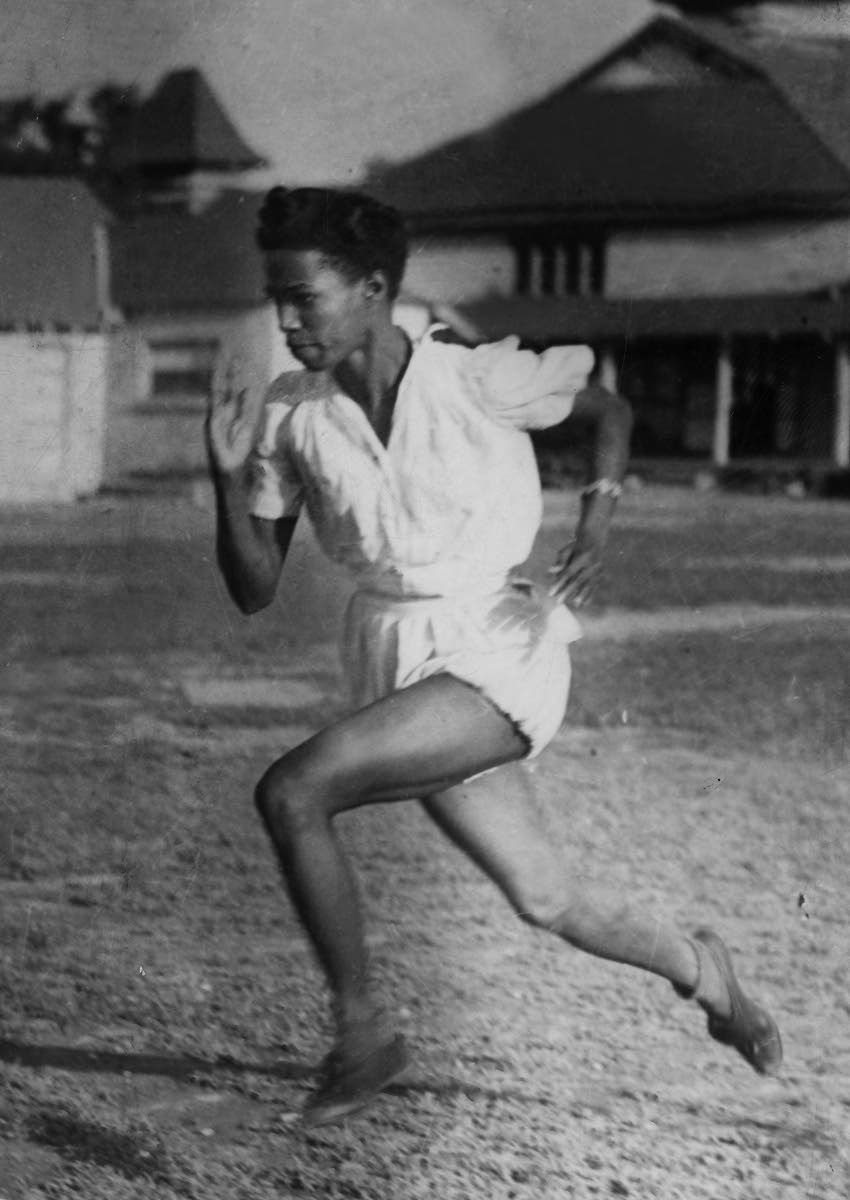
Born Cynthia Annabelle Thompson on November 29, 1922, in Kingston she attended St. Hugh’s High School for Girls in Kingston, where her natural speed quickly set her apart. Always a winner, she later shared that she “never came second in a race.” She ran for the sheer joy of it and did not take athletics too seriously in those early years. At the time, the sport was informal and largely improvised, with no spikes, specialised training, or structured coaching. Yet Thompson thrived, relying on raw talent and instinct.
In 1946 she prepared for her first international appearance at the 5th Central American and Caribbean Games (CAC) in Barranquilla, Colombia, by riding her bicycle from her home on Hagley Park Road to Caxton Park, now the Bell Chung Stadium, in Rae Town. There she began receiving formal coaching and learned the technical foundations of sprinting, including starting techniques, arm action and knee lift.
Competing against the best in the region, Thompson captured gold in the 100 metres in 12.1 seconds and silver in the 50 metres. In 1947, she repeated her success against strong American opposition by winning the 100 yards at the British Guiana Games, equalling the world record with a time of 10.8 seconds. She went on to rank fourth in the world in the 100 metres and sixth in the 200 metres. At a time when the Caribbean was only beginning to assert itself in athletics, her performances signalled the emergence of Jamaica as a sprinting force.
The 1948 London Games
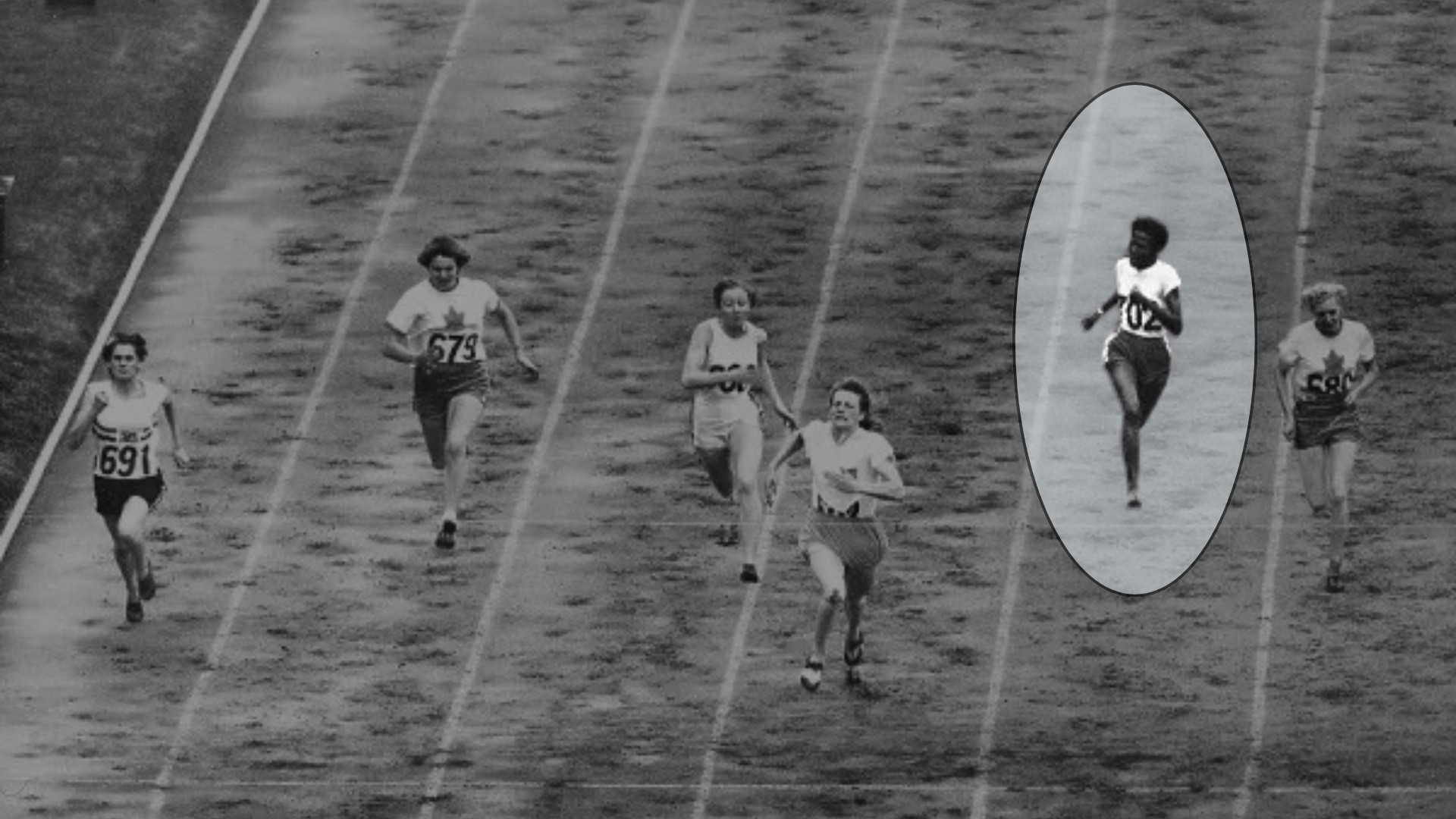
Two years later, Thompson travelled to London as one of four Jamaican women selected for the 1948 Olympic Games, the first Olympics in which Jamaica fielded female athletes. She competed in the 100 metres and 200 metres and, by her own admission, did not fully grasp the significance of the moment.
The 1948 Games, known as the “Austerity Games,” were held just three years after the end of the Second World War, and the scars of wartime bombing were still evident across the city. The journey itself was difficult. Travelling by ship, she battled severe seasickness, lost weight, and arrived in London far from her peak condition. Despite the difficult conditions and limited time to recover, she pressed on, advancing through the rounds of the 100 metres and reaching the semi-finals of the 200 metres. Her performance made her the first Jamaican, male or female to reach an Olympic 100 metres final.
Thompson finished sixth in the final, an extraordinary accomplishment for an athlete with limited resources and no international experience. Her personal bests from this era, 12.0 seconds in the 100 metres and 25.1 seconds in the 200 metres, stood as competitive marks for decades.
TSU Cinderbelle
After the Olympics, Thompson moved from Jamaica to Nashville to join the Tennessee State University athletics programme, becoming part of the early group of athletes who laid the groundwork for what later became the famed Tigerbelles. While at TSU, she continued to excel. In 1954, she was part of the Tennessee State “Cinderbelles” quartet that shattered a 22-year-old 440-yard relay record at the Alabama State Relays, clocking 49 seconds flat with teammates Margaret Davis, Revoyda Fuller and Mae Faggs.
She also continued to compete for Jamaica, setting records in the 100 metres at the 6th Central American and Caribbean Games. She added silver in the 50 metres and produced additional medal-winning relay performances during this period.
Transition to Medicine
After retiring from athletics, Thompson pursued paediatrics at the Meharry Medical College in Nashville before returning home to qualify as a doctor. Homesick, she moved back to Jamaica in 1966, joining the medical team at the Children’s Hospital, now the Bustamante Hospital for Children, before establishing a private practice.
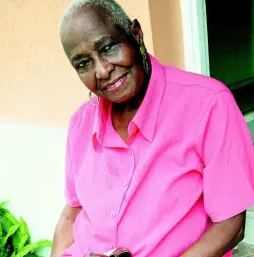
For more than three decades, Dr. Thompson cared for generations of Jamaican children, demonstrating the same discipline and commitment that defined her sprinting career. She retired from medicine in 2000, widely respected for her compassion, professionalism and long service to the community.
Honours and Recognition
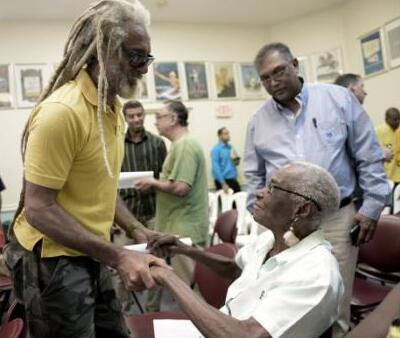
In 2004, Dr. Thompson was inducted into the Jamaica Amateur Athletics Association Hall of Fame for her exceptional contribution to Jamaican sport and her groundbreaking achievement at the 1948 Olympics. In 2017, Dr. Thompson and Olympian Rupert Hoilett were honoured as trailblazers by the Olympians Association of Jamaica (OAJ), now the National Association of Jamaican Olympians (NAJO). She was also inducted into the Hall of Fame at her alma mater, Tennessee State University, where she is remembered and honoured for her talent.
Passing and Legacy
Dr. Thompson passed away on 8 March 2019 after a period of ill health. She was 96 at the time of her passing and was recognised as Jamaica’s oldest Olympian, a reminder of how early her achievements came in the island’s sporting journey.
Her passing sparked national tributes. The Honourable Olivia Grange, Minister of Culture, Gender, Entertainment and Sport, described her as “remarkable in every sense” and “a heroine of Jamaican sport and medicine.”
Today Dr. Thompson is remembered as one of the extraordinary Jamaican women who helped shape the nation’s sprinting story. Her contributions to sport, medicine and community remain an enduring inspiration and a powerful reminder of the women who paved the way long before global fame, sponsorships and professional coaching became the norm.