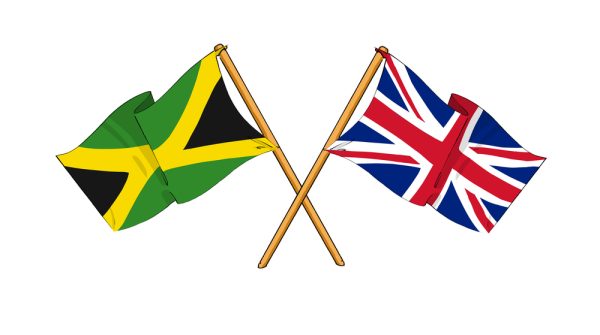
In a recent New York Times article, correspondent Simon Romero examines the history and modern context fueling a movement in Jamaica to make Patois the nation’s official language. Prompted by Jamaica’s stated intention to call a referendum on removing the British monarch as its head of government, the public’s attention has also turned to the question of accepting English as the official language used in government offices, courtrooms, and classrooms. Most Jamaicans speak Patois, and it is used in homes, on the street, on talk radio, and in the feeds of Jamaican online influencers. The debate over language has become increasingly political as Jamaica moves toward changing its Constitution and finalizing its separation from the United Kingdom, which was never completed despite gaining independence in 1962.
What is Jamaican Patois?
According to the article, Jamaican Patois is a unique language that has its own grammar and pronunciation. While it has often been stigmatized as a poorly structured form of English, language experts say that Patois, also known as Patwa, Creole, or just Jamaican, differs from English as much as English differs from German. Patois incorporates many words from African, European, and Asian sources. The Patois word, “ganja,” used in many reggae songs stems from the Hindi word for cannabis and came with laborers from India who were taken to Jamaica in the 19th century. The Patois word for a small child, “pikni,” comes from a Portuguese word that means “very small,” and the word “nyam,” which means “to eat” is believed to come from the language “Wolof” in West Africa.
Remnants of Colonialism
Romero shares that linguist John H. McWhorter suggested that English-based Creole spoken in the Caribbean originated on the coast of Ghana in the 17th century and then spread throughout the Caribbean. The British ruled in Jamaica for more than 300 years, a history reflected in discussions of Patois that often link it with the slave trade. According to the director of the Jamaican Language Unit of the University of the West Indies, Joseph Farquharson, there has been a tendency to reject Patois because it was created within the context of slavery. Other linguists have suggested that Creole languages, including Jamaican Patois, came into being as the slave trade intensified in the 17th century, and the British made contact with African languages like Twi, a major source of vocabulary in Jamaican Patois. The evolution of Patois can be viewed as a way to trace the development of the island as a British colony.
Now is The Time
The article also focuses on the criticism that has arisen concerning Jamaica’s lingering ties to Britain in the island’s population, which is over 90 percent Black, and memories of centuries of enslavement by the British endure. Support for making Patois Jamaica’s official language gained momentum when British Prime Minister Rishi Sunak refused to apologize for his country’s role in the slave trade and would not commit to paying reparations. Linguist Oniel Madden at Northern Caribbean University in Jamaica stated, “If there was ever a time to definitively change the status of Jamaican Creole, it is now.” Other Caribbean countries where Creole is spoken along with English are following the language debate in Jamaica with interest. To date, Haiti, Curaçao, and Aruba are among the few countries that have elevated their Creole languages to official status.
What The Critics Say
There are critics of the move to adopt Patois as the official language of Jamaica, however. Biblical scholar Peter Espeut is an archivist for the Roman Catholic Archdiocese in Kingston, and he said it would be expensive and impractical for Jamaica, a nation with several hundred Catholic schools, to prepare textbooks in the Jamaican language. Other critics say that adopting Patois as the official language would put Jamaicans in a negative position in business, as the prevailing language in global trade, tourism, and academic research is English. Former Spanish lecturer at Howard University, Andrew Tucker, wrote in the Jamaica Observer newspaper that because Jamaicans have not “mastered English,” preferring their “plantation language,” has “crippled our social, intellectual, and economic development. He added that no foreign investor wants to communicate in the Jamaican dialect.
Linguistic Sovereignty
Romero notes the political positions taken by government and other authorities who have been exploring various positions on the issue as the debate involves national identity, class division, and the legacy of slavery. If Jamaica chooses to make Patois its national language, the repercussions would be felt throughout the Caribbean, as well as in sections of Central and South America. Leader of Jamaica’s opposition People’s National Party, Mark Golding, has promised to make Jamaican the official language, stating that it is important to project the country’s culture outside of its borders. He stated, “If it is loved abroad, why don’t we respect it a yaad?” Mr. Golding asked in a speech notable for its Patois words like “yaad,” which means home. Jamaican Prime Minister Andrew Holness of the nation’s governing Jamaica Labor Party, has been more nuanced on the issue, believing that the language should be “institutionalized” and not saying it should become the official national language.
Support For a Language “Bridge”
The article concludes by describing the strong support for making Patois the official national language among representatives of Jamaica’s education system. Many teachers and school administrators argue that younger children are not well served by prioritizing English when they start school as they are only fluent in Patois at that time. A report from 2021 found that about 33 percent of Jamaica’s sixth graders were illiterate in English and more than 50 percent had difficulty writing in English. Former principal Grace Baston said that the schools are effectively teaching children to read in a foreign language. She added that she is not advocating to replace English, but wants to prepare children to succeed and thrive in both languages. She would like to use Patois as a “bridge” that would be used to teach the basics before transitioning learners to English.
Photo – Deposit Photos
The post New York Times Writer Calls Out Jamaica’s Hesitance to Make Patois An Official Language appeared first on Jamaicans.com.

 Dans une déclaration commune, plusieurs associations étudiantes de la prestigieuse université américaine ont pris parti contre le gouvernement israélien dans le conflit qui l’oppose au Hamas, provoquant la réaction de donateurs ulcérés.Dans une déclaration commune, plusieurs associations étudiantes de la prestigieuse université américaine ont pris parti contre le gouvernement israélien dans le conflit qui l’oppose […]


 Sa rencontre avec son homologue américain, Antony Blinken – voire avec Joe Biden –, pourrait préfigurer une visite du président chinois Xi Jinping aux Etats-Unis d’ici à la fin de l’année, au moment où les sujets de friction sont nombreux entre les deux puissances.Sa rencontre avec son homologue américain, Antony Blinken – voire avec Joe Biden […]
 Au 12e numéro de Studio Fest The Show, la chanteuse Tamara Suffren était invitée à répondre aux questions du présentateur Marc Anderson Bregard avant d’offrir une performance XXL au Centre Culturel Caraïbes. Huit jours après un concert émouvant organisé dans le but de rendre un vibrant hommage à l’artiste Mikaben décédé sur scène parisienne en […]
 « L’Afrique au centre du jeu » (1/4). A deux mois et demi de la Coupe d’Afrique des nations qui se déroule en Côte d’Ivoire, « Le Monde Afrique » propose à ses lecteurs une journée de débats à Abidjan le 26 octobre.« L’Afrique au centre du jeu » (1/4). A deux mois et demi de la Coupe d’Afrique des nations qui […]
 Survivant de la catastrophe aérienne de 1958 vécue par son club emblématique de Manchester United, l’ancien champion du monde avec l’Angleterre est mort, samedi 21 octobre, à l’âge de 86 ans.Survivant de la catastrophe aérienne de 1958 vécue par son club emblématique de Manchester United, l’ancien champion du monde avec l’Angleterre est mort, samedi 21 octobre, à l’âge […]
 [#item_full_content]
