Blog
-

In-door multipurpose facilities to be built in Hinterland regions

Toshaos want banks, ATVs, clean water & planting materials

GOA incentives for medal-winning Youth Commonwealth Games athletes
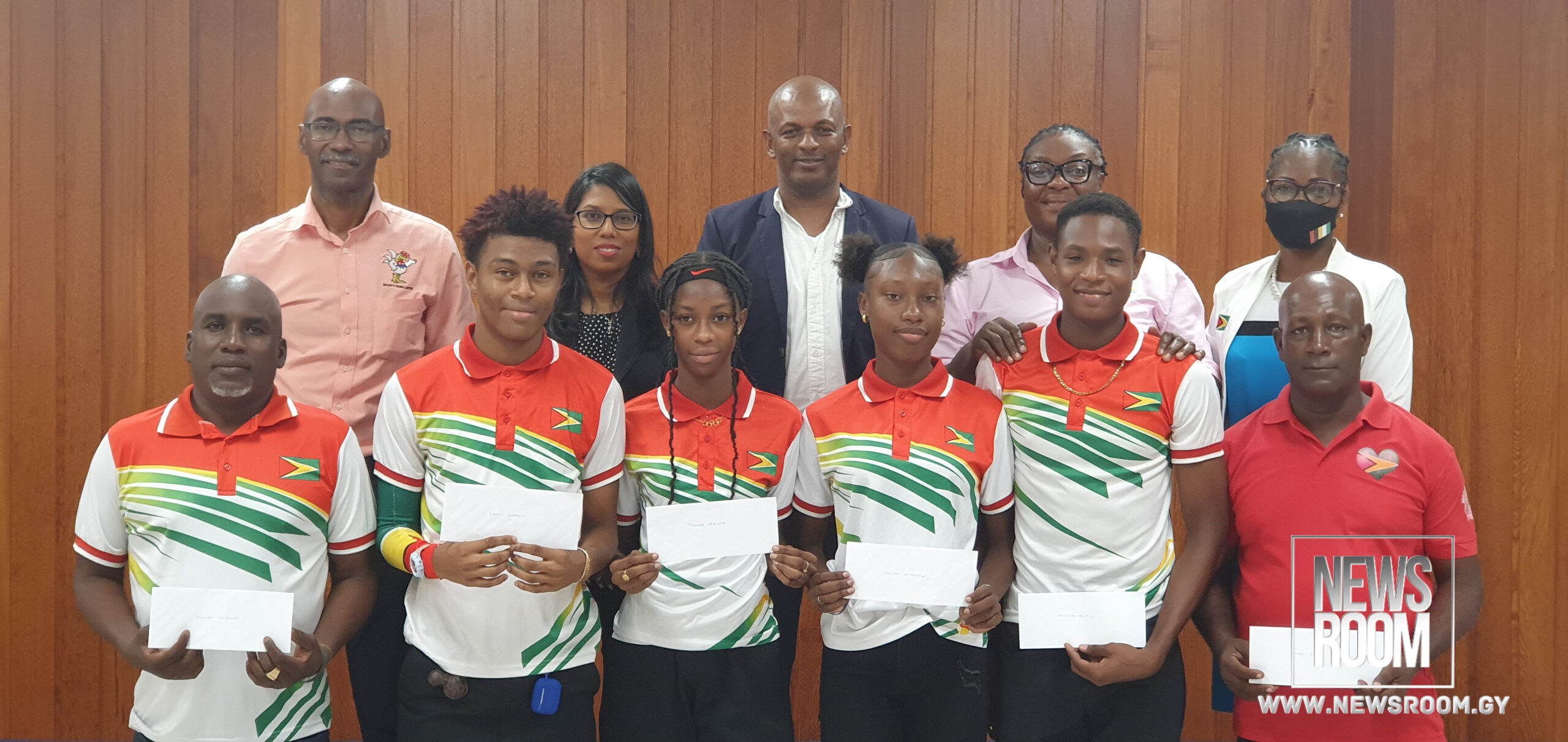
medal-winning athletes who represented the country at the Youth Commonwealth Games in Trinidad.
The medallists- Tianna Springer, Malachi Austin, Narissa McPherson and Javon Roberts- along with coaches Julian Edmonds and Mark Scott received cash incentives from the Godfrey Munroe-led Olympic Association.
Munroe said the executives felt it was important to reward the efforts of the athletes, noting that their feat was significant and groundbreaking.
“Continue to stay humble (and) discipline…continue to work hard and the sky would be the limit,” Munroe told the athletes before they received the incentives.
The talented Tianna Springer, who created history by copping Guyana’s first-ever gold at the Games, winning the Women’s 400m in 53.55s, was presented G$500,000.
Malachi Austin copped silver Men’s 400m and was given G$350,000, while McPherson, who won bronze in the Women’s 400m, got G$250,000.
The quartet also teamed up to shatter the 4x400m Mixed Relay record on their way to winning gold in a time of 3:22.07s. Roberts received G$100,000, while coaches Edmonds and Scott pocketed G$50,000 each.
“We felt this core is a great core for us to continue to work with and we look forward to supporting your development moving forward,” Munroe added.
President of the Athletics Association of Guyana Amanda Hermonstine, in congratulating the athletes and coaches, read a quote:
“Limitations live only in our minds, but if we use our imagination our possibilities become limitless.”
Also present at the simple ceremony at the GOA Headquarters at Lilliendaal were Secretary General of the GOA Vidushi Persaud-McKinnon, Treasurer Garfield Wiltshire, Team Leader to the Games Nalini McKoy and parents of the athletes.

Viacom18 bags Indian cricket digital and TV media rights for $720 million
Viacom18 has bagged the media rights – both digital and television – to Indian cricket globally for INR 5963 crore (USD 720 million approx.) for the period 2023-28. These rights extend to all the cricket the BCCI runs in the country, international and domestic, apart from the IPL.
Up against two competitors, Disney Star* and Sony, Viacom18 bid the highest in both digital and television categories, in an e-auction conducted by the BCCI on Thursday.
In the digital category, Viacom18 bid INR 3101 crore (USD 375 million approx.), and another INR 2862 crore (USD 346 million approx.) for television rights. Disney Star and Sony’s bids remain unconfirmed.
Viacom18, who takes over the BCCI media rights from Disney Star, already owns digital rights for the IPL, and both digital and TV rights for the Women’s Premier League (WPL).
Viacom18’s latest deal translates to an average per-match value of INR 67.75 crore, which is 12.92% higher than the INR 60 crore Star India had paid the BCCI in the previous cycle.
For 2018-23, Disney Star, which was earlier Star India, had won worldwide rights to India’s games for INR 6138 crore (then USD 944 million), for a total of 102 international matches. This time, the BCCI listed 88 international matches for the rights period.
In the previous cycle the BCCI had put three categories of rights up for bidding: Indian subcontinent television rights and rest of the world digital rights (GTVRD), digital rights for the Indian subcontinent alone (ID), and global consolidated rights (GCR).
The winning bid was eventually made in the last category. This time the BCCI limited the bidding to two categories: TV for Indian subcontinent only (base price INR 20 crore, or USD 2.42 million approx.), and digital for Indian subcontinent combined with TV and digital rights for rest of the world (base price INR 25 crore, or USD 3 million approx.).
BCCI secretary Jay Shah had tweeted the news on Thursday evening.
Last year, during the IPL media rights bidding, Viacom18 secured digital rights in the Indian subcontinent, and TV and digital rights across three global regions – Australia + New Zealand, the UK, and South Africa – for INR 23,758 crore (then USD 3 billion approx.). Disney Star had won IPL TV rights in the Indian subcontinent at the same auction.
Viacom18 then pipped Disney Star to the global media rights for the WPL, paying INR 951 crore (then USD 116 million approx.) for the period 2023-27.
Bilateral cricket financially less valuable now?
An overall comparison of the winning bids for the BCCI rights from 2018 and now would show a 2.8% drop, but there are 14 fewer matches in the current cycle. The bigger talking point would be the shrinking value of bilateral cricket rights compared to the exponential sums being forked out for IPL rights.
Last year the IPL climbed to a podium position globally, slotting in behind only the NFL in terms of per-match value after the sale of five-year rights (2023-27) for INR 48,390.5 crore (then USD 6.2 billion approx.).
In addition to the amount Viacom18 spent – as noted above – Disney Star retained the TV rights in the Indian subcontinent for INR 23,575 crore (then USD 3 billion approx.) while Times Internet paid almost USD 60 million for overall media rights in two other global regions – the Middle East (INR 205 crore/USD 26.27 million approx.) and the USA (INR 258 crore/US$ 33.06 million approx.).
Disney Star’s winning TV bid was worth INR 57.5 crore (then USD 7.36 million approx.) per match. In addition, Viacom18’s winning bids averaged to effectively INR 58 crore (then USD 7.43 million approx.) per match: INR 50 crore (then USD 6.40 million approx.) per match for subcontinent digital rights plus INR 33.24 crore (then USD 4.26 million approx.) per match for a non-exclusive package of high-profile games (ranging between 18 and 22 matches). That totals roughly INR 115 crore per match, not including Times Internet’s offerings. (ESPNcricinfo)

Search ongoing for boat captain following collision in Pomeroon River

Trio arrested with 15 ounces of ganja during Police raid

Unidentified man found dead in Bartica

Why is Guyana spending big to replant patches in its forest?
 neil@newsroom.gy
At Dakoura, 65 miles south of Guyana’s capital Georgetown, bulldozers and excavators work to fill in a crater left from bauxite mining.
Once this work is done, it will be time to treat the land and plant trees, most of them prized for high-value timber.
The idea is to restore the area to what it once was before mining – green, and not the white sandy dent in the surrounding forest.
It’s just 23 hectares, a rather tiny patch when you consider that Guyana already has 18 million hectares of land covered by forest.
In fact, Guyana, part of South America’s giant Amazon, has the second highest forest cover in the world, with 85 per cent of its total land area covered by forests of various kinds, mainly rainforest and montane forests.
But even a small disturbance in that forest cover, as in the case at Dakoura, is cause for concern.
“We know how the ecosystem functions. It’s one system, you know. If you have a system broken, or you leave it fractured, naturally it has implications for us as Guyanese,” says Godfrey Scott, who heads the Reclamation Unit within the Guyana Geology and Mines Commission (GGMC), the legal body that oversees all mining operations in Guyana.
Mining is the main driver of deforestation in Guyana. Last year, an estimated 6, 470 hectares of the country’s forest was cleared, most of it because of mining.
“Mining disrupts the environment, and if we don’t adopt a system that at least attempts to make it whole, or intact, that has implications for us as Guyanese,” says Scott, pointing out the valuable ecological services the forests provide, such as hunting grounds and fresh water for indigenous communities.
Scott and his colleagues are working with those at the Guyana Forestry Commission (GFC) to reforest some 200,000 hectares of forest cleared over recent years for mining and other activities, such as agriculture and the building of roads.
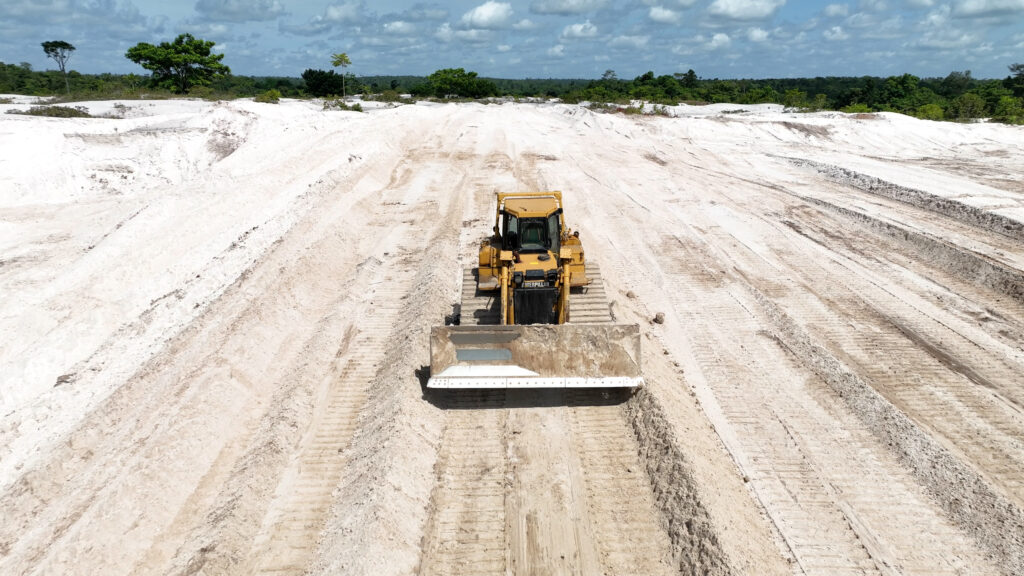
A machine is seen working to level the land at Dakoura that will be reforested. (Photo: Yusuf Ali/News Room) Guyana has continued to maintain one of the lowest deforestation rates in the world (0.02-0.079%), coming in at one 1/10th of the global deforestation rate.
Chandroutie Sookdeo, who works in the Forest Areas Assessment Unit of the GFC, maps deforestation and forest degradation using satellite imagery.
On a visit by the News Room to the GFC last week, she pointed to an area straddling the gold-rich Regions One and Seven which was destroyed by mining last year. Her work allows her to determine the exact area size – 8.4 hectares.
She estimated that the total forest area removed in Guyana last year was 6, 470, hectares leading to a deforestation rate of 0.034 per cent and the release of about 10.6 million tonnes of carbon dioxide; the deforestation rate was lower than in 2021 when it was 0.042 per cent.
|Graphic shows the main reasons for deforestation in Guyana for the year 2022 and the amount of carbon dioxide emitted as a result. (Source: Guyana REDD+ Monitoring Reporting & Verification System Report for 2022)
It is this deforestation that the Mines and Forestry Commissions is seeking to restore. And it’s no idle exercise to plant back trees just for the sake of hiding blemishes to the country’s forest cover.
For example, at Dakoura, an experiment in reclaiming land by the GGMC previously led to the planting of Acacia trees, which are ideal for greening an area quickly, as they spread rapidly, says Shuba Soamandaugh, a Forestry Management Expert and an Assistant Commissioner of Forests.
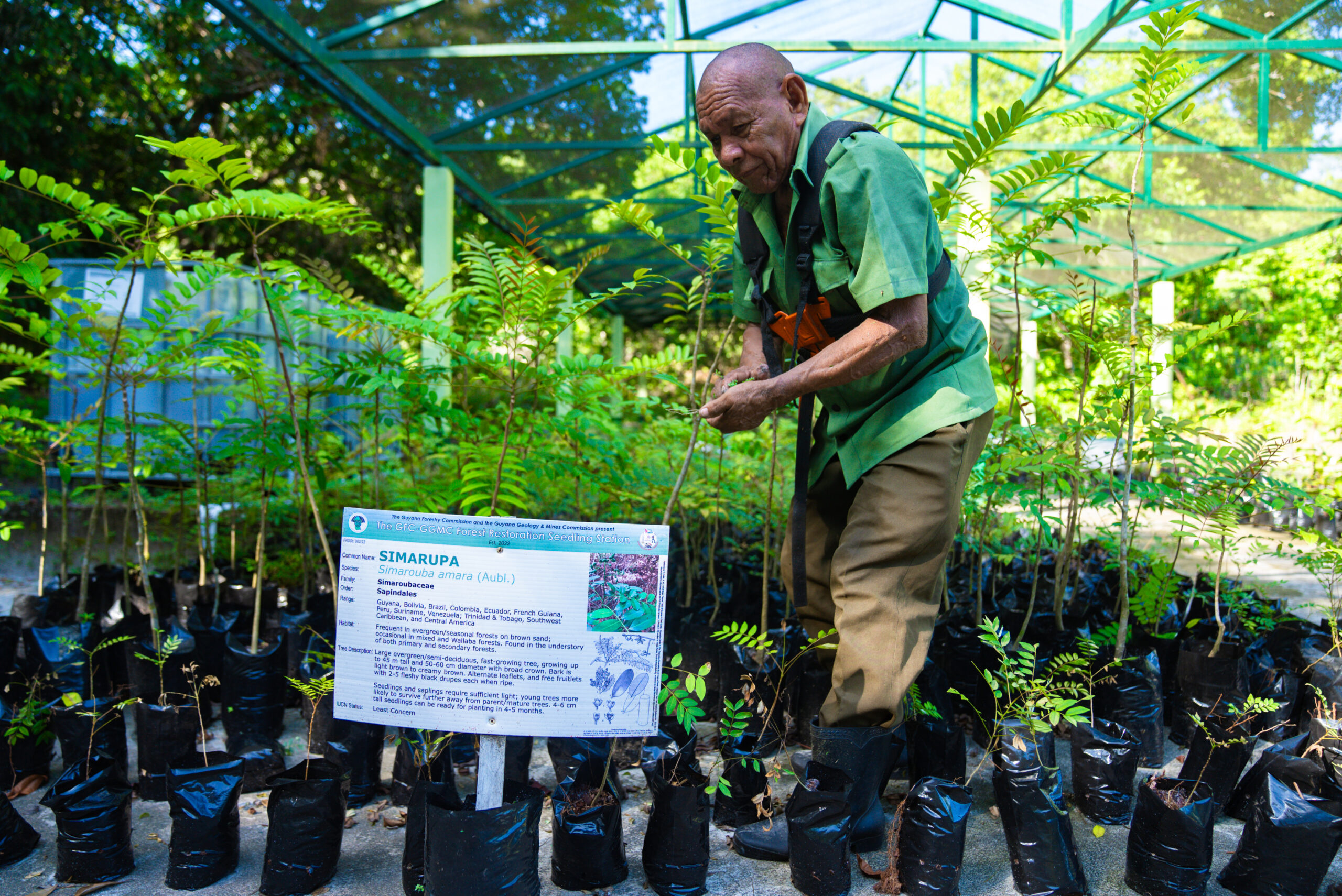
But this time around, the acacia trees are not being used; the area in Dakoura will be planted using native and pioneer species such as Simarupa, Tauroniro, Kaditiri, Bloodwood and Awati.
The seedlings are being grown in a nursery set up by the GFC and once hardened, they will be planted at Dakoura. The seedlings are harvested from the forest surrounding Dakoura.
Somandaugh says these species are ideal for harsh conditions, such as those posed by Guyana’s hilly sand and clay belt where Dakoura is.
|Video shows the damage caused by mining, the main driver of deforestation, along a river in Region Eight. (Video: News Room)
“Pioneer species have a few characteristics – they can occur in harsh environments, they can survive on little nutrition, and they are very good at remediation, reclaiming land,” Somandaugh asserts.
But importantly, she says these species are of high timber value and it is the intention that the reforested area could later be allocated for community forestry operations.
The Forestry Commission’s sustainable management guidelines do not allow clear-cutting but selective logging, so any allocations to the restored areas will prevent the clearing of the land.
Rawle Lewis, Deputy Commissioner for the Forestry Resource Management Division of the Forestry Commission says apart from Dakoura, restoration activities are slated for deforested areas in Matthews Ridge at the top of Guyana and at Bartica, almost at the centre of the country.
“It is a very expensive procedure; it’s not a cheap exercise,” Lewis asserts, but he says the value to Guyana and the world in restoring the forest is critical.
“These were initially naturally forested areas,” he notes, pointing out the important roles forests play in sequestering or trapping harmful greenhouse gases, such as carbon dioxide, from the atmosphere. The presence of these gases is what scientists attribute to changes in the climate, leading to severe weather events such as wildfires and catastrophic floods.
Guyana’s forest is meticulously managed to ensure as limited deforestation as possible.
At the Forestry Commission, Lashanna Lilly manages a centralized database and helps determine for the Commission which areas can be allocated as a forestry concession. And, once the allocations are made, the department also ensures that the owners comply with the coordinates of their concessions.
Currently, there are 548 small concessions (everything below 20,000 acres) and 18 large concessions.
Lilly says all concessions, large and small, are concentrated above the fourth parallel (the most narrow part of Guyana) or an area around the village of Apoteri in Region Nine going upwards. What falls below that is virgin rainforest.
Map shows Guyana’s land classes (Source: Guyana REDD+ Monitoring Reporting & Verification System Report for 2022)
The country’s combined rainforest, documents presented by the Government of Guyana to the United Nations climate change body, is said to store 19.5 gigatons of carbon. The country has studiously avoided cutting down the forests to prevent the carbon from being released into the atmosphere and exacerbate climate change.
However, the country argues it must find alternative sources of revenue to develop and has set about trading the carbon.
Its first forest-saving deal was with Norway for US$250 million and last December, American Oil Company, Hess Corporation bought into a carbon credits deal that will see it buying 37.5 million REDD+ jurisdictional carbon credits, giving the government US$750 million – 15 per cent of which it has pledged to indigenous communities. REDD+ is the United Nations’ mechanism to prevent the destruction of the world’s rainforests because of the important role it plays in mitigating climate change.
The initiative to once more grow trees in deforested areas and the carbon credits scheme fits into Guyana’s Low Carbon Development Strategy (LCDS), which is essentially Guyana’s plan to keep the forest standing while pursuing ventures that would bring wealth to citizens.
“We understand the importance of our forests for life in the global community. We understand the significance of the forests for biodiversity studies and for the advancement of modern medicine and research and development and importantly, we know for a fact the value of that forest knocked down and for the value of the forest standing,” President Irfaan Ali said at the University of Guyana this week during a conversation with former UK Prime Minister Tony Blair.
“I think you’re in a very strong leadership position on this because you’re one of the very, very few countries in the world that actually prefer to preserve their rainforests,” Blair said.
Within the next two to three years, the mined-out area in Dakoura should be green again.

WOMEN’S CPL 2023: Devine’s brilliant 103* not enough to stop Royals
Barbados Royals kicked off the 2023 Massy Women’s Caribbean Premier League (WCPL) with a thrilling final over chase at Kensington Oval, Barbados.
After winning the toss and opting to bat, the Amazon Warriors produced a record-breaking innings on their route to 166/2 from their 20 overs.
Sophie Devine became the second New Zealander in as many days to hit a CPL century, following on from Martin Guptill’s knock with 103 not out from 64 balls, bringing up the landmark score on the final delivery of the innings with a six over long-off.
Facing a difficult task, the Royals appeared to lack power until Laura Harris took the 15th over for 24 to put the game in the balance. With 43 still required from five overs, Erin Burns and Chinelle Henry saw the hosts home with two balls to spare.
With Devine leading the way a day before her 35th birthday, the Warriors kept wickets in hand throughout their innings while maintaining a strong run rate as they ended an explosive PowerPlay 50/0.
Royals captain Hayley Matthews used 12 overs of spin consecutively in the innings in attempt to slow the visitors through the middle overs, before the Amazon Warriors blasted 62 from the final five overs to break the WCPL record for highest total.
Amanda-Jade Wellington should have had Devine out for 41 in the ninth over when a false shot brought a straightforward chance for Afy Fletcher at short cover which was dropped, while the score was still wicketless.
The Royals were facing an uphill battle chasing 167 in the early stages; Matthews’ dismissal for 23 was a setback after a steady powerplay at a-run-a-ball. Gaby Lewis played a superb 360-degree knock which brought hope for the Royals which was backed up by Harris’ spectacular 30 from just 12 balls.
Shabnim Ismail produced a brilliant 19th over, conceding just three runs but with just nine runs to win from the final over, Suzie Bates couldn’t stop an in-form Erin Burns from closing out the chase
Barbados Royals are in action again on Saturday as they face defending champions Trinbago Knight Riders. (CPLT20)

La pupille serait un indicateur de l’effet de l’activité physique sur le cerveau
 Une étude de chercheurs japonais a montré qu’une activité physique, même légère, a des effets positifs sur les fonctions exécutives, la taille de la pupille servant de marqueur.Une étude de chercheurs japonais a montré qu’une activité physique, même légère, a des effets positifs sur les fonctions exécutives, la taille de la pupille servant de marqueur.
L’article La pupille serait un indicateur de l’effet de l’activité physique sur le cerveau est apparu en premier sur Radio Télévision Caraïbes.
Jwe Kounya — 100% Gratis → Televizyon LakayJwe Jwèt Gratis!Quiz, Solitaire ak Mo Kaché
Jwèt Ayiti & Karayib — 100% gratis!English · Français · Kreyòl

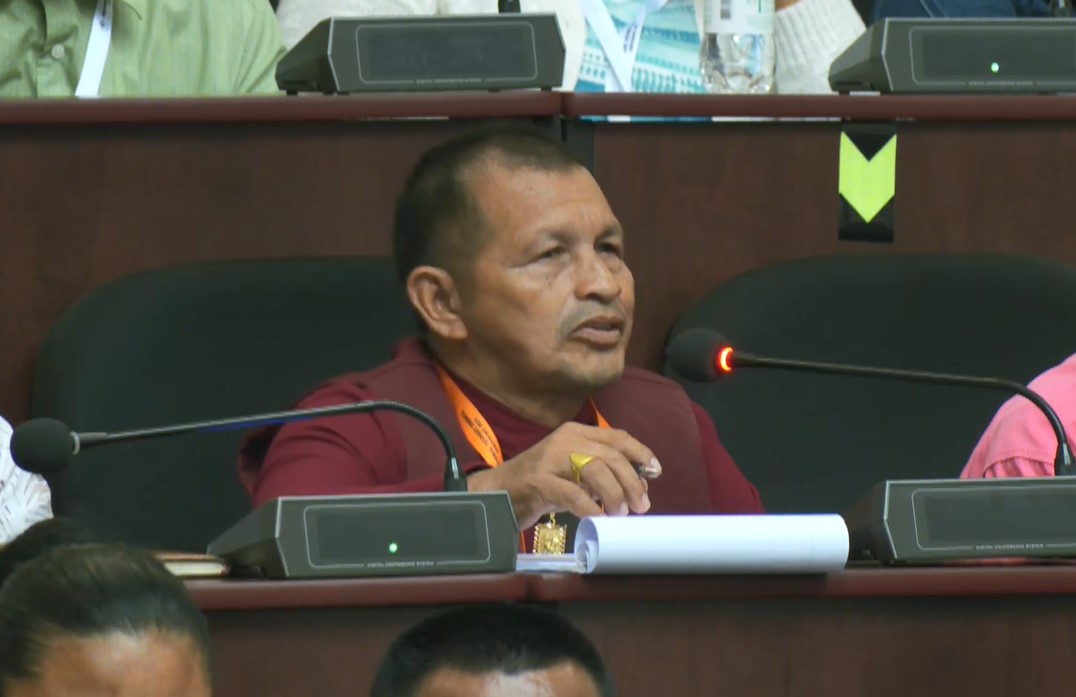 Oswald Brescenio, the Deputy Toshao for Santa Cruz, in Region One at the National Toshaos Conference (Photo: News Room/ August 31, 2023)
 medal-winning athletes who represented the country at the Youth Commonwealth Games in Trinidad.

 The wooden boat was damaged as a result of the impact of the collision. (Photo: GPF/August 31,2023)


</p>
<p>” data-medium-file=”https://newsroom.gy/wp-content/uploads/2023/08/Map-190×300.jpg” data-large-file=”https://newsroom.gy/wp-content/uploads/2023/08/Map-648×1024.jpg” class=”wp-image-168405 ” src=”https://newsroom.gy/wp-content/uploads/2023/08/Map-648×1024.jpg” alt=”” width=”512″ height=”809″ srcset=”https://newsroom.gy/wp-content/uploads/2023/08/Map-648×1024.jpg 648w, https://newsroom.gy/wp-content/uploads/2023/08/Map-190×300.jpg 190w, https://newsroom.gy/wp-content/uploads/2023/08/Map-768×1213.jpg 768w, https://newsroom.gy/wp-content/uploads/2023/08/Map.jpg 864w” sizes=”(max-width: 512px) 100vw, 512px”><figcaption class=) Map shows Guyana’s land classes (Source: Guyana REDD+ Monitoring Reporting & Verification System Report for 2022)
Map shows Guyana’s land classes (Source: Guyana REDD+ Monitoring Reporting & Verification System Report for 2022) Barbados Royals kicked off the 2023 Massy Women’s Caribbean Premier League (WCPL) with a thrilling final over chase at Kensington Oval, Barbados.