The government has awarded a US$184 million contract for the new four-lane highway which will stretch from Sheriff Street in the city to Mahaica, East Coast Demerara. It is expected to be completed in two and a half years.
The contract has been awarded to China Railway First Group Limited, the Chinese construction firm that worked on the four-lane expansion of the East Coast Demerara public road, which straddles the Atlantic ocean.
Indigenous communities across Guyana—more than 200—should receive 15% of the money Guyana makes from selling its carbon credits.
And Toshaos, who are Indigenous leaders, seem intent on using the funds allocated to their communities to implement much-needed plans and programmes.
Karrau, a riverside community in Region Seven (Cuyuni-Mazaruni), needs income-generating ventures to help boost people’s livelihoods. A huge chunk of its GY$24 million (about US$114,000) will be used to expand logging and sawmilling.
“Logging is a major area for us.
“Most persons do logging but we want to convert the logs to lumber,” Karrau’s Toshao Shane Cornelius said, adding that logging is one of the community’s main economic activities.
Karrau has a population of over 500 people. Cornelius estimates that about 20 households are involved in logging. Sawmilling, however, would help the villagers earn more.
“With the sawmilling, the Village Council will be doing it as a business and we intend to buy logs from loggers hence maintaining the circular flow of income,” Toshao Cornelius explained.
The trees that will be used to help Karrau earn more are among Guyana’s forest resources, helping it earn these carbon credits in the first place.
Indigenous communities are regarded as the custodians of Guyana’s vast, intact forests. Many of these communities are found in forested areas and help authorities monitor activities, be it logging or mining, that impact the forests.
Deforestation in the country, over the past decade, has ranged between 0.02% to 0.06%; it is among the lowest rates in the world. And Karrau believes it will be able to continue aiding the sustainable management of Guyana’s forests even as it intensifies logging and sawmilling.
Toshao Cornelius believes the direct allocation of funds from the carbon credits deal is one that helps to reward Indigenous communities for their environmental stewardship.
“As Indigenous peoples, I think we are being rewarded for our stewardship.
“I await other companies to buy the remaining carbon credits so that we can continue bridging the gap that exists between the coast and the hinterland,” the Toshao said.
Guyana’s first and only carbon credit deal so far, brokered after the country got special carbon credits issued to it last December, was executed with Hess Corporation, a US oil giant and one of the companies searching for and producing petroleum in the country’s nascent oil and gas sector.
A carbon credit, generally, is a kind of tradable permit or certificate that represents the removal of a certain amount of carbon dioxide from the environment. Since carbon dioxide is the principal greenhouse gas that harms the environment, it is tracked and traded like any other commodity.
Hess, an oil company, hopes these credits will help improve, or at least offset, its environmental actions. The oil industry is notorious for emitting harmful greenhouse gases.
By the end of 2030, Guyana should amass at least US$750 million from the deal inked with Hess. Of that sum, Indigenous communities, altogether, should receive at least US$112 million—that is, their 15% direct cut as stipulated by Guyana’s Low Carbon Development Strategy (LCDS).
Concerns about the carbon credit venture were, however, raised by at least one Indigenous rights organisation.
The Amerindian Peoples Association (APA), in a statement issued last December after the Hess deal was announced, questioned how the authorities arrived at the 15% revenue allocation figure, contending that there were not adequate consultations on this.
Guyana’s authorities maintained that enough consultations were done when the government was updating the LCDS, and earlier this year, Guyana received the first tranche of payments from Hess.
The process of disbursing funds to Indigenous communities then got underway.
But before the communities got the money, they were required to open a new bank account for their funds to be deposited into. Additionally, they had to create Village Development Plans that outline how the money will be spent. Ideally, those plans were created after in-village consultations.
Toshao Cornelius, for example, said Karrau’s projects were identified by villagers and included in the community’s development plan. The community also plans to purchase a boat and engine to help transport children and other residents, as well as a generator for electricity.
Communities elsewhere are pursuing similar initiatives.
In the South Pakaraima area of Region Nine (Upper Takutu- Upper Essequibo), the Karasabai sub-district is set to receive GY$35.8 million (roughly US$170,000).
Regional Councillor for the subdistrict, Vania Albert, highlighted some plans several communities in the subdistrict have.
Rukumuta, for example, will upgrade the Corona Falls trail in an attempt to attract tourists there. Other infrastructural works, such as constructing community bridges, building a fuel depot, and expanding the village shop, will help the village cater to tourists.
Tigerpond, Albert shared, hopes to expand agriculture; a banana farm is in the works. Other projects in this community include purchasing sewing machines for the local women’s group and reforesting water cedar plants.
The community of Pai Pang hopes to invest in equipment that will help villagers process cassava grown there; the community will also spend on maintaining internal roads and purchasing solar-powered street lights.
Among the plans for Kokshebai, according to Albert, is to purchase pigs, sheep, and chickens so that the community can get into animal rearing on a larger scale. With these plans, Kokshebai will also invest in fencing the animal-rearing and farming areas.
And the story repeats itself in other communities. Toshaos, the Village councils, and the residents themselves are exploring how they can earn more while upgrading their communities’ environment.
Guyana’s Vice President, hours before announcing how the first tranche of funds would be divided among the indigenous communities, said the government hoped the communities would spend their allocations, at least in part, on income-generating ventures.
He, however, noted that the government did not want to dictate how the funds would be spent. Instead, he said community consultations were needed.
The Toshao of Bethany in Region Two (Pomeroon- Supenaam), Sonia Latchman, explained that the residents in her village identified six areas they wanted to focus on: health, education, nature and the environment, governance, livelihood development, and culture and tradition.
“Having come up with those projects, the village decided to look at the priority projects.
“These projects were passed by a village general meeting,” she said.
Bethany, like Karrau, got GY$24 million. Toshao Latchman said the community wants to boost poultry production, so it is investing in birds and developing the pens and stations needed. Bethany will also invest in a tractor to aid in ongoing farming and logging.
At a recent press conference, Vice President Jagdeo confirmed that the funds designated for Indigenous communities have been deposited into “over 240” bank accounts.
“Some have already started to draw down; I am aware that we are making progress in this regard,” he said.
This story was published with the support of the Caribbean Climate Justice Journalism Fellowship, which is a joint venture of Climate Tracker and Open Society Foundations.
England came close to wasting a superb fightback with some brainless batting late on the second day of the second Ashes Test against Australia at Lord’s.
The home side had done much to reverse the damage of a poor opening day, bowling Australia out for 416 and reaching 188-1 in response.
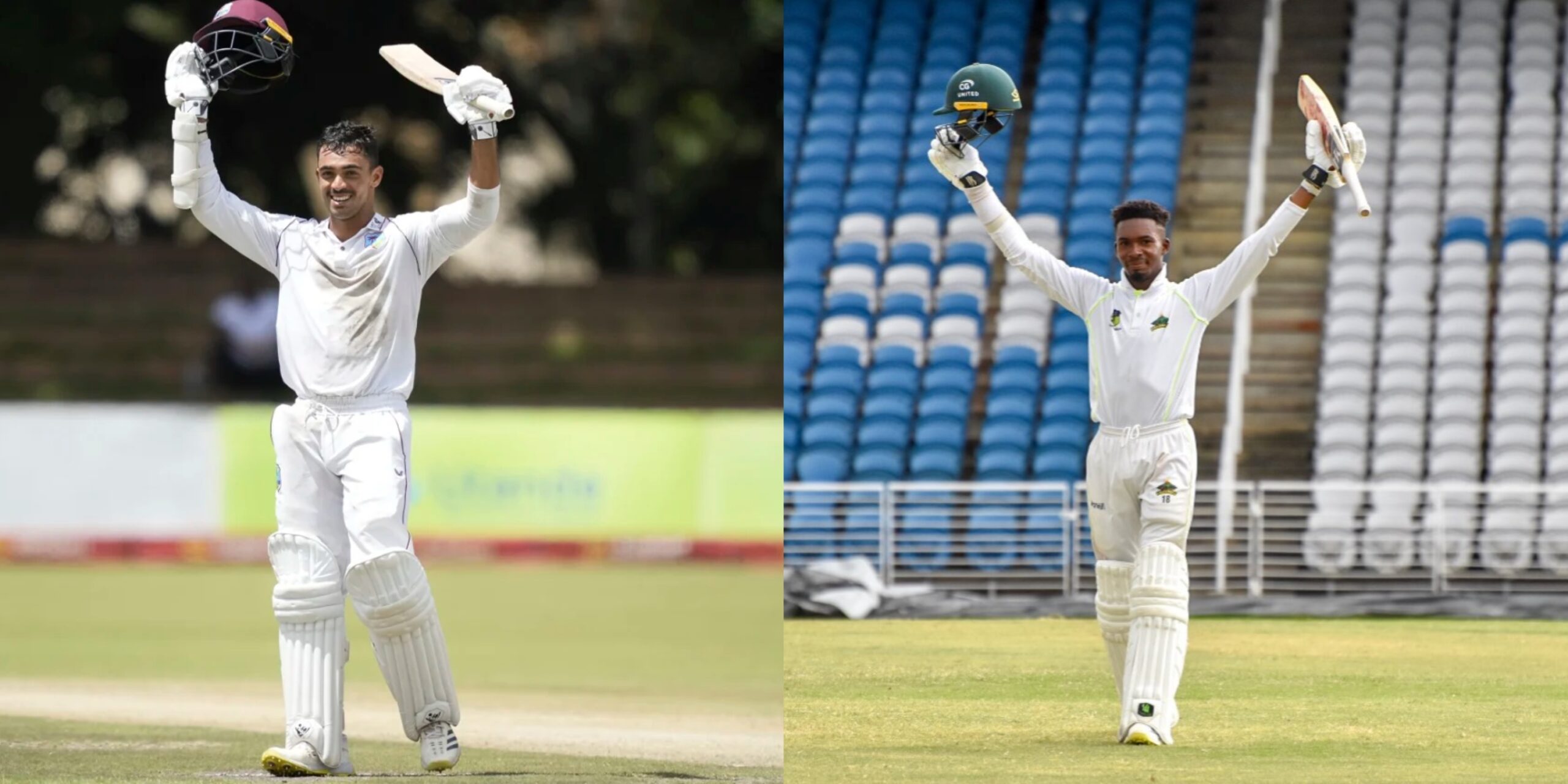
But Ollie Pope, Ben Duckett and Joe Root all gifted their wickets to Australia’s telegraphed short-ball plan, Duckett falling for 98 and missing out on a maiden Ashes hundred.
The three wickets fell for 34 runs before Harry Brook, who had several near misses in his 45, and captain Ben Stokes, with a calm 17 from 57 balls, took England to 278-4, 138 behind.
Steve Smith earlier completed his 32nd Test hundred before being dismissed for 110 by Josh Tongue.
That was part of an Australia collapse of five wickets for 65 runs on Thursday morning, with Tongue and Ollie Robinson finishing with three wickets apiece. (BBC)
The 2023 Haitian Labor Day Festival is scheduled to take place on Sunday, September 3, 2023. The event will take place at the Coney Island Amphitheater located at 3052 W 21st Street in Brooklyn, NY 11224. The festival is being presented by Venus International Productions. Doors are scheduled to open as early as 3:00 P.M. Performance […]
Haiti National Football Team Roster 2023 List of professional men’s Haitian soccer players that will be eligible to compete in the 2023 Concacaf Gold Cup. List includes football player names, positions, current team & birth year.
Les acteurs politiques haïtiens sont dans l’attente d’un second round de négociations sous la houlette des personalités de la Caricom. Les trois anciens Premiers Ministres caraibéens réaliseront la seconde partie de la médiation entre les acteurs politiques haïtiens à Port-au-Prince.
Aucune date n’a encore été fixée mais le chef de file de l’UNIR, M. Clarens Renois, estime que les discussions pourraient débuter à la mi juillet.
Les acteurs devront épiloguer essentiellement sur le bicephalisme qui représente le noeud gordien de la crise.
M. Renois espère que les acteurs politiques feront preuve de flexibilité afin de trouver une solution durable. À son avis un grand nombre de partis et d’organisations politiques sont favorable au bicephalisme, seule option pour garantir des élections transparentes, justes honette et crédibles. Les partis réclament une présidence collégiale afin de garantir un équilibre à la tête de l’exécutif et ne prônent pas pour autant un chambardement général. Ils ne recommandent pas une transition dans la transition et envisagent le maintien du Premier Ministre Ariel Henry a son poste.
Le chef de file de l’UNIR assure que la réunion de Kingston a été un bel exercice en raison de la présence d’une majorité d’acteurs de premier plan.
Une régulation des médias sur les réseaux sociaux peut être envisagée pour faire face aux dérives dans ce secteur. Le nouveau président de l’Association Nationale des Médias Haïtiens (ANMH), M. Robert Denis, entend faire de ce dossier épineux l’une des priorités de son mandat.
Il a mis la question sur la table et sollicite des réactions des autres acteurs. M. Denis est alarmé par les flots d’informations véhiculées sur les réseaux sociaux. Dans la quasi totalité des cas les règles de la profession sont bafoués.
Il invite ses collègues à oeuvrer en vue de gagner la confiance de leur auditeurs, téléspectateurs et lecteurs. Les différents métiers de la communication sont menacés et résistent difficilement aux assauts des réseaux sociaux, s’est plaint le directeur général de Canal Bleu faisant valoir que les journalistes ne sont plus ecoutés avec la même ferveur.
Ayant dressé le triste constat de la situation, M. Denis exhorte ses collègues à élaborer une stratégie pour reconquérir leurs audiences. À son avis les médias classiques ou traditionnels doivent se concentrer autour d’un projet commun. Ceci sera bénéfique puisqu’il permettra de gagner dans le même temps la confiance des commanditaires.


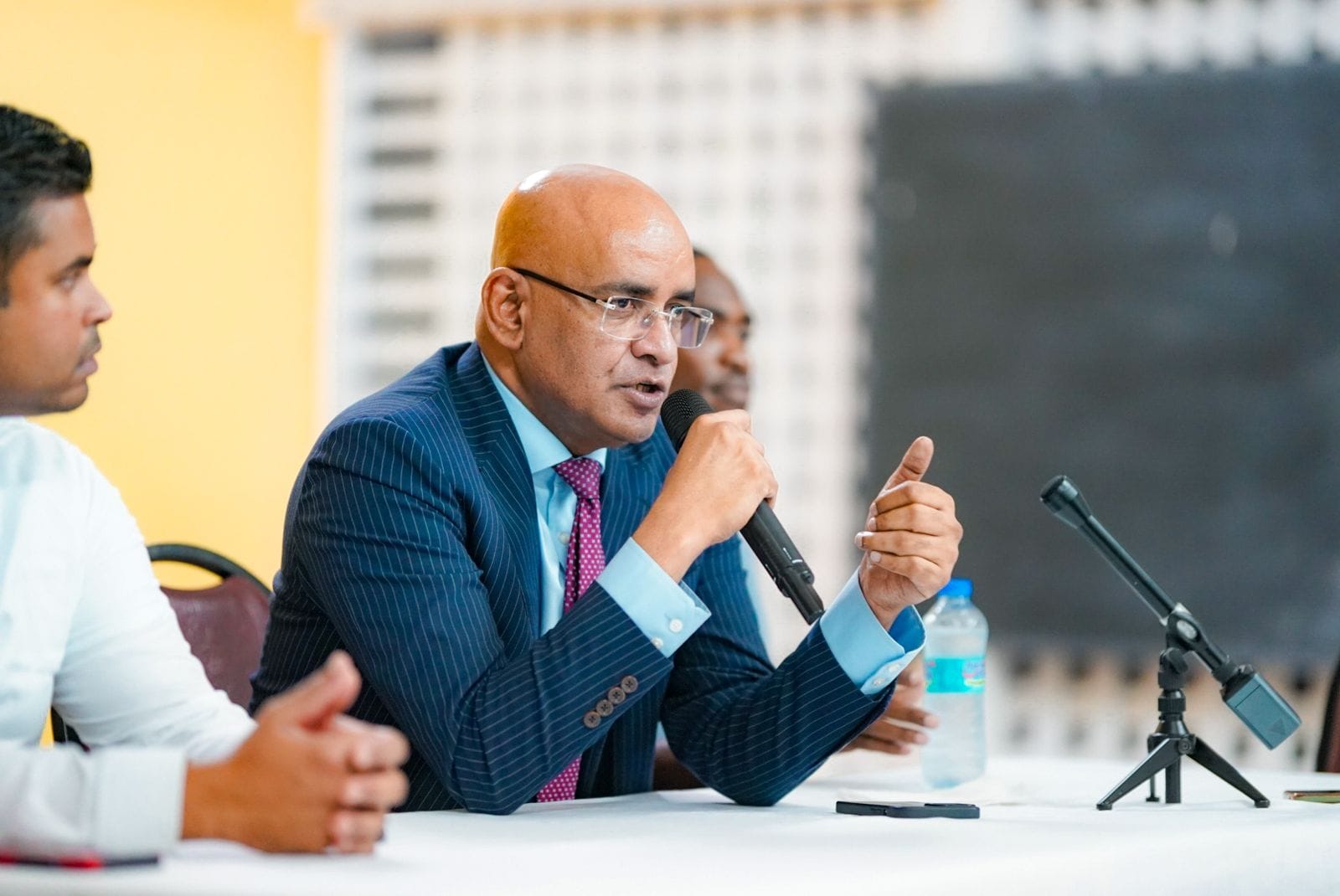 Vice President, Dr Bharrat Jagdeo met and engaged directly with residents and vendors of the community of Plaisance (Photo: Facebook/June 28, 2023)



 Vishani@newsroom.gy
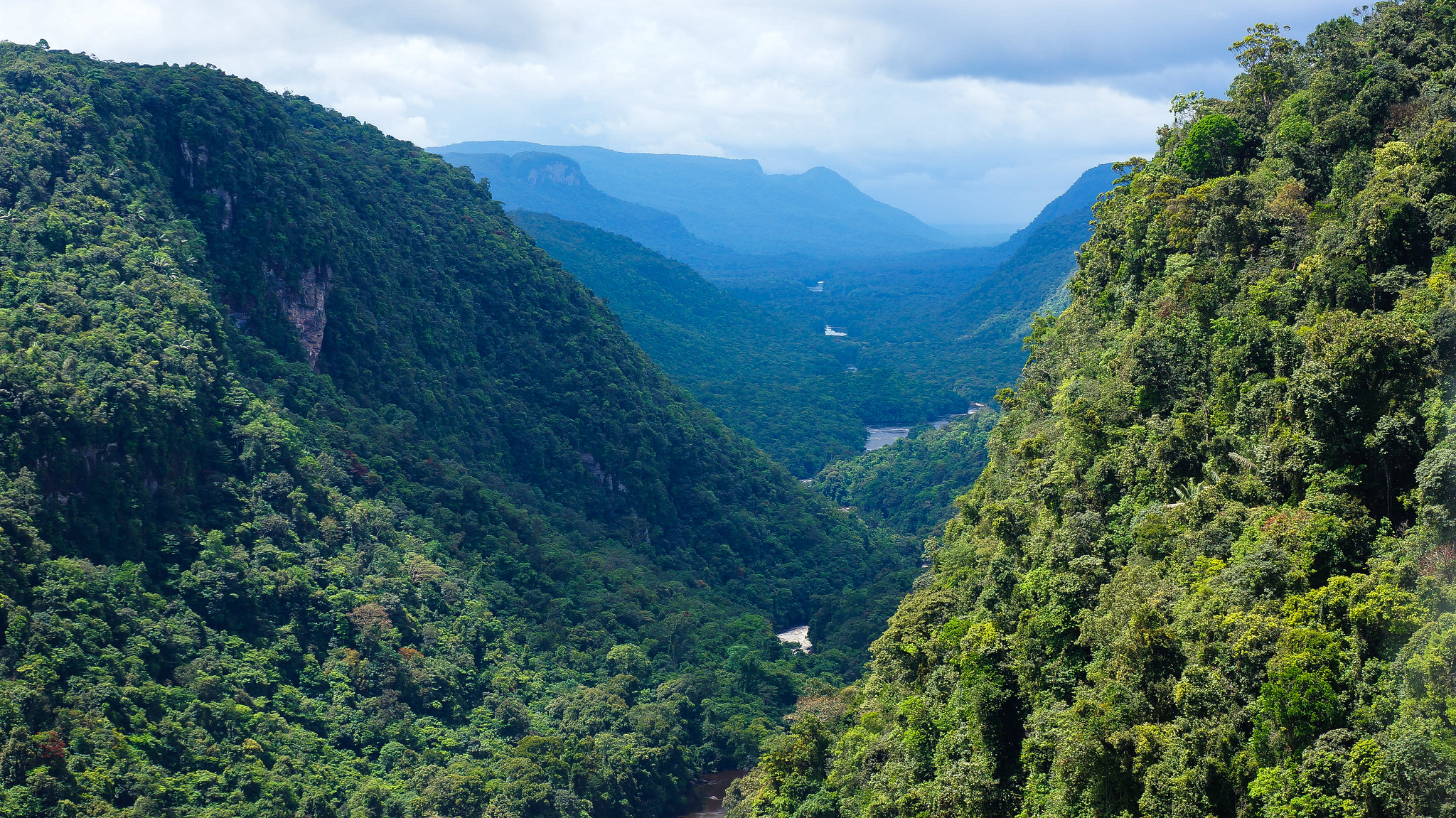 View of the rainforest from Guyana’s Kaieteur Falls (Photo by Dallas Reeves on Flickr)
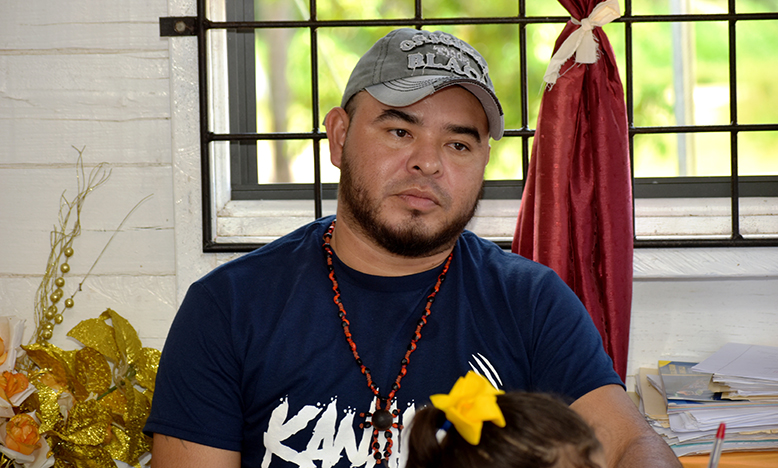 Toshao of Karrau, Shane Cornelius (Photo: Guyana Chronicle)
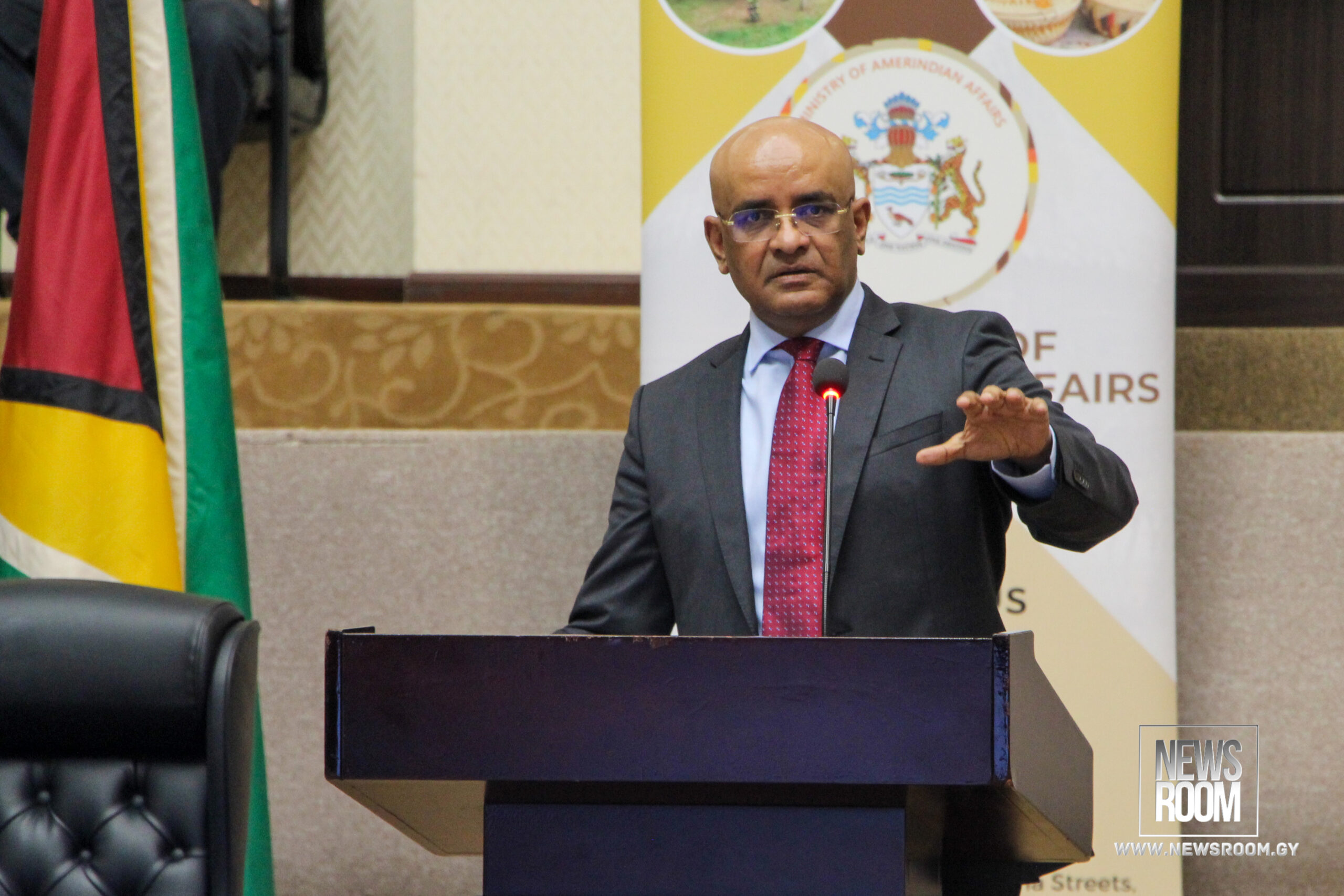 Dr. Bharrat Jagdeo engaging over 200 Toshaos at the Arthur Chung Conference Centre at Liliendaal, Georgetown (Photo: News Room/ February 15, 2023)
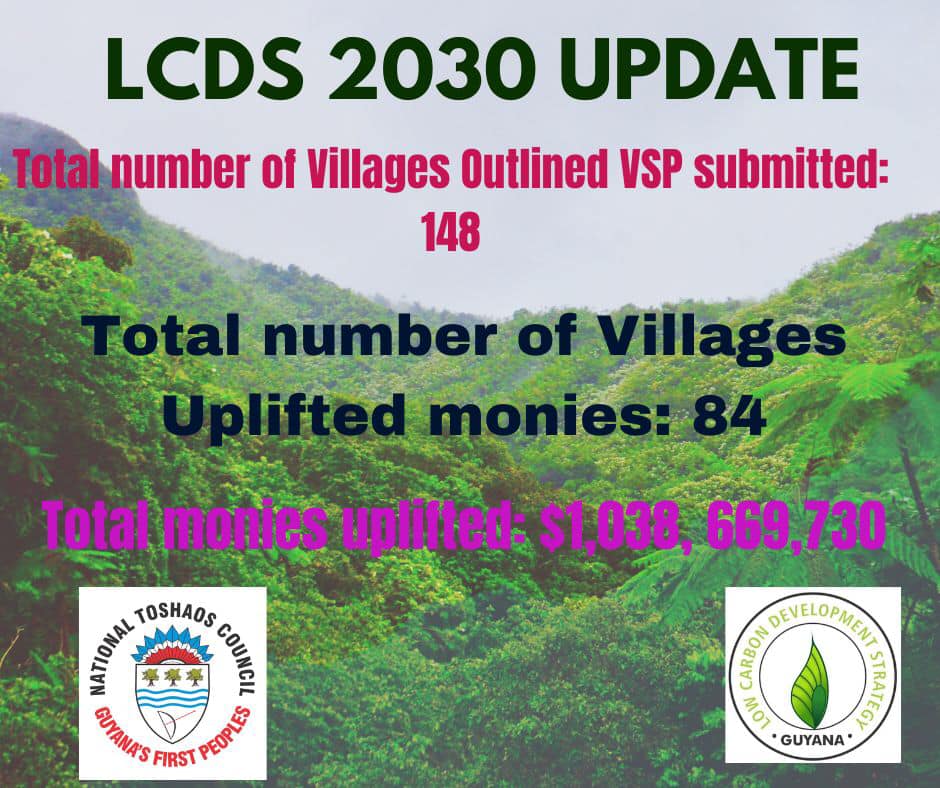 On June 24, 2023, the National Toshaos Council (NTC) provided this update on the disbursement of payments to Indigenous communities. Based on information obtained by the News Room, a total of 242 Indigenous communities will receive varying allocations out of a GY$4.7 billion sum following the payment of the first tranche of payments from Hess