Blog

  • ‘No rushing the process’ – Jagdeo says gov’t to finalise new Petroleum law, model contracts by July

    ‘No rushing the process’ – Jagdeo says gov’t to finalise new Petroleum law, model contracts by July

    vishani@newsroom.gy

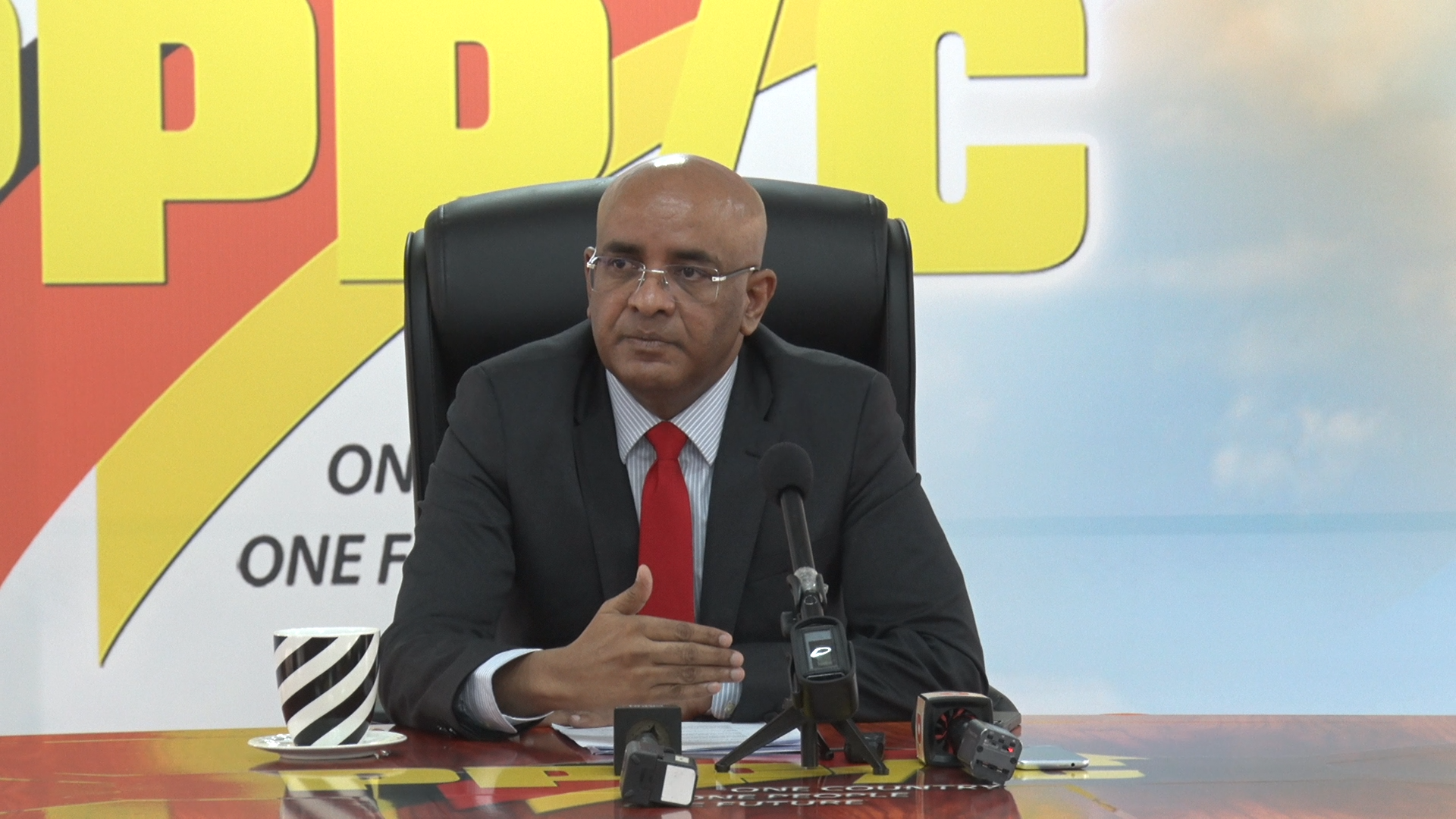
    The government promised Guyana’s regulatory framework for the nascent oil and gas sector will be up to par and on Thursday, Vice President Dr. Bharrat Jagdeo said an overhaul of the 1986 Petroleum Act and updated model oil contracts should be finalised by July.

    By that time, the government hopes it will auction off 14 unused oil blocks offshore Guyana.

    “The outer time limit for legislation and the PSA [Production Sharing Agreements (PSAs), commonly called oil contracts] is mid-July.

    “We are not going to rush the process but that is the outer timeline,” the Vice President said at a press conference hosted at the Arthur Chung Conference Centre at Liliendaal, Georgetown, on Thursday.

    Last year, government officials said it would overhaul the Petroleum Act so that it can be more applicable to the modern oil and gas environment. More recently, Jagdeo said issues with that outdated law have been identified and a new draft will be in the public domain for consultations soon.

    On Wednesday, the government extended the auction of oil for 11 shallow blocks and three deep water blocks. Jagdeo added that this extension will see the blocks being awarded about a month and a half after the auction.

    Before that, the government released new model oil contracts and opened a 14-day consultation period for persons to submit their comments on those documents that are expected to be used when the new blocks are awarded.

    These efforts are underway because the government wants Guyana to benefit more from its petroleum sector, Jagdeo said.

    “We want to ensure that we get more benefits from Guyana from the fiscal side, (we want) more business flowing from Guyanese companies and individuals that’s through the Local Content Law and (we want) a PSA that can properly regulate the sector from a safety perspective and an environmental perspective,” the Vice President told reporters.

    NO CHANGES TO BIDDING CONDITIONS

    He, however, noted that changes to the criteria for companies seeking to bid for Guyana’s oil blocks are not likely.

    The News Room understands that some foreign companies interested in participating in Guyana’s auction have engaged the government on its technical criteria provided for bidding for the deep water blocks.

    Specific concerns have been raised about the criterion of producing at least 200,000 barrels of oil per day in deep water projects elsewhere.

    Asked about any concerns raised, Jagdeo said the government is not likely to change any conditions before the auction.

    This is so because the government has already made some provisions to allow more investors, including local investors, to participate in the auction, once they can foot the financial conditions.

    Jagdeo pointed out that in the qualification criteria for shallow water blocks, non-operators do not need experience in exploration and production.

    According to an information document provided by the Ministry of Natural Resources, non-operators need not demonstrate technical competence but must satisfy key financial criteria.

    The financial conditions ask for audited financial statements of the last five years, must have a debt to equity percentage less than or equal to 50 per cent, must have a current ratio greater than or equal to one, must have an interest cover greater than or equal to two and finally, non-operators must show investments in offshore blocks over the last five years of at least US$10 million.

    The only condition the government may be open to changing is its limit on the award of three blocks per investor. That could be changed, post-bidding, if there is only one investor bidding in a larger number of blocks, Jagdeo said.

  • Les raketteurs imposent leur loi à l’état

    Les raketteurs imposent leur loi à l’état

    Les raketteurs ont provoqué une paralysie des activités à l’annexe du bureau de l’immigration à Pétion ville. Les raketteurs qui réalisent des gains énormes, grâce aux attroupements des demandeurs de passeports, protestent contre l’utilisation d’une plateforme numérique pour faciliter l’accès au service.
    Les activités sont paralysées depuis deux jours par les raketteurs qui refusent de perdre leur revenu.
    Ils ont lancé des tessons de bouteilles et installé des barricades de pneus enflammés devant le Parc Sainte Thérèse, qui héberge le bureau en raison de l’affluence des demandeurs de passeports.
    Les raketteurs veulent s’opposer a l’Etat qui a mis en place la plateforme Delidoc pour les rendez-vous des contribuables.

    En perturbant le fonctionnement du service les raketteurs affichent leur détermination à assouvir leur soif de gain sordide au détriment des intérêts de la population. Des contribuables expliquent que des agents de sécurité, des fonctionnaires du service d’immigration et des policiers sont en première ligne des raketteurs qui ont multiplié leur revenu de manière exponentielle entre janvier et avril 2023.

    LLM / radio Métropole Haïti

    The post Les raketteurs imposent leur loi à l’état appeared first on METROPOLE.

  • Les haïtiens de Floride confrontés aux inondations

    Les haïtiens de Floride confrontés aux inondations

    La communauté haïtienne de Floride est confrontée aux intempéries de ces dernières 48 heures.
    Le sud de la Floride, qui accueille la plus forte communauté de la diaspora, est frappé par des inondations en raison des récentes averses.

    De milliers d’Américains d’origine haïtienne et des ressortissants haïtiens sont concernés par ces inondations.
    Nombre d’entre eux n’ont pu se rendre au travail en raison de l’impraticabilité des routes.

    Les comptés de Miami Dade et de Broward sont les plus touchés par les averses. Les habitants de Miami, Fort Lauderdale, Hollywood et Kendal notamment sont les plus touchés.

    Dans certains quartiers l’eau arrivait aux genoux, constate un correspondant de presse.
    Les prévisions météorologiques annoncent la persistance des intempéries jusqu’au week end.

    LLM / radio Métropole Haïti

    The post Les haïtiens de Floride confrontés aux inondations appeared first on METROPOLE.

  • 8 Benefits of Ackee You May Not Know

    8 Benefits of Ackee You May Not Know

    Ackee is a contradictory food. When the unripe fruit is ingested, its toxic and can be fatal. Conversely, the fully ripened fruit can be consumed after being cooked. The national fruit of Jamaica is typically treated more like a vegetable in recipes. The National Institutes of Health in the U.S. confirms that ackee has a wealth of health-related benefits.

    Read how ackee made this Jamaican chef famous

    1. Antiaging
    Ackee is rich in vitamins A and C that are powerful antioxidants. They help the body mitigate the effects of free radicals that damage DNA and result in the signs of aging. The vitamins support wound healing and immune system function.

    2. Calcium
    Required for strong bones, calcium also has an impact on blood clotting, the release of hormones, and properly functioning neurotransmitters.

    3. Cells, Muscles, Nerves
    The fruit contains potassium, a trace mineral the body uses to maintain the appropriate fluid level in cells. It’s needed for muscles and nerves to function properly.

    Ackee Fruit
    4. DNA Creation
    Zinc is a trace mineral available in ackee. It’s an essential element for the creation of DNA and healing tissue damage. It supports the immune system and cell growth.

    5. Energy Conversion
    The body uses vitamin B3 available in ackee to convert food into energy. The vitamin promotes healthy skin and nervous system.

    6.  Gut Function
    A healthy gut provides an effective immune system response. Ackee is high in fiber that promotes regular elimination, aids in reducing constipation, and has the potential to prevent the development of hemorrhoids and inflammation of the colon.

    7. Heart Health
    The fruit contains oleic acid that has a positive effect on reducing “bad” cholesterol in the body that can result in high blood pressure and cardiovascular disease.

    8. Protein
    Protein is processed by the body to make new cells and repair existing cells. It’s critical for muscle growth and development, along with bone density.

    Photo – Deposit Photos

    Photo – Gabre Cameron, Unsplash

    The post 8 Benefits of Ackee You May Not Know appeared first on Jamaicans.com.

  • Two Jamaican authors on Shortlist for Commonwealth Short Story Prize

    Two Jamaican authors on Shortlist for Commonwealth Short Story Prize

    Jamaican authors Demoy Lindo and Kwame McPherson have been shortlisted for the prestigious 2023 Commonwealth Short Story Prize, joining three other writers on the list. The prize is awarded annually to the best unpublished short fiction piece by a writer from one of the 56 member states of the Commonwealth. The winner of the prize will be announced on June 27, 2023.

    Demoy Lindo is under consideration for “Road Trip,” which tells the story of Jermaine, a zoology major who decides to take the chance of a college road trip to reclaim the heart of his girlfriend. Lindo, 21, was born in Portland Cottage and is a student at the University of the West Indies. He was the winner of the Jamaica Young Poet Laureate Prize in 2020 and has been published in journals like PREE Literature and New Voices.

    McPherson attended London Metropolitan University and the University of Westminster. He was awarded the Poetic Soul prize in 2007 and in 2020 became the first Jamaican to receive the Flash Fiction Bursary Award in the Bridport Prize International Creative Writing Competition. McPherson is a prolific contributor to anthologies from Flame Tree Publishing in the United Kingdom, as well as to the anthology “The Heart of a Black Man” to be published in Los Angeles. He is shortlisted for his story “Ocoee,“ which combines African American reality and history with Caribbean folklore.

    Kwame McPherson Commonwealth Short Story Prize

    The other shortlisted stories include “The Ovelias at Benzie Hill Dump” by Alexia Tolas from the Bahamas, “Where The Winds Blow” by Cosmata Lindie of Guyana), and “Teef from Teef” by Deborah Lee Matthews of Trinidad and Tobago.

    The Commonwealth Prize accepts entries in Bengali, Chinese, Creole, French, Greek, Malay, Portuguese, Samoan, Swahili, Tamil, and Turkish, as well as English. The 2023 shortlist was chosen from a total of 6,642 entries from the Commonwealth nations, including first-time entries from Togo and Gabon, the Commonwealth’s newest members. The ten men and 18 women on the shortlist range in age from 20 to 74, and 27 writers are new to the shortlist in 2023.

    Photo – Commonwealth Foundation Creatives

    Photo –  Author Kwame McPherson’s official facebook page

    The post Two Jamaican authors on Shortlist for Commonwealth Short Story Prize appeared first on Jamaicans.com.

  • Trade barriers no longer serve Caribbean countries & hinder food security – says Regional Academic

    Trade barriers no longer serve Caribbean countries & hinder food security – says Regional Academic

    slash the US$6 billion annual food import bill by 25 per cent by 2025 but these efforts are being hindered by longstanding trade barriers that do not serve Caribbean Community (CARICOM) countries well.

    This is according to Dr Kai-Ann Skeete, a Trade Research Fellow at the Shridath Ramphal Centre for International Trade Law, Policy and Services based at the UWI Cave Hill campus in Barbados.

    Dr Skeete spoke at an event in Guyana last week, explaining that trade barriers implemented by individual countries may have previously proven beneficial.

    Now, however, it does not appear as though these barriers serve the interests of Caribbean countries or the Caribbean Community (CARICOM) as a whole.

    “We have these barriers in place as a means of protecting local employment but a lot of these barriers are from 1960’s and 1970’s (and) this should not exist now in 2023.

    “It requires that our politicians go back to the drawing boards, go back to Parliament and amend legislations because we cannot have regional substitution of goods unless we remove those barriers,” Dr Skeete said.

    What CARICOM is hoping to do is cut its expensive food import bill by producing more food regionally. With more food produced, countries hope to intensify trade among each other.

    This plan, that is led by Guyana, would see fewer food imports from traditional places of import like the United States of America (USA) and Europe.

    Currently, however, certain trade restrictions impact this plan.

    “A clear example [is] my own country of Barbados does not allow in sweet potatoes from Grenada; Trinidad and Tobago will not let in any CARICOM honey producing products; Grenada’s restriction as it relates to flour, rice and its quantity restriction for a 12 month period restriction for packages over 10 kilogrammes,” she said.

    There has been some revitalised interest in removing these barriers, with Guyana’s leadership on agriculture and nutrition in CARICOM’s quasi-cabinet.

    Dr. Skeete believes that these efforts will prove beneficial for the region.

    This week Guyana’s President Dr. Irfaan Ali said the countries have to invest at US $7.5 billion to achieve the 25 by 2025 goal.


Televizyon Lakay
Televizyon Lakay
Jwe Jwèt Gratis!
Quiz, Solitaire ak Mo Kaché
Jwèt Ayiti & Karayib — 100% gratis!
Jwe Kounya — 100% Gratis →
English · Français · Kreyòl