Blog
-

Jagdeo says threat against U.S interests in Guyana ‘a serious matter’, pledges govt’s support

Trump hit with criminal charges in New York, a first for a US ex-president
(Reuters) – Donald Trump has been indicted by a Manhattan grand jury after a probe into hush money paid to porn star Stormy Daniels, two sources said on Thursday, becoming the first former U.S. president to face criminal charges even as he makes another run for the White House.
The charges, arising from an investigation led by Democratic Manhattan District Attorney Alvin Bragg, could reshape the 2024 presidential race. Trump previously said he would continue campaigning for the Republican Party’s nomination if charged with a crime.
The specific charges are not yet known and the indictment will likely be announced in the coming days, the New York Times reported. Trump will have to travel to Manhattan for fingerprinting and other processing at that point.
Susan Necheles, a lawyer representing Trump, said she was informed of the indictment but did not know when he would surrender. A law enforcement source, speaking on condition of anonymity, also confirmed the indictment.
Bragg’s office did not immediately respond to requests for comment.
Trump, 76, sought re-election in 2020 but was defeated by Democrat Joe Biden. Trump has falsely claimed he lost to Biden due to widespread voting fraud and has called the investigation that led to his indictment a “political witch hunt.” Bragg’s office last year won the criminal conviction of the businessman-turned-politician’s real estate company.
The Manhattan investigation is one of several legal challenges facing Trump, and the charges could hurt his presidential comeback attempt. Some 44% of Republicans said he should drop out of the race if he is indicted, according to a Reuters/Ipsos poll released last week.
The grand jury convened by Bragg in January began hearing evidence about Trump’s role in the payment to Daniels days before the 2016 presidential election that he ended up winning. Daniels, a well-known adult film actress and director whose real name is Stephanie Clifford, has said she received the money in exchange for keeping silent about a sexual encounter she had with Trump in 2006.
The former president’s personal lawyer Michael Cohen has said Trump directed hush payments to Daniels and to a second woman, former Playboy model Karen McDougal, who also said she had a sexual relationship with him. Trump has denied having affairs with either woman.
Federal prosecutors examined the Daniels payoff in 2018, leading to a prison sentence for Cohen but no charges against Trump.
No former or sitting U.S. president has ever faced criminal charges. Trump also faces two criminal investigations by a special counsel appointed by U.S. Attorney General Merrick Garland and one by a local prosecutor in Georgia.
DIVISIVE FIGURE
Trump, a divisive figure in U.S. politics with support particularly among white blue-collar and conservative Christian voters, served as president from 2017 to 2021, governing as a right-wing populist. He was impeached twice by the House of Representatives, once in 2019 over his conduct regarding Ukraine and again in 2021 over the attack on the U.S. Capitol by his supporters. He was acquitted by the Senate both times.
He leads his early rivals for his party’s nomination, holding the support of 44% of Republicans in a March Reuters/Ipsos poll, compared with 30% support for his nearest rival, Florida Governor Ron DeSantis, who has yet to announce his candidacy. Biden is expected to seek re-election.
Trump on March 18 wrote on social media that he had expected to be arrested on March 21 and urged his supporters to protest to “take our nation back,” reminiscent of his exhortations ahead of the Jan. 6, 2021, attack on the U.S. Capitol.
Several Republicans in Congress accused Bragg of selective prosecution with political motivations. “Outrageous,” House of Representatives Judiciary Committee Chairman Jim Jordan wrote on Twitter.
Trump in 2018 initially disputed knowing anything about the payment to Daniels. He later acknowledged reimbursing Cohen for the payment, which he called a “simple private transaction.”
In 2018, Cohen pleaded guilty to campaign finance law violations for his role in orchestrating the payments to Daniels and McDougal and was sentenced to three years in prison. He testified that Trump directed him to make the payments.
Cohen testified before the Manhattan grand jury investigating Trump on March 13. The grand jury also heard from David Pecker, the former publisher of the National Enquirer. The tabloid publication bought the rights to McDougal’s story about her alleged relationship with Trump for $150,000 but never published it, a method known as “catch and kill” used by some media outlets to bury damaging information about a third party.
Daniels has said she had a sexual encounter with Trump at a Lake Tahoe hotel in 2006 – the year after he married his current wife Melania and more than a decade before the businessman-turned-politician became president.
The U.S. Supreme Court in 2021 rejected her bid to revive a defamation lawsuit she brought against Trump over a Twitter post in which he accused her of a “con job” after she described being threatened over publicizing her account of a sexual relationship with him. Lower courts had thrown out her suit.
In the case that led to the conviction of the Trump Organization on tax fraud charges, Bragg declined to charge Trump himself with financial crimes related to his business practices, prompting two prosecutors who worked on the probe to resign.
Among Trump’s ongoing legal woes are a criminal investigation led by Fani Willis, the Democratic district attorney in Georgia’s Fulton County, into whether he unlawfully tried to overturn his 2020 election defeat in that state.
Special counsel Jack Smith is separately investigating Trump’s handling of classified government documents after leaving office and his efforts to overturn the results of the 2020 election.

Lancement du projet Renforcement de la résilience climatique du secteur de l’eau potable dans le Sud
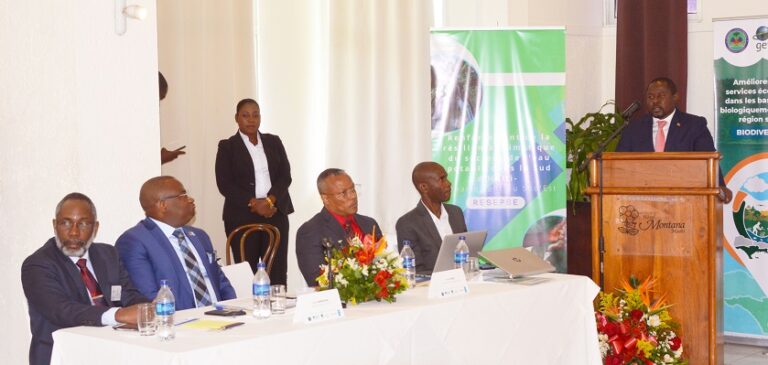
Le Ministère de l’Environnement d’Haïti (MDE), le Programme des Nations Unies pour le développement (PNUD), la Direction Nationale de l’Eau Potable et de l’Assainissement (DINEPA) et la Helvetas Haïti ont lancé officiellement le mardi 28 mars 2023 le projet « Renforcement de la résilience climatique du secteur de l’eau potable dans le sud d’Haiti (RESEPSE) ».
Selon un communiqué, la cérémonie s’est déroulée à l’Hotel 22/22 à Belle-Anse en présence des officiels du Gouvernement haïtien, des autorités locales, des partenaires techniques et financiers de l’Etat haïtien et des représentants d’institutions partenaires du projet.
Financé par le Fond mondial pour l’Environnement (FME) à hauteur de 4.6 millions de dollars américains à travers le Programme des Nations Unies pour le développement ( PNUD), le projet « Renforcement de la résilience climatique du secteur de l’eau potable dans le Sud d’Haiti » sera exécuté par Helvetas Haïti et la DINEPA pour le compte du Ministère de l’Environnement.
L’objectif général de ce projet est de renforcer la résilience des communautés rurales et périurbaines vulnérables du département du Sud-Est face aux impacts prévus du changement climatique sur la disponibilité et l’accès à l’eau potable. Trois objectifs spécifiques sont ciblés par le projet RESEPSE, prévu sur 60 mois. Il s’agit d’avoir (i) une meilleure compréhension et une prise de conscience de la vulnérabilité du secteur de l’eau par rapport au changement climatique ; (ii) de renforcer les cadres réglementaires et politiques, ainsi que les capacités institutionnelles au niveau national, régional et local pour une meilleure gestion de l’eau potable dans un contexte de changement climatique et enfin (iii) d’identifier et de promouvoir des pratiques de conservation, de gestion et d’approvisionnement en eau potable adaptées aux conditions du changement climatique
Visant à garantir l’accès à l’eau potable en faveur des communautés et des ménages cibles, grâce à la mise en œuvre de mesures d’adaptation au changement climatique, le projet RESEPSE sera réalisé dans les zones vulnérables du département du Sud-Est, notamment les bassins versants, les zones de recharge et les points de production d’eau, des systèmes d’alimentation en eau potable (SAEP) de Cresson à Jacmel, de Bodarie à Grand Gosier, de Préchet à Belle-Anse, de la Cascade Pichon à Belle Anse et de K-Royer à Thiotte.
Ce projet s’inscrit dans le cadre global de la décennie de l’eau (2018-2028) et de l’Objectif 6 de l’Agenda 2030 de l’Organisation des Nations Unies. Les données disponibles à date sont sans appel et montrent qu’il est crucial d’agir sur le secteur de l’eau et de l’assainissement en tenant compte des risques climatiques existants.
The post Lancement du projet Renforcement de la résilience climatique du secteur de l’eau potable dans le Sud appeared first on METROPOLE.

L’énergie solaire est salvatrice affirme un spécialiste

Le directeur de l’Anarse, docteur René Jean Jumeau, préconise une approche nouvelle pour résoudre le défi de l’énergie électrique. Il soutient que l’énergie solaire représente la seule planche de salut des haïtiens.
A cet effet un effort concerté entre l’état et les citoyens est indispensable.
Dans le cadre de sa méthode, l’ex ministre plaide pour une réduction des taxes et redevances sur les materiels et équipements solaires. Il s’agit de diminuer la charge financière que les citoyens devront supporter sur plus d’une décenie .De l’avis de M. Jumeau il faudra des efforts sur une dizaine d’années pour remettre en état l’EDH.
Actuellement la compagnie ne peut répondre à la demande de plus de 250 megawatts.
L’EDH ne dispose que d’une cinquantaine de megawatts en raison notamment de la saison sèche qui réduit considérablement la production de la centrale hydroélectrique de Peligre.De plus les contrats d’achat d’énergie des compagnies privées notamment Sogener et Haytrac n’ont pas été renouvelés.
Les deux compagnies fournissaient une trentaine de megawatts à l’EDH.La compagnie publique ne peut elle même produire et transporter l’énergie en raison notamment de la vétusté du réseau et de la faillite financière.
Inauguré en 1971, l’EDH avait la capacité de fournir l’énergie électrique à plus de 500 000 clients.
Cependant l’EDH a cessé de grandir tandis que la clientèle a augmenté de manière exponentielle.LLM /radio Métropole Haïti
The post L’énergie solaire est salvatrice affirme un spécialiste appeared first on METROPOLE.

La Police renforce sa présence dans le Sud

Faisant suite à la rencontre qui s’est déroulée en début de cette semaine, le Directeur Départemental de la Police du Sud, Commissaire Divisionnaire Daniel Compère, et le chef du Parquet juridictionnel, Me Ronald Richemond, ont réalisé une tournée de supervision dans les rues des Cayes, ce mercredi 29 mars 2023.
Accompagné des policiers de tout rang et grade, le Directeur Départemental, Commissaire Divisionnaire Daniel Compère a témoigné la volonté de la PNH de renforcer sa présence dans la région du Sud dans l’objectif d’être de plus en proche de la population, tout en luttant contre tout individu armé qui aurait tendance à troubler l’ordre public.
À noter que lors de cette tournée, le CD Daniel Compère invite la population à rejoindre la PNH dans la bataille contre le grand banditisme sous toutes ses formes, notamment dans le Sud du pays.
The post La Police renforce sa présence dans le Sud appeared first on METROPOLE.

Jamaican Americans among Black Women Attorneys Sworn In to Appear before US Supreme Court
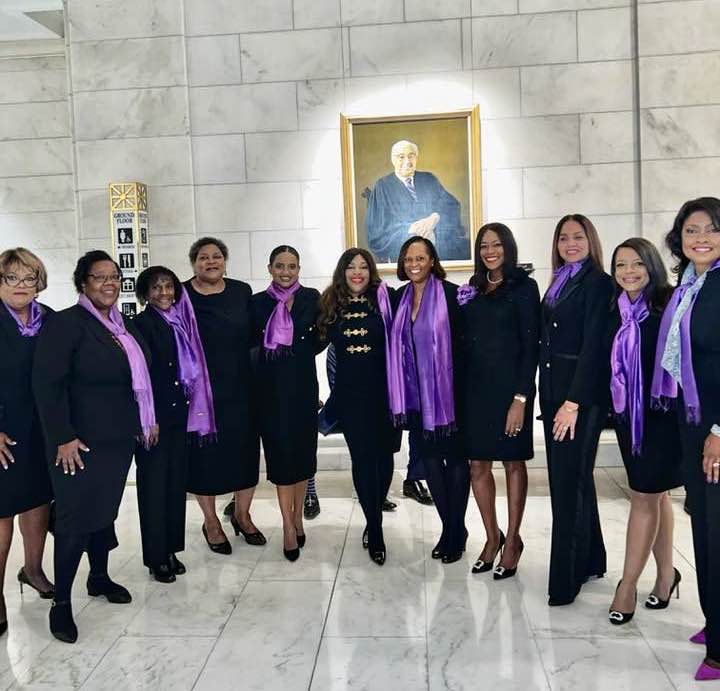
Five Jamaican American women were included in a group of Black women attorneys from Florida who were sworn in at the United States Supreme Court. The swearing-in allows these attorneys to appear before the high court in Washington DC. The Jamaican Americans included Judge Maxine Williams; attorney Alison Smith, Circuit Judge Maxine Cheesman, Judge Maxine Williams, Circuit Judge Cymonie Rowe, and attorney Lisa Quarrie. Supreme Court Justice Ketanji Brown Jackson, the first Black woman to serve on the Supreme Court, attended the swearing-in ceremony.
Following the ceremony, which took place during February, Black History Month, 2023, the attorneys were photographed under the portrait of the late Justice Thurgood Marshall, the first Black individual to sit on the US Supreme Court, and the portrait of Justice Ruth Bader Ginsburg, who was well known for her support and advocacy for women’s equality.
Attorney Alison Smith, who was raised in St. Elizabeth and Manchester in Jamaica, is the first Black woman elected to serve as president of the Broward County Bar Association, an organization that has existed for almost 100 years. Smith explained that the swearing-in followed an extensive application process that began a year earlier and involved considerable paperwork and background checks.
Judge Maxine A.M. Williams was appointed to serve as a general magistrate in Palm Beach County’s 15th judicial circuit in 2006. She earned a BA in English literature at the University of Florida and a law degree from the University’s Fredric G. Levin College of Law. Before joining the Circuit Court, she was an attorney at the Legal Aid Society of Palm Beach County, Inc. Williams’ legal experience includes work as an assistant public defender in the Office of the Public Defender for the 15th judicial circuit. As a general magistrate, she has had assignments in the family, juvenile, and mental health divisions and has also served as an administrative magistrate for the 15th Circuit.
Fifteenth Judicial Circuit Judge Maxine Cheesman was born and raised in Jamaica, moving to Florida with her family after graduating with a BS in chemistry from the University of the West Indies. She earned an MS in organic chemistry at the University of Miami and worked for 15 years as a director and scientist at the South Florida Water Management District. She also worked for 12 years as a chemist and hydrogeologist with Miami-Dade County’s Department of Environmental Resources Management. She earned her law degree from Nova Southeastern University’s Shepard Broad Law Center in 2004. She was a founding partner at the Law Offices of Cheesman and Varner and worked as a sole practitioner at her own firm later on. Her special areas of focus were real property, fair housing, bankruptcy, foreclosure, probate, family, construction, and contract law. As a circuit court judge, she has presided in the Family and Probate divisions.
Circuit Judge Cymonie Rowe, a judge in the 15th judicial circuit in Palm Beach County, was appointed by Governor Rick Scott in 2016. She earned a B.S.C. in broadcast journalism and psychology from the University of Miami and a J.D. from the Shepard Broad Law Center at Nova Southeastern University. Before her appointment to the circuit court, she was a senior trial attorney with Liberty Mutual and practiced as an attorney with the firm of Green, Ackerman, and Frost. She has presided over the Civil Division of the circuit court and was presented with the 2018 Florida Bar Judge of the Year Award from the Florida Bar. She was honored in 2021 as Jurist of the Year by the Charles S. Barnard Inns of Court and by the Palm Beach County Florida Association of Women Lawyers.
Attorney Lisa Quarrie has a history of working with utilities and renewables industry. She is experienced in the areas of electric utility, wind energy, mergers and acquisitions, renewable energy markets, and real estate and commercial transactions. She currently works with NextEra Energy Resources as director of mergers and acquisitions. Quarrie earned her law degree at Nova Southeastern University, graduating Cum Laude. Prior to her J.D., she received a BA, Magna Cum Laude, from Central State University. She also has a Master’s Degree in Public Administration. Quarrie serves as Parliamentarian for the Reggae Girlz Foundation and is involved in pro bono activities that include serving on the Board of Directors of the Children’s Home Society, as a Committee Member on the National Bar Association’s Gertrude Rush Dinner Committee, and as Immediate Past-President of the F. Malcolm Cunningham, Sr., Bar Association.
The post Jamaican Americans among Black Women Attorneys Sworn In to Appear before US Supreme Court appeared first on Jamaicans.com.

Jamaican Rallycross Driver, Fraser McConnell, Will Drive for Lewis Hamilton’s X44 Vida Carbon Racing Team
Jamaican Fraser McConnell, 24, is set to drive for the X44 Vida Carbon Racing Team for Lewis Hamilton, replacing Sabastien Loeb of France who won the 2022 Extreme E race along with Cristina Gutierrez. Considered a rising star in the field of RallyCross, McConnell announced his inclusion in the Hamilton team on Instagram, posting that he was “reporting for duty” and that he was excited to begin a new chapter of his racing career with Teamx44 in the third season of Extreme E. He added that there were “big shoes to fill” in replacing Loeb, but that he was going to “give it my all.”

McConnell debuted as a professional in RallyCross in 2018 when he competed in the North America ARX2 series. He made his global debut in 2019 with Olsbergs MSE and won the ARX2 championship the same year. He has been called the most successful Jamaican driver in the history of global RallyCross competitions. When he won the Americas RallyCross championship in 2019, it was the first and only time that a Jamaican driver had won the race in its history. He had his first supercar win in 2021, defeating Johan Kristoffersson, a three-time FIA world champion, at the RallyX Nordic competition in Nysum, Denmark.
McConnell currently competes in the Group E class for Dreyer & Reinbold. He won his second qualifying event in February 2023 in Calgary, Canada, at Stampede Park and was only the third driver in the current season to take three career top qualifier results in RallyCross.
Fraser McConnell was born in Bog Walk in St. Catherine, Jamaica, in 1998. At the age of eight, he started karting, motocross, and rally, achieving significant success in his junior career and receiving the title of Jamaican Driver of the Year twice. He also won at Dover Rack Track, Jamaica’s national competitive venue, when he was 16 years of age.

Lewis Hamilton
British driver Lewis Hamilton, a seven-time Formula One World Champion and the founder of the X44 team, was one of the youngest Formula One drivers in history and has enhanced the appeal of Formula One competition throughout the world with his lifestyle, social and environmental activism, and music and fashion interests. He advocates for greater diversity in motorsports and is a committed anti-racist activist. In 2020, he launched the X44 team to compete in Extreme E, an all-electric SUV, off-road racing series. The team finished in second place at the inaugural Extreme E championship, and in 2022, became the first winner of the Extreme E Sustainability Award.
The post Jamaican Rallycross Driver, Fraser McConnell, Will Drive for Lewis Hamilton’s X44 Vida Carbon Racing Team appeared first on Jamaicans.com.

Wanted bulletin issued for WPA member
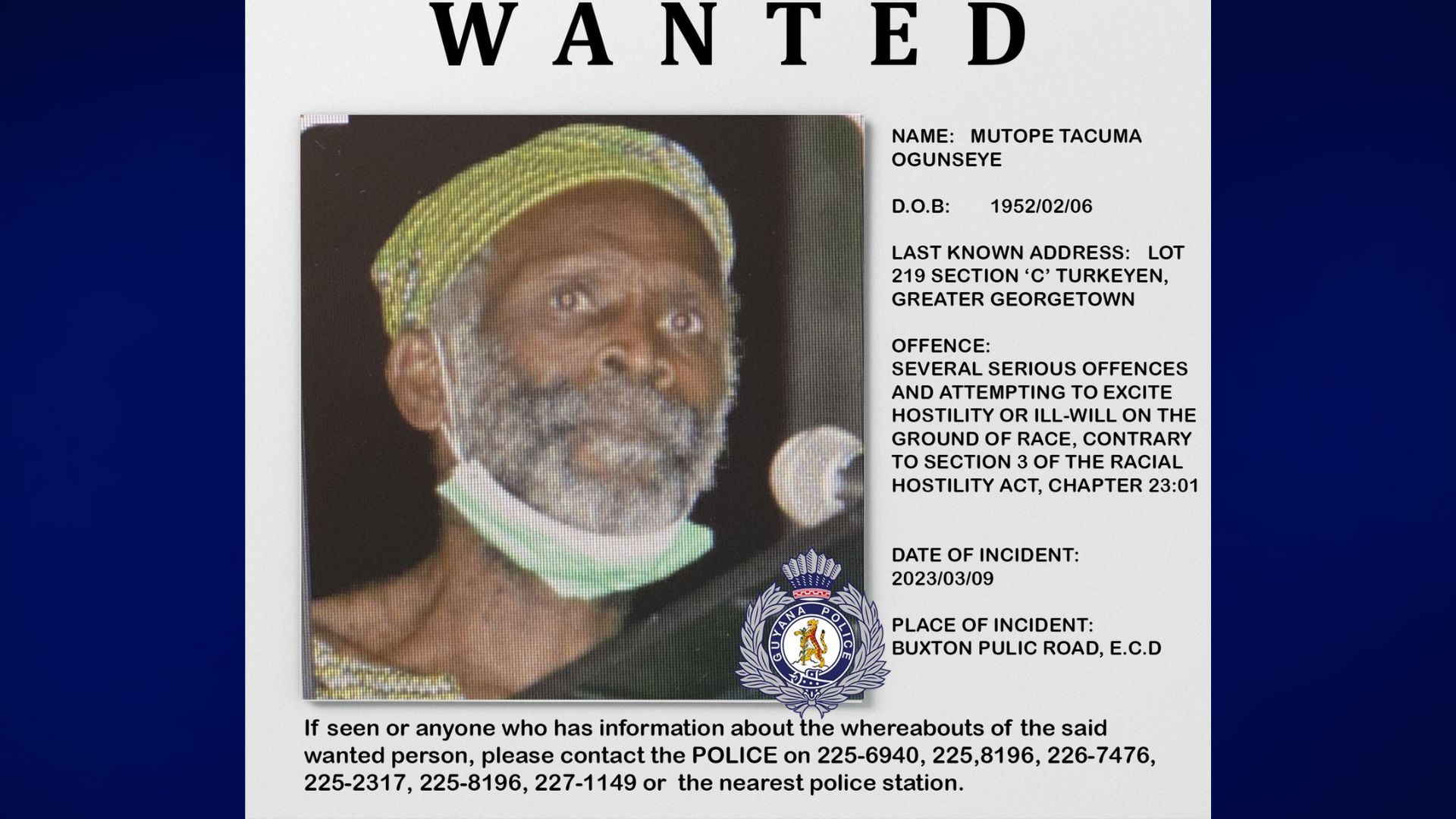
The Guyana Police Force on Thursday issued a bulletin for Mutope Tacuma Ogunseye, an executive member of the Working People’s Alliance (WPA) who is wanted for “several serious offences.”
Police Headquarters revealed that Ogunseye, 71, is also wanted for attempting to excite hostility or ill-will on the grounds of race contrary to section three of the Racial Hostility Act.
The Police said that the incident occurred on March 9 at Buxton Public Road, East Coast Demerara.
On the day in question, the WPA held a public meeting in the community during which Ogunseye called on Afro-members of the Disciplined Services to ‘turn their guns’ on the People’s Progressive Party Civic (PPP/C) government.
He also accused the government of deploying discriminatory policies that disproportionately impact some Guyanese.
The country’s Attorney General, Anil Nandall, SC, had called for a full investigation into Ogunseye’s statement, noting that it amounts to several criminal offences, including but not limited to, sedition, seditious libel, inciting riotous behaviour and exciting racial hostility in order to create a breakdown of law and order within the State of Guyana.
Additionally, the Home Affairs Minister, Robeson Benn, had noted that a legal review was being done before any charges were instituted.
Meanwhile, at that same meeting in Buxton, another WPA member, Rhonda Layne made demeaning statements against the East Indian community when she referred to East Indians in Guyana as those who came from the “slums” in India.
The statements from the WPA executive members were met with widespread condemnation from a plethora of politicians, civil society and other organisations in Guyana.
The WPA has since noted that it stands by the statements.

Farmlands Guyana Inc to start cultivation of corn, soya beans
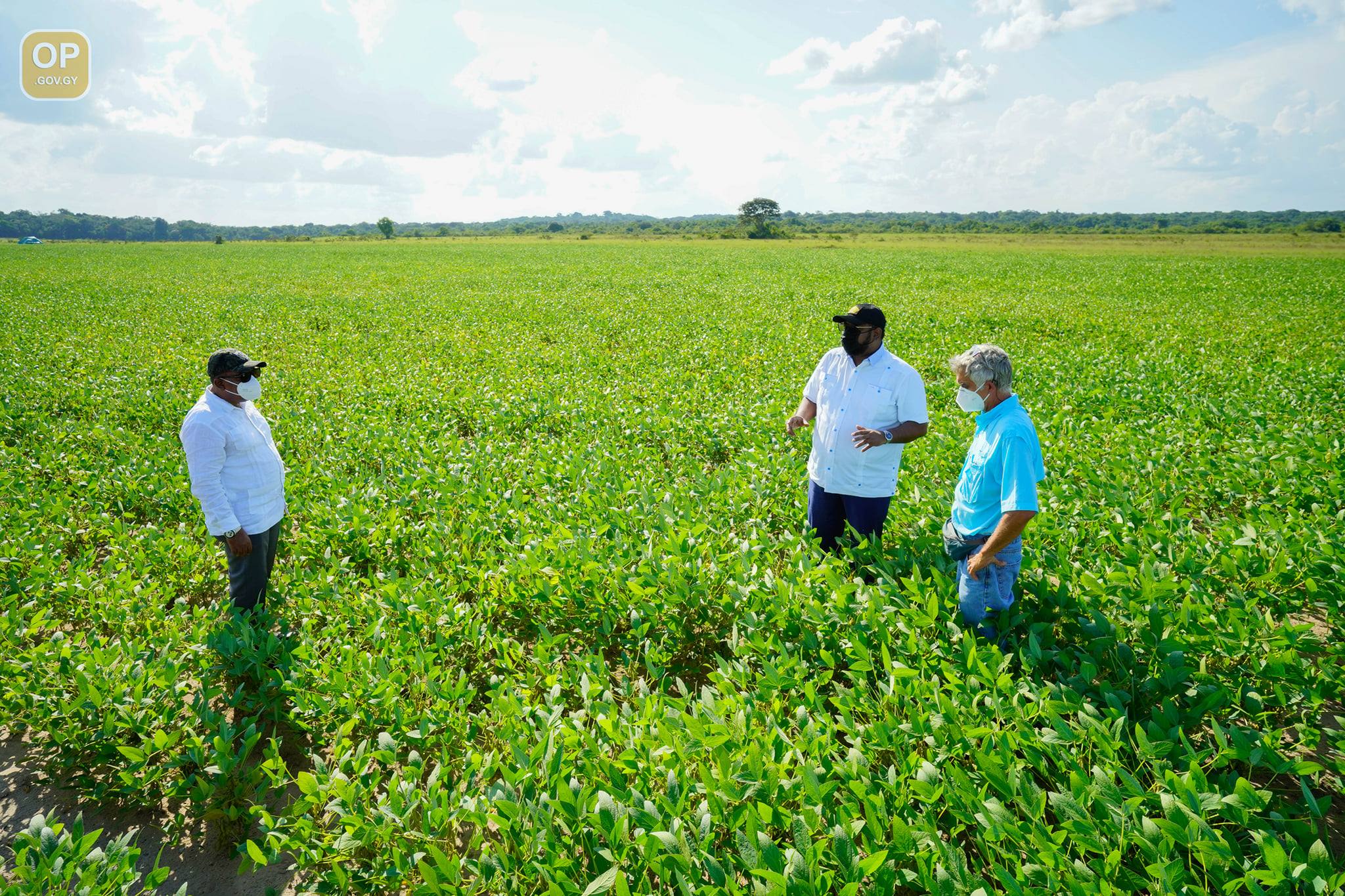
Minister Zulfikar Mustapha during the meeting with the team from Farmlands Guyana Inc. (Photo: Ministry of Agriculture/March 30, 2023)
Last September, a technical team consisting of four technicians from Argentina and other officials from the company visited the area to conduct an assessment of the land to determine the logistics involved with transporting inputs and outputs, water sources and irrigation solutions, soil types, existing infrastructure such as roads, storage and drying facilities, varieties and types of inputs required to successfully cultivate corn and soya bean.
This is the second group of investors who have embarked on developing the industry to supply inputs for the production of feed for the livestock industry.
Local cultivation of corn and soya commenced in 2021 after President Irfaan Ali challenged local investors to get involved in the cultivation of two of the main inputs for feed for the livestock sector.
During a trip to the Tacama Savannah back in September 2021, the Head of State said that sustainable food and agriculture are the country’s future and that the Government will fully support the soya bean and corn project in Ebini which will help produce much-needed feed for the poultry industry.
Minister Mustapha explained that the government has already invested hundreds of millions of dollars to support the industry. So far, works have been moving apace on the construction of facilities such as three 3000-tonne silos and one 80-tonne-per-hour drying tower at the Tacama Landing.
In 2022, some $887 million was budgeted to carry out infrastructural works needed to support the large-scale cultivation of corn and soya bean.
Of that amount, $426 million was budgeted to complete the rehabilitation of 47 kilometers of a vital Ituni to Tacama farm-to-market road, starting from the junction of the Linden/Ituni road and heading east towards the Berbice River. In 2021, some $102 million was spent to commence rehabilitation works on the road.
Minister Mustapha said with the addition of another company in the large-scale cultivation of corn and soya beans, Guyana was well on its way to meeting its target of 25,000 acres in the next two years. (Modified press release from Ministry of Agriculture)

‘The quintessential man of action’- Paul Cheong honoured for serving as PSC Chairman
shardabacchus@newsroom.gy
As his stint gradually comes to an end, Paul Cheong was on Wednesday praised for his exceptional performance as Chairman of the Private Sector Commission (PSC) throughout the COVID-19 pandemic and at a time when the country is experiencing unprecedented change.
Described as a “man of action than a man of words”, Cheong was honoured during a dinner and cocktail reception held at Parc Rayne on Wednesday night.
Finance Minister, Dr Ashni Singh has commended the leadership of the outgoing PSC Chairman (Photo: DPI/March 29, 2023)
“Paul has walked the walk…Paul Cheong is the quintessential man of action…He is a man that would deliver the goods,” Senior Minister within the Office of the President with responsibility for Finance, Dr Ashni Singh said during his address at the event.
Dr Singh said Cheong was never “shy” of representing and articulating the interests of the PSC during his chairmanship.
“The scale, scope and speed with which things are changing in Guyana…at which the economic landscape and at which the business economy is changing, evolving and emerging…It takes a safe and steady pair of hands to conduct whichever ship you might be navigating through this complicated and unprecedented time,” the Finance Minister said.
Meanwhile, in his remarks, Cheong noted that as Guyana’s economy continues to mature, it is “crucial” that robust institutions are established to safeguard the interests of local businesses.
Cheong noted that during his tenure, he has “consistently” emphasised the importance of “strong” local content legislation.
“…We will continue to advocate for this legislation to ensure that our country’s resources are utilised to benefit the people of Guyana…Ensuring that they do not face any unfair competition or practices,” he said.
And to prevent the decision-making body from being dominated, Cheong said the PSC must remain vigilant and the nurturing of small and medium size businesses must be prioritised.
“In whatever we are tasked to do, we must do it with dedication, passion and pride…We must never shortchange the organisation.”
He further noted that with the massive transformation ongoing in all the sectors in the country, the opportunities are “plenty” to expand and grow business.
Chairman of the Private Sector Commission (PSC) Paul Cheong (Photo: News Room/December 15, 2021)
As such, he urged people not to procrastinate but take full advantage of them.
“I am truly grateful for the many opportunities we have had to learn and grow and collaborate and I am confident that the PSC will continue to strive under the leadership of my successor,” Cheong said.
Cheong served as the Chairman of the PSC for two consecutive years; he was elected in April 2021 and re-elected in 2022. A new chairman is expected to be elected at the Annual General Meeting (AGM) slated for April 18.
He is a business executive with over 40 years of experience and currently serves as the chairman of several boards, including the Guyana Oil Company (GuyOil), the National Industrial and Commercial Investment Limited (NICIL) and the Berbice Bridge Company Incorporated.
He also served as a member on the boards for the Guyana Sugar Corporation (GuySuCo), Edward B. Beharry Company, Sterling Products, North American Fire and General Insurance (NIS), among others.
He has among his academic qualifications a Master in Business Management.
Jwe Kounya — 100% Gratis → Televizyon LakayJwe Jwèt Gratis!Quiz, Solitaire ak Mo Kaché
Jwèt Ayiti & Karayib — 100% gratis!English · Français · Kreyòl

 (Reuters) – Donald Trump has been indicted by a Manhattan grand jury after a probe into hush money paid to porn star Stormy Daniels, two sources said on Thursday, becoming the first former U.S. president to face criminal charges even as he makes another run for the White House.
</p>
<p>” data-medium-file=”https://newsroom.gy/wp-content/uploads/2023/03/Minister-Zulfikar-Mustapha-during-the-meeting-with-the-team-from-Farmlands-Guyana-Inc.-300×200.jpg” data-large-file=”https://newsroom.gy/wp-content/uploads/2023/03/Minister-Zulfikar-Mustapha-during-the-meeting-with-the-team-from-Farmlands-Guyana-Inc.-1024×683.jpg” decoding=”async” loading=”lazy” class=” wp-image-160591″ alt=”” width=”663″ height=”442″ srcset=”https://newsroom.gy/wp-content/uploads/2023/03/Minister-Zulfikar-Mustapha-during-the-meeting-with-the-team-from-Farmlands-Guyana-Inc.-1024×683.jpg 1024w, https://newsroom.gy/wp-content/uploads/2023/03/Minister-Zulfikar-Mustapha-during-the-meeting-with-the-team-from-Farmlands-Guyana-Inc.-300×200.jpg 300w, https://newsroom.gy/wp-content/uploads/2023/03/Minister-Zulfikar-Mustapha-during-the-meeting-with-the-team-from-Farmlands-Guyana-Inc.-768×512.jpg 768w, https://newsroom.gy/wp-content/uploads/2023/03/Minister-Zulfikar-Mustapha-during-the-meeting-with-the-team-from-Farmlands-Guyana-Inc.-1536×1024.jpg 1536w, https://newsroom.gy/wp-content/uploads/2023/03/Minister-Zulfikar-Mustapha-during-the-meeting-with-the-team-from-Farmlands-Guyana-Inc.-2048×1365.jpg 2048w” sizes=”(max-width: 663px) 100vw, 663px”><figcaption class=) Minister Zulfikar Mustapha during the meeting with the team from Farmlands Guyana Inc. (Photo: Ministry of Agriculture/March 30, 2023)
Minister Zulfikar Mustapha during the meeting with the team from Farmlands Guyana Inc. (Photo: Ministry of Agriculture/March 30, 2023)
 shardabacchus@newsroom.gy
</p>
<p>” data-medium-file=”https://newsroom.gy/wp-content/uploads/2023/03/338966000_741641260928332_5714306222822189661_n-300×199.jpg” data-large-file=”https://newsroom.gy/wp-content/uploads/2023/03/338966000_741641260928332_5714306222822189661_n.jpg” decoding=”async” loading=”lazy” class=” wp-image-160586″ alt=”” width=”490″ height=”325″ srcset=”https://newsroom.gy/wp-content/uploads/2023/03/338966000_741641260928332_5714306222822189661_n.jpg 960w, https://newsroom.gy/wp-content/uploads/2023/03/338966000_741641260928332_5714306222822189661_n-300×199.jpg 300w, https://newsroom.gy/wp-content/uploads/2023/03/338966000_741641260928332_5714306222822189661_n-768×509.jpg 768w” sizes=”(max-width: 490px) 100vw, 490px”><figcaption class=) Finance Minister, Dr Ashni Singh has commended the leadership of the outgoing PSC Chairman (Photo: DPI/March 29, 2023)
Finance Minister, Dr Ashni Singh has commended the leadership of the outgoing PSC Chairman (Photo: DPI/March 29, 2023) Paul Cheong (Photo: News Room/December 15, 2021)</p>
<p>” data-medium-file=”https://newsroom.gy/wp-content/uploads/2021/12/Paul-Cheong-300×225.jpeg” data-large-file=”https://newsroom.gy/wp-content/uploads/2021/12/Paul-Cheong-1024×768.jpeg” decoding=”async” loading=”lazy” class=” wp-image-130057″ alt=”” width=”484″ height=”363″ srcset=”https://newsroom.gy/wp-content/uploads/2021/12/Paul-Cheong-1024×768.jpeg 1024w, https://newsroom.gy/wp-content/uploads/2021/12/Paul-Cheong-300×225.jpeg 300w, https://newsroom.gy/wp-content/uploads/2021/12/Paul-Cheong-768×576.jpeg 768w, https://newsroom.gy/wp-content/uploads/2021/12/Paul-Cheong-86×64.jpeg 86w, https://newsroom.gy/wp-content/uploads/2021/12/Paul-Cheong.jpeg 1280w” sizes=”(max-width: 484px) 100vw, 484px”><figcaption class=) Chairman of the Private Sector Commission (PSC) Paul Cheong (Photo: News Room/December 15, 2021)
Chairman of the Private Sector Commission (PSC) Paul Cheong (Photo: News Room/December 15, 2021)