The Guyana Rugby Football Union Sevens tournament will take place this weekend at the National Park.
It focuses on mentally and physically preparing teams for the upcoming Rugby Americas North (RAN) Sevens Championships.
With cash and prizes at stake, this final tournament of the season will determine the top team in Guyana, as the Police Falcons and Panthers each have won three tournaments this year.
Moreover, the tournament serves as crucial preparation for the seven-time RAN Sevens Champions ahead of the Senior Men’s and Women’s Sevens Rugby Tournament hosted by the Trinidad and Tobago Rugby Union on November 23rd-24th, 2024, at Larry Gomes Stadium in Arima.
New Zealand stormed into the final of the Women’s T20 World Cup after 14 years, beating the 2016 champions West Indies by eight runs in a low-scoring thriller in Sharjah.
New Zealand will meet the 2023 edition’s runners-up South Africa as the tournament is set for a first-time champion.
Opting to bat first, Sophie Devine’s side huffed and puffed their way to 128 for 9 on a pitch where the ball was not coming onto the bat.
Deandra Dottin starred for West Indies, taking 4 for 22. However, West Indies’ chase did not take off as expected with Eden Carson and Co keeping them to 25 for 2 in the powerplay.
Hayley Matthews and Stafanie Taylor toiled hard but could manage only a combined 28 off 41 balls.
That left West Indies 51 for 4 and needing 78 from 55. Dottin once again kept West Indies in the game.
Her fireworks – a 22-ball 33 where she hit Lea Tahuhu for three sixes in an over – brought the equation down to 34 from 24. But Amelia Kerr, the highest wicket-taker at this World Cup, ended Dottin’s innings in the 17th over when she top-edged a sweep to short fine leg.
New Zealand were not flawless, having dropped five catches in the field, but their bowlers found a way to stop West Indies to 120 for 8. (ESPNcricinfo)
The Ministry of Human Services and Social Security hosted the ‘Her Vision, Her Future Empowerment Workshop’ on Friday to help young girls in childcare take control of their lives by envisioning what they want their future to be like.
It was organised by the Child Care and Protection Agency (CPA), through its Family Support Services Unit and the Young Influencers programme, at the Regency Suites Hotel, in Georgetown.
Subject Minister, Dr Vindhya Persaud shared in a heartfelt discussion with the girls and encouraged them to become familiar with their rights.
“You have rights as children. You have rights as girls, and you have rights in the world in which you live. The question is, ‘Do you know those rights?’ If you don’t know those rights, I hope this morning I am going to motivate you to learn about those rights,” Dr. Persaud told them.
“Once you know what your rights are, you can stand up for those rights, speak about those rights, and encourage all your friends to do the same thing,” she added.
Senior Probation and Social Services Officer Sherri-Ann Francois shared that the intention was to create an environment where young women are inspired, supported and empowered to shape a bright future for themselves.
“As we move through today’s sessions, I encourage you to fully engage, ask questions when you have them, and rise to the challenge. Come out of your comfort zone. This space is created for you to explore your goals, connect with others in the room, and most importantly, reflect on how you will apply what you learn today to your own personal journey,” Francois urged.
The Guyana Hindu Dharmic Sabha will launch its countdown to Diwali 2024 with its Deep Jale event that promises to be a spectacular light – up with rich cultural items.
Deep Jale will be at the Kitty Seawall Roundabout in Georgetown. On the occasion of the 50th anniversary of Dharmic Sabha, a bazaar will also be on display.
President of Guyana Hindu Dharmic Sabha, Dr. Vindhya Persaud spoke about what persons can expect as they usher in the festival of lights.
“In addition to the light up which symbolizes to always let light triumph over darkness, we will be hosting a grand cultural programme featuring outstanding Guyanese artistes who will be performing in music, song and dance,” Dr. Persaud explained.
Dr. Vindhya Vasini Persaud, President of the Guyana Hindu Dharmic Sabha
Deep Jale is now a staple on the national calendar and this year will expand at the Kitty Seawall Roundabout as it continues each night until the 30th when Dharmic Sabha’s magnificent motorcade will make its way past the Roundabout from the Shri Krishna Mandir in Campbellville to the La Bonne Intention Community Center Ground.
Deep Jale will be held from October 19 – 30 starting from 18:00hrs every evening.
Guyanese artistes including Kishan Sugrim of Berbice, Suraj Singh, Sookrane Boodhoo, Rekha Singh and Ganindra of West Coast Demerara, Elizabeth Wongand Arijit Singh of East Coast Demerara and the Dharmic Nritya Sangh, Cumming’s Lodge Mandir and Golden Om Dharmic Dance troupe from Berbice.
Deep Jale will also be held countrywide, like places at Palmyra, Berbice at the Indian Heritage Monument Site on the 23rd of October and follows those held in Essequibo and West Coast Demerara.
On the occasion of the 50th anniversary, Dharmic Sabha has added a Bazaar element on the avenue opposite the Roundabout, where attendees can Indian cuisines such as 7-curry, hot fried vegetarian samosas, potato balls etc, sweets, rotis and curries.
“People can really have a culinary experience as well as a shopping experience so they can purchase anything from their diyas, to their outfits for Diwali jewelry as they walk along the bazaar,” Dr. Persaud said.
Deep Jale is open to the public with free admission.
“We are encouraging families to come out because it is a really perfect occasion for families to come out in their numbers, experience what Diwali is all about, learn more about Diwali and enjoy the elements of the festival.”
Other activities leading up to Diwali include the Inter-School Rangoli Competition along with a Fashion show.
For 2024, a total of 97 persons were killed on the country’s roadways after being involved in accidents, majority of the victims being pedestrians and motorcyclists.
The figures reflect a decrease in road accidents when compared to the same period last year which saw 140 persons losing their lives out of the 118 accidents recorded.
“We need to do much more now to curb the situation. We can’t allow this to continue.
“The situation is one which needs immediate response. We have to take stronger measures perhaps,” Minister of Home Affairs Robeson Benn said.
Speeding and driving are among the major causes of the fatal accidents while men between the ages of 18 and 30 are among most of the victims.
“These accidents though there is a reduction comparatively, it really speaks to, tolerance, patience, not planning ahead of your schedule…whether it’s daily or weekly and there is an issue of not wanting to use the safety equipment.
“Most of the fatal accidents that we have had over the last five to six days, a motorcyclists would have been involved.” Traffic Chief, Mahendra Singh said.
The time during which these accidents occur are mostly between Thursday evening and Tuesday evening.
Speaking at a press conference held at his Brickdam office on Friday, Benn said to curb the situation, the ministry will be working along with the Guyana Police Force with the intention of implementing new measures and stricter penalties.
This, he said, includes changes to the legislation to impose a heftier fines for traffic offences, stronger measures such as clamping of cars and using volunteers to assist the Police.
“We note that there has been a greater increase of vehicles on our roads, we know that there are more miles travelled…while infrastructure has to catch up, there is a great pressure in use of the roads and there is still a great deal of indiscriminate behaviours in road traffic…particularly among those who are operators of vehicles,” Benn explained.
In addition, he added that the Ministry of Home Affairs will be initiating a series of initiative under a campaign the ‘do the right thing’ campaign.
The campaign, according to Benn is intended to instill due consideration of the safest and secure resorts in practices and behaviours which should result in safe communities and country by enhancing safety and security.
“Doing the right thing is a responsibility of every Guyanese and of every persons in our territory and does of course extend to persons required all types of public services respect and care,” Benn said.
Campaign will be rolled out with initial emphasis on the approaching National Road Safety Month 2024 in November. The plan is for it to eventually focus beyond road safety and delve into other issues of concern related to safety and security.
To be in accordance with United Nations Second Decade of Action for Road Safety 2021–2030, Benn said Guyana needs to recorded 50 deaths or less annually.
Hotoquai. Hobodeia. Wiruni. Most Guyanese may have never heard these names, let alone know how to pronounce them.
These are remote communities, located in Barima/Waini, the region at the top of Guyana if you look at the country on the map.
The villages are among over 100 remote and poor communities that are now connected to the internet, thanks to what is called the ICT Access and E-Services for Hinterland, Poor, and Remote Communities Project.
The transformative initiative is aimed at bridging the digital divide in Guyana by providing reliable internet access and enhancing digital infrastructure in underserved rural and remote areas.
“Every day, additional communities are being connected in our hinterland,” said Prime Minister Brigadier Mark Phillips at a recent board meeting of the project.
The project focuses on the country’s hinterland regions, which have traditionally faced significant challenges in connectivity due to their geographic isolation and underdeveloped infrastructure.
“Connectivity is the lifeblood of modern society. By investing in ICT infrastructure, we are investing in the future of our nation – ensuring that no one is left behind, especially those in our hinterland communities.”
The project involves the construction of ICT hubs, equipped with internet connectivity, to serve as community centers for digital access. These hubs allow residents to access online services, participate in virtual learning, and engage in e-commerce.
Residents of Rincon in Region 1 stand in front the village’s ICT hub after completing training. Residents from 4, 000 communities are being will be trained in areas of Office Productivity, Internet Access and ICTs.
“The services offered by this project now afford and create equity in the area of information and communication, research, telemedicine and educational opportunities. among many other benefits, compared to those available on the coast,” Ronald Harsawack, the Project Manager told the News Room.
“We expect to see an uptake in the use of internet connection to improve business services, village tourism and access to other governmental services online,” he added.
To date, 120 hubs have been completed, with 115 fully operational.
“We have seen tremendous investments in the areas of infrastructure, equipment installation, training and ICT development in the past few years in all hinterland areas. New and modern buildings are being erected throughout the ten regions and full connectivity is closer to reality,” Harsawack stated.
Project Manager Ronald Harsawack hands over a certificate to a resident of Orealla in Region Six. 4,000 residents of hinterland communities are being trained in areas of Office Productivity, Internet Access and ICTs.
Recognizing the infrastructural challenges in remote areas, the project has installed photovoltaic systems (solar power) at 120 of the hubs to ensure they remain functional even in regions with limited or no access to the national electricity grid.
The initiative is not only about infrastructure but also about building local capacity. Grants have been awarded to Amerindian Village Councils and Community Development Councils to support community-led management of the ICT hubs. ICT hub managers and ICT technicians have received specialized training, with plans to extend ICT training to 4,000 community members by the end of the project.
Residents of Hotoquai received certification after completing training.
To boost connectivity, the government has acquired 1,000 Low Earth Orbit (LEO) devices, which provide enhanced internet access to remote and rural regions, ensuring broader and more reliable coverage. So far, 115 connections have been made.
Beyond providing internet access, the project promotes local development and digital literacy, empowering residents to participate in the digital economy. It facilitates online education, healthcare access, and social services, improving the overall quality of life for residents in these remote communities.
Of the benefits of the project, Harsawack stated: “I am heartened to see students and elders alike being able to type, surf and talk to their loved ones further afield.
“I have seen the young teachers from the Cyril Potter of Education utilizing these ICT Hubs for tuition sessions and nurses doing online schooling and training.
“We believe that building our human capacity is equally as important as building out infrastructure.”
The Government of Guyana has made significant financial allocations to the project. In the 2024 budget, $60 million was allocated for maintenance, with plans to double this to $120 million in 2025 for operational costs, ensuring the project’s sustainability.
Kimbia, located in the Berbice River, operationalised it’s ICT Hub in mid-September 2024. The building is fitted with furnishings, photovoltaic electricity, work-stations, smart television and 20 computers with Low Earth Orbit high-speed internet connection. A total of 115 such ICT hubs have been constructed in hinterland communities.
Total investment to date across the regions on civil works, equipment and training amounts to G$1,147,272,475.
In addition, so far, 143 grants have been awarded to hinterland communities valued at G$536,431,568
The project aims to construct additional ICT hubs and continue expanding its community-based training initiatives.
The ultimate goal is to connect 200 communities by December 2025, ensuring widespread digital inclusion.
The project is funded by the Guyana REDD+ Investment Fund (GRIF) and implemented by the Prime Minister’s Office with oversight from the United Nations Development Programme (UNDP).
The University of Guyana Institute for Research, Innovation and Entrepreneurship (UGIRIE) is hosting its Second Exhibition of Innovations from Thursday to Saturday, at the university’s Turkeyen Campus.
Over 40 innovations and applied research projects are on display, allowing researchers, students, entrepreneurs, and innovators to showcase their work, explore collaborations, and engage with potential sponsors.
Shomari Williams, a technical communications officer, presented UG’s Project Alpha, an initiative that integrates education with cutting-edge technology like virtual reality and augmented reality.
Shomari was part of a four-member team that won the first Webby Award for Guyana at the 2022 5G for Change Hackathon Award.
Shomari said Project Alpha can be a game-changer for education as it incorporates AI to ensure that students learn at a pace tailored to them.
“I believe that the more educated people we have, it is better for the country as a whole.
“There is a bunch of AI features that are integrated into the experiences and the entire goal with this technology is to make sure each student learns at a pace that is designed for them,” Shomari explained, noting that the platform includes experiences like a virtual fighter jet, which is used for military training and aeronautical engineers.
With the system, users can take apart the jet with a click, and every component is meticulously modeled to replicate real-life functionality.
A cross-section of the human brain is another feature aimed at the medical field.
“Think about it like this, I don’t think that I want a surgeon who doesn’t have the prerequisites necessary for him to open up my heart, opening my heart. But with a system like this [Project Alpha] he can keep going over and over until he makes it to the prerequisites,” Shomari explained as he further noted that the platform will now allow you to move to the next level until you have completed the current level.
Currently, Shomari said Project Alpha is conducting testing in plumbing but it can be used for any sector.
“The first lesson is basically all the pipes and fitting, you have to be able to identify them correctly before you can move on to the next lesson and the next lesson there is a sink setup and from there, you move on.”
The University of Guyana is committed to integrating research into all levels of its curriculum. This was revealed by UG’s Vice Chancellor Professor Paloma Mohamed Martin during the opening ceremony of UG’s Institute for Research, Innovation and Entrepreneurship (UGIRIE) Second Exhibition of Innovations on Thursday.
Executive Director of UGIRIE, Professor Patsy Francis, called on the government to increase funding for research at UG, stressing the critical role research plays in Guyana’s rapid development.
“The government says we want more microbiological packages, information on ICT and different areas. We at UG will package it and make it more, now you just gotta give us the money,” Professor Francis stated.
Meanwhile, Professor Martin highlighted the importance of research across all programmes, referencing the establishment of seven research centres in the past five or six years, including the highly successful Centre for Early Childhood Education.
The Centre is focused on early childhood development, research on conditions like autism, and is the only internationally accredited institution of its kind in the Caribbean.
“The University of Guyana insists that all students both undergraduate and others, every single programme must have a research component,” Professor Martin said.
Adding: “One of the leading projects that we have that we are very proud of is the Centre for Early Childhood Education, which produces about two or three pieces of research every single quarter.”
UG offers a wide range of research related services that can be monetized according to the Vice Chancellor.
“In the upcoming years, we might have to rely very heavily on services that we can provide to help us fill any funding gaps that might arise and so we have labs that test for water, that test for soil, for concrete we do other things in research, we do psychometric evaluations, counseling and other types of research,” Professor Martin explained.
UG’s press has also published five new books within the last three years and Professor Martin said persons are also investing in applied research and creating prototypes for items that can be manufactured on a large scale.
The Vice Chancellor also noted the university’s online research hub, which lists all UG research from the past decade
“So if you want to know anything about Guyana and the region by UG researchers within the last 10 years or so, that resource is there and open to the public.
“There is so much that is happening in the country, at the university, in the region and in the world that research and innovation has to answer and has to fill those gaps and help us solve those problems,” Professor Martin stated.
Oliver Kerr has not forgotten how his life drastically changed when he was nine years old and acquired retinal detachment, an eye condition that caused him to go from being fully sighted to not seeing at all.
But one thing that has truly helped him over the years is maintaining a positive disposition about everything.
In an interview with News Room on Thursday, at the Guyana Society for the Blind in Georgetown, where he spends some of his days, the former Guyana and West Indies blind cricketer (2006-2010) joked that people do not believe him when he tells them that he has no challenges.
It’s not that he is free of all troubles and uncomfortable situations in life, but his attitude towards these things makes all the difference. “I always keep an open window to the positive side of life. I think that is my key to getting by in life; always keep a positive mindset,” he expressed.
Kerr does not hesitate to use the roadways even with the challenges involved (Photo: News Room/October 17, 2024)
In the context of Road Safety Month, Oliver shared how he is safely able to navigate the roadways, and how the public can be more supportive towards persons with disabilities. He is hoping that the public, especially the operators of public transportation, will extend a little more courtesy to persons who are blind or visually impaired.
One of the challenges of using the roadways is the picky attitude of some operators of public transportation, who will choose to pick up sighted persons over persons with a disability. “We have things to do like everybody else. We have our money to pay like everybody else. It’s not like we are looking for a free ride,” Kerr appealed.
Because of having to cope with some drivers who do not have much patience, he explained that persons with a vision disability would need to come up with their own techniques for how to get home. “Sometimes you count the speed bumps on the road, or use various landmarks on the street,” he shared.
Even so, using a minibus may only prove advantageous up to about 19:00 hours. Anything after this would require a taxi, which brings up the issue of finances. “We only come out when we have important things to do. It’s difficult to cope with the finances for transportation,” he said.
He, however, embraces the fact that life must come with challenges, and he has to find ways to overcome them.
Tisheree Taylor says she only follows “important things” on Facebook, so she couldn’t be happier that she made it a point to check all of the posts and updates on the Ministry of Human Services and Social Security’s page, which introduced her to the Women Innovation and Investment Network (WIIN) programme.
The 39-year-old has been with WIIN since its inception and has managed to complete a few programmes so far. “I would like to encourage young people to take the opportunity. You don’t have to pay, and it is for everyone,” she shared.
“The first thing we did was the pin cushion. Miss is very nice and patient enough with you. We did some towels, different designs in skirts and pants,” she shared in a video produced by the ministry.
Tiofania Marques is another beneficiary of WIIN who also came across the programme on the ministry’s social media. “I think it’s a good initiative not only for young people but for anybody. In the programme, I’ve learned a lot so far, from pillowcases to skirts and pants. Not only did we learn the technical skills, but we learned how to start a business; they brought business plans and explained them to us, and I am really grateful for the opportunity,” she expressed.
The Ministry of Human Services and Social Security is continuing to invite members of the public to sign up for free for any course being offered through WIIN, Coursera, or City and Guilds.
Since its launch in 2021, WIIN has been a transformative initiative, providing free, high-quality education to residents, both old and young, across Guyana. The programme has so far impacted the lives of more than 11,000 graduates.
The women enrolled in WIIN are able to benefit from a number of courses, including Home Management, Project Management, Social Media Marketing, Entrepreneurship, Child Care, Care for the Elderly, Garment Construction, and Graphic Design.

 100vw, 960px”><figcaption class=) Dr. Vindhya Vasini Persaud, President of the Guyana Hindu Dharmic Sabha
Dr. Vindhya Vasini Persaud, President of the Guyana Hindu Dharmic Sabha 100vw, 960px”><figcaption class=) Residents of Rincon in Region 1 stand in front the village’s ICT hub after completing training. Residents from 4, 000 communities are being will be trained in areas of Office Productivity, Internet Access and ICTs.
Residents of Rincon in Region 1 stand in front the village’s ICT hub after completing training. Residents from 4, 000 communities are being will be trained in areas of Office Productivity, Internet Access and ICTs. 100vw, 960px”><figcaption class=) Project Manager Ronald Harsawack hands over a certificate to a resident of Orealla in Region Six. 4,000 residents of hinterland communities are being trained in areas of Office Productivity, Internet Access and ICTs.
Project Manager Ronald Harsawack hands over a certificate to a resident of Orealla in Region Six. 4,000 residents of hinterland communities are being trained in areas of Office Productivity, Internet Access and ICTs. 100vw, 960px”><figcaption class=) Residents of Hotoquai received certification after completing training.
Residents of Hotoquai received certification after completing training. 100vw, 960px”><figcaption class=) Kimbia, located in the Berbice River, operationalised it’s ICT Hub in mid-September 2024. The building is fitted with furnishings, photovoltaic electricity, work-stations, smart television and 20 computers with Low Earth Orbit high-speed internet connection. A total of 115 such ICT hubs have been constructed in hinterland communities.
Kimbia, located in the Berbice River, operationalised it’s ICT Hub in mid-September 2024. The building is fitted with furnishings, photovoltaic electricity, work-stations, smart television and 20 computers with Low Earth Orbit high-speed internet connection. A total of 115 such ICT hubs have been constructed in hinterland communities.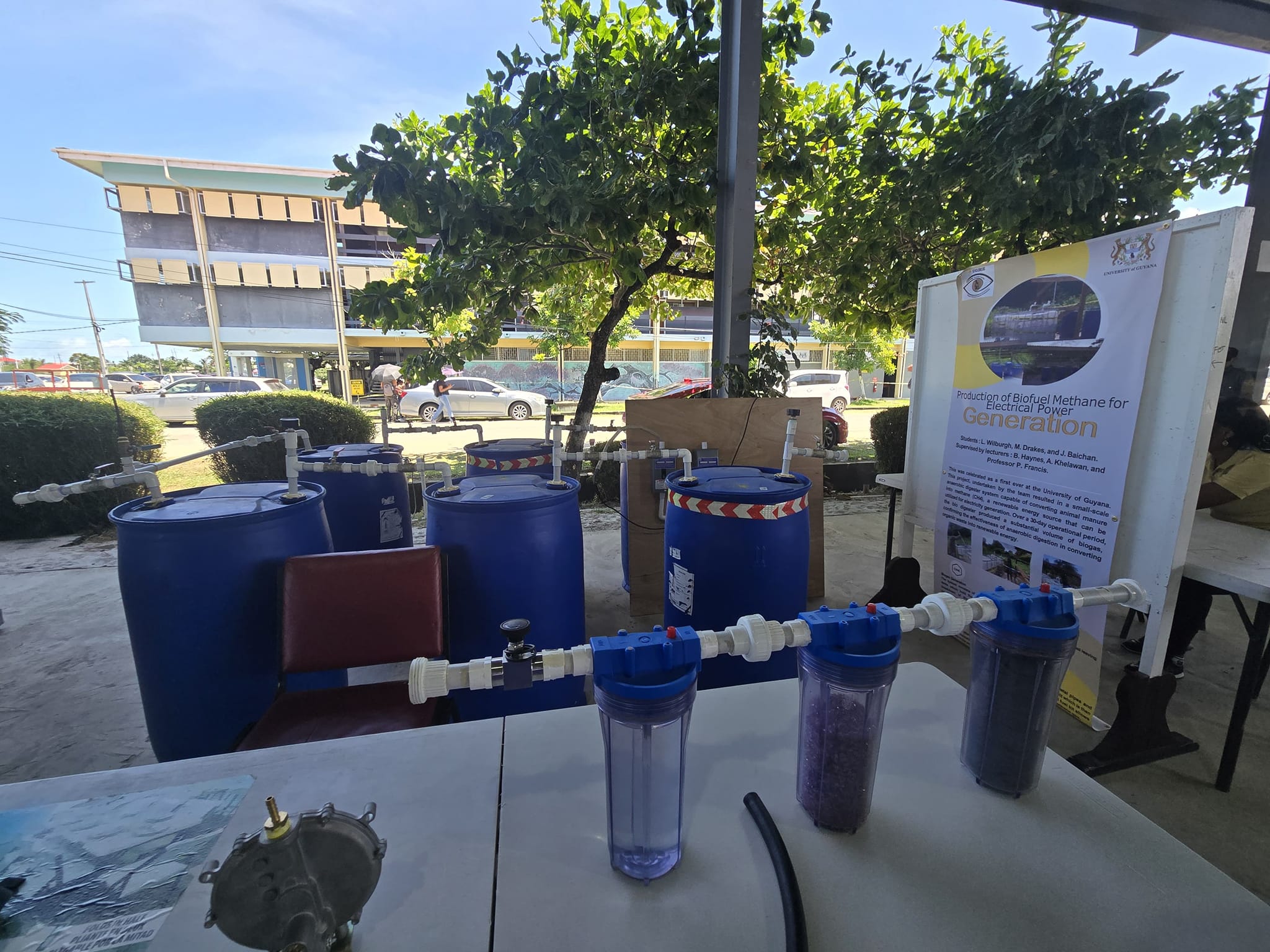
</p>
<p>” data-medium-file=”https://newsroom.gy/wp-content/uploads/2024/10/WhatsApp-Image-2024-10-18-at-5.18.55-AM-300×169.jpeg” data-large-file=”https://newsroom.gy/wp-content/uploads/2024/10/WhatsApp-Image-2024-10-18-at-5.18.55-AM-1024×576.jpeg” tabindex=”0″ role=”button” class=”wp-image-187476 size-full” alt=”” width=”1600″ height=”900″ srcset=”https://newsroom.gy/wp-content/uploads/2024/10/WhatsApp-Image-2024-10-18-at-5.18.55-AM.jpeg 1600w, https://newsroom.gy/wp-content/uploads/2024/10/WhatsApp-Image-2024-10-18-at-5.18.55-AM-300×169.jpeg 300w, https://newsroom.gy/wp-content/uploads/2024/10/WhatsApp-Image-2024-10-18-at-5.18.55-AM-1024×576.jpeg 1024w, https://newsroom.gy/wp-content/uploads/2024/10/WhatsApp-Image-2024-10-18-at-5.18.55-AM-768×432.jpeg 768w, https://newsroom.gy/wp-content/uploads/2024/10/WhatsApp-Image-2024-10-18-at-5.18.55-AM-1536×864.jpeg 1536w, https://newsroom.gy/wp-content/uploads/2024/10/WhatsApp-Image-2024-10-18-at-5.18.55-AM-747×420.jpeg 747w, https://newsroom.gy/wp-content/uploads/2024/10/WhatsApp-Image-2024-10-18-at-5.18.55-AM-640×360.jpeg 640w, https://newsroom.gy/wp-content/uploads/2024/10/WhatsApp-Image-2024-10-18-at-5.18.55-AM-681×383.jpeg 681w” sizes=”(max-width: 1600px) 100vw, 1600px”><figcaption class=) Kerr does not hesitate to use the roadways even with the challenges involved (Photo: News Room/October 17, 2024)
Kerr does not hesitate to use the roadways even with the challenges involved (Photo: News Room/October 17, 2024)