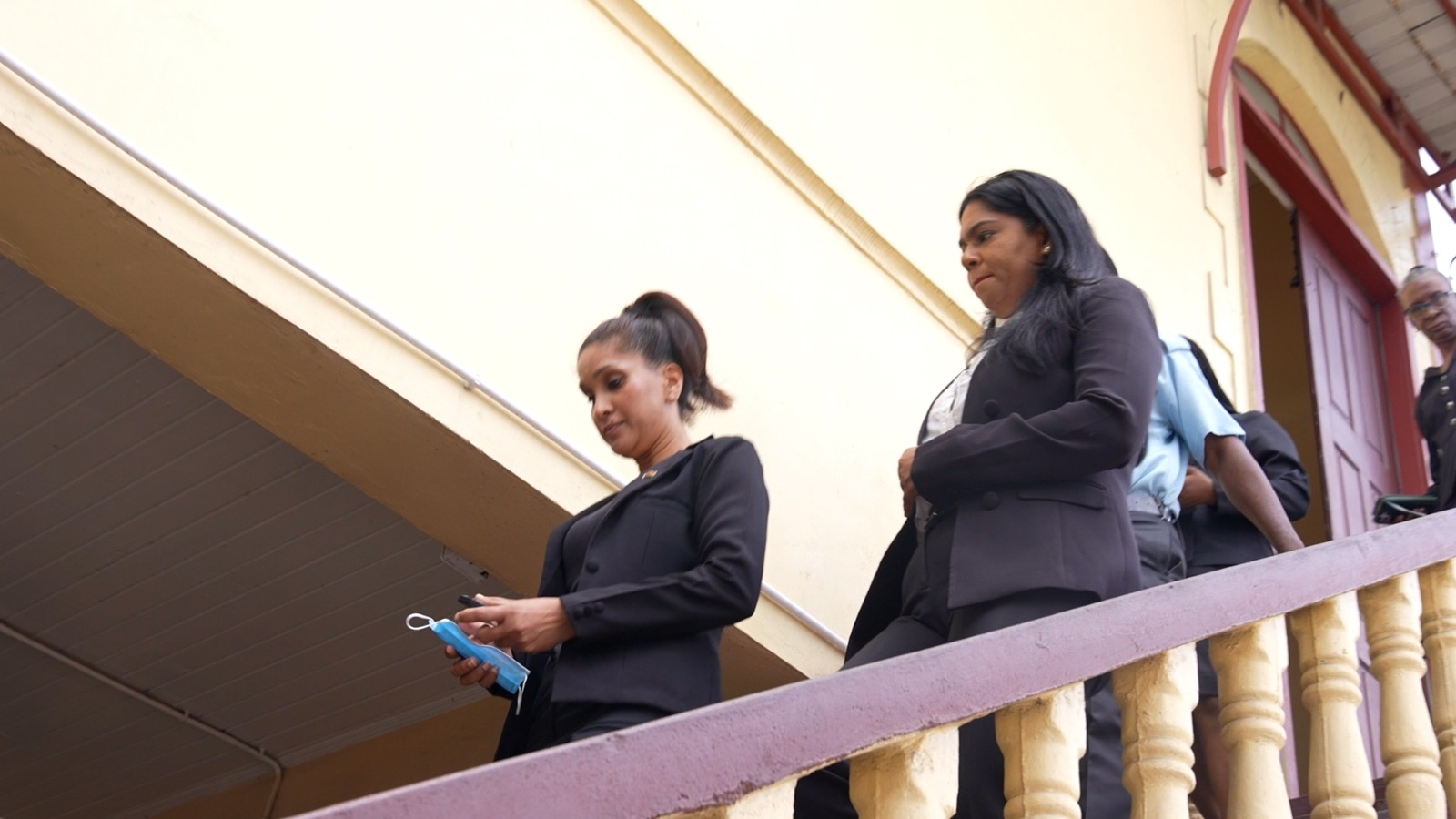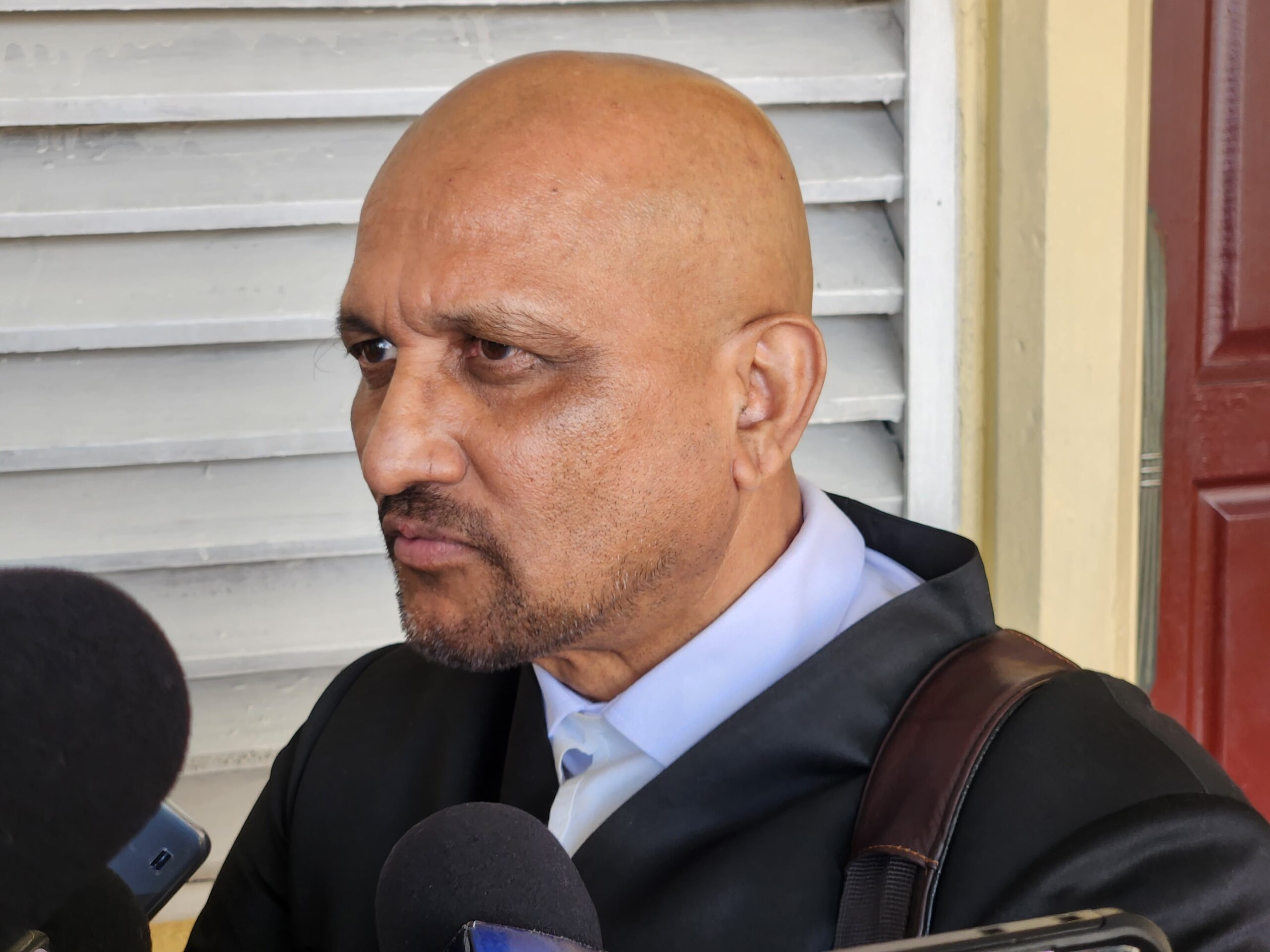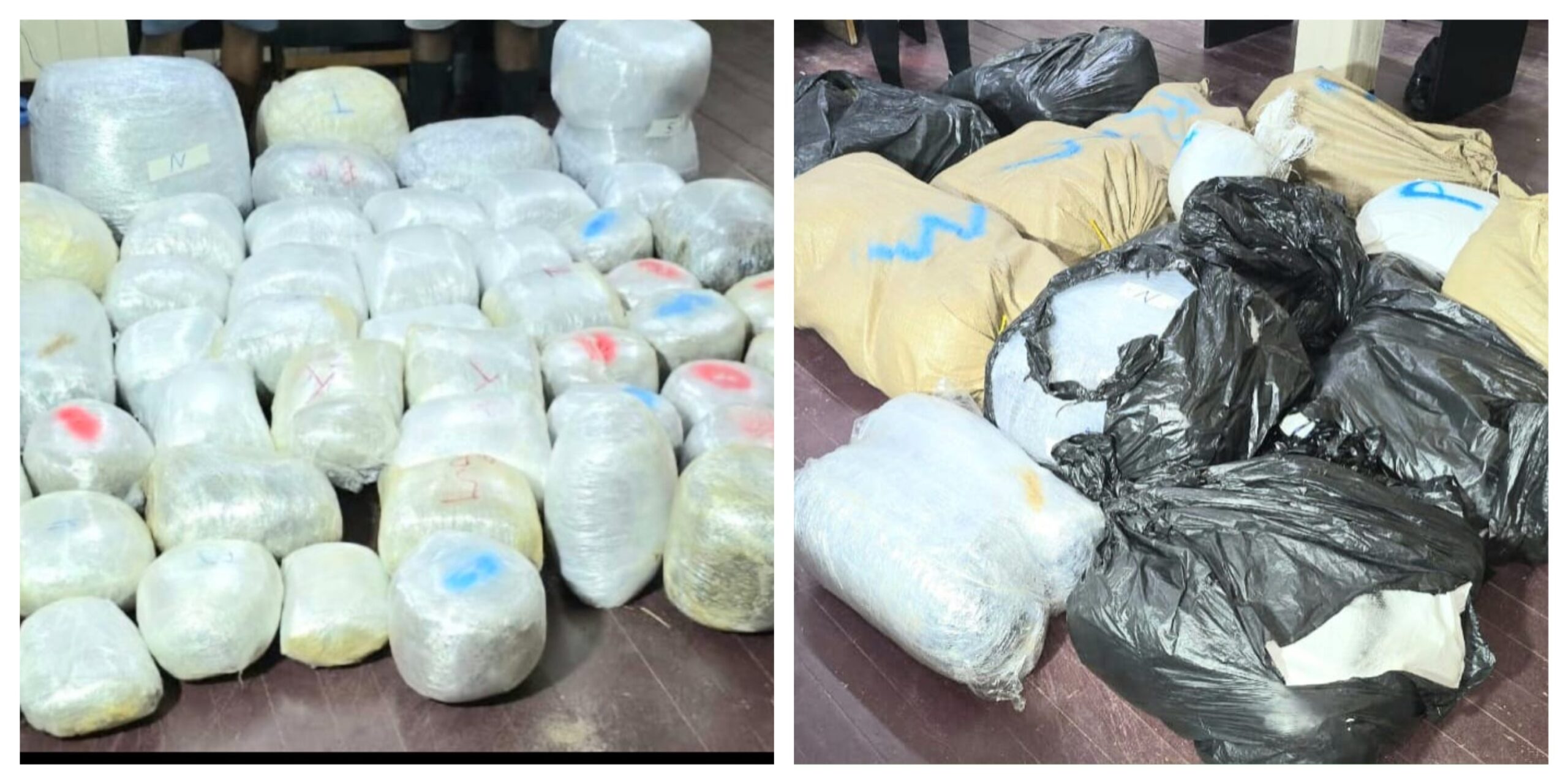

Nigel Hughes was on Saturday declared the new Leader of the Alliance for Change with 149 votes to his main rival Sherod Duncan’s 62. The Chairman of the Party is now David Patterson whose 150 votes exceeded Juretha Fernandes’ 69.
The party hosted a successful 8th National Conference concluding a highly competitive campaign to elect the team of new leaders who will take the party into the 2025 general elections.
This was the first time that none of the surviving founding members of the Party were vying for the position of leader though founding member Raphael Trotman is now the General Secretary.
The remaining position on the executive was filled by Michael Carrington the new Vice Chair.
In his message to the congress, outgoing leader Khemraj Ramjattan sought to assure the membership of the party’s continued relevance as a third force.
“Although third parties have little chance by themselves of forming a government…they do have relevance in ethnic-based societies in the sense that they tend to bridge the racial divide,“ Ramjattan said.
Delivering the charge to the delegates and observers, Hughes immediately co-opted leading members of the opposing slate to be part of the Executive. He then went on to deliver his vision positioning the AFC as “the force” in the upcoming 2025 election.
The Leader urged the Party to undertake a comprehensive review of its performance in office to examine the missteps that lead to its loss of office in 2020 so that it can take the lessons from the past in crafting a pathway to the future.
In great detail he outlined the future thrust of the Party and its commitment to reach out to all Guyanese irrespective of political persuasion, all key stakeholders and civic organizations including the private sector, trade unions, women’s and youth movements.
L’Allegiant Stadium, dans l’État du Nevada, aux États-Unis, a accueilli le vendredi 28 juin 2024 la deuxième sortie du Brésil en phase de groupe face au Paraguay dans le cadre de la 48e édition de la Copa America. Vinicius, grand artisan de cette large victoire brésilienne, a sorti son grand jeu pour permettre aux siens d’étriller le Paraguay qui avait pourtant bien démarré la rencontre. Quatre buts à un, le Brésil passe désormais à 4 points mais n’est pas encore qualifié mathématiquement.
Le Brésil n’est pas parvenu à se départager avec le Costa Rica pour son entame dans la compétition. Ayant été critiqués pour ce piètre match discuté, les Brésiliens ont pris au sérieux cette rencontre face au Paraguay.
Vinicius, étincelant tout au long du match, a inscrit un doublé dans la partie et a créé de nombreuses occasions. En première période, le Brésil a obtenu un pénalty après une faute commise sur Vini, et malheureusement Lucas Paqueta l’a raté.
A la 35e, Vinicius a déclenché les hostilités en marquant le premier but de la rencontre. Savinho a doublé la mise à la 43e, en moins de dix minutes. Avant de regagner les vestiaires, Vinicius a inscrit son second but à 45e+5e. Le Brésil est donc rentré aux vestiaires avec 3 buts, l’adversaire était déjà fatigué.
De retour des vestiaires, soit à la 65e, Paqueta a cette fois-ci marqué sur penalty après en avoir loupé un en première mi-temps.
Le Paraguay épuisé et asphyxié par un Bresil enjambe, parvenait quand même à réduire l’écart tôt dans la deuxième mi-temps, soit à la 48e par le biais de O. Alderete.
Le Brésil redonne espoir à ses supporters, et espère une qualification pour les quarts pour son troisième et dernier match de la phase de groupe. Pour avoir été si brillant, l’attaquant madrilène Vinicius Jr. a été élu MVP du match.
Police are investigating a fatal accident which occurred at about 21:45 hrs Friday night on the Enmore Railway Embankment Road, East Coast Demerara, which resulted in the death of Inderpaul Pramenauth, called ‘Babai’, a 43-year-old Businessman of Block 12 Non-Pareil, ECD.
The accident involved motor car #PKK 2473, owned and driven by Pramenauth, and motor car #PAC 5742, owned and driven by a 31-year-old female resident of Paradise Housing Scheme, ECD.
The driver of motorcar #PAC 5742 told investigators she was proceeding East along the northern side of the Enmore Railway Embankment road when she observed motor car #PKK 2473 proceeding South along Enmore Estate Acess Road at a fast rate and then made a right turn to proceed West onto the Railway Embankment road and collided with motor car #PAC 5742.
The vehicle then collided with a utility pole on the northern parapet and then into a trench on the northern side of the road, where the vehicle came to a stop. The driver (Pramenauth) received injuries about his body and head. As a result, the driver was taken out of his vehicle in an unconscious condition by Police ranks who were on Patrol duty, placed into a GPF vehicle and escorted to the Georgetown Public Hospital’s Accident and Emergency Unit. The businessman was examined by a Doctor, who pronounced him dead on arrival. The body is at the hospital’s mortuary, awaiting a post-mortem examination.
The driver of motor car #PAC 5742 is in custody, assisting with the ongoing investigation.
Budget 2023:The 2023 budget continued this trend, with over $50 billion allocated to a range of initiatives designed to ease financial pressures on households and spur economic growth. Key measures included further reductions in freight charges, significant increases in the income tax threshold, and the expansion of social support programs such as the Because We Care cash grant and uniform voucher scheme.
Budget 2024: Significantly, this year’s budget commits over $70 billion to sustaining the government’s efforts to increase the disposable income available to citizens while ensuring their improved standard of living. This includes maintaining zero percent excise tax on petroleum products, extending freight charge reductions, and continuing the highly successful part-time job programme. Additionally, significant investments in housing, education, and public assistance underscore the government’s dedication to long-term socio-economic development.
In total, the PPP/C Government has introduced measures which left over $195 billion in the pockets of Guyanese. The baseless claims by Kaieteur News and opposition-aligned entities fail to acknowledge these substantial and impactful measures.
The measures over the period have cumulatively increased disposable income, but the total estimate is vastly conservative as it does not account for the compounded impact of earlier policies continuing to benefit subsequent years.
The list below provides a comprehensive outline of some of the most critical measures featured within budgets 2020 to 2024.
Budget 2020
Reversal of VAT on electricity and water
Provision of $25,000 COVID-19 relief voucher per household
Removal of VAT on building and construction materials
Removal of VAT on cell phones
Removal of VAT on private education
Removal of Corporate Tax on private health care as well as VAT on medical supplies
The mining and extractives sector benefited from billions of dollars in incentives through removal of VAT on machinery and equipment; removal of VAT on all ATVs for mining, forestry and agriculture; removal of VAT on exports; and removal of VAT on lubricating oil.
Reversal of Land Lease fees across all sectors as well as water charges back to 2014 rates. There was also the reversal of land taxes and drainage and irrigation charges back to 2014. Reversing the increases (imposed during 2015 to 2020 period) to the 2014 levels significantly reduced these costs, which grew by between 67 percent and 1,900 percent.
Removal of VAT on fertilisers, agrochemicals, pesticides, and key inputs in the poultry industry.
Tax concessions on investments in Agro-Processing Facilities, Cold Storage and Packaging
In 2013, the PPP/C Administration introduced mortgage interest relief (MIR) to exempt the portion of taxable income used for housing loan interest from personal income tax, applicable to loans up to $30 million. The APNU-AFC Administration had revised this in 2017, limiting the relief to loans up to $15 million. The current government restored the MIR to its original level, making interest on loans up to $30 million tax-deductible, thereby reducing homeownership costs for new homeowners and young professionals.
To stimulate the economy, the Guyana government, via its 2020 budget, granted corporate tax relief to banks for low-income loans. This measure enabled low-income households to borrow up to an additional $2 million at a lower interest rate.
The annualised cost of these measures exceeded $40 billion.
Budget 2021
Government restored to zero rated status, all of the food items and other basic household necessities that were previously zero rated at the time the PPP/C administration demitted office in 2015. These items included: basic wheaten flour, basic breads, oats, unflavoured cracker biscuits, cooking oil, locally produced bedsheets and pillowcases, toothbrushes, etc.
A 5 percent reduction in water tariffs across the board, targeting all levels of consumers.
To improve access to ownership, the government zero-rated VAT stone imported for construction and housing from CARICOM, locally produced pre-stressed concrete piles, locally fabricated mild steel beams for building construction, and locally manufactured roofing and PVC products for building construction.
Duty on Industrial Grade Cement reduced from 15 percent to 5 percent.
Ceiling on low income homes moved from $10 million to $12 million.
The annualised cost of these measures and others are approximately $10 billion.
Budget 2022
$5 billion for cost of living measures in light of the pandemic’s impact on the global supply chain.
Government rolled back freight costs to pre-pandemic levels. This measure alone cost the State in the order of $6 billion.
Government lowered the Excise Tax rate on gasoline and diesel from 20 to 10 percent. Later in March 2022, Government cut this tax further from 10 percent to zero – a measure that resulted in tax revenue losses of over $17 billion.
Introduction of a Dialysis Support Programme under which the government finances up to $600,000 per annum worth of dialysis treatment for every dialysis patient in Guyana. This programme provides much needed assistance to almost 300 persons at a cost of $180 million.
Reduction of cost for life and medical insurance. A measure that cost the State $1.1 billion.
Income tax threshold moved from $65,000 to $75,000 monthly, thereby releasing a total of $1.3 billion into the hands of taxpayers both in the public and private sectors.
As part of this Government’s suite of measures to combat the rising cost of living and supplement household income in 2022, the hinterland and riverain communities also benefitted from a $25,000 one-off cash grant, injecting more than $1.2 billion into these communities.
Further, almost 8,000 fisherfolk benefited from the provision of a $150,000 one-off payment totalling $1.2 billion
Over 1,400 sugar workers of Uitvlugt, who were affected by the Estate downtime, were provided a one-off payment totalling over $277 million.
In 2022, Government launched the part time job programme among the suite of measures implemented to cushion the rising cost of living. The job programme has allowed for one person per household to work in public offices in proximity to their homes for 10 days per month and earn $40,000. Over 11,000 persons were employed through the programme in Regions 2, 3, 5, 6, 9 and 10, injecting $2.3 billion into these households since the programme started in the second half of 2022.
Annualised cost of these and other measures, over $25 billion.
Budget 2023
$5 billion allocated for additional cost of living measures
Extension of reduction in freight charges for the period January 1, 2023 to December 31, 2023, at a cost of over $6 billion to the State.
$10 billion allocated to continue government’s part time job programme.
All workers benefit from increase in the monthly income tax threshold from $75,000 to $85,000, providing an additional $3.3 billion in disposable income to these workers, and removed over 12,000 workers from the tax net.
In January 2023, 5,000 health workers and almost 9,000 members of the Disciplined Services benefitted from salary adjustments, placing an additional $3 billion in the hands of these workers
In December 2023, teachers benefitted from several salary revisions. All Graduate teachers moved to the maximum of the scale applicable to their post at that time, benefitting 4,000 teachers at a cost of $1 billion annually. Additionally, effective December 2023, teachers received a monthly education allowance of $10,000 for a Bachelor’s Degree, $20,000 for Master’s Degree and $30,000 for a Doctorate Degree, to the benefit of over 4,500 teachers, at an additional annual cost of $500 million.
The Remote Areas Incentive for teachers was also revised upwards to $20,000 monthly, effective December 2023, at an annual cost of $260 million.
As part of the $5 billion cost of living allocation for 2023, public servants, teachers and members of the Disciplined Services, as well as staff of Semi-Autonomous Agencies and Public Enterprises were paid a $25,000 one-off tax-free cash grant in December 2023 at a cost of $1.7 billion.
At the end of 2023, an across-the-board salary increase of 6.5 percent retroactive to January 1, 2023, was paid to over 54,000 public servants, teachers, members of the Disciplined Services and Government Pensioners, placing $7.5 billion in the hands of these individuals. Notably, since assuming office in 2020, the cumulative salary increase for these groups of workers is 23 percent.
Members of the Disciplined Services also benefitted from the reinstituted one month tax-free bonus. For the first time, as well, the civilian employees of the Guyana Defence Force, also benefitted from the one month tax-free bonus. This placed in the hands of 12,000 members of the Disciplined Services an additional $1.5 billion which, it would be recalled, was callously taken away by the APNU/AFC during their term in office.
In 2023, the Because We Care cash grant and uniform grant benefited 201,281 public and private school students at a cost of $8.1 billion, and distribution of the grants will continue in 2024 to benefit 205,305 children.
In 2023, government introduced school grants for teachers to purchase supplies for their classrooms at a cost of $898.2 million, benefitting 182,672 children. In 2024, the sum of $3.1 billion is allocated to continue the distribution of school grants.
Annualised cost of these and other measures, over $50 billion.
Budget 2024
As global fuel prices remain relatively elevated, Government maintained zero percent excise tax on petroleum products since March 2022. This measure alone cost the State $40 billion annually.
$10 billion allocated to part time job programme
$7 billion allocated for cost of living measures
Old Age Pension moved from $20,500 in 2020 to $36,000 per month. This reflects a 75 percent increase in OAP since resuming office in 2020, and will benefit 76,000 persons, placing an additional $2.7 billion of disposable income in their hand.
Pubic Assistance moves from $9000 in 2020 to $19,000 in 2024, placing $1.2 billion in additional disposable income in the hands of over 35,000 persons.
The Because We Care cash grant of $40,000 this year has been substantially increased from $15,000 in 2021 when its disbursement resumed. Together with the uniform allowance of $5,000, this year’s grant to each child amounts to $45,000. Following the disbursement of the grants this year, Government will have disbursed $9.2 billion for this year alone, while for the period 2021-2024, a total of $26.9 billion in the cash grants will have been disbursed to school children under the programme.
Income tax threshold increased to $100,000. As a result, 13,000 persons were removed from paying income taxes and will result in $4.8 billion increase in disposable income of workers.
$4 billion set aside for GOAL scholarships. In previous years the allocation is as follows : $1 billion in 2021, $1.3 billion in 2022, and $1.8 billion in 2023.
First phase of UG student loan write-off totalling $11 billion, benefitting 13,000 individuals.
Overall, these measures provide over $70 billion to businesses and individuals.
Player-of-the-Match Virat Kohli (Photo: ICC via Getty Images)
INDIA 176-7 from 20 overs
Virat Kohli 76 off 59 (6x4s, 2x6s)
Axar Patel 47 off 31 (1×4, 4x6s)
Shivam Dube 27 off 16 (3x4s, 1×6)
Keshav Maharaj 2-23 (3)
Anrich Nortje 2-26 (4)
Kagiso Rabada 1-36 (4)
Marco Jansen 1-49 (4)
Jasprit Bumrah was named Player-of-the-Tournament for his 15 wickets (Photo: ICC via Getty Images)
SOUTH AFRICA 169-8 from 20 overs
Heinrich Klaasen 52 off 27 (2x4s, 5x6s)
Quinton de Kock 39 off 31 (4x4s, 1×6)
Tristan Stubbs 31 off 21 (3x4s, 1×6)
David Miller 21 off 17 (1×4, 1×6)
Hardik Pandya 3-20 (3)
Jasprit Bumrah 2-18 (4)
Arshdeep Singh 2-20 (4)
Axar Patel 1-49 (4)
Hardik Pandya defended 16 off the final (Photo: ICC via Getty Images)
India ended their 13-year wait for a world title by fighting back to beat South Africa in a thrilling T20 World Cup final.
The Proteas needed 26 from 24 balls in pursuit of 177, but the wicket of Heinrich Klaasen for 52 from 27 swung a dramatic game in India’s favour.
Arshdeep Singh conceded only four from the penultimate over, leaving Hardik Pandya to defend 16 from the last.
David Miller was sensationally caught by Suryakumar Yadav at long-off for 21 from the first ball before India closed out a seven-run win.
It sparked jubilant scenes among the India players and fans in Barbados, including superstar Virat Kohli, who dragged his side to 176-7 with 76 off 59.
It is India’s second T20 title, having won the inaugural tournament in 2007, and first World Cup win in either format since the 2011 50-over competition.
For South Africa it was a horrible defeat that brought back all of the pain of World Cups past.
India’s wait is over
In the end Hardik was in tears.
He was part of the India side that lost the 50-over World Cup final to Australia on home soil eight months ago. This was their glorious redemption in the Caribbean.
The game looked done during Klaasen’s onslaught but Hardik removed him by finding a thin edge through to wicket-keeper Rishabh Pant.
Even as Klaasen slumped off, South Africa remained favourites.
They have done so much to banish the one cruel reputation of choking that follows their cricket team around.
In the end, up against some superb bowling from Jasprit Bumrah, who took 2-18 in a high-scoring game, they faltered again at the last.
In the final moments, Kagiso Rabada edged a four and Hardik bowled a wide, leaving eight needed from the last two balls before Radaba was caught at long-off.
India have so much in their favour – a team of superstars chosen from population of 1.4 billion and the largest proportion of the revenue generated in the game.
As they celebrated, none of that mattered. It was an occasion of pure sporting drama and relief.
When Heinrich Klaasen was batting South Africa were in charge (Photo: ICC via Getty Images)
South Africa come so close
The Proteas, like India, had progressed to this point unbeaten. They had come through a series of tight games and their semi-final win against Afghanistan was their first victory in the last four of a World Cup in eight attempts.
They slipped to 12-2 early on, Reeza Hendricks sensationally bowled by Bumrah, but fought back to set up a grand stand finale.
Quinton de Kock and Tristan Stubbs struck 39 and 31 respectively, taking down India’s vaunted spinners. That assault was ramped up further by Klaasen, who struck five sixes.
After Klaasen fell, number seven Marco Jansen struggled and was bowled by Bumrah in the 18th over.
India captain Rohit Sharma gambled by using Bumrah’s final over when there were still two to follow. He will have been grateful to 25-year-old left-armer Arshdeep, whose mix of pace in the 19th was superb.
In the closing moments India were just more clinical, no more so than Suryakumar when he juggled the ball on the long-off boundary while keeping his feet in play to dismiss Miller.
This will hurt South Africa just as much, if not more, than those previous semi-final defeats.
Kohli rises to occasion
Virat Kohli scored a half-century, won the World T20 and announced his retirement from the format (Photo: ICC via Getty Images)
India’s innings was built around Kohli, who had only made two double-figure scores in the tournament.
Here he notched his third within five balls by driving and flicking Jansen for three fours in the first over.
India were flying when Rohit hit the first two balls of the second over for four, but after the captain swept spinner Keshav Maharaj to square leg, the Proteas fought back superbly.
Rishabh Pant chipped up a full toss for a duck and the dangerous Suryakumar Yadav was caught at fine leg, but from 34-3, Kohli was able to play the role he knows best.
He did not hit a boundary between the fourth and 18th overs. Axar Patel, promoted to provide a left-handed option, instead provided the attack with 47, including two fine hits over long-on, in a partnership of 72.
Shivam Dube added impetus with his 16-ball 27 as Kohli’s next support act.
In the 18th over, Kohli cut loose, striking Rabada superbly over long-on, pulling the next ball for four and in the 19th he whipped Jansen onto the roof of the pavilion.
The 50-over World Cup, where Kohli was the tournament’s leading scorer, was supposed to be the white-ball great’s crowning glory.
In the end it came on the other side of the world eight months later, with Kohli confirming this was his final T20 World Cup appearance. (BBC)
Virat Kohli has ended his T20 international career with a World Cup trophy. He made the announcement shortly after India clinched their second T20 World Cup title at Kensington Oval in Barbados.
“This was my last T20 World Cup and this is exactly what we wanted to achieve,” Kohli said after winning the Player-of-the-Match award for his 76 in India’s seven-run victory.
“This is an amazing game, I was telling Rohit today when we went out to bat that one day you feel like you can’t get a run, and then you come out and things happen. God is great. I bow my head in gratitude. I’m really grateful was able to get the job done for the team when it mattered the most.”
Kohli ends his 125-match T20I career as India’s second highest run-scorer in the format- 4188 at an average of 48.69 and strike rate of 137.04. He had endured a difficult T20 World Cup up until the final- scoring only only 75 runs in seven innings before he made 76 off 59 balls in the final. (ESPNcricinfo)
The Alliance For Change (AFC) Congress will witness a heated leadership contest between Sherod Duncan and Nigel Hughes on Saturday.
The event will see Duncan, known for his grassroots support, clashing with Hughes, who has faced scrutiny over his ties with ExxonMobil.
Duncan emerged as the frontrunner, securing the maximum number of nominations, reflecting his deep connection with the party’s base. He has sought to highlight Hughes’ inconsistent involvement with the AFC, characterizing him as merely a financial contributor. But Hughes has refuted these claims, listing a series of activities he participated in after resigning from leadership in the AFC.
“Too many leaders have grown cold and quiet, with some even taking a sabbatical in the face of the challenges we confront,” Duncan said in a public statement.
He even quoted Bob Marley, saying, “See them fighting fu power but they know not the hour.”
Duncan is a member of Parliament for the AFC, extracted from the AFC’s coalition with APNU in the 2020 general elections.
Hughes, whose law firm represents ExxonMobil, faced criticism over his potential conflict of interest.
His aspirations to lead the AFC were questioned, particularly regarding his stance on renegotiating the controversial oil contracts. When pressed on whether he would renegotiate these contracts if elected leader, Hughes notably evaded the question on an online programme, raising further concerns about his suitability for the role.
“Exxon is a client of our firm. I’m making it public now so nobody can say that I have never made it [known] – several of the oil companies are clients of our firm. I cannot comment on that,” when asked if he would negotiate the oil contract Exxon and its partners have with the government.
Hughes’ firm had expanded to Texas to support oil and gas operations while the former APNU+AFC government was in office.
As the party navigates this leadership battle, the outcome will significantly shape its future direction.
Duncan’s grassroots appeal contrasts sharply with Hughes’ corporate affiliations, presenting AFC members with a critical choice about the party’s path forward.
The Congress’ decision will ultimately determine whether the AFC will continue its current trajectory or pivot towards new leadership under Hughes, whose professional ties to ExxonMobil remain an issue.
Whoever wins the leadership contest will have to navigate a potential coalition with APNU for the next general and regional elections, which are due late next year.
But the public will remember the AFC and both of its potential leaders for its brazen stance in seeking to overturn the results of the 2020 elections. Duncan used his appeal online during the contentious five-month period following the elections when leading players in the then government colluded with leaders of the elections body GECOM to keep APNU+AFC in government and deny the real winners of the elections – the PPP.
Hughes’ argument that 33 was not a majority in the 65-seat Parliament was one or multiple legal machinations by the then APNU+AFC, enabling the then-government to remain in power for an additional year and a half. This argument was soundly rejected in the courts in Guyana and ultimately at the Caribbean Court of Justice.
Since its establishment in April this year, the Hope and Justice Centre has provided support to nearly 100 individuals facing various challenging circumstances.
This was announced by the Manager of the Sexual Offences and Domestic Violence Policy Unit, Dr Cona Husbands, during the centre’s official opening ceremony on Friday, at Lusignan, East Coast Demerara in Region Four.
Dr Husbands highlighted that the centre has addressed a wide range of issues, with 50 per cent of cases involving domestic violence, 30 per cent concerning elder abuse, and 15 per cent related to legal matters such as land disputes and restraining orders.
Additionally, the centre has collaborated with the Child Protection Agency (CPA) to address childcare issues.
The centre’s counselling sessions, held every Thursday, attract significant participation, with around 30 individuals attending each session.
Manager of the Sexual Offences and Domestic Violence Policy Unit, Dr Cona Husbands
The facility was conceptualised through a joint effort between the Ministry of Human Services and Social Security, and the Ministry of Legal Affairs, under the Inter-American Development Bank (IDB)’s Support for the Criminal Justice System (SCJS) programme.
A United Nations (UN) study revealed that Guyana has a domestic violence rate of 55 per cent, indicating that one in every two women is affected, compared to one in every three women globally.
To combat the rising issue of gender-based violence, the “one-stop” operational model provides victims with comprehensive support services including counselling, legal aid, and medical treatment.
Hope and Justice Centre, at Lusignan
It also offers temporary accommodation based on the severity of the cases.
Lusignan’s Hope and Justice Centre is the first of its kind, serving as a model for future centres.
This innovative approach will soon expand, with another centre slated to open in Region Three, broadening the reach and impact of these essential services. The centre is open from Monday to Friday, 8:00 to 16:00 hours, offering free services to residents from Industry to Mahaica, Region Five. (DPI)