India registered a record innings and 300-run victory over Afghanistan inside three days in Mullanpur, riding on Manav Suthar’s six-fer in the first innings on Test debut and a combined eight wickets from the spinners in the second innings.
Resuming on the overnight score of 113-5, trailing by 451 more, Afghanistan succumbed to 152 in their first innings. Rahmat Shah offered brief resistance to convert his patient knock into a 60 but the Indian bowlers – Suthar and Prasidh Krishna – had already picked a wicket early on Day Three.
India imposed the follow-on, and to their credit, Afghanistan did begin their second innings on a bright note. The openers put on a 42-run stand, with Abdul Malik holding the fort and Sediqullah Atal bringing in most runs.
Malik fell after a patient eight off 40 deliveries, and Atal then combined with Ramanullah Gurbaz to stitch a 32-run partnership for the second wicket. Gurbaz played the agressor, making a run-a-ball 24, inclusive of three boundaries and a six.
Once this partnership was broken by Kuldeep Yadav, Afghanistan didn’t take long to implode. Atal fell for 42, and Rahmat Shah then was the only other batter to enter double digits.
Washington Sundar ran through the middle-order to pick up 4-36, while Kuldeep bagged 3-30 as the visitors folded for a mere 112 in the second innings to concede a big win. (Cricbuzz)
The 23-year-old man who was arrested on Saturday has confessed to the brutal killing of seven-year-old Adriel Aftab Mohamed at Zeelugt, East Bank Essequibo.
Deputy Commissioner, Crime Chief Wendell Blanhum confirmed that detectives secured digital evidence pinning the 23-year-old to the crime scene when the tragedy unfolded. When shown the evidence, the man reportedly confessed to the crime, providing gruesome details of what transpired.
Little Mohamed was killed early Friday morning while at home with his 72-year-old great-grandmother; the elderly woman was badly injured and is receiving medical care.
Investigators also recovered a knife from the crime scene, which the suspect confirmed was the weapon that he used to kill the boy and injure the elderly woman.
The suspect reportedly confirmed that before entering the victims’ home, he had entered a yard close by. However, he failed to enter the house when he heard movements, which alerted him that someone was awake. As he hurriedly attempted to escape, the 23-year-old suspect left his slippers and a music player. Investigators recovered these items, and the man reportedly identified them as his property.
Additionally, the suspect’s employer has reportedly confirmed that the 23-year-old man went to work with a visible wound on his hand that wasn’t there previously. The suspect is said to have confessed that he got the cut during the Zeelugt attack.
The News Room understands that detectives were also able to retrieve clothing worn by the suspect during the attack. The clothing will be submitted to the Forensic Science Laboratory along with other pieces of evidence for analysis.
Iran’s World Cup squad left Turkey for Mexico this weekend, taking off under the shadow of a bitter diplomatic row between Tehran and Washington after the United States refused to issue visas for some of the team’s support squad.
The dispute erupted just days before the June 11 start of the 2026 World Cup, which is being jointly hosted by the United States, Mexico and Canada.
The team took off around 6:10 pm (1510 GMT) on Saturday for Tijuana in north-west Mexico, where they will be based for the duration of the tournament, on what was expected to be a 20-hour flight, Iranian State TV reported.
The team “took off this evening for Mexico to participate in the World Cup after” training in Turkey, it said.
Team Melli had spent nearly three weeks at a training camp in Antalya, using their time in Turkey to apply for visas to travel to Mexico, Canada and the United States.
On the eve of their departure for Mexico, the players received their US visas, Washington’s envoy to Turkey Tom Barrack said on X late Friday.
But Iran’s embassy to Turkey said a “large” number of managerial and executive staff and others had been denied visas, prompting a furious response.
“You have now escalated the deliberate and discriminatory treatment against Iran’s national football team to its highest level,” the embassy wrote on X on Saturday.
“FIFA must hold the US accountable for violations of its rules and for the discriminatory treatment of Iran’s national football team.”
Iranian State TV said the players and their technical staff had received visas, but 15 others on the administrative and management side had not. It said the matter would be followed up in Mexico.
Iran’s Football Federation, whose chief Mehdi Taj was reportedly among those denied a visa, also hit out, describing the decision as “political interference in sport in its worst form”.
“By extending its hostile behaviour towards the Iranian nation into the field of sport, the… US Government has deprived Iran’s national team of… the opportunity to compete without discrimination,” it said, pledging to pursue the matter with FIFA.
In response, a US Administration official confirmed that “the visas necessary for Iran to compete in the World Cup, including for athletes and necessary support staff, have been issued”.
Without directly addressing the matter of those whose visas were refused, the official added: “We will not allow the Iranian team to abuse this system to sneak terrorists into the United States under false pretences.”
In April, US Secretary of State Marco Rubio said any problem would not be with the Iranian players but “some of the other people [they] would want to bring with them”, suggesting they may have ties to the Revolutionary Guards, a group on the US terror blacklist.
Taj himself is a former Guards member, Iranian media in the diaspora have said.
Tensions over the Middle East war have complicated the US visa issue for Iran’s Team Melli, who shifted their World Cup base from Tucson in the US state of Arizona to the Mexican border city of Tijuana.
The war began after the US and Israel began bombing Iran on February 28. An April 8 ceasefire, which largely halted the fighting, has come under strain from recent exchanges of fire by the US and Iran.
Team Melli will be based in Tijuana for the duration of the tournament, but all three of their group stage matches are due to be held in the United States.
Iran, who are in Group G, will play New Zealand and Belgium in Los Angeles on June 15 and 21, followed by a game against Egypt in Seattle on June 26.
Ahead of their departure, Iran played a final friendly against Mali in Antalya on Thursday, which they won 2-0. Prior to that they played on May 29, defeating Gambia 3-1. (Jamaica Observer)
Police Commissioner Clifton Hicken says events organised to celebrate Guyana’s 60th Independence Anniversary passed without any major security incidents.
Speaking on an online programme produced by the Guyana Police Force, Hicken said police officers worked alongside ranks from the other disciplined services to provide security support across the many large events held throughout the country. He described the period as “well-managed” and said peaceful celebrations prevailed.
The Commissioner added that the experience demonstrated the local security apparatus’s readiness for future large-scale events.
“Based on the successes we would’ve gained, the regional heads, the security heads, the joint services heads, and all of us, we are now a team together, and we are ready to plan any other really big event for Guyana incident-free, based on the experience we had,” Hicken said.
Guyana celebrated its 60th Independence Anniversary on May 26, 2026. Several large events commemorating the anniversary were held throughout the month, alongside the annual Guyana Carnival week of activities.
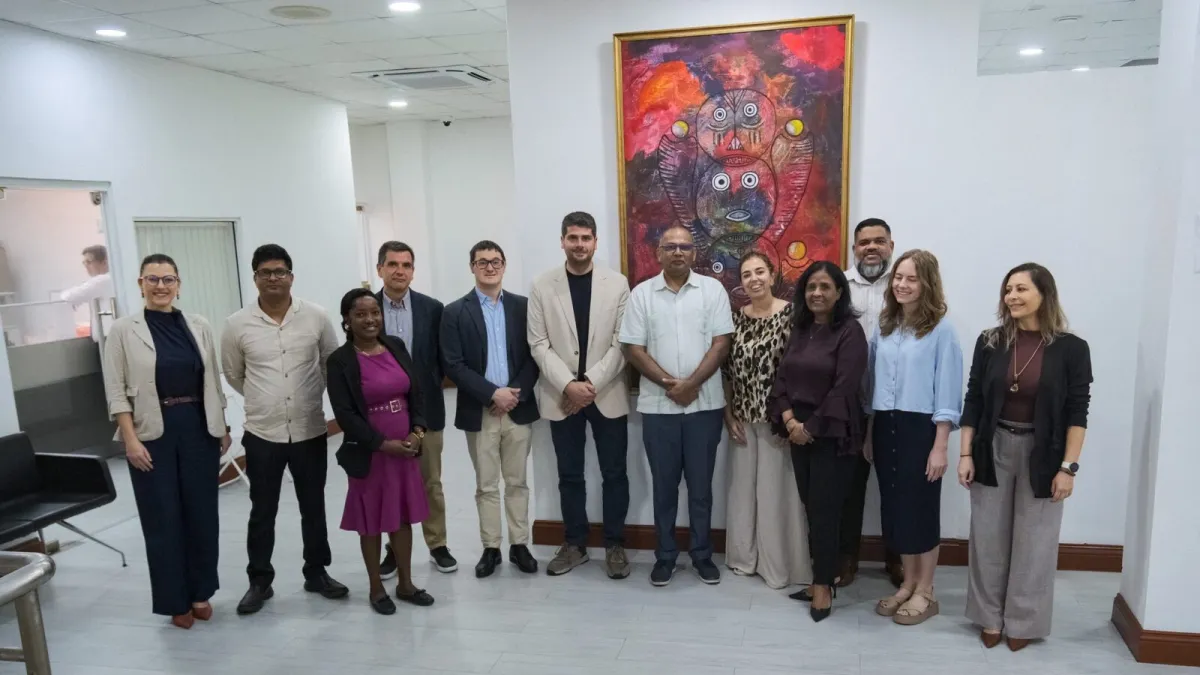
In an effort to strengthen Guyana’s healthcare capabilities and improve patient outcomes, the Ministry of Health has launched a 31-month Initiative to build a sustainable, resilient and internationally aligned organ donation and transplantation system.
Minister of Health, Dr Frank Anthony, met with a delegation from the Donation and Transplantation Institute (DTI Foundation), the Human Organ and Tissue Transplant Agency (HOTTA), the Georgetown Public Hospital Corporation (GPHC), and other senior health officials at his Brickdam office.
The high-level engagement marked the commencement of a transformative 312-month programme from April 2026 to October 2028. It will support the development of the internationally aligned framework.
This initiative is funded by the European Union and coordinated by Expertise France under the Guyana NextHealth programme. It will strengthen institutional, clinical, regulatory and laboratory capabilities while enhancing protocols for living kidney donation.
The project represents a significant shift from isolated ad hoc procedures to a fully integrated and ethically governed national system under local leadership.
This transition is expected to improve access to life-saving transplant services, reduce mortality associated with end-stage organ failure and lessen the need for patients to seek costly treatment overseas.
In addition, the initiative will facilitate the transfer of knowledge and international best practices to local healthcare professionals, ensuring that Guyana develops the expertise necessary to manage organ donation and transplantation services independently and sustainably.
The programme also forms part of the government’s broader agenda to modernise the healthcare sector and build medical self-sufficiency, ensuring that citizens have access to specialised care within Guyana.
Twenty-two individuals have joined Guyana’s pool of skilled renewable energy technicians after completing specialised training in Electric Vehicle Systems and Solar PV Charging Infrastructure.
The initiative was implemented through a partnership among the Board of Industrial Training (BIT), the Guyana Energy Agency (GEA), the International Organisation for Migration (IOM), and the United Nations.
Following the graduation ceremony at the Windjammer International Hotel in Kitty, Georgetown, on Friday, one of the graduates, Marion Glasgow expressed how elated he is to have completed the “terrific” session.
He said that due to his love for electric vehicles, and after seeing the advertisement for the programme, he hopped on board with the training. According to him, the skills he gained will now be used in his professional space.
Meanwhile, Ayesha Bovell said the programme provided an opportunity to expand her understanding of vehicle electrical systems, an area she had not previously explored despite being a driver.
She noted that the knowledge gained will also benefit her professional career as a Science teacher, allowing her to better educate students about renewable energy technologies, including solar panels.
Krishan Kempadoo also spoke with DPI, stating that the training was educational and informative. He believes that Guyana is advancing in the energy sector, and electric vehicles are in demand than petroleum vehicles because of their many advantages.
Ayesha Bovell
Similarly, Bobby Samuels said he was passionate about his training and is heavily interested in technology.
With the country transitioning to the gas-to-energy project, Samuel believes there will be more solar power across the region, which will accommodate electric vehicles.
Delivering remarks on behalf of Prime Minister Brigadier (Ret’d) Mark Phillips, Chief Executive Officer of the Guyana Energy Agency, Dr Mahender Sharma, highlighted the government’s commitment to building a skilled workforce to support Guyana’s transition to renewable energy and electric mobility.
He noted that Guyana continues to invest heavily in renewable energy, energy efficiency and climate resilience while creating an enabling environment for the adoption of electric vehicles and clean technologies.
Marion Glasgow
“This training initiative complements those efforts by ensuring we develop the local expertise needed to install, operate, and maintain technologies that will power the future,” Dr Sharma said.
He stated that the programme comes at a critical time as demand for renewable energy technologies and electric vehicles continues to grow.
Dr Sharma also highlighted the government’s ongoing grid-connected solar programme and encouraged graduates to participate in installing solar-powered EV charging stations being established countrywide.
In addition, United Nations Development Programme Resident Coordinator Katy Thompson reaffirmed the UN’s commitment to supporting Guyana’s sustainable development and energy transition goals.
She noted that the long-term success of the transition will depend on technicians, trainers, educators, innovators and leaders who can sustain and expand the impact of renewable energy initiatives.
The programme also produced two comprehensive training curricula covering Electric Vehicle Systems and Solar PV-Powered EV Charging Infrastructure.
The books were handed over to BIT and will support future technical and vocational education programmes nationwide.
See below the full release from the Guyana Police Force:
The Guyana Police Force has taken note of a Facebook Live video, which was later posted on social media today, Sunday June 7, 2026, featuring an individual known as “Melly Mel,” in relation to an ongoing murder and attempted murder investigation.
The Force categorically rejects the reckless and unfounded claims made in the video, including suggestions that the investigation is being covered up, manipulated, or that Detective Senior Superintendent M. Caesar, who is one of the senior investigators assisting with the matter, is engaged in any improper conduct.
This relentless campaign by this so-called Social Media Influencer against members of the Guyana Police Force is patently false, irresponsible and serves only to mislead the public, attack the character of a senior investigator and create unnecessary distrust at a time when investigators are actively working to ensure that justice is served.
Detective Senior Superintendent Caesar remains a senior and experienced investigator who was adjudged Best CoP of the Guyana Police Force on 2 occasions and was also the Runner-up *Top Caribbean Crime Fighter in the year 2017, has always executed his duties professionally and lawfully.
Therefore, any attempt to malign his character or undermine his role is strongly condemned.
The Guyana Police Force assures the public that this matter is being thoroughly investigated and all lawful lines of enquiry are being pursued.
Members of the public are urged to reject speculation, avoid spreading unverified claims and rely only on official updates from the Guyana Police Force.
Kimi Antonelli took a dominant victory in the Monaco Grand Prix ahead of the Ferrari of Lewis Hamilton after a chaotic ending that featured two safety cars and a red flag.
The 19-year-old Italian’s fifth win in a row, in combination with a dire race for Mercedes team-mate George Russell, who finished 13th and out of the points, puts him in total control of the championship.
Antonelli leads Hamilton by 66 points, with Russell now down to third, two points further adrift.
Russell dropped to the back from third place because of a drive-through penalty that he had to serve when the field was compressed two laps after the restart.
Race winner Andrea Kimi Antonelli of Italy and Mercedes AMG Petronas F1 Team on the podium with his trophy during the F1 Grand Prix of Monaco at Circuit de Monaco on June 07, 2026 in Monte-Carlo, Monaco. (Photo by Mark Thompson/Getty Images)
Pierre Gasly finished third for Alpine, but was immediately dropped to seventh with a penalty for speeding in the pit lane.
That promoted Red Bull’s Isack Hadjar to the final podium position, ahead of McLaren’s Oscar Piastri on the occasion of the team’s 1,000th grand prix.
The madcap ending was one of several key stories, including:
Antonelli’s supreme display to take total control of the championship
Russell’s latest dose of bad luck seemingly killing his title chances
A costly error from Charles Leclerc at his home race – which he refused to accept was his fault
The chaos caused by the track breaking up and an unusually high number of penalties – six – for drivers speeding in the pit lane
Antonelli stays cool as chaos unfolds behind him
Antonelli kept his cool through two race starts – the initial one and the final one after the red flag – to hold the lead off the line for the first time this season and utterly dominate.
An absolute masterclass from Antonelli for his first Monaco win underlined his credentials as the likely world champion this year, even if there are scheduled to be 16 races remaining.
The talk before the race was whether Antonelli could for the first time this year keep his position off the grid.
In fact, he got away well, and instead it was Max Verstappen’s Red Bull alongside him who suffered an engine problem off the line and was passed by the entire field before retiring after limping around the first lap.
That left Hamilton chasing Antonelli but any sense of competition evaporated almost immediately.
The Mercedes was 2.9 seconds clear at the end of two laps and continued to build a lead of more than five seconds by the end of 10 laps.
He had to back off a little to manage overheating brakes for 10 laps but then was able to pull away again.
Antonelli was more than 20 seconds clear of Hamilton when the first safety car was called with 18 laps to go after Lance Stroll crashed his Aston Martin at the final corner.
But even though Antonelli missed the pit lane entry the first time around – asking his engineer whether to pit and being told too late that he should – he stopped the next time around and retained his lead.
Antonelli said: “It was one of those days where we had incredible pace. It was just coming all so natural. The car was feeling incredible and was just giving me the confidence to push.
“The job isn’t finished. It’s still a long season. We are going to keep pushing and keep raising the bar. The goal is to keep performing like this.” (BBC)
India had two centurions – Shubman Gill (126) and KL Rahul (100). They also had two batters making 81 each – B Sai Sudharsan and Rishabh Pant. But it was left-arm spinner Manav Suthar‘s successful introduction to Test cricket that was their biggest W on day two of the one-off Test against Afghanistan in New Chandigarh.
Suthar bowled nearly two hours after tea, and took 1-20 in a marathon spell of 12.2 overs. He got lavish drift and turn with the new ball, and held his lengths nicely. Suthar eventually struck on the stroke of both tea and stumps, and finished with a three-for.
There was good support from Prasidh Krishna and Kuldeep Yadav even as Rahmat Shah (43*) showed some resistance for Afghanistan.
Earlier in the day, India’s batting continued to dominate from a position of strength as all ten batters got to double figures, while Washington Sundar (52*) ground the Afghanistan bowlers down in the heat.
Mohammad Saleem, though, was lion-hearted in his second Test, and finished with a six-for. Azmatullah Omarzai had also started well, and missed out twice due to Afghanistan not using the DRS.
India declared and bowled at Afghanistan for 20 minutes before tea. Openers Sediqullah Atal and Abdul Malik worked past nervy moments, and picked up two boundaries each off Mohammed Siraj. Malik looked to sweep Suthar off a length after the first three balls spun big, but only managed a top edge to backward square leg.
Rahmanullah Gurbaz defended decisively, didn’t mind getting beaten, and played the odd sweep. In 33 balls, he scored seven runs with 31 dots. Suthar got him with a ripper turning away to take the edge for a low catch at second slip.
Meanwhile, Prasidh bowled a snorter that seamed in to flatten Atal’s middle stump, and also send off stump flying. Rahmat had a bit of luck when he was hit on the pad by Suthar, in the 16th over, as the contact was made more than three metres from the stumps.
Kuldeep had a couple of near moments go against him. A drive from Rahmat went teasingly above him in the 21st over. Rahul then dropped Hashmatullah Shahidi at first slip in the 25th.
Washington replaced Suthar for a couple of overs. Shahidi survived an lbw call with DRS thanks to an inside edge. That wasn’t possible next over, when he missed a flick off Prasidh.
Suthar returned, Washington changed ends, and Afghanistan’s batters seemed to shut shop in the last few overs. There were no real boundary shots attempted. Rahmat danced down and smacked Suthar over the head for six.
Afsar Zazai saw a short ball down leg sit up and wound up big for the pull shot, but checked his shot halfway and got a top edge that ballooned back to the bowler.
When India batted earlier on day two, Afghanistan started the second session with spin – much to Suthar’s delight. He helped himself to two sixes off Shahidi as India made 28 off the first three overs after lunch.
Saleem joined Omarzai to cut down runs at first. It led to Suthar being caught behind looking to drive through cover, and completed Saleem’s five-for.
Siraj, promoted over Kuldeep Yadav, scored all his runs in boundaries. He took apart left-arm spinner Nangeyalia Kharote, and cut Saleem despite not getting width. Saleem responded by beating Siraj’s slog and denting middle stump.
Washington and Kuldeep didn’t hurry, though. Saleem continued to bowl at a high pace even after bowling upwards of 25 overs, and beat Kuldeep’s edge regularly.
The only bit of intent against Saleem came in the final over of the innings. Washington started it with a pulled six, and flicked one past mid-on to bring up fifty. (ESPNcricinfo)
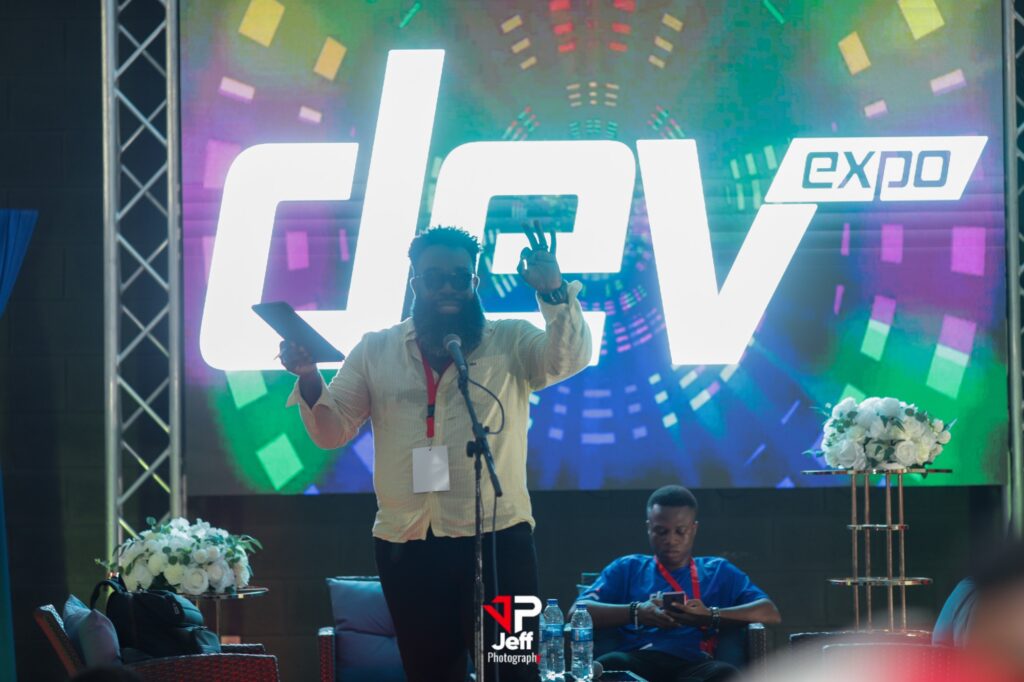
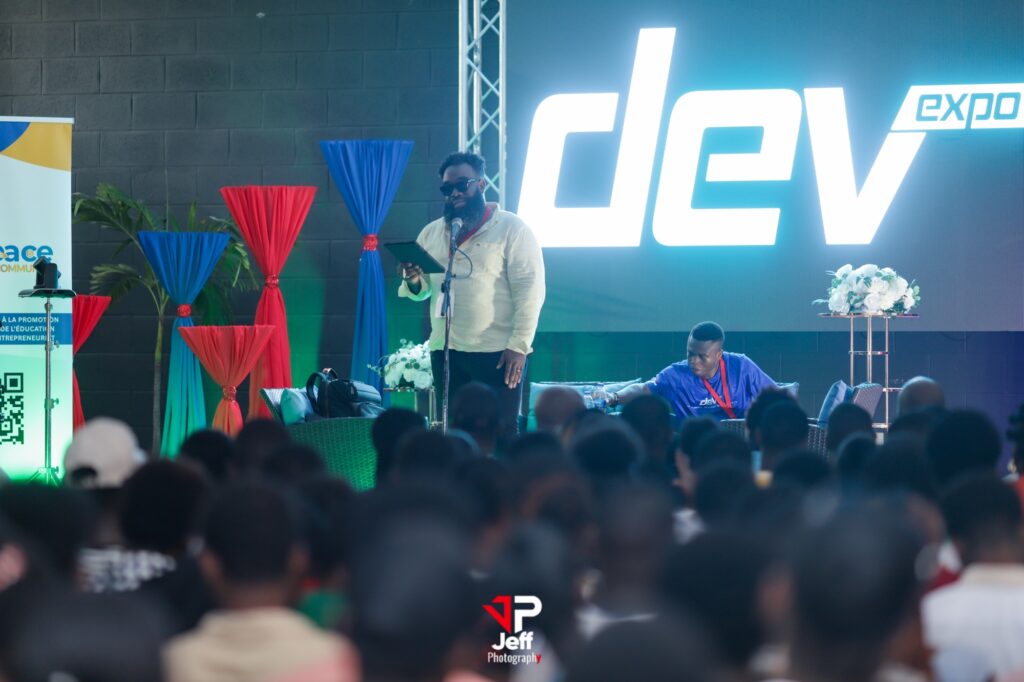
DevExpo a réuni des participants dans les dix départements du pays autour d’une même ambition : rapprocher l’innovation, le numérique et l’intelligence artificielle des réalités concrètes des communautés haïtiennes. Dans le Sud, l’événement a pris une résonance particulière avec la participation de John BOISGUENE, plus connu sous le nom de TekTek, invité comme Keynote Speaker aux côtés d’autres intervenants venus partager leurs expériences, leurs visions et leurs réflexions sur l’avenir technologique du pays.
À DevExpo Sud, il ne s’agissait pas seulement de parler de technologie comme d’un sujet lointain, réservé aux grandes entreprises, aux ingénieurs ou aux pays déjà fortement industrialisés. Le véritable enjeu était de poser une question simple, mais profonde : comment l’intelligence artificielle peut-elle réellement servir le peuple haïtien, non pas dans les promesses, mais dans la vie quotidienne d’un jeune, d’un entrepreneur, d’un agriculteur, d’un professeur, d’une commerçante ou d’une communauté qui cherche à avancer malgré les obstacles ?
Le thème de l’intervention de John BOISGUENE s’inscrivait directement dans cette logique : bâtir un changement durable depuis la base. Son message a été clair : l’intelligence artificielle ne doit pas devenir un nouveau privilège réservé à une minorité déjà connectée, déjà formée et déjà favorisée. Elle doit être comprise, vulgarisée et adaptée afin de devenir un outil utile pour ceux qui en ont le plus besoin.
Dans son intervention, John BOISGUENE a rappelé que l’intelligence artificielle n’est pas une baguette magique. Elle ne remplacera pas l’électricité, les routes, les écoles, la sécurité, la formation, l’organisation ni le travail humain. Elle ne viendra pas effacer, à elle seule, les difficultés structurelles auxquelles le pays fait face. Mais utilisée avec intelligence, discipline et méthode, elle peut devenir un levier puissant pour apprendre plus vite, mieux organiser ses idées, améliorer la gestion d’une petite entreprise, renforcer la communication, produire du contenu, soutenir l’éducation, faciliter certaines recherches et ouvrir de nouvelles perspectives aux jeunes.
L’une des forces de DevExpo Sud a été de replacer la technologie dans le quotidien haïtien. Parler d’intelligence artificielle dans le Sud, ce n’est pas seulement évoquer des robots, des logiciels complexes ou des laboratoires étrangers. C’est se demander comment un entrepreneur aux Cayes peut mieux présenter son activité, comment un jeune peut apprendre une compétence avec son téléphone, comment un agriculteur à Nippes peut accéder à de meilleures informations, comment une jeune femme à Jacmel peut utiliser un smartphone pour développer un service, vendre un produit ou se former, même lorsqu’elle ne dispose pas toujours d’un courant stable.
Ce regard concret change profondément la manière d’aborder l’IA. Il ne s’agit plus de la présenter comme une mode technologique, mais comme un outil qui peut accompagner la transformation sociale et économique si elle est rendue accessible, compréhensible et utile. Pour John BOISGUENE, le danger n’est pas seulement que l’intelligence artificielle avance trop vite. Le danger serait surtout que les jeunes haïtiens restent en dehors de cette évolution, par manque d’information, de formation ou d’accompagnement.
DevExpo Sud a ainsi mis en lumière une idée forte : la technologie ne doit pas éloigner davantage les citoyens les uns des autres. Elle doit au contraire aider à réduire certaines distances. Distance entre ceux qui savent et ceux qui ne savent pas encore. Distance entre les grandes villes et les zones rurales. Distance entre ceux qui ont accès à l’information et ceux qui en sont privés. Distance entre les jeunes qui rêvent d’avenir et les outils capables de les aider à construire cet avenir.
Aux côtés des autres intervenants, John BOISGUENE a insisté sur la nécessité de former les jeunes, les entrepreneurs, les enseignants, les professionnels et les acteurs communautaires à l’usage responsable de l’intelligence artificielle. Car utiliser l’IA ne signifie pas simplement poser une question à une application. Il faut apprendre à vérifier les réponses, à structurer ses demandes, à protéger ses données, à éviter les fausses informations, à ne pas copier aveuglément, à garder son esprit critique et à utiliser ces outils pour devenir plus compétent, non plus dépendant.
Cette dimension éducative est essentielle. Dans un pays comme Haïti, où de nombreux jeunes disposent d’un téléphone mais n’ont pas toujours accès à des formations de qualité, l’intelligence artificielle peut devenir une porte d’entrée vers l’apprentissage. Elle peut aider à comprendre une leçon, préparer un CV, rédiger une lettre professionnelle, structurer un projet, traduire un texte, apprendre une langue, s’initier au marketing digital, découvrir les bases de la programmation ou mieux organiser une activité économique. Mais pour que cela profite réellement à la population, il faut vulgariser, accompagner et former.
Le passage de John BOISGUENE à DevExpo Sud a également porté un message d’espoir. Non pas un espoir naïf, ni un discours qui ignore les difficultés du pays, mais un espoir fondé sur la capacité des jeunes à apprendre, à s’adapter et à transformer les outils numériques en opportunités concrètes. Il a rappelé que le téléphone dans la main d’un jeune peut servir à perdre du temps, mais qu’il peut aussi devenir un espace de formation, de création, de travail et de projection vers l’avenir.
Dans ce sens, DevExpo Sud a dépassé la simple tenue d’un événement technologique. Il a offert un espace de réflexion sur la place des régions dans la transformation numérique du pays. Le Sud, comme les autres départements, ne doit pas être considéré comme un espace périphérique par rapport à l’innovation. Il doit être pleinement intégré à la conversation nationale sur le numérique, l’intelligence artificielle, l’entrepreneuriat, l’éducation et le développement local.
L’intervention de John BOISGUENE a mis en évidence une conviction centrale : Haïti n’a pas seulement besoin de consommateurs de technologie. Le pays a besoin de jeunes capables de comprendre les outils de leur époque, de les adapter à leur environnement, de les utiliser pour résoudre des problèmes locaux et de bâtir des solutions utiles à leurs communautés. L’intelligence artificielle n’aura de sens pour Haïti que si elle sert à améliorer la vie réelle, à renforcer les capacités, à soutenir la production, à améliorer l’éducation et à donner aux citoyens davantage de moyens pour agir.
DevExpo Sud aura donc été un moment important de dialogue entre innovation et réalité. En réunissant John BOISGUENE et d’autres intervenants autour de ces questions, l’événement a rappelé que la transformation numérique ne doit pas être pensée uniquement depuis les grandes villes ou les milieux spécialisés. Elle doit partir de la base, rejoindre les territoires, parler la langue des gens, répondre aux besoins concrets et offrir aux jeunes des raisons de croire qu’ils peuvent, eux aussi, participer à la construction de l’avenir.
Au fond, le message porté à DevExpo Sud est simple : l’intelligence artificielle ne sauvera pas Haïti à la place des Haïtiens. Mais entre les mains d’une jeunesse formée, consciente, disciplinée et créative, elle peut devenir un outil important pour apprendre, entreprendre, produire, communiquer et bâtir. La technologie seule ne suffit pas. Ce qui fera la différence, c’est la vision, l’éducation, l’organisation et la volonté de mettre ces outils au service du peuple.