The body of Zaheer Karim Bacchus, a 49-year-old unemployed man, was found midday Monday at Montrose, East Coast Demerara (ECD).
Police Headquarters said the man’s body was found at about 12:40 hrs.
An anonymous caller contacted Police in Regional Division 4 ‘C’ and said the body of a male was seen laying motionless at Fourth Street Montrose. A
A Police patrol responded and found the body of a male later identified as Bacchus. The man was found laying motionless clad in black shorts.
A physical check was done on the body, and no marks of violence were seen. The Emergency Medical Technicians (EMT) were summoned, and a doctor pronounced Bacchus dead .
The body was then escorted to the Memorial Gardens Funeral Home awaiting post-mortem examination. Investigations are ongoing.
Leroy Goriah, a 46-year-old Albouystown, Georgetown resident, and Alonzo McLean, a 48-year-old Independence Boulevard, Georgetown resident, were stabbed on Saturday night by a man who they witnessed beating his girlfriend.
Jason Lespor, a 34-year-old porter of Albouystown, attacked the men at about 21:00 hrs Saturday in the vicinity of the GT Bar at La Penitence, Georgetown.
Police Headquarters reported that Goriah and McLean were at the bar drinking when they observed Lespor hitting his girlfriend, a 29-year-old security guard, outside.
The men intervened to help the woman but the suspect then drew a knife from his pants waist and dealt the victims several stabs about their body before making good his escape on foot in an eastern direction.
The victims were later picked up by public-spirited citizens and taken to the Georgetown Public Hospital Corporation (GPHC), where they were seen, examined, and admitted. Goriah’s condition is listed as critical and Alonzo’s condition is stable; both men are still receiving medical attention.
Goriah reportedly received five stabs to his back measuring about six inches each, one to his right side chest causing his right side lungs to collapse, and several stabs to his right hand.
McLean was stabbed once to his left side upper back in the vicinity of his shoulder.
Meanwhile, Police said checks were made in the area and at the suspects home for him and the weapon that was used to commit the act. He nor the weapon have been located yet. Investigations are ongoing.
The GNFCS is guided by three standards: Forest Management (the Guyana Standard for Sustainable Forest Management (GSSFM); Chain of Custody, and, Group Certification. In 2020, the Ministry of Natural Resources initiated the development of the GNFCS and has been deeply involved in its progress ever since. In 2021, an independent, multi-stakeholder working group chaired by the Guyana Forestry Commission (GFC), commenced the formal process of developing the GNFCS. The multi-stakeholder working group comprised representatives from the Forest Products Association (FPA), the Guyana Manufacturing and Services Association (GMSA), indigenous non-governmental organisations (NGOs), environmental NGOs, academia and research, workers’ organisations, and youth and women’s organisations. Two editorial drafts were made available for public review and comment before the GNFCS was finalised and sent for its assessment under the auspices of PEFC.
Guyanese timber and timber products certified under the GNFCS will now bear PEFC International labels and trademarks. This provides clear evidence to local and international buyers that the certified forest operator’s management practices meet global environmental, social, and economic standards. It also demonstrates compliance with national and international legal forest requirements, including fundamental ILO conventions that govern the rights of workers and the unauthorised use of child labour. This assurance extends to the environmental, social, economic and legal requirements and protection of rights throughout the forest supply chain under the EU Timber Regulation, the US Lacey Act, and the Australian
Illegal Logging Prohibition Bill. Notably, Guyana has maintained a national wood tracking system, which dates back to the early 2000s. It enables the tracking of timber and timber products from the market to the forest source. Further, Guyana has a dual wood-tracking system (electronic and manual) implemented nationally. Some forest stations have internet access and electronic tag scanners; however, stations in remote locations still operate on a purely manual basis with staff having to visually verify tag numbers with removal permits. Under the VPA, there is the intention to further build capacity, enabling the phased implementation of a fully electronic system which will greatly increase efficiency and offer greater credibility to the wood-tracking system. In the interim, however, the dual system will remain functional.
The GNFCS drew on the national wood tracking system and other regulatory and monitoring systems developed and implemented by the GFC, including the national code of practice for forest management. The endorsement of the GNFCS by PEFC not only recognises the credibility of our systems, but also assures buyers that Guyanese timber is legally sourced and sustainably
managed. Importantly too, the GNFCS has been designed to make it cost-effective for large, medium, small and community forest sector operators (FSOs), aimed at attaining individual or group certification. Group certification allows FSOs to operate under one certificate and share costs, information, and experiences. The GFC is also working on training local auditors for certification bodies to use under the GNFCS, reducing the need to bring auditors from overseas. Additionally, the GNFCS complements other national initiatives which the Government of Guyana has embarked on for several years, with an example as the European Union’s Forest Law Enforcement, Governance and Trade Voluntary Partnership Agreement. It is also one of the priority areas under Sustainable Forestry in the Low Carbon Development Strategy (LCDS) 2030.
For achieving yet another milestone, the ministry extends its deep appreciation to all forestry stakeholders, the local PEFC working group and the GFC team.
Minister of Housing and Water, Collin Croal, during remarks at the memorial service in Karisparu Village
He explained that a total of $60 million is being invested to the execute overall works, thereby boosting the water coverage in the community and region.
Since last year, he explained that the government had planned to drill a well in Karisparu, but access to the area to transport a rig there was one of the logistical obstacles.
He then pointed out, “We then put in the trestle system where we are investing about $60 million overall…We are putting in a catchment to catch the water from your creek and then, we will run the distribution system. We are about 60 per cent works completed…By the mid-June, we will implement that completely.”
Residents were informed that more water tanks will be added to the two tanks currently in the system.
Now that the airstrip has reopened, access has been enhanced and the contractor will be able to transport more materials to the area.
Government is aggressively pursuing its agenda in ensuring that every hinterland community has access to potable water by the end of 2025.
Minister Croal further committed, “It is still my intention that we will, at some point, come back to drill a well.”
Over the three and half a year, $526 million has been spent to advance water access in the region. The investment is expected to increase to some $650 million by the end of this year.
With these investments, the region’s water coverage will move to about 90 per cent by year-end.
The water system in Karisparu
Overall, a total of $1.5 billion has been budgeted to improve water services in the hinterland regions for 2024.
“We are drilling a number of wells in Region Eight starting with first-time access and then we will branch off…We are therefore investing to ensure that all communities have access,” he emphasised.
Some 361 residents from Kamana and Sand Hill are benefitting from new water supply systems worth $84 million.
Meanwhile, in the housing sector, ten Karisparu families will benefit from the construction of ten elevated houses under the hinterland housing programme.
Through this framework, the village council and the residents will identify the most vulnerable families in the village to receive a house.
Additionally, another village in the region will also benefit from this programme by the latter half of this year.
Joining the minister was Minister of Amerindian Affairs, Pauline Sukhai and GWI’s Hinterland Services Director, Ramchand Jailal. (DPI)
President Dr Mohamed Irfaan Ali addressing the audience at the flag-raising ceremony on Saturday evening
In his lengthy but comprehensive address to the nation Saturday night at the Mackenzie Stadium in Linden, President Ali highlighted the government’s strategic investments in the region, positioning it as a major investment centre by establishing a manufacturing ecosystem, enhancing transport and logistics, engineering services, and expanding housing.
“Make no mistake; this region that we are in tonight is going to be the centrepiece for development. It is going to be the critical link between the investment we are making towards the Guiana Shield, connecting northern Brazil, building out in the interior, connecting into Bartica, building your roads, opening up new lands, creating new opportunities,”the Head of State detailed.
With Guyana taking a lead role in agriculture in the Caribbean, the administration has taken bold steps to build out the infrastructure so that the mining town can contribute to the regional food security and sustainability plans.
A showcase of rich Guyanese culture and talent at the 58th flag raising ceremony held at Linden, Region Ten on Saturday night
It is this same region that will be supplying all the soya and corn needs locally and regionally and undertake large-scale production of black eye and red beans to meet the regional market demand.
“We are now working on building a first-class food hub, a regional food hub, right here in Guyana and Region 10 will be critically connected,” President Ali went on to add.
The region is poised to become the central transport and logistics hub, linking Brazil with the Caribbean and surrounding regions.
And major infrastructure projects including the construction of 45 bridges from Mabura to Kurupukari and Lethem, the US$190 million Linden-Mabura Hill Road, the US$35 million Wismar Bridge, and the upgrading of the Linden-Soesdyke Highway at a cost of US$120 million, are being undertaken to facilitate this.
“These are the investments that are transformative, that will raise your region that will lift your region every single village in the river, every single community here in Region 10, you will be lifted with this tide of development,” Dr. Ali emphasised.
President Ali also highlighted investments in housing that saw a $3B in injection into the housing programme while $1 billion is being expended to improve the quality of water for residents.
The audience at this year’s 58th Independence Flag Raising Ceremony held in Linden, Region Ten on Saturday evening
In sports, the government has invested a staggering $1.4 billion in building back sports facilities in less than three years; they are being built to accommodate international FIFA standard football.
“You’re going to see a major push to ensure that your region becomes an important region in tourism and development. Silica City, the new Silica City will be connected to your region. The new highway that will come from Mandela and connect to the Linden- Soesdyke highway will reduce your transport time [and] bring greater efficiency.”
The President assured the residents of Region 10 that their region has received significant investments and will continue to be a priority, acknowledging its potential for development.
“When you look at per capita investment, we have invested in your region higher than any other region per capita because we understand the potential of this region. We believe in the potential of this region as we believe in the potential of Guyana,” Guyana’s President underscored.
Billions of dollars are also being invested to improve infrastructure, healthcare, education and the standard of living for residents living in the ten administrative regions of Guyana. (DPI)
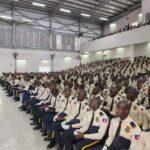
Plus de 2 000 policiers haïtiens se rendront au Kenya pour y suivre une formation. Il a été convenu que l’équipe sera envoyée par avion au Kenya pour une courte formation sur le droit, le combat et d’autres questions de police avant de retourner dans le pays, a rapporté The Star Kenya.
Cependant, la délégation de responsables kényans qui était en Haïti pour une mission d’enquête retourne au Kenya ce lundi 27 mai.
Selon le journal kényan, la délégation et les autorités haïtiennes se sont mises d’accord sur diverses questions à résoudre avant le déploiement du premier contingent de policiers kényans prévu d’ici la mi-juin 2024.
« La formation des policiers fait partie de ce que nous avons convenu. Il sera moins cher et plus facile de les former au Kenya pendant, disons, deux semaines ou plus avant leur déploiement en Haïti », a déclaré une source haut placée.
Les officiers devaient commencer à arriver avant la fin du mois de mai, mais une équipe avancée sur le terrain a déclaré que le pays ne dispose pas des équipements nécessaires pour accueillir le déploiement des policiers kényans, d’où la prolongation de deux semaines supplémentaires.
Il est à souligner que l’accord portant sur les règles d’engagement pour le personnel de sécurité, convenu entre le gouvernement haïtien et le Kenya, n’a pas encore été mis par écrit ni soumis au Conseil de Sécurité des Nations Unies, condition préalable au démarrage de la Mission Multinationale de Soutien à la sécurité (MMSS). Toutefois, les responsables ont déclaré qu’ils seraient entièrement prêts à se déployer d’ici la mi-juin.
Sur BFM-TV, Manon Aubry, Jordan Bardella, François-Xavier Bellamy, Léon Deffontaines, Raphaël Glucksmann, Valérie Hayer, Marion Maréchal et Marie Toussaint ont débattu sur le pouvoir d’achat, l’immigration et la défense européenne.
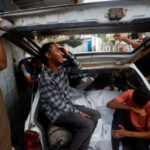
Les frappes, qualifiées d’« erreur tragique » par Benyamin Nétanyahou, ont fait au moins 45 morts et 249 blessés, selon le ministère de la santé du Hamas. D’après le Croissant-Rouge palestinien, le site avait été désigné comme une zone humanitaire par l’armée israélienne.



 Minister of Housing and Water, Collin Croal, during remarks at the memorial service in Karisparu Village
 The water system in Karisparu


 President Dr Mohamed Irfaan Ali addressing the audience at the flag-raising ceremony on Saturday evening
 A showcase of rich Guyanese culture and talent at the 58th flag raising ceremony held at Linden, Region Ten on Saturday night
 The audience at this year’s 58th Independence Flag Raising Ceremony held in Linden, Region Ten on Saturday evening