Tacky’s War: The Key Facts Behind Jamaica’s Largest Slave Uprising
In April 1760, a coordinated uprising broke out in eastern Jamaica, led by an enslaved African known as Tacky. What followed was not a brief revolt, but a sustained and strategic conflict that spread across the island and lasted well into 1761.
Long remembered as Tacky’s Rebellion, historians now recognise it as something far more complex: a war. It drew on African military traditions, unfolded across multiple regions, and forced the British Empire to confront one of the most serious internal threats it had ever faced in the Caribbean.
Here are the key facts that explain what happened, why it mattered, and how it reshaped Jamaica’s history.
It Was Not a Single Revolt — It Was an Island-Wide War
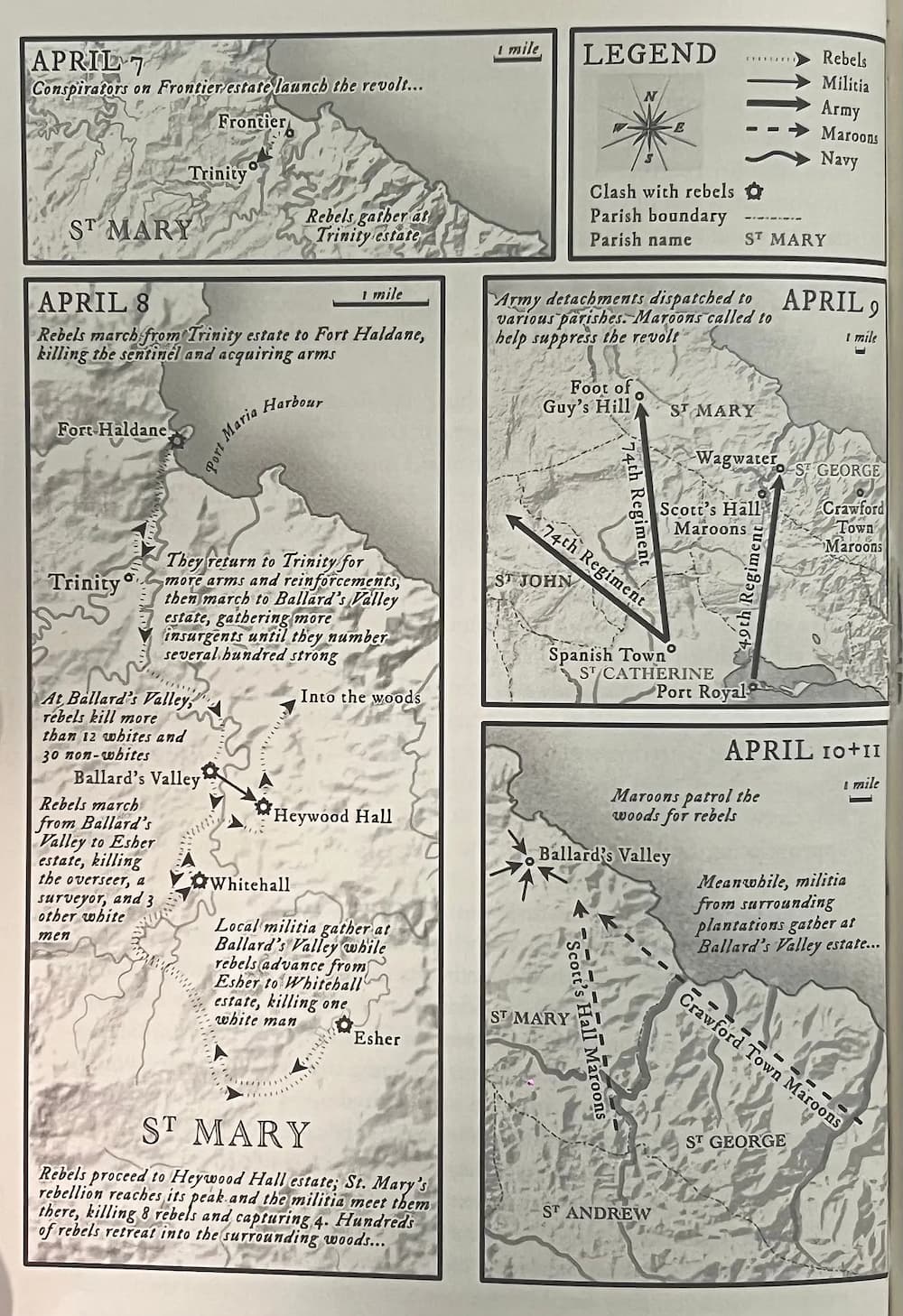
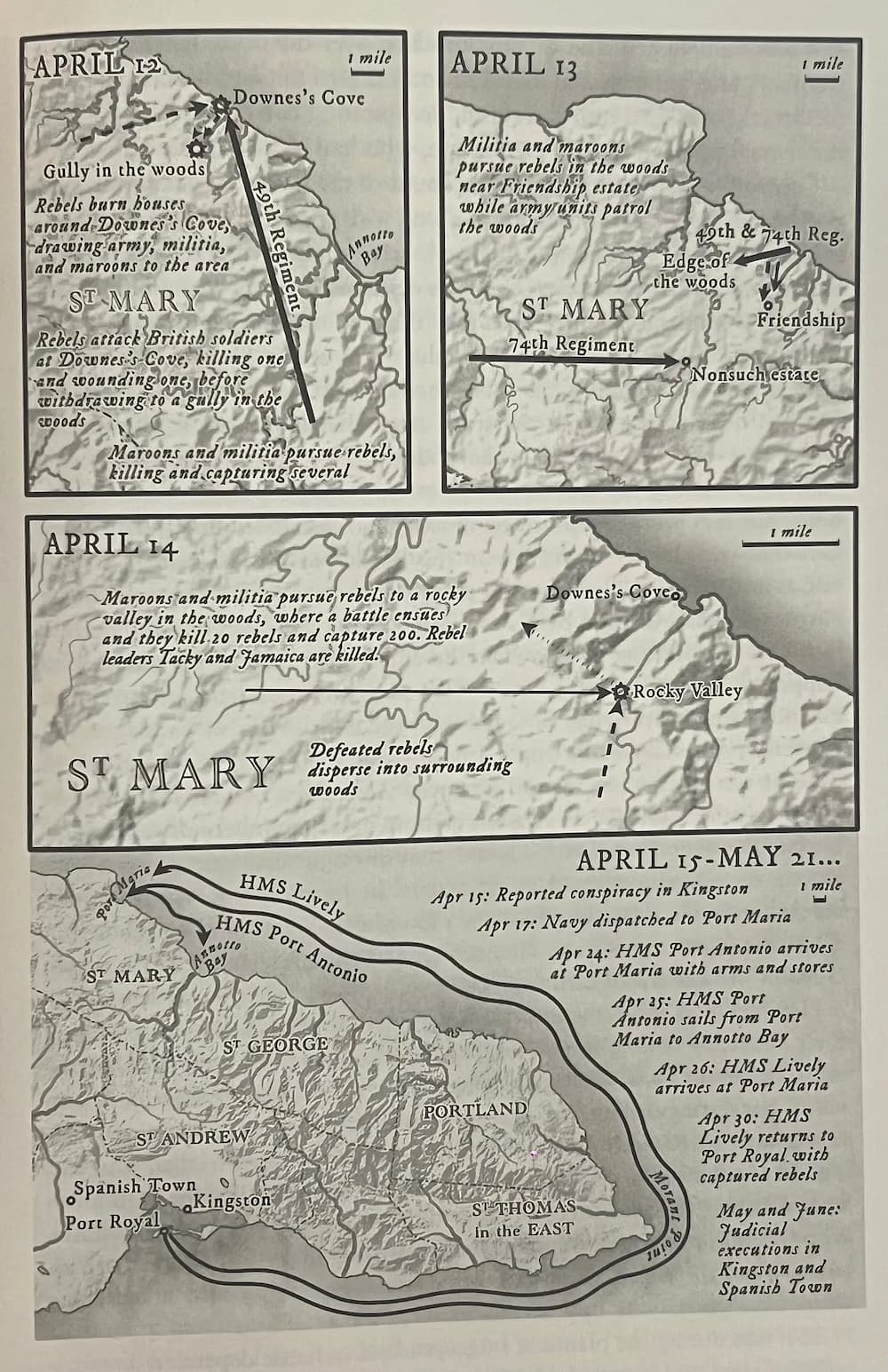
What began in St. Mary on April 7, 1760 (Easter Monday) quickly spread across Jamaica, evolving into a prolonged and multi-front conflict. Uprisings and conspiracies emerged in several parishes, disrupting plantation life, trade, and colonial governance.
According to Encyclopedia of Jamaican Heritage by Olive Senior, the uprising in St Mary was only one part of a much wider revolt “planned for the entire island,” though the effort was ultimately betrayed. This aligns with historian Vincent Brown, who frames the events of 1760–1761 as a series of interconnected uprisings that together formed one of the largest slave wars in the eighteenth-century British Empire.
The Uprising Was Strategically Planned — and Militarily Executed
The timing of the revolt—during the Easter holiday—was deliberate. The rebels struck when many enslavers were least prepared, beginning with the seizure of Fort Haldane, where they killed the storekeeper and secured firearms and ammunition.
As Senior details, the rebels also armed themselves with improvised ammunition, using lead weights from fishing nets as bullets, while moving from estate to estate—burning, looting, and drawing others into the fight. Her account describes a guerrilla-style campaign, a view reinforced by Brown, who argues that such uprisings involved planning, tactics, and coordination more akin to warfare than spontaneous resistance.
Tacky’s War Was About Freedom, Power and Control
The scale and coordination of the uprising suggest that this was not simply about fleeing slavery. The rebels targeted military sites, moved across territories, and organised in ways that point to broader struggles.
Historian Vincent Brown argues that Tacky’s War can be understood as four overlapping conflicts. Enslaved Africans fought white enslavers for freedom, fought Maroons for control of territory, and in some cases continued rivalries rooted in West Africa. The uprising also unfolded during the Seven Years’ War, where instability in Jamaica had implications for British imperial strength.
In this context, Tacky’s War was simultaneously an all out slave uprising and a coordinated challenge to colonial authority shaped by multiple, intersecting conflicts.
It Was Part of a Larger Global Conflict
Tacky’s War unfolded during the Seven Years’ War (1756–1763), a global conflict that stretched across Europe, North America, West Africa, and the Caribbean. At the time, Britain was engaged in multiple theatres of war, with troops and resources spread thin.
Brown argues that the uprising in Jamaica was not separate from this wider conflict, but deeply connected to it. Some of the same forces engaged in Britain’s global campaigns were also deployed to suppress the rebellion, placing Tacky’s War within the broader machinery of imperial warfare. Yet, as he notes, this connection has often been overlooked, with Jamaica’s uprising treated as a local disturbance rather than a significant front within a global war.

The Leaders Were Experienced Fighters with Deep African Roots
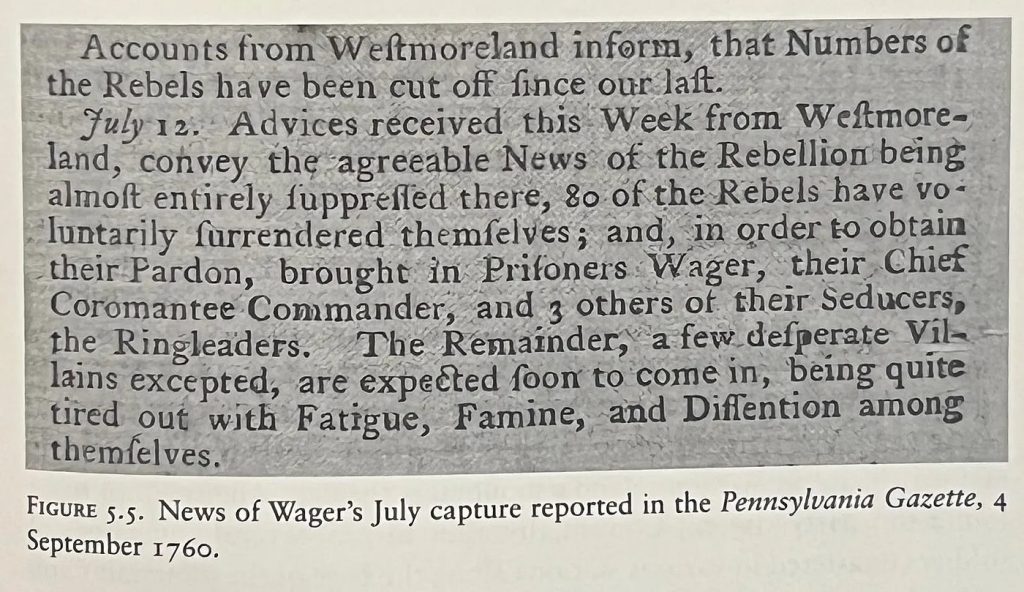
Tacky was not alone. While he led the eastern campaign, Apongo (also known as Wager) led a major uprising in western Jamaica, particularly in Westmoreland. The war unfolded across multiple fronts, shaped by different leaders and networks. The fighters were largely Coromantee (Akan) people from the Gold Coast, and according to Olive Senior, historian Bryan Edwards described Tacky as “a Koromantyn Negro… who had been a chief in Guinea.” Before the uprising, he served as a driver on the plantation, a role that likely gave him the authority and access to organise across estates such as Frontier and Trinity.
Apongo’s background reinforces this pattern of leadership. As outlined in historical accounts and analysed by Vincent Brown, he was likely a military leader in West Africa before being captured in the 1740s. Enslaved by British naval officer and planter Arthur Forrest, he was renamed “Wager” after the ship HMS Wager and lived in Jamaica for years bringing with him both battlefield experience and insight into British systems of power.
His campaign, which began in May 1760, saw coordinated attacks across multiple plantations in western Jamaica and helped sustain the wider conflict after Tacky’s death. Brown argues that this western uprising was not secondary, but central to the war itself—highlighting that Tacky’s War was driven by multiple leaders whose experience and organisation made it far more formidable than often portrayed.

The Revolt Exposed Deep Fears and Triggered Brutal Reprisals
For Jamaica’s slaveholding class, the uprising confirmed a long-standing fear: that the enslaved population, which outnumbered them, could organise and overthrow the system. The war disrupted plantation life, halted economic activity, and forced the British to deploy significant military force under colonial leadership, including Lieutenant Governor Henry Moore, who oversaw the island’s response.
Both Brown and Senior point to the scale of the response. Senior details that the suppression involved militia, soldiers from Spanish Town, Maroons, and “loyal slaves,” forming a layered and coordinated military response led by colonial authorities and supported by powerful planters such as Zachary Bayly in the west. The consequences were severe: approximately 300 enslaved Africans were killed, 50 executed, and another 300 deported to logwood camps in Honduras, while many reportedly chose suicide rather than surrender. Sixty white colonists were killed. Brown similarly emphasises that the repression that followed was as significant as the uprising itself, underscoring the scale of colonial retaliation.
7. Maroons Played a Critical Role in Suppressing the Uprising
The British response to Tacky’s War relied heavily on Jamaica’s Maroon communities, whose knowledge of the terrain and experience in warfare made them highly effective in tracking and defeating rebel fighters.
As outlined in Olive Senior’s account, Maroons were among the forces mobilised alongside militia, soldiers, and “loyal slaves” to suppress the uprising. This reflects the realities of the post-1739 treaties, which required Maroon communities to assist colonial authorities in putting down slave rebellions. It was reportedly a Maroon marksman who killed Tacky.
Brown’s broader interpretation helps frame this moment, noting that such conflicts were not simply between enslaved Africans and European colonists, but also involved internal divisions shaped by survival, strategy, and political alignment. In this case, Maroons—preserving their autonomy under treaty—were positioned on the side of the colonial state, even as others fought to overturn it.
The War Did Not End with Tacky’s Death
According to historical accounts, Tacky was shot by a Maroon marksman before being captured. As detailed in Encyclopedia of Jamaican Heritage, Olive Senior notes that his head was then cut off and taken to Spanish Town, where it was displayed on a pole as a warning. His followers later returned under cover of night and retrieved it.
Despite this, the fighting continued. Uprisings persisted across the island, particularly in western Jamaica under Apongo’s leadership, and extended well into 1761, with further plots and unrest emerging in the years that followed.
This continuity reinforces Brown’s argument that the uprising was not dependent on a single figure, but part of a wider, coordinated movement shaped by shared experiences, networks, and resistance across the enslaved population.
The War Intensified Control Over the Enslaved
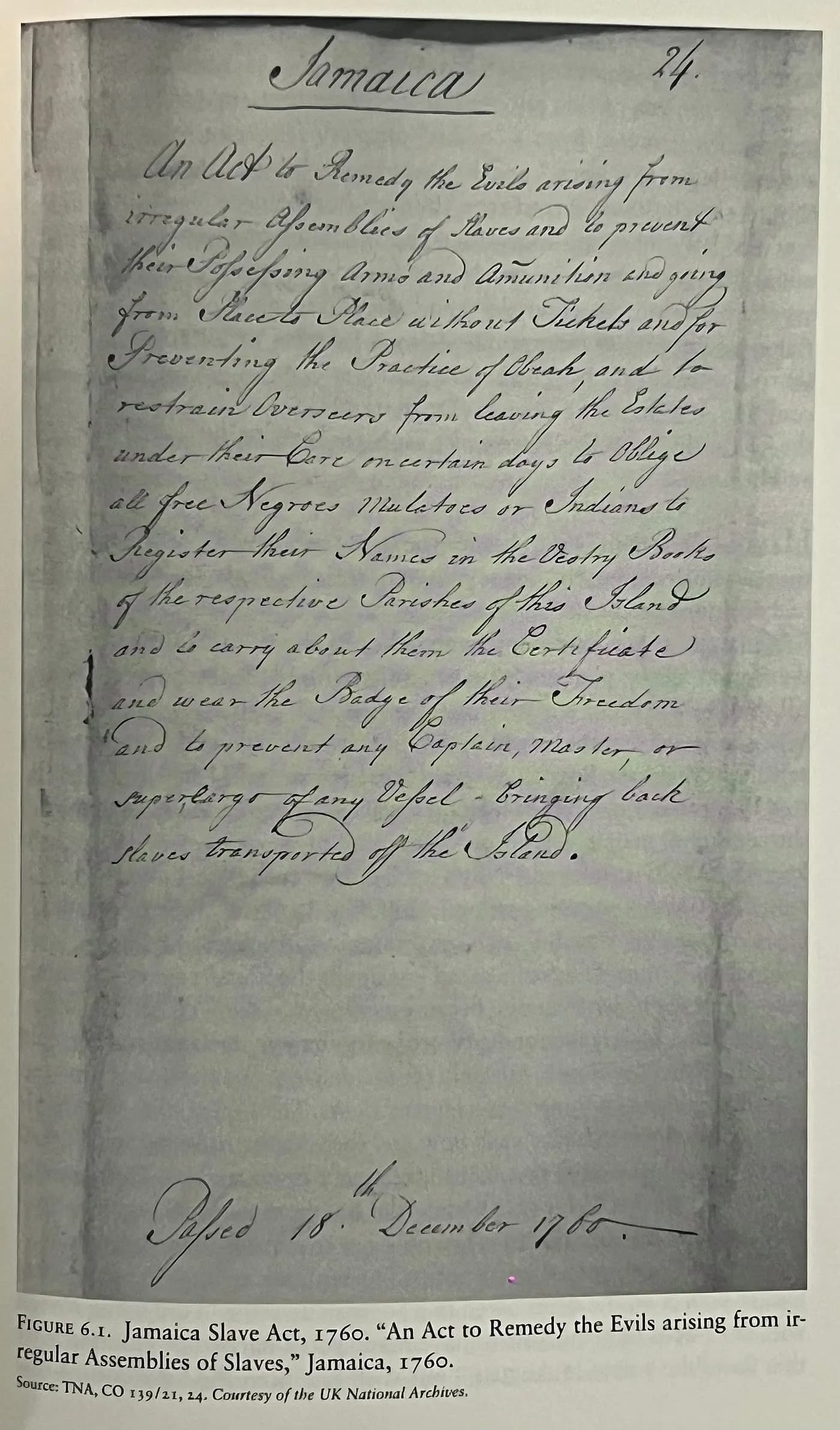
One of the most lasting impacts of Tacky’s war was how it reshaped colonial law and deepened control over the daily lives of enslaved Africans. In response, colonial authorities passed the Jamaica Slave Act on December 18, 1760, formally titled “An Act to Remedy the Evils arising from irregular Assemblies of Slaves.” According to Encyclopedia of Jamaican Heritage, Olive Senior notes that the uprising marked one of the first times the term “obeah” entered official colonial records. In response, colonial authorities passed the Jamaica Slave Act on December 18, 1760, formally titled “An Act to Remedy the Evils arising from irregular Assemblies of Slaves.”
The law went far beyond targeting spiritual practices. It criminalised obeah, prescribing death or transportation for anyone accused of practising it, but also imposed sweeping restrictions on movement, gathering, and communication. Enslaved people were prohibited from possessing weapons without white supervision, from assembling in groups, and even from using drums or other instruments that could signal or mobilise others. Holidays were restricted to prevent opportunities for organising, and both enslavers and overseers faced heavy fines or imprisonment for failing to enforce these rules.
As historian Vincent Brown observes, these measures reflected a broader tightening of control in the wake of war, with estate managers fined or imprisoned for allowing gatherings or expressions of collective culture. The Act revealed how deeply the uprising had shaken colonial authority—transforming fear into law, and extending the reach of surveillance and punishment into nearly every aspect of enslaved life.
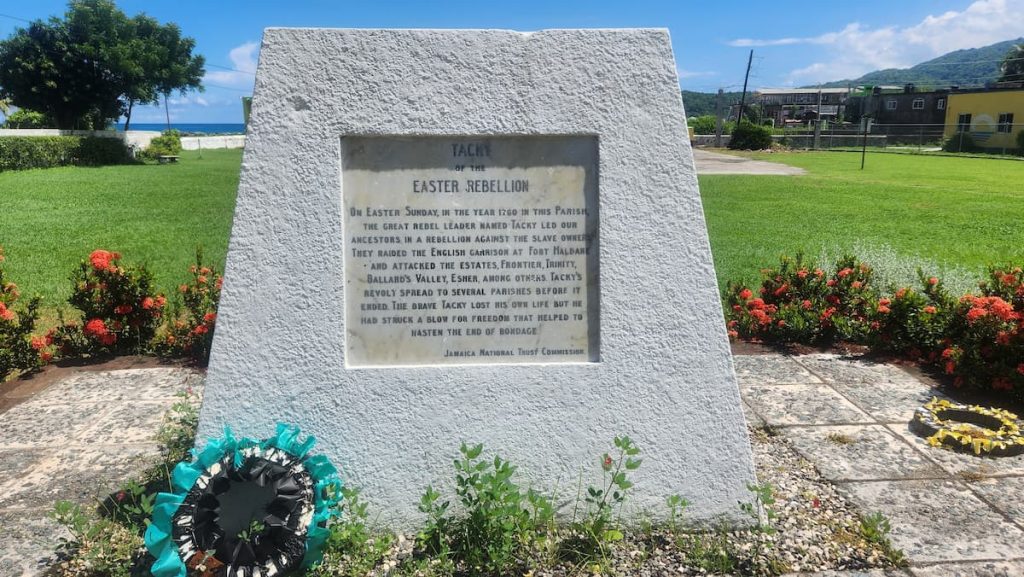
Tacky’s Legacy
The impact of Tacky’s War extended beyond its immediate suppression. The scale of the uprising forced colonial authorities to rethink security, control, and the management of enslaved populations.
Even in defeat, the rebels left their mark—physically and historically. Remains of the conflict have been identified in St. Mary, and the war itself cemented Tacky’s status as a national figure. As Olive Senior notes, his actions made him a “legendary figure,” while Brown’s work expands that legacy to include the wider network of African fighters whose coordinated resistance reshaped Jamaica’s history.
Today, the story continues to evolve, offering a deeper understanding not just of Tacky, but of the many individuals like Apongo and forces that made this one of the most significant uprisings in the Atlantic world.
Comments