Jamaica Rises to 49th in Global Happiness Rankings, Second in the Caribbean
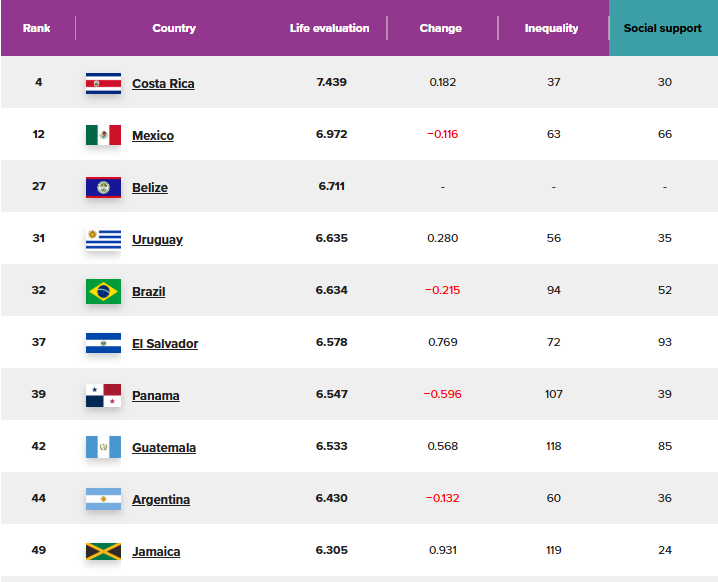
The World Happiness Report 2026 is out, and Jamaica’s latest ranking offers more than just a number. The country now sits 49th globally, firmly within the top third of all countries ranked, and marks a notable jump from 73rd in 2025, pointing to a clear shift in how Jamaicans are assessing their quality of life.
Across the region, several Caribbean nations feature prominently in the rankings, with nine countries placing within the top 50. However, only Jamaica and one other Anglophone CARICOM nation are among them, a distinction that points to something more culturally profound about Jamaicans: an enduring, almost defiant sense of optimism, even in the face of adversity.
A Significant Jump — And What the World Happiness Report Measures
The resilience of Jamaicans is deeply rooted in history. While happiness indices have declined among some Caribbean neighbours, Jamaicans remain vibrant even in the face of disaster.
Perhaps the clearest example is that, just months after one of the most devastating hurricane in recent history, communities at home and in the diaspora have rallied, rebuilding quickly while maintaining a spirit that remains remarkably unshaken.
That ability to find joy, connection, and meaning, even during difficult periods, is not incidental. It is deeply embedded in the Jamaican experience. It is this enduring outlook that helps explain Jamaica’s rise by 24 places in just one year, one of the most striking shifts in the 2026 rankings.
With an overall score of 6.305, the country’s performance reflects a clear improvement in how Jamaicans assess their own quality of life.
The Power of Community
Jamaica’s improved ranking suggests stronger self-evaluated life satisfaction, particularly driven by its high performance in social support. In simple terms, more Jamaicans are reporting that they feel supported, connected, and relatively satisfied with their lives.
This progress is measured through the World Happiness Report, produced in partnership with the United Nations, which evaluates well-being beyond traditional economic indicators using data from the Gallup World Poll. Individuals are asked to rate their lives on a scale from 0 to 10, with the index also considering factors such as social support, income, health and life expectancy, personal freedom, generosity, and perceptions of corruption.
One of Jamaica’s strongest assets continues to be its sense of community. The country ranks 24th globally in social support, a key driver of its overall score.
This metric captures whether individuals feel they have someone to rely on in times of need. In Jamaica’s case, it reflects longstanding cultural values rooted in family, community networks, and social resilience.
It is this social fabric, often felt in everyday interactions, neighbourhood ties, and diaspora connections, that continues to underpin the country’s relatively strong performance.
Regional and Global Context
The island ranks second in the Caribbean, behind Belize (27th globally), and ahead of the Dominican Republic (64th) and Trinidad and Tobago (76th). This positioning is indicative of Jamaica’s uniquely positive disposition, the resilience of its people, and its strong reliance on community and family, even as structural and governance challenges continue to shape everyday life.
However, despite its strong showing, the country ranks 88th globally in perceptions of corruption, pointing to ongoing concerns around trust in institutions. This seeming contradiction in rankings highlights a key dynamic: while interpersonal relationships and community support remain strong, confidence in broader systems still requires attention.
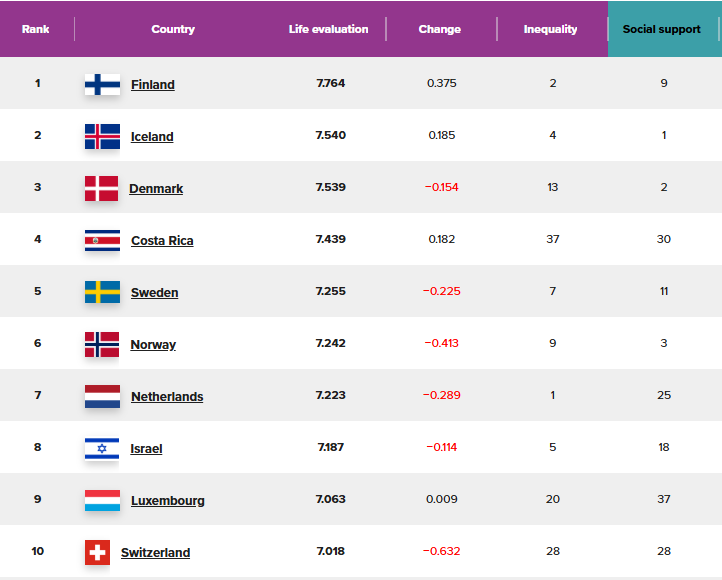
On the global stage, Nordic countries reign supreme, with Finland again leading the pack as the world’s happiest country for the ninth consecutive year, followed closely by its Nordic counterparts Denmark, Iceland, Sweden, and Norway. Notably, Costa Rica secured an impressive 4th place.
Why should we care?
The rankings are both encouraging and revealing. On one hand, they reinforce Jamaica’s identity as a people-centred society, deeply rooted in community, family, and shared experiences. This is more than just a cultural trait. It is a survival mechanism that has carried the nation through generations. From food and social gatherings to tradition and everyday interactions, these elements form the foundation of how Jamaicans define well-being. And that matters, because well-being is essential to the strength and sustainability of any nation.
At the same time, the rankings highlight a persistent challenge. Jamaica’s lower position in perceptions of corruption points to ongoing concerns around governance and a deep, often long-standing mistrust of institutions. It serves as a reminder that true national well-being requires balance. Strong communities alone are not enough. Trust, accountability, and effective systems must also play their part.
Strengthening confidence in institutions and addressing systemic issues will be key to sustaining and improving this upward trajectory.
For now, Jamaica’s place among the world’s happier nations offers a moment of reflection and a reason for cautious optimism.
Comments