Jamaican sprinter Antonio Watson added another gold to Jamaica’s tally by racing to victory in the men’s 400 meters final at the 2023 World Championship in Budapest. Watson crossed the finish line in a time of 44.22 seconds, outpacing Great Britain’s Matthew Hudson-Smith, who secured the second position with a time of 44.31 seconds.
Breaking the 40-Year Drought for Jamaica
Watson’s accomplishment gains profound significance as he etches his name in history as the first Jamaican athlete to secure gold in the men’s 400m event since Bert Cameron’s victory in the inaugural World Athletics Championships held back in 1983.
The race dynamics were intense. Matthew Hudson-Smith, representing Great Britain, initially dominated the first half of the race. Yet, as he neared the finish line, signs of fatigue emerged, leading him to secure the silver medal with a time of 44.31.
Quincy Hall, the 2019 NCAA champion from the United States, executed a late surge to secure the bronze medal. His strong performance pushed him ahead of his compatriot Vernon Norwood. Hall’s achievement came by setting a personal best time of 44.37, edging out Norwood by a mere 0.02 seconds.
No Specific Strategy
In a post-race interview, Watson expressed his commitment to giving his best performance in the race. He stated that he didn’t approach the race with a specific strategy to secure victory. He attributed his success to the valuable guidance provided by his coach, Glen Mills, and highlighted the support and encouragement from his teammate that served as significant factors in his achievement.
Versatile Athlete
In another media interview in July 2023, the former World Youth U18 Champion revealed that at the start of the season he had not initially been geared up for the 400 meters. He explained that the switch to focus on the 400m event occurred midway through the season. Despite this change, he managed to impressively clock a time of 44.5 at the Jamaica Athletics Administrative Association (JAAA) National Championships held at the National Stadium.
Second Gold for Jamaica
Watson’s victory added another gold to Jamaica’s achievements. This success became the nation’s second gold in the championship. Danielle Williams had won Jamaica’s first gold by being the fastest in the 100 meters hurdles race.
“Apart from using forest products, we are actually trying to promote awareness on the forest itself. So what we are going to have here in the environment is trying to bring out some of our timber species to be among the houses,” Basmatee Mohabeer, a representative of the Guyana Forestry Commission, said.
She added, “Along the roadway will have some trees. We will try to keep it the same seizes are the eco-lodges so it’s within the setting”
Following the completion of the Caribbean Premier League, the houses will be available to anyone interested.
A scripted apology by Charles Gladstone for his family’s profitable commanding of slave-run-sugar plantations in Guyana during the 18th century was met with protest on Friday even as the visiting Gladstones cried shame and offered regret for the leading role their patriarch, John Gladstone, played in the slave trade.
Charles, the great-great-great-grandson of John, is in Georgetown for the weekend and during a ceremony to open a new Centre for Migration and Diaspora Studies, funded by his family, he noted their desire to help those affected to find healing.
He was at the time standing on former plantation lands which now forms the foundation for the University of Guyana.
“We the undersigned, descendants of John Gladstone…wish to offer our sincere apologies for his actions holding your ancestors in slavery in Demerara, Guyana,” Charles read from a prepared apology.
The apology coincides with the month of national observances for the 1823 Demerara Slave Revolt that erupted on the Gladstone plantation at Success, East Coast Demerara.
It comes almost 200 years after enslaved Africans were given their freedom – emancipated – and amid mixed reactions with some Guyanese insisting that the apology was not enough.
The apology also extends to the period of indenture, another profitable period for thousands of British families. Tears flowed from the eyes of persons within the audience, others held placards in silence as one person periodically shouted, “not accepted.”
The moment of the apology lasted for less than five minutes but it changed the room’s atmosphere characterized by a spirit of oneness, humility and personal introspection.
Others, in accepting the apology, argue that it is the first step towards compensation and reparatory justice.
But despite the moment of uncertainty about what comes next, the apology was read to the end and a signed copy was handed over to the Chair of the Guyana Reparations Committee, Eric Phillips.
“With heartfelt sincerity, we apologise to the descendants of those enslaved in Guyana. In so doing, we acknowledge slavery’s continued impact on the daily lives of many.
“We understand that we cannot change history but we believe it can have an impact on the world in which we live and in apologising for the actions of our ancestors, we hope to work towards a better future,” Charles said.
In so doing, Charles has encouraged the British Government to enter into meaningful discussions with CARICOM and urge other descendants of those who benefited from slavery to open discussions on their ancestors’ crime.
A fund will be created by the Gladstone family to support further initiatives in Guyana.
On Thursday, while the Gladstones were in-flight to Guyana, President Dr. Irfaan Ali, in a national address, said the apology was not enough and restated his call for compensation, reparative justice, and for those involved to be posthumously charged for the crimes against humanity.
While most persons in attendance, particularly those from the Reparations Committee, accepted the apology, some felt it did little to give impetus to the process of healing and understanding.
“We do accept the apology but we do not accept the agreement, the amount, we will not accept the amount.
“They need to go back to the drawing board and come again, it is very embarrassing,” an Afro-Guyanese woman said in rejection.
An assessment of financial reparations shows that the Dutch owe Guyana $40 billion while the British owe Guyana $1.2 trillion for their role and benefits derived from the slave trade.
Vice Chancellor of UG, Dr. Paloma Mohamed said no financial negotiations regarding reparations were discussed or agreed upon with the Gladstone heirs.
“Yes, it (the apology) is one that I can accept,” Ester Gittens, Secretary of the Reparations Committee told the News Room.
And for those who do not accept the apology, Gittens said, “Well, they need to be educated. They got to get involved because if they were part of the movement they would understand that a formal apology is step one and there is more to follow.”
And so, many Afro-Guyanese look forward to what is to follow.
One such person is Nicole Cole, a professional Clinical Social Work Practitioner and Constitutional Commissioner.
“The apology is one aspect…I cannot say that I accept the apology wholeheartedly.
“…I still feel as though the apology doesn’t go far enough to repair what has been done,” Cole said.
On Saturday, the African Cultural and Development Association (ACDA) will host a special spiritual ceremony where they will ask African ancestors to accept the apology and provide forgiveness.
Speaking at the dedication ceremony, President Dr Irfaan Ali said Dr Luncheon, who served as Head of the Presidential Secretariat and Cabinet Secretary, was a symbol of commitment to national security.
“Dr Luncheon played a central role in shaping our country’s national policies and plans as a Secretary of the Defense Board, he acted in coordinated efforts to protect our nation from internal and external threats.
“His dedication to the well-being of our citizens and his tireless work in maintaining law and order is of public record and acclaim,” the Head of State said during the dedication ceremony on Friday at Homestretch Avenue, Georgetown.
NISA was established in 2010; the building will now have displays of Dr. Luncheon’s work and achievements as a public figure in Guyana.
Dr. Luncheon passed away on August 2 after an extended period of illness at the Georgetown Public Hospital; he was 74 years old.
He is remembered for many remarkable efforts to strengthen the country’s intelligence and security apparatus as well as forming necessary policies and plans. He was a dedicated public servant and visionary thinker who understood the importance of safeguarding the values of democracy, justice and human rights.
“It is fitting that the National Intelligence Security Agency building should be named after Dr Luncheon. We are not only also associating his legacy and caliber with national security…we are not only paying homage to a man of exceptional caliber but also associating his legacy with protecting our motherland,” Dr Ali said.
The Head of State added that Dr Luncheon, unfortunately, died before he could be awarded for his tremendous service to Guyana.
Dr Luncheon’s son, Shaka, in an emotional vote of thanks said, “The significance of this dedication goes beyond mere words that I can truly express.
“It stands for my father’s values, dedication to work hard to further not only the security but the continued development of Guyana and to be patriotic to not only his country but to our country we are truly humbled by this gesture.”
The Spanish government started legal proceedings seeking to suspend the 46-year-old, while FIFA has also launched disciplinary proceedings.
Rubiales had been widely expected to resign at an extraordinary general assembly called by the Spanish Football Federation (RFEF), but instead said “I don’t deserve this manhunt”.
He added: “Jenni was the one who lifted me up. I told her to ‘forget about the penalty [that Mary Earps saved]’ and I said to her ‘a little peck?’ and she said ‘OK’.
“It was a spontaneous kiss. Mutual, euphoric and consensual. That’s the key. A consensual ‘peck’ is enough to get me out of here?”
Spanish football federation president Luis Rubiales had been criticised by some Spanish government ministers and come under fire on social media (Photo: The Independent)
Pachuca player Hermoso released a long statement on social media, saying: “I want to make clear that at no time did the conversation to which Mr Luis Rubiales refers to in his address take place and, above all, was his kiss ever consensual.”
She added his claims were “categorically false and part of the manipulative culture that he has generated”.
“I feel the need to report this incident because I believe no person, in any work, sports or social setting should be a victim of these types of non-consensual behaviours. I felt vulnerable and a victim of impulsive-driven, sexist, out-of-place act, without any consent on my part,” she continued.
“Quite simply, I was not respected.”
She added that she was put “under continuous pressure” to help with a “statement that could justify” Rubiales’ actions – and so were her family, friends and team-mates.
“These types of incidents add to a long list of situations that the players have been denouncing. This incident is the final straw and what everyone has been able to witness on live television also comes with attitudes like the one we saw this morning [Friday] and have been part of our team’s daily life for years,” she added.
A statement from England’s Lionesses, who lost to Spain in the final, said the incident was “unacceptable”.
It added: “The behaviour of those who think they are invincible must not be tolerated and people shouldn’t take any convincing to take action against any form of harassment.
“We stand with you, Jenni Hermoso.”
A statement by players’ union Futpro was signed by a host of players, including all 23 members of the Spain squad which just won the World Cup.
It read: “After everything that happened during the delivery of medals of the Women’s World Cup, we want to state that all the players who sign this letter will not return to a call for the national team if the current leaders continue.”
Spain’s next game is against Sweden in the Nations League on September 22.
Borja Iglesias, who plays for Real Betis, said earlier on Friday he would not play for the men’s national team again while Rubiales is in charge.
The Spanish government will ask Rubiales to explain himself to a Spanish court as soon as possible, secretary of sport Victor Francos said earlier on Friday.
If the administrative court deems he violated the professional sports code, he could then be suspended.
Meanwhile, FIFA will look at whether his actions constitute violations of Article 13 in its disciplinary code, concerning offensive behaviour and fair play. (BBC Sport)


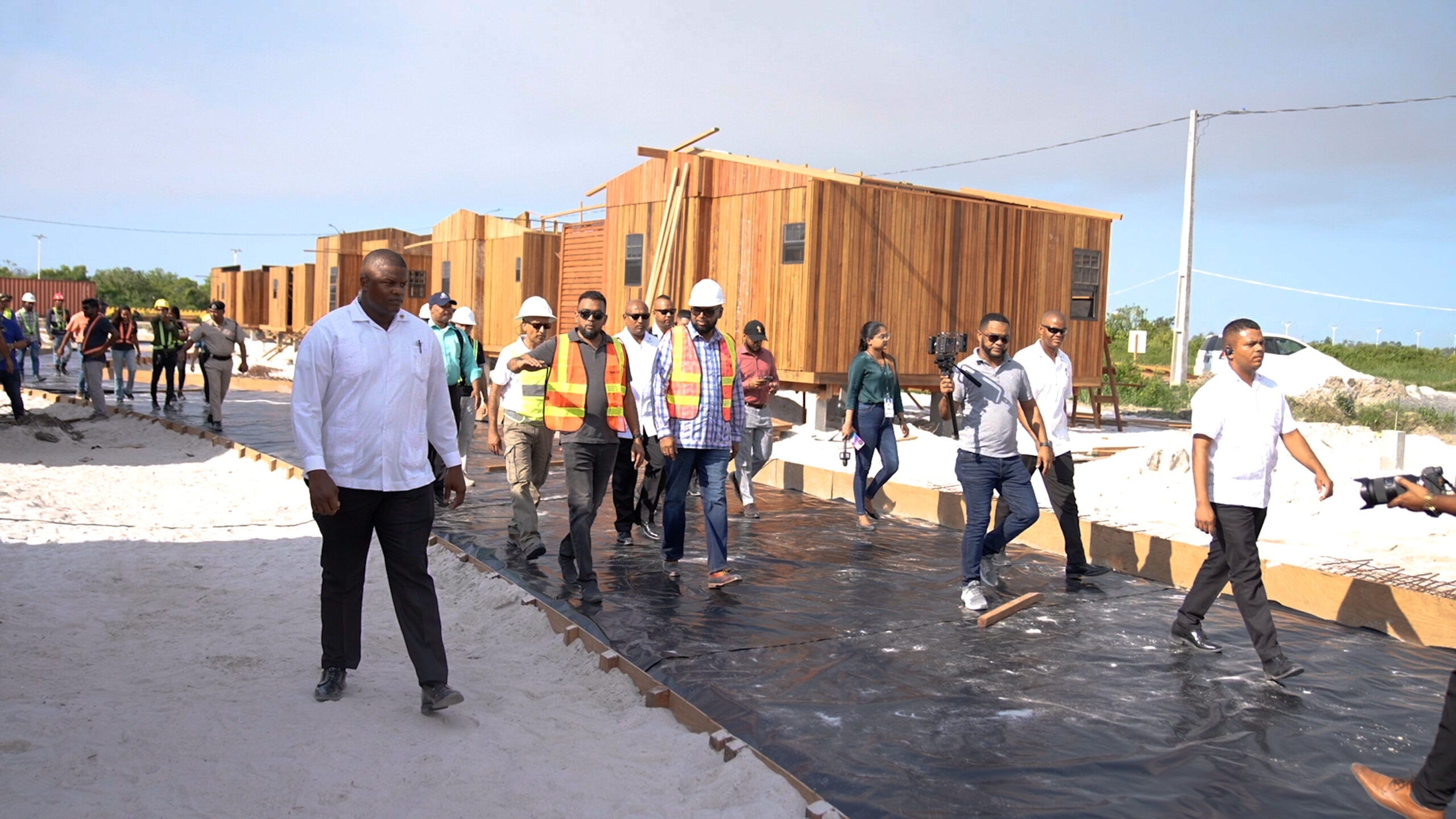 President Dr Irfaan Ali toured the site where he inspected ongoing works. (Photo: News Room/August 25,2023)



 Kurt@newsroom.gy
 Four of the six members of the Gladstone family who travelled to Guyana (Photo: News Room/ August 25, 2023)
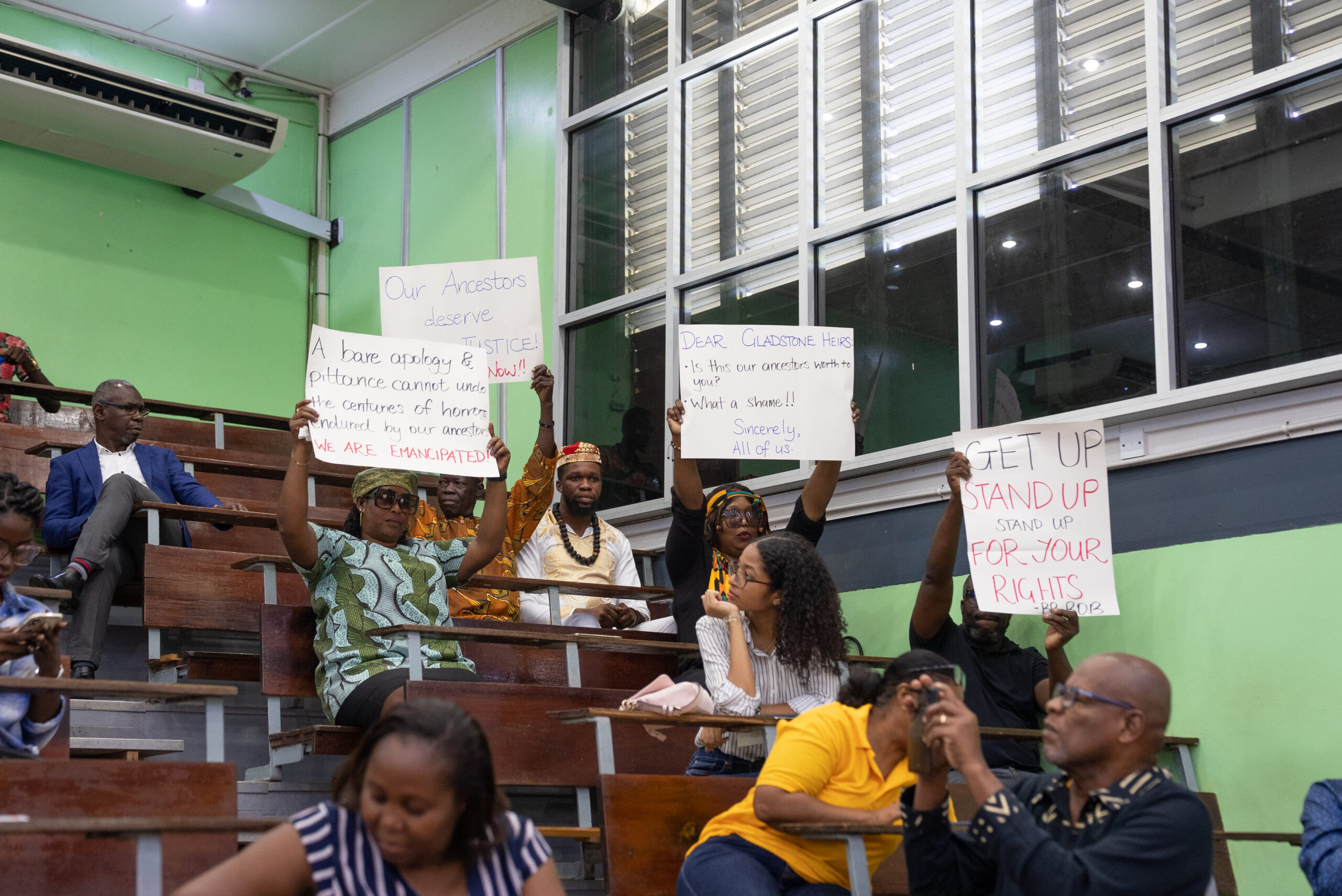 Some Afro-Guyanese in silent protest during the ceremony (Photo: News Room/ August 25, 2023)
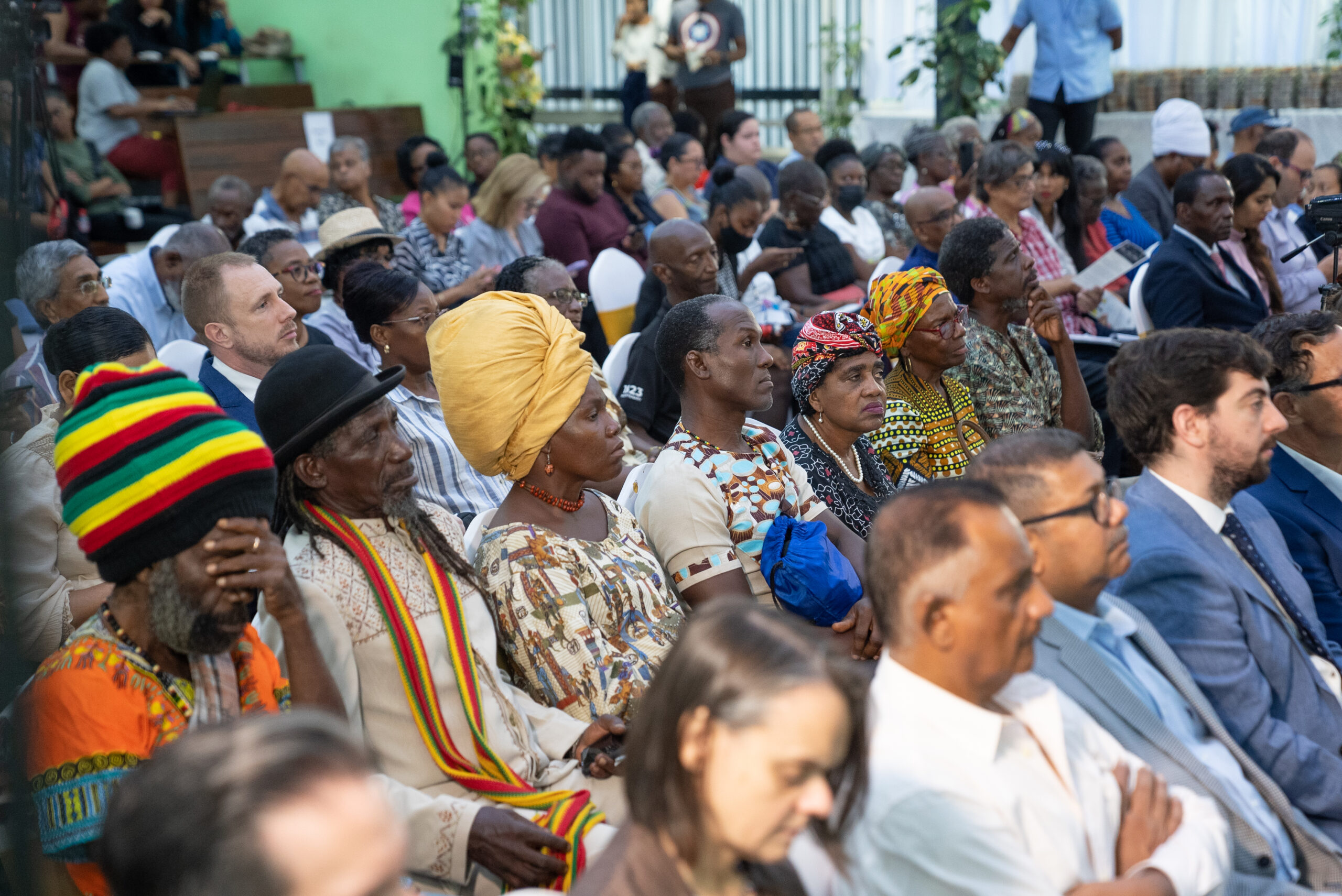 Citizens and members of the Guyana Reparations Committee during the ceremony (Photo: News Room/ August 25, 2023)


 renamed in his honour.
 The plaque bearing the new name of the building, Doctor Roger Forbes Luncheon Building National Intelligence and Security Agency (Photo: Office of the President/ August 25, 2023)
 President Dr Irfaan Ali and other officials at the unveiling of the plaque (Photo: Office of the President/ August 25, 2023)
 The Spanish government started legal proceedings seeking to suspend the 46-year-old, while FIFA has also launched disciplinary proceedings.
 </p>
<p>” data-medium-file=”https://newsroom.gy/wp-content/uploads/2023/08/20-8464983a05384f19a0b9c200e85d8745-300×200.jpg” data-large-file=”https://newsroom.gy/wp-content/uploads/2023/08/20-8464983a05384f19a0b9c200e85d8745-1024×683.jpg” class=” wp-image-167907″ alt=”” width=”912″ height=”608″ srcset=”https://newsroom.gy/wp-content/uploads/2023/08/20-8464983a05384f19a0b9c200e85d8745-300×200.jpg 300w, https://newsroom.gy/wp-content/uploads/2023/08/20-8464983a05384f19a0b9c200e85d8745-1024×683.jpg 1024w, https://newsroom.gy/wp-content/uploads/2023/08/20-8464983a05384f19a0b9c200e85d8745-768×512.jpg 768w, https://newsroom.gy/wp-content/uploads/2023/08/20-8464983a05384f19a0b9c200e85d8745-1536×1024.jpg 1536w, https://newsroom.gy/wp-content/uploads/2023/08/20-8464983a05384f19a0b9c200e85d8745-2048×1365.jpg 2048w” sizes=”(max-width: 912px) 100vw, 912px”><figcaption class=) Spanish football federation president Luis Rubiales had been criticised by some Spanish government ministers and come under fire on social media (Photo: The Independent)
Spanish football federation president Luis Rubiales had been criticised by some Spanish government ministers and come under fire on social media (Photo: The Independent)


