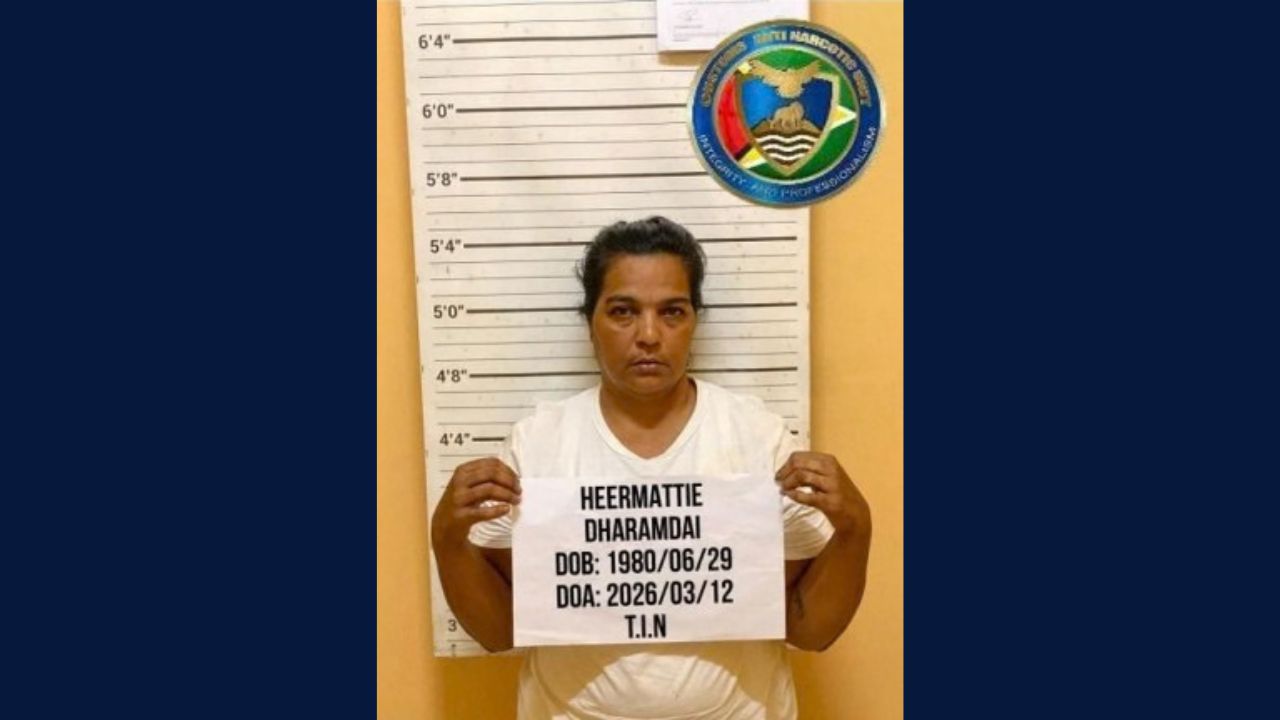
Prince Bagot, a 61-year-old businessman, was arrested on Thursday after he was found with 912 grammes of cannabis and 11 grammes of ecstasy.
The Customs Anti Narcotic Unit (CANU), revealed that officers carried out an operation at the businessman’s residence at Lot 108 David Rose Street, Bagotville, West Bank Demerara.
A subsequent search of the residence revealed a quantity of cannabis and ecstasy.
See below full release from the Barama Company Limited:
Barama Company Limited launches installation of Strategic Reinvestment and Plywood Expansion; Production to Increase in Guyana
largest investor in Guyana’s forestry sector
G$1 billion reinvestment
50-70% increase in production capacity
improving the conversion rate of logs to finished plywood by over 7%
50% increase in timber supply needs
capacity of four hundred and fifteen (415) employees
over 40% of Barama’s workforce is comprised of women
GNBS “Made in Guyana” Standards Mark
introduce waterproof (WBP) plywood
Barama Company Limited (BCL), a leader in the forestry and manufacturing sector, is proud to announce the completion/installation of a significant new phase of reinvestment, which has seen a massive expansion of its plywood production facilities. This strategic move, part of the “Barama 3.0” transformation plan, reinforces the company’s 34-year commitment to Guyana’s industrial growth, value-added manufacturing, and sustainable community development.
PlywoodExpansionandProductionCapacity
Driven by a recent reinvestment exceeding $1 billion (GYD), Barama has successfully revitalized its factory operations at Land of Canaan, East Bank Demerara, and the timber supply chain. This capital injection has funded the addition of critical machinery and the integration of advanced processing technologies.
IncreasedOutput: The expansion triggers a 50-70%increaseinproductioncapacity depending on prevailing market conditions, ensuring that Barama remains the primary source for high-quality, tropical hardwood plywood.
OperationalRecovery: The company has transitioned from a period of restructuring to full-scale recovery, significantly improvingtheconversionrateoflogstofinished plywood by over 7%. By optimizing its recovery processes, Barama is maximizing the value of every cubic meter of timber harvested, aligning with Guyana’s Low Carbon Development Strategy (LCDS).
SourcingRawMaterialsfromRuralCommunities
Central to Barama’s expansion is its “Local First” sourcing strategy. To meet the increased demand for raw materials, the company has deepened its engagement with rural and riverain communities.
Empowering Local Loggers: Barama sources approximately 95% of its manufacturing inputs indigenously. By partnering with small-scale loggers and community forestry associations in remote areas, the company has invested in vital capital equipment needed to support the rural economy.
Sustainable Partnerships: This model provides rural producers with a consistent market for their logs, fostering long-term economic stability in regions that depend on the forestry sector. This expansion project will relate to a 50% increase in timber supply needs and an improvement in the timber specifications in favour of our suppliers.
ManpowerGrowthandGenderDiversity
The expansion of the Plywood division has led to a significant surge in employment. Barama is not only growing its headcount from two hundred (200) employees to now having a capacity of four hundred and fifteen (415) employees but is fundamentally changing the demographic of the forestry workforce. In doing so we continue to foster a safe and healthy work environment along with above standard welfare practices, with the possibility of being the only unionized company in the forestry sector.
PioneeringFemaleEmployment: Breaking traditional forest industry norms,over40%of Barama’s workforce is comprised of women. From the factory floor to specialized technical roles and management, the company is committed to gender parity and providing high-skill manufacturing opportunities for Guyanese women.
CommitmenttoQuality:“MadeinGuyana”
As a testament to its operational excellence, Barama recently received re-certification for four consecutive years of the GNBS “Made in Guyana” Standards Mark. This certification covers its diverse range of plywood, including regular, grooved, and water-resistant types, ensuring that local consumers and international export markets receive products that meet world-class benchmarks.
ProductDevelopment
During the reinvestment phase, the company managed to introduce waterproof (WBP) plywood as a new product which meets the current construction demand for such plywood. Going forward, we will be introducing other plywood products to further enhance our product line.
Challenges
To ensure the long-term viability of the local plywood industry and protect existing jobs, the company is seeking government’s collaboration to address current raw material shortages and an erosion of the market integrity as detailed in earlier correspondences. These proposed measures, including certain concessions on specialized manufacturing inputs, are intended to stabilize production levels and overcome immediate threats to the future of plywood manufacturing. Currently, the market situation has had the following impact over the last 8 months:
Slow Down in Production Loss: 2,000 cubic metres valued at G$330million
Manhours loss: 300 hours
Manpower Loss due to slow down: 50 employees
Acknowledgement
Barama Company Limited expresses sincere gratitude to the Government of Guyana for its continued commitment to enforce trade policies, which provides essential stability for our domestic manufacturing sector. We thank the Guyana Office for Investment for facilitating the Investment Agreement enabling our G$1 billion reinvestment, and the Guyana Forestry Commission for their steadfast policy enforcement and supplier networking. Most importantly, we acknowledge our valued suppliers, customers, and our dedicated, hardworking workforce. Together, these partnerships remain vital to the sustainability and growth of Guyana’s timber sector.
About Barama Company Limited
Established in 1991, Barama Company Limited is the largest investor in Guyana’s forestry sector. The company specializes in the production of tropical hardwood plywood, consistently striving to provide value-added products that showcase the richness of
Guyana’s natural resources and we are pleased to conform that high-quality, locally manufactured plywood is readily available for immediate purchase at our factory.
See full release issued by Iwokrama International Centre:
The Iwokrama International Centre for Rain Forest Conservation and Development (Iwokrama) has confirmed that the Iwokrama Forest has retained its Forest Stewardship Council TM (FSCTM) Certification for Forest Management following an annual surveillance audit in October 2025. The Centre also maintained its FSC status for two ecosystem services – Biodiversity Conservation and Recreational (tourism) Services.
The Iwokrama Forest remains the only forest area in Guyana and the Caribbean to achieve this accolade. This Ecosystem Services verification provides an additional opportunity to demonstrate positive outcomes and offers further third-party validation of the Centre’s sustainable forest management best practices. Verification of the ES means that there are no major corrective actions against any requirements of the FSCTM Ecosystem Services procedure.
Iwokrama’s CEO, Dane Gobin, noted that “the Centre is proud to have maintained its FSCTM certification.” He continued that “in 2008 the Centre was the first to achieve and maintain FSCTM certification in Guyana. I am happy to see that other operators have followed the Centre’s footsteps so that there are now 4 FSCTM Forest Management certificates in Guyana”.
Anne-Marie Ford, Head of the Certification team stated, “this achievement not only validates Iwokrama’s commitment to sustainable forest management but reinforces our innovative approach to integrating ecotourism and world-class research for lasting ecological and community impact.”
Iwokrama’s Certificate for Forest Management was renewed in January 2026, confirming that the Iwokrama Forest has maintained its certification uninterrupted since October 2016 (Iwokrama received initial certification in 2008).
FSCTM certification is the highest international accolade that Forest Managers can receive, and it is testament to the Centre’s application of international social, ecological and environmental best practices in its management of the Iwokrama Forest. Iwokrama’s forest management procedures and policies were rigorously measured against the Interim National Standard for Guyana (FSC-STD-GUY-01-2020) which includes 10 principles, 70 criteria and 213 indicators. Key to the adherence to FSCTM guidelines is that forest managers must follow all national rules, laws and guidelines including the GFC’s comprehensive Codes of Practice. The assessment team evaluated all elements of Iwokrama’s operations applicable to the standard to determine compliance against national and international benchmarks.
During the recent surveillance audit, Iwokrama received 3 observations and 1 minor corrective action. Non-compliances are categorized as “observations”, “minor corrective actions” or “major corrective actions” and are a normal part of any assessment / audit process. The number and the severity of the non-compliances with the standard, could prevent the applicant from being maintaining the certificate.
In recent years, many international buyers and consumers have increased demands for proof of forest products being sourced from well-managed forests. Currently, many of the major global markets require some sort of certification for wood imports, to provide assurance to buyers that wood comes from forests managed according to strict social, economic, and environmental standards.
The Centre is grateful to the Government of Guyana for their valuable ongoing support to the Centre. Special thanks are extended to the certification team of the Centre and our local community partners, the North Rupununi District Development Board (NRDDB), for their unwavering support.
Police seized quantities of cannabis and $3 million cash following operations in Bartica, Region Seven (Cuyuni- Mazaruni).
In a Police release, it was noted that a quantity of suspected cannabis was seized following an intelligence-led operation conducted on Friday, January 23, between 10:30hrs and 11:20hrs at Fifth Avenue, Bartica.
Preliminary investigations revealed that ranks conducted a search at the residence of a 40-year-old self-employed male and found 13 zip-lock parcels containing leaves, seeds, and stems suspected to be cannabis in the living room area.
Further searches resulted in the discovery of cash amounting to $3 million.
The 40-year-old was arrested and escorted to the Bartica Police Station, where the suspected cannabis was weighed in his presence and amounted to 23.2 grams. The suspected cannabis and cash were lodged pending investigation.
The suspect remains in police custody as investigations continue.
In another release, Police said cannabis was found following an intelligence-led operation conducted on Friday, January 23 between 10:30hrs and 11:20hrs at Fifth Avenue, Bartica.
Preliminary investigations revealed that police ranks conducted a search at the residence of a 37-year-old self-employed female and found a black plastic bag containing a transparent parcel with leaves, seeds, and stems suspected to be cannabis inside a wardrobe.
The suspect was arrested and escorted to the Bartica Police Station, where the suspected cannabis was weighed in her presence and amounted to 351.6 grams before being lodged.
The suspect remains in police custody as investigations continue.
In the second T20I against New Zealand in Raipur, Kishan smashed 76 off 32 balls and Suryakumar 82 not out off 37 to help India complete a chase of 209 in just 15.2 overs.
India were 6-2 after 1.1 overs and still registered their joint-highest successful chase in T20Is, with seven wickets to spare.
After being sent in in dewy conditions, New Zealand, too, had made a blazing start.
Even though only one of their top five crossed 25, each of them struck in excess of 140. India made a brief comeback in the middle overs but Mitchell Santner’s 47 not out off 27 balls lifted them to 208-6.
At the post-match presentation, Santner said they probably needed 300. He was only half-joking.
Kishan’s onslaught
Sanju Samson and Abhishek Sharma managed just six runs between them. It should have been zero had Conway not put down Samson at deep square leg off Matt Henry and parried the ball over the boundary line.
Samson, though, couldn’t capitalise on the reprieve and was caught at mid-on in the same over. Abhishek was out for a first-ball duck when he flicked Jacob Duffy to deep square leg. Conway made no mistake this time.
New Zealand were firm favourites at that point. But Kishan had other ideas. He hit Zak Foulkes for three fours and a six in the third over, which also featured three wides and a no-ball. There was no looking back.
Kishan raced to his fifty off just 21 balls, improving Abhishek’s record from the first T20I of the fastest T20I fifty by an India batter against New Zealand by one ball. By the end of the powerplay, India were setting pretty at 75-2.
That both Santner and Ish Sodhi turn the ball into the left-hand batter also played into Kishan’s hands. He hit a six off each of them. Sodhi induced a miscue in the tenth over but by then the required rate had come down to 7.36.
Suryakumar back among the runs
Throughout his batting slump last year, Suryakumar maintained he was not out of form, only out of runs. In this match, he found runs too. There were signs of it in the first T20I when he scored 32 off 22.
Here, he looked close to his best. With Kishan going berserk, he did not have much strike initially. But it also allowed him to take his time – he was on a run-a-ball 10 before he swept Santner over short fine leg for four in the eighth over.
The runs came in a torrent thereafter. In the next over, he smashed four fours and a six off Foulkes. Even after Kishan fell, he did not let the scoring rate drop. He brought up his fifty- his first in 24 T20I innings- in 23 balls and hit boundaries not just behind the wicket and on the leg side but also through the off side.
He had luck on his side as well. Mark Chapman parried a difficult chance over the boundary line when he was on 43, Santner dropped a dolly on 64, and a leading edge on 70 just evaded backward point. But you would imagine he was due some.
In the company of Shivam Dube, who scored 36 not out off 18, he took India into a 2-0 series lead. (ESPNcricinfo)
Minister Juan Edghill on Friday called for the immediate removal of derelict vehicles, containers and debris in spaces around Georgetown as part of efforts to keep the city clean.
During his visit to locations along the Railway Embankment Road and communities in Georgetown, Edghill said his ministry is working in collaboration with the Guyana Police Force to remove the vehicles.
“Parapets do not belong to individuals and businesses. This is an eye sore, it’s a hive for criminal activity and a total disrespect to all the other people who are living in the neighbourhood,” the minister said.
While on the Railway Embankment, Minister Edghill said the owners of these vehicles are causing risks to others using the roadways. He also said that the owners of the sand, mud and derelict vehicles were given notices and in some instances the items were cleared away multiple times.
The minister also warned that vehicles will be impounded.
“The government can’t afford to clear it and then people come back the next day or the next week. It’s a waste of taxpayers’ money,” Edghill said.
An important issue the Minister raised is the situation involving abandoned vehicles parked at tarmacs built for the improvement of communities and recreational spaces. At Sandy Bab and Middleton Streets, the minister said the tarmac built for recreational purposes continues to be filled with vehicles.
“The lawlessness has been going on for long enough, every time you talk to people they need time.
“Well something has to happen, today is the day, we are not going to allow this,” the minister said.
The minister also said that the ministry will ensure the area is cleaned after he vehicles are removed.
The Guyana Fire Service is making training its top priority in 2026 to ensure firefighters are fully prepared to meet the country’s growing urban challenges, Fire Chief, Gregory Wickham said.
During an interview with the News Room, Wickham said the Fire Service has exhausted local training prompting a shift to regional and international courses to equip personnel with globally recognised skills.
“We have exhausted generally all local training, so we are moving ahead with programs of international standard.
“Our men and women need to be well prepared and well trained to deal with any eventuality,” Wickham told the News Room on Friday.
The push, Wickham said, comes as the country is experiencing a surge in housing developments and the construction of high-rise buildings.
To address these challenges, the Fire Service will collaborate with regional and international agencies to provide advanced training tailored to modern urban risks.
Specialised training in firefighting within confined spaces will also be a key focus, ensuring staff can effectively respond to complex incidents and provide critical support during emergencies.
“This approach ensures our personnel are equipped to handle any scenario…and reinforces our commitment to public safety amid Guyana’s evolving urban landscape,” Wickham said.
Electrical faults and the theft of electricity have emerged as major causes of the more than 2,200 fires recorded in 2025, according to Fire Chief Gregory Wickham.
According to figures provided to the News Room, the Guyana Fire Service received 2,267 fire calls in 2025.
This represents a decrease of almost 1200 fires than those recorded in 2024. To be exact, in 2024, 3,461 fire calls were received.
Fire-related deaths also declined year-on-year, falling from 20 deaths in 2024 to 17 in 2025.
In an interview with the News Room on Friday, Fire Chief Wickham said investigations has revealed that there has been an increase in electrical fires, particularly those linked to unsafe internal wiring practices.
He noted that many incidents were caused by overloaded electrical circuits and illegal power connections.
“We have seen lots of fires coming out from fires of an electrical nature, not external electrical nature, more internal.
Fire Chief, Gregory Wickham
“We have seen more persons overloading electrical circuits, stealing electricity in actual terms, so that jumps out as one of the areas where we have seen a significant rise as the cause of fire,” Wickham told the News Room.
The Fire Chief warned that electricity theft poses a severe risk to lives and property, urging those involved to desist.
“For those in the habit of stealing electricity, you should desist. It is illegal and it has caused many people their properties and some people their lives,” he cautioned.
Additionally, Wickham said the Fire Service also responded to several incidents where fires were deliberately set, particularly during unsafe waste-burning activities. In many cases, individuals lit fires to dispose of garbage but left them unattended, allowing flames to spread to nearby structures.
“We have also seen fires deliberately set by persons that resulted in destruction of properties,” Wickham said. Therefore, Wickham is urging residents to closely supervise any use of fire.
Acknowledging its strides, Wickham said this is as a result of direct community engagements and public education.
He explained that firefighters went beyond emergency response, focusing instead on prevention and preparedness
This, Wickham said, has resulted in a noticeable shift in public behaviour, with many householders now able to safely extinguish small fires before they escalate into major incidents.
“The amount of fires we would have responded to and had no reason to go into firefighting shows there is a direct benefit from us going into these communities and engaging persons,” Wickham said.
As the Guyana Fire Service continues its prevention drive, the Fire Chief is urging citizens to equip their homes with basic firefighting and early-warning devices, including fire extinguishers, smoke detectors and fire alarms.
“We implore persons to ensure that you have the first-aid firefighting appliance in your home,” Wickham said, stressing the financial and safety benefits of preparedness.
“One fire extinguisher can save a whole lot of millions of dollars,” he said.
Fines exceeding $2 million, tighter controls on e-waste along with oil and gas waste, and mandatory financial security for operators are among the key features of Guyana’s proposed Integrated Solid Waste Management Bill and Regulations.
The proposals for the draft bill were unveiled during a national consultation on Friday held at the Arthur Chung Conference Centre, Liliendaal.
Legal Consultant for the UNEP Zero Waste Programme, Romel St. Hill, presented findings from a comprehensive analysis that informed the draft legislation.
Under the proposed framework, operators who engage in willful negligence or cause serious environmental harm could face fines exceeding $2 million and/or imprisonment from three to five years.
The draft bill proposes a graduated enforcement system, beginning with cooperative compliance notices and escalating to orders, ticketing, and criminal prosecution where voluntary compliance fails.
A major focus of the draft legislation is the establishment of a comprehensive e-waste management control framework, designed to address the growing risks associated with electronic waste. The framework provides multi-layered protection against heavy metals and hazardous components, safeguards public health, and promotes material recovery through controlled collection systems, licensed processing facilities, and Extended Producer Responsibility (EPR) funding mechanisms.
File photo of garbage removal
The bill also introduces an Oil and Gas Waste Integration Framework, ensuring that waste generated by petroleum operations is managed within a coordinated national system. While aligning with the Petroleum Activities Act, the framework preserves the Environmental Protection Agency’s (EPA) authority over hazardous waste classification, transportation, and disposal.
Another key provision is the requirement for financial security and closure obligations. Waste operators will be required to provide financial guarantees, such as bank guarantees, bonds, trusts, or escrow accounts, to ensure funds are available for site closure, post-closure care, and environmental remediation if a facility is abandoned or an operator defaults.
The draft bill is informed by an analysis conducted to identify current challenges within Guyana’s waste management system and to provide evidence-based recommendations aligned with international best practices and environmental law principles.
The assessment found that while multiple EPA regulations exist, including the Hazardous Waste Regulations (2000), Water Quality Regulations (2000), and Litter Enforcement Regulations (2013), they lack integration into a cohesive national waste management framework.
Among the system’s strengths are constitutional provisions for environmental protection, an established regulatory framework, EPA enforcement capacity, and the involvement of multiple stakeholder institutions. However, critical weaknesses were identified, including a fragmented legal framework, overlapping institutional mandates, outdated regulations, weak penalties, limited enforcement mechanisms, and the absence of circular economy principles and a formal waste hierarchy.
The analysis also highlighted external threats such as climate change impacts, rising waste generation, transboundary pollution, funding constraints, political instability, and lack of public awareness. Environmental impacts linked to these gaps include continued landfilling and open dumping, soil and water contamination, and biodiversity loss. Public health concerns include exposure to hazardous waste, disease vectors, landfill odours, and air and water pollution in vulnerable communities.
To address these challenges, the draft bill incorporates proven global principles promoted by UNEP and international environmental law, including the waste hierarchy, circular economy approaches, and Extended Producer Responsibility (EPR) schemes.
The waste hierarchy prioritises preventing waste at the source, followed by reuse, recycling and recovery, with disposal as the last resort. A circular economy approach aims to keep materials and products in use for as long as possible through reuse, repair, recycling and recovery, reducing reliance on landfilling and minimising environmental impacts. While, EPR schemes place responsibility on producers and importers to manage the environmental impact of their products, particularly packaging and electronic goods, by financing or organising collection, recycling and safe disposal.
Key features of the proposed legislation include updated definitions using modern, circular economy-aligned terminology; clearly defined institutional roles and coordination mechanisms; comprehensive licensing and permitting systems; waste segregation, recycling, and recovery requirements; and innovative financial instruments to ensure sustainable funding and cost recovery.
Special provisions are also included for biomedical waste, used oil, and other special waste streams, with strict colour-coding, labelling, containment, and secure handling requirements to protect workers and the environment.
Following the national consultations, the next steps of the bill will include a review at the Attorney General’s Chambers, Cabinet approval, and parliamentary passage. This will be accompanied by capacity building, training for government agencies, the private sector, and communities, and a phased transition to operational implementation.
The estimated timeline projects drafting and stakeholder validation within six months, parliamentary review and approval within 12 months, and full capacity building and operational transition within 18 months.
The West Indies bowling attack will take immense confidence through to the Super Six stage of the ICC Under-19 Men’s Cricket World Cup after their match-winning efforts against South Africa.
The 55-run victory helped cement tournament progression and has the side daring to dream of a deep tournament charge as the stakes now rise.
The Windies outfit defended their total of 234 with aplomb, dismantling South Africa’s batting lineup inside 39 overs, all out for 179.
Shaquan Belle was the star of the show, taking 6/40 off 10 overs. But he was well supported by fellow opener Jakeem Pollard (1/19), Isra-El Morton (1/27) and Vitel Lawes (1/60).
Zachary Carter did most of the heavy lifting in the first innings, smashing 114 off 104 balls with eight fours and eight sixes.
It was the type of performance that will remind rival Super Six teams that the West Indies have match-winners throughout their ranks.
“The main focus (now) is to get through to the semi-finals and I think that if the fellas work hard, we will come out on top,” Pollard continued.
“(This is) my first time playing in the World Cup (and) it would be very good to represent not only Barbados, but the whole Caribbean.”
Their Super Six mission will commence in a clash with Ireland in Windhoek on Sunday. (ICC)