
Blog

  • $30 million water supply system ends water woes for Silver Hill residents

    $30 million water supply system ends water woes for Silver Hill residents

    A new $30 million water system was commissioned in the remote community of Silver Hill on Friday, marking the end of strenuous walks to the creek for approximately 90 per cent of its residents.

    The upgrade introduces potable water access directly to homes, fulfilling what many describe as a long-awaited “dream come true.”

    The scope of the works included three major components: the drilling of a new water well, the installation of a sustainable photovoltaic pumping system, and the laying of approximately 3km of distribution network.

    The successful implementation means the vast majority of Silver Hill residents now have water access close to their homes, eliminating the tiring daily chore of accessing water from the creek.

    Raffina Lund, a lifelong resident of Silver Hill, expressed profound gratitude during the commissioning ceremony.

    A new $30 million water system was commissioned in the remote community of Silver Hill on Friday, marking the end of strenuous walks to the creek for approximately 90 per cent of its residents. (Photo: DPI/November 29, 2025)

    “I was born and grew up at Silver Hill. And I’ve been a resident for actually my entire life,” she said. “Growing up and living without water close to the home, it was a struggle. With this well, I just want to say thank you. Thank you so much. This is like actually a dream come true.”

    Similar sentiments were echoed by Raymond Baldwin, who expressed not only relief at the intervention but also pride in his crucial role in bringing it to fruition.

    Baldwin was one of the residents actively involved in laying the distribution network, taking great pride in shaping a new future for his community.

    “For years we have been using creek water for everything. Since the beginning of this project, I have helped with the laying of pipes and it has been very beneficial for me and the community, because now everybody is getting potable water, and it even helps in the little kitchen gardens we have in the yard,” he shared.

    He also commended the government’s grassroots approach to leadership which sees essential services and direct contact with residents in previously overlooked communities.

    A new $30 million water system was commissioned in the remote community of Silver Hill on Friday, marking the end of strenuous walks to the creek for approximately 90 per cent of its residents. (Photo: DPI/November 29, 2025)

    “I think it is a good step that the government has taken for small communities along the highway. We look forward to taking care of this well as the years go by,” Baldwin affirmed.

    Minister of Public Utilities and Aviation, Deodat Indar, who commissioned the system,  noted that the water being produced from the well is low in iron content, which means it is safe for consumption.

    He said that the government, through the Guyana Water Incorporated (GWI) has drilled  about 131 similar wells in remote and hinterland communities over the last five years, underscoring a commitment to expanding potable water access across the country.

    “We have to modernise, we have to move away from [relying on water from creeks and rivers]. So through [GWI] we are divulging those resources to ensure that we have universal access to water that is clean, and usable for cooking,”

    While 90 per cent of households gained direct home access, the remaining 10 per cent of Silver Hill can access potable water via the standpipes located at strategic points of the community. (Republished from DPI)

    The post $30 million water supply system ends water woes for Silver Hill residents appeared first on News Room Guyana.


  • Tropical Shipping and Rotary Georgetown partner with focus on Youth Development

    Tropical Shipping and Rotary Georgetown partner with focus on Youth Development

    Tropical Shipping, the US-based transportation and logistics company, has reaffirmed its commitment to community development in Guyana with a generous donation to the Rotary Club of Georgetown Central (RCGC).

    The contribution is earmarked to support youth and educational projects across the country, furthering the company’s long-standing community relations programme.

    The donation was formally handed over at Tropical Shipping’s Georgetown office by Country Manager Glenis Hodge, who stressed the importance of sustainable investment in the region.

    “Tropical Shipping views community engagement as an essential part of our mission,” Hodge said. “Our community relations program provides continued support for the countries and islands where we serve, contributing to sustainability, growth, and development.”

    Hodge further noted the company’s focus on nurturing future talent: “Our donation today demonstrates that our commitment to youth development in a rapidly growing Guyana. We hope this contribution helps more young people benefit from educational and developmental activities, opening doors of opportunities and supporting Guyana’s continued progress.”

    The RCGC confirmed that funding would be crucial to maintaining its ongoing initiatives focused on education and literacy within Guyanese communities.

    Lloyd David, president of the Rotary Club, expressed his appreciation, noting the three-year duration of the funding relationship.

    “The Rotary Club of Georgetown Central is extremely grateful to Tropical Shipping for the funding provided over the last three years,” David stated.

    “These funds have enabled the Club to deliver on its annual projects, particularly those related to education and literacy in Guyana.”

    Tropical Shipping has operated in Guyana for over 30 years and globally for more than six decades.

    The post Tropical Shipping and Rotary Georgetown partner with focus on Youth Development appeared first on News Room Guyana.

  • Camp-Perrin : terre d’élèves… mais orpheline d’université !

    Camp-Perrin : terre d’élèves… mais orpheline d’université !

    Camp-Perrin est sans doute l’un des coins les plus dynamiques du Sud d’Haïti en matière d’éducation fondamentale. Commune de plus de 40 000 habitants.  Son réseau d’écoles écoles primaires, secondaires, centres d’alphabétisation, constitue un socle éducatif solide.  Mais ce constat encourageant s’arrête abruptement là : pour tout ce qui est études supérieures, la commune reste dépourvue d’infrastructures. Aucun institut universitaire, aucune faculté locale, aucune option de haut niveau accessible sur place. Résultat : une génération entière de jeunes brillants se retrouve contrainte de quitter la zone pour espérer étudier, quand les moyens le permettent, ou d’abandonner, faute d’offre adaptée.

    Cette réalité, c’est celle que m’a décrite l’éducateur et citoyen engagé Rolin Saint-Vil lors d’une rencontre récente. Pour lui, l’absence d’une institution supérieure à Camp-Perrin creuse une brèche grave dans le parcours éducatif local. Chaque année, des jeunes obtiennent leur 9ᵉ année fondamentale, passent le secondaire, réussissent ; le taux de réussite du district scolaire de Camp-Perrin à l’examen de 9ᵉ année a été de 77 % selon les données officielles. Voilà un vivier humain réel, capable, désireux d’apprendre, de construire. Et pourtant, sans université, ce vivier se vide, les cerveaux s’en vont, l’espoir se disperse.

    Pourquoi Camp-Perrin a droit à son université ?

    1. Il y a déjà la base humaine et scolaire.

    Quand une commune affiche des taux d’admission élevés à l’école fondamentale, cela signifie que les enfants réussissent à acquérir un socle solide. Pour une région comme la nôtre, ce n’est pas anodin. Cela montre la discipline, le sérieux des familles, la valeur accordée à l’école. Transformer ce socle en pipeline vers l’enseignement supérieur est juste logique, c’est construire sur ce qui existe déjà.

    2. Retenir le capital humain, briser l’exode intellectuel.

    Chaque année où un jeune quitte Camp-Perrin pour aller étudier ailleurs, c’est un peu de la commune qu’on emmène. Les rêves, les talents, l’énergie, la vitalité. Le départ des jeunes crée ce qu’on pourrait appeler un « exode étudiant », mais c’est surtout un exode de potentiel, d’avenir. Une université locale, ou même une antenne d’enseignement supérieur, permettrait de retenir ces talents, de les transformer en ressources pour le développement local, d’éviter la fuite des cerveaux.

    3. Justice territoriale et équité éducative.

    Il ne peut pas exister en Haïti des centres urbains favorisés avec des universités, et des communes rurales comme Camp-Perrin, si bien scolarisées, exclues du parcours supérieur simplement parce qu’elles sont en périphérie. L’accès à l’enseignement supérieur ne doit pas être un privilège géographique. Offrir une structure à Camp-Perrin, c’est rendre effectif le droit à l’éducation pour ses jeunes.

    4. Impact socio-économique local.

    Une université locale ne formerait pas uniquement des diplômés — elle stimulerait l’économie locale : logements pour étudiants, commerces de proximité, services, emplois d’enseignants, d’administratifs, d’entretien. Elle faciliterait aussi des formations adaptées aux réalités de la région : agriculture, agro-écologie, agro-business, gestion rurale, artisanat, développement communautaire. Cela pourrait contribuer à freiner l’exode rural, à revitaliser le tissu social et à offrir des perspectives de développement durable.

    5. Risque pour l’avenir national : renoncer à la cohésion éducative.

    À l’échelle nationale, l’enseignement supérieur en Haïti souffre déjà de nombreuses faiblesses : un enseignement concentré dans les grandes villes, un déficit d’encadrement, des disparités d’accès, une fuite des cerveaux massive. En refusant de développer l’enseignement supérieur dans les communes comme Camp-Perrin, c’est une partie du pays qu’on exclut du progrès. C’est sacrifier l’équité, la diversité des territoires, l’avenir collectif.

    Le plaidoyer de Rolin Saint-Vil : ce qu’il a vu, ce qu’il demande.

    Rolin Saint-Vil ne parle pas uniquement en théorie : il décrit le réel. Il raconte des familles qui encouragent leurs enfants à étudier, mais voient les espoirs s’éteindre quand vient l’heure des études supérieures. Il parle d’élèves prometteurs blessés par la distance, par les coûts, par l’absence d’infrastructure. Il évoque une jeunesse victime d’une injustice invisible : ce qu’elle a construit jusque-là ; réussite, discipline, assiduité ; ne suffit pas pour rester chez elle.

    Pour lui, l’établissement d’une université ou d’une antenne d’enseignement supérieur à Camp-Perrin est une question de dignité. Ce n’est pas un luxe, c’est un besoin urgent. Il stipule que ce projet ne devrait pas se limiter à une faculté prestigieuse : il peut s’agir d’une structure adaptée, modeste, mais fonctionnelle — avec des filières professionnelles, techniques, agricoles, ou sociales. L’objectif : donner des outils concrets aux jeunes pour qu’ils restent, construisent, développent leur territoire.

    Ce qu’il reste à faire — et ce que chaque acteur peut faire

                  •            L’État central (MENFP, Rectorat de l’UEH, autorités éducatives) doit inscrire Camp-Perrin dans le plan national de développement de l’enseignement supérieur, envisager la création d’une antenne ou d’un institut public.

                  •            Collectivités territoriales, élus locaux, communauté de la diaspora, société civile : identifier les ressources, mobiliser les financements, appuyer la construction d’infrastructures, encourager les partenariats.

                  •            Population locale, parents, jeunes : maintenir l’engagement scolaire, soutenir le projet, faire pression citoyenne pour que l’idée ne reste pas lettre morte.

                  •            Partenaires internationaux, ONG, bailleurs : investir dans l’éducation rurale, soutenir la formation, appuyer les jeunes, contribuer à l’égalité territoriale.

    Conclusion : un appel, un espoir

    Camp-Perrin est une terre d’élèves. Elle a prouvé qu’elle savait apprendre, réussir, former. Mais elle manque d’un pilier fondamental : l’enseignement supérieur. La commune mérite qu’on lui donne cette chance. Qu’une génération puisse étudier, rêver, bâtir, sans quitter sa terre d’origine. Qu’elle puisse transformer ses succès scolaires en potentialités réelles pour elle-même, pour sa communauté, pour Haïti.

    Ce plaidoyer n’est pas seulement une demande, c’est un engagement moral et citoyen : il invite chacun à regarder la réalité en face, à sensibiliser, à agir. Pour que Camp-Perrin ne soit plus jamais orpheline d’université. Pour que ses élèves restent chez eux, formés, debout, et prêts à participer à l’essor d’un pays qui a tant besoin de ses propres enfants.

    Ricardo Tcardo Nicolas

    The post Camp-Perrin : terre d’élèves… mais orpheline d’université ! first appeared on Radio Télévision Caraïbes.

    L’article Camp-Perrin : terre d’élèves… mais orpheline d’université ! est apparu en premier sur Radio Télévision Caraïbes.

  • New gender equality seal to ensure safety and fairness at workplaces   

    New gender equality seal to ensure safety and fairness at workplaces  

    Ministry of Human Services and Social Security on Wednesday launched the National Gender Equality and Empowerment Seal, a necessary step to ensure workplaces take gender equality seriously.

    Dr. Vindhya Persaud, Minister of Human Services and Social Security, during the launch event at the Duke Lodge Hotel, said this Seal empowers workplaces and holds them accountably in creating safe and fair workplaces as a national responsibility.

    “We need to start looking at all of the organisations and not seeing gender balance as tokenism or wanting to check a box,” the Minister said.

    It was established as a national response to data showing that 85 percent of domesticviolence survivors are women between 20 and 39, the core of Guyanas workforce.

    Dr. Vindhya Persaud, Minister of Human Services posing with partners who assisted with the establishing the National Gender Equality and Empowerment Seal. (Photo: News Room)

    With many cases unreported, women continue to face discrimination, sexual harassment, and workplace bias. Women also make up only about 40 per cent of the labor force.

    To address these gaps, the Ministry supported by UNFPA, UN Women, and UNDP, developed the National Gender Equality and Empowerment Seal, a simple but accountable system. Organisations commit to core gender-equality principles, complete mandatory training, and undergo an assessment that may earn them Bronze, Silver, or Gold accreditation.

    Dr. Persaud underscored the importance of women and men are treated with respect and dignity at the workplace.

    “When we talk about harassment, abuse and violence at the workplace, it is speaking to an area that was off limit, where people never really looked at.

    “We look more at what happens in the home environment but now we need to build all the spaces including the digital space,” she said.

    Kristia Ramlagan-Prescott, the Secretary of the GCCI, emphasised how financial dependency traps many women.

    “Having a sort of income can remove the vulnerability that comes into living.

    “We know that ending gender-based violence should be everyone’s concern, achieving gender-based and equality empowerment is also everyone’s concern,” she said.

    Minister of Labour and Manpower Planning Keoma Griffith and Minister of Public Service, Government Efficiency and Implementation, Zulfikar Ally committed that their ministries will collaborate hand-in-hand to support the government in ensuring companies and agencies are trained and can attain this seal. Several Private Sector representatives also committed to championing this cause as it can greatly benefit companies as international companies aim to form strategic partnerships with companies that have accreditation in various areas including ensuring that workers are safe and respected.


    The post New gender equality seal to ensure safety and fairness at workplaces   appeared first on News Room Guyana.
  • Hand-in-Hand launches Toastmasters Club 

    Hand-in-Hand launches Toastmasters Club 

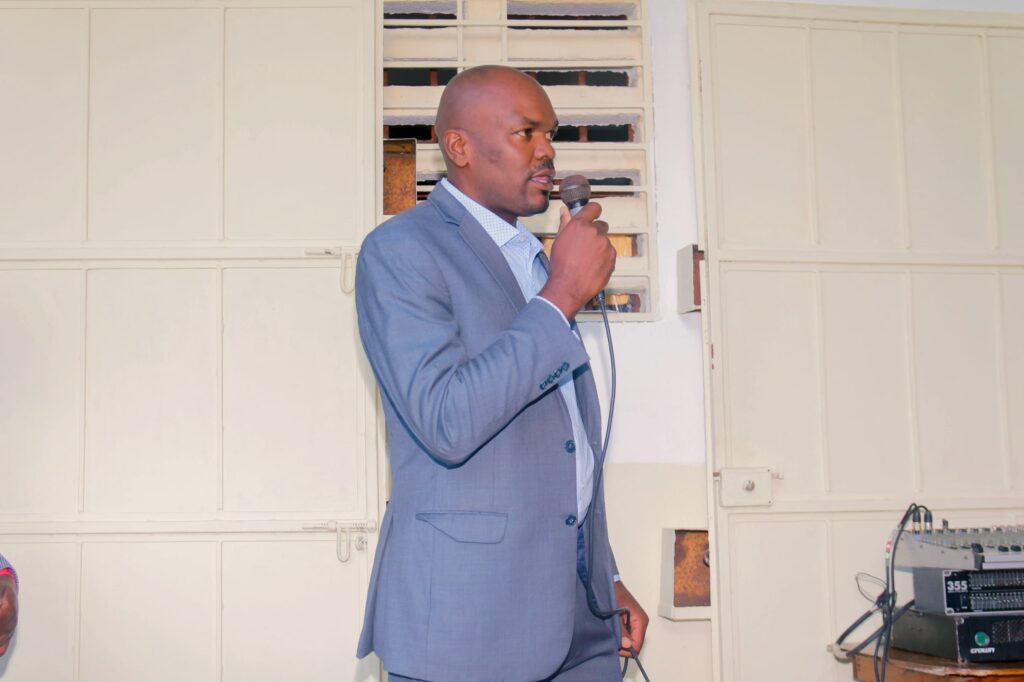
    The Hand-in-Hand Mutual Fire Insurance Company Ltd, Guyana’s longest-established and AM Best rated insurer, has launched the Hand-in-Hand Group of Companies Toastmasters Club—the first official Toastmasters club within the country’s insurance sector.

    The historic initiative was conceptualised and led by the company’s HR & Administration Manager, Mrs Zaida Joaquin, with key support from Marketing & Direct Sales Supervisor, Brandon Singh.

    The launch coincides with Hand-in-Hand’s 160th anniversary, reinforcing its commitment to strengthening leadership, expanding employee development, and driving innovation within the corporate space. Company officials say the establishment of the club demonstrates Hand-in-Hand’s belief that strong communication is essential to exceptional service, visionary leadership, and long-term national impact.

    The Executive Committee of the newly formed club comprises:
    President: Mr Nandray Bachan
    Vice President Education: Mrs Puja Ramcharran
    Vice President Membership: Brandon Singh
    Vice President Public Relations: Ms Theressa Hector
    Secretary: Ms Dhanwantie Jaipersaud
    Treasurer: Ms Chandra Sibajan
    Sergeant-at-Arms: Ms Kelly Singh

    Through Toastmasters International—an organisation active in more than 140 countries—members will now have access to structured training in public speaking, leadership, critical thinking, and professional communication at a global standard.

    Reflecting on the launch, Mrs Joaquin described the club as “a transformational step toward nurturing confident and dynamic leaders from within our organisation.” She noted that beyond developing internal capacity, the long-term vision includes volunteering and mentoring within the wider Guyanese community in leadership and communication.

    With this initiative, the Hand-in-Hand Group of Companies Toastmasters Club is positioned to lead a new movement in corporate communication excellence, further cementing the company’s legacy as a pioneer in people development and innovation.

    The post Hand-in-Hand launches Toastmasters Club  appeared first on News Room Guyana.

  • Police seek two persons of interest as men recover from drive-by shooting in Linden

    Police seek two persons of interest as men recover from drive-by shooting in Linden

    Police in Regional Division #10 are investigating a shooting in Amelia’s Ward, Linden, that left a 32-year-old vendor and a 36-year-old carpenter injured on Sunday night, November 23, 2025. Authorities are now seeking two persons of interest in connection with the incident.

    The shooting occurred around 10:30 PM at Lover’s Lane, Central Amelia’s Ward. According to police reports, the vendor was standing outside his shop while the carpenter was walking nearby when a motor car pulled up close to them. An occupant of the vehicle allegedly fired several shots in their direction before fleeing the scene.

    The vendor sustained a gunshot wound to the chest and was initially treated at the Linden Hospital Complex before being transferred to the Georgetown Public Hospital Corporation for further care. The carpenter was shot in the foot and remains at the Linden Hospital Complex. Both men are reported to be in stable condition.

    Investigators revisited the scene to conduct further inquiries, and CCTV footage from nearby premises is under review as part of the ongoing probe. One of the victims was also interviewed while hospitalised, providing additional information to assist investigators.

    Police have confirmed that no arrests have yet been made and have urged anyone with information about the incident or the persons of interest to come forward. Investigations remain ongoing.


    The post Police seek two persons of interest as men recover from drive-by shooting in Linden appeared first on News Room Guyana.

  • High-speed crash at Berbice River Bridge leaves family and visitors injured

    High-speed crash at Berbice River Bridge leaves family and visitors injured

    A late-night accident on Monday, November 24, left four people injured on the Berbice River Bridge Access Road, Palmyra, East Canje.

    The crash involved a motor car, PAJ 1625, carrying a 57-year-old driver from Martin Luther Housing Scheme, New Amsterdam, along with three passengers: a 30-year-old woman and a 7-year-old student from Islington Village, East Bank Berbice, and a 66-year-old visitor from South Ozone Park, New York, U.S.A.

    According to initial reports, the vehicle was travelling east along the northern drive lane at an allegedly fast pace when the driver lost control and collided with a culvert on the southern side of the road.

    Public-spirited citizens and emergency medical personnel quickly came to the aid of the victims, transporting them to the New Amsterdam Public Hospital. Three of those injured were admitted for fractures and other injuries, while the 30-year-old woman is being treated for soft tissue injuries.


    The incident has left the community shaken, particularly as it involved both local residents and an overseas visitor, underscoring the human cost of road accidents. The vehicle has been impounded as Regional Division #6 police continue investigations into the circumstances surrounding the crash.

    The post High-speed crash at Berbice River Bridge leaves family and visitors injured appeared first on News Room Guyana.

  • After walking away, woman shares journey enduring 15 years of abuse

    After walking away, woman shares journey enduring 15 years of abuse

    After surviving 15 years of abuse at the hands of her partner, Sonia Sewnarine finally walked away, choosing safety, healing and a chance to rebuild not only her life, but her children’s. Even then, she admitted, she wasn’t sure she had the strength to start over.

    “Sometimes strength is simply walking away,” Sewnarine told the audience gathered at the Red Shoe event on Tuesday at the Kingston Seawall esplanade. Her voice carried a story of survival, courage, and hope for the many women who still suffer in silence.

    The young mother described herself as a woman who found the strength to rise after years spent in darkness. Outwardly, her marriage looked normal. But behind closed doors, she said, “I smiled for photos, cooked dinner, carried the weight of being a good wife, but behind closed doors, my home was a battlefield.”

    She remembered living every day on eggshells, never knowing what would trigger the next outburst, whether it would be silence, insults, or violence.

    “I told myself so many things: ‘I can fix this… he didn’t mean it… if I try harder, things will get better.’ The most painful thought was that my children needed a complete home, but I didn’t realise then that this wasn’t it,” she shared.

    Photos of women who lost their lives due to violence displayed at the Red Shoe event on Tuesday

    There were days she sat numb on the edge of her bed, praying for peace and wondering if she would lose herself entirely. What kept her going were her children, her motivation to survive, and eventually, to leave.

    Her turning point came after a particularly frightening incident. She looked into her children’s eyes and finally recognised the fear she had been ignoring. “If I couldn’t save myself, I would save myself for them,” she said.

    Leaving wasn’t a single dramatic moment, but a series of small, brave steps—each one a quiet promise to herself that she deserved peace. With her children’s hands in hers, she walked out in fear, but also in freedom, taking the first real breath she had felt in years.

    Life after leaving was not simple. Sewnarine spoke of the long process of rebuilding her confidence, piece by piece, learning to undo the lies she had been made to believe and discovering the power of her voice. She shared the challenges of starting over, the moments of doubt, and the small victories that carried her forward.

    “I learned to love myself again… to recognise the woman I truly was. Not broken. Not weak. Healing is possible. Beginning again is possible,” she said.

    Her message to women still living with abuse was unwavering: “You are not to be blamed. You are not alone. You are worth more than the pain you are carrying.”

    The Red Shoe event, held as part of the 16 Days of Activism against Gender-Based Violence, honoured women who lost their lives to violence and uplifted those still fighting to reclaim their own.

    The post After walking away, woman shares journey enduring 15 years of abuse appeared first on News Room Guyana.

  • Trucks blamed for almost half of road deaths in recent years, speed governors coming soon

    Trucks blamed for almost half of road deaths in recent years, speed governors coming soon

    Heavy-duty trucks have been responsible for nearly 40% of all road fatalities over the past five years, a troubling pattern that has pushed authorities toward the introduction of mandatory speed governors on these vehicles.

    Chairman of the Guyana National Road Safety Council, Earl Lambert, raised the alarm during a recent episode of ‘Road Safety and You’, where he revealed that from 2019 to 2024, trucks consistently accounted for 38 to 40% of deadly crashes, outpacing all other vehicle categories.

    In 2023 alone, 30 truck accidents were recorded, followed by 25 in 2024, many of which involved head-on collisions and severe intersection impacts linked to excessive speeding along major corridors, including the East Bank Demerara and East Coast Demerara highways.

    Lambert said these statistics highlight a national road-safety crisis, driven by a clear correlation between speeding, poor road conditions, and fatal outcomes.

    Chairman of the National Road Safety Council, Earl Lambert 

    He explained that the government’s push to implement an Auto Control Speed Management System, a mandatory speed-regulating device for trucks, is rooted in the urgent need to curb this deadly trend and address longstanding gaps in traffic enforcement.

    The Guyana Police Force and the Ministry of Home Affairs are leading the initiative, which is currently in the consultative stage.

    The system’s core component is a tamper-resistant speed governor designed to automatically regulate truck speeds within the limits set out in the Motor Vehicles and Road Traffic Act: 50 km/h in urban zones and 80–100 km/h on rural and highway roads, depending on road capacity.

    Featuring GPS monitoring, geo-fencing, real-time data transmission and instant alerts when tampering is detected, the device provides continuous oversight of truck movements and speed patterns.

    Lambert said this technology-driven approach offers a transformative shift toward digitised, data-driven enforcement, eliminating subjective policing and ensuring full traceability of vehicle activity.

    He described the impending rollout as a bold but necessary step to safeguard citizens and modernize road governance.

    With truck-related crashes ranking among the top causes of road deaths and heavy-duty vehicles consistently representing nearly 40% of fatal accidents, Lambert emphasised that the introduction of speed governors is not just a policy choice but a lifesaving imperative.

    The post Trucks blamed for almost half of road deaths in recent years, speed governors coming soon appeared first on News Room Guyana.

Televizyon Lakay
Televizyon Lakay
Jwe Jwèt Gratis!
Quiz, Solitaire ak Mo Kaché
Jwèt Ayiti & Karayib — 100% gratis!
Jwe Kounya — 100% Gratis →
English · Français · Kreyòl