Après plusieurs semaines d’attente liées à des problèmes administratifs, Mondy Prunier a enfin retrouvé la compétition ce samedi avec l’US Orléans. L’attaquant international haïtien a effectué son retour sur les terrains à l’occasion du déplacement de son équipe face au Puy-en-Velay, comptant pour la 5e journée de Ligue 3, match soldé sur un nul (1-1).
Arrivé à l’US Orléans cet été en provenance du Francs Borains, Prunier n’avait pas encore pu participer aux rencontres officielles du club en raison de ce problème administratif car il n’était pas autorisé à jouer puisque son dossier de transfert et la qualification n’avaient pas été validés par les instances fédérales dans les délais nécessaires malgré qu’il était là depuis juillet.
Son retour constitue donc une bonne nouvelle pour l’USO, qui pourra désormais compter sur les qualités offensives de l’attaquant haïtien pour la suite de la saison. Avec son dossard 9 sur le dos, le Grenadier a fait son entré en jeu à la 65e minute à la place de Guillaume Khous, le buteur orléanais à la 4e. C’est ainsi qu’il a disputé sa première rencontre sous les couleurs jaunes.
Noter que, l’US Orléans est 8e au classement avec la bagatelle de 7 points après 5 journées de compétition.
Natif de Mirebalais, je suis un journaliste passionné par l’actualité sportive, la communication et la recherche. Je couvre divers sujets avec rigueur, professionnalisme et objectivité à travers mes articles et analyses. Je m’engage à informer le public avec précision tout en mettant en lumière les faits marquants de l’actualité locale. Rédacteur en chef de haititempo.com depuis juillet 2013, je mets mon expérience au service d’une information crédible et accessible. Depi w renmen espò, atik mwen yo ap rive sou ou, pa gen manti nan sa!
Le SCU Torreense n’a pas prolongé le contrat de Dany Jean pour rien. L’ailier haïtien est très déterminant pour le club en ce debut de saison. Il est déjà l’auteur de son 2e but en Championnat portugais ce samedi alors qu’on jouait la 5e journée pour ce qui est la première victoire de la formation située à Torres Vedras dans le District de Lisbonne. . SCU Torreense a donc réalisé son premier succès en Liga Portugal 2 face à l’équipe B du Benfica (2-0). Et dans cette réussite, Dany Jean a fait apparaître une nouvelle fois son talent de buteur. Pourtant, les réservistes du plus grand club de Portugal avaient mené la vie dure aux coéquipiers du Grenadier, très mal partis dans cette rencontre.
Titularisé par Luis Tralhao, et ce, depuis la reprise de la Ligue, Dany Jean a démontré pourquoi que le technicien portugais compte sur lui. Il a ouvert le score pour le SCU Torreense juste avant la pause (45e) permettant à son équipe de mener 1-0 sur la pelouse du Benfica Campus.
Ce succès permet à Torreense de monter à la 14e place avec la bagatelle de 5 points. Une belle motivation avant d’affronter Leixoes la semaine prochaine.
Natif de Mirebalais, je suis un journaliste passionné par l’actualité sportive, la communication et la recherche. Je couvre divers sujets avec rigueur, professionnalisme et objectivité à travers mes articles et analyses. Je m’engage à informer le public avec précision tout en mettant en lumière les faits marquants de l’actualité locale. Rédacteur en chef de haititempo.com depuis juillet 2013, je mets mon expérience au service d’une information crédible et accessible. Depi w renmen espò, atik mwen yo ap rive sou ou, pa gen manti nan sa!
Last Friday, September 4, was the 71st anniversary of the MV Resurgent becoming the last “return” ship transporting time-expired Girmitiyas to India in 1955, and it prompted the question of why Rambishoon, my great-grandfather, had not taken that option. A return passage was a critical early clause in the indentured contract that was to kick in after the five years of indenture had been fully served – meaning that all periods of incarceration for labour violations were added on. To encourage the now fully seasoned worker to remain as a labourer, a $50 bounty – equivalent to the cost of the return passage – was offered in the 1850s if the worker re-indentured for an additional five years.
However, because of sugar planters’ influence on the legislature – both local and in London – this offer was not only removed in 1873, but in 1879, Law 12 required male returnees to pay one-fourth and females to pay one-sixth of their return passage. In 1899, the law was again changed to shift the burden onto the labourer when it was stipulated that males would now pay one-half and females one-third. Rambishoon, however, having arrived before August 1898, was exempt from this new burden.
The record is replete with accounts of the difficulties and challenges returnees faced in India, and these accounts would have filtered back into the Indian community on and off the sugar plantations by re-indentured. The returning Girmitiyas invariably discovered that their attitudes had changed significantly during their stay in Guiana, and they could not fit in with the India they had left or which some were discovering for the first time. They were fleeced from the moment they stepped off the return ship, and the expense of Hindus performing the ceremonies to be reinstated into their community after crossing the Kala Pani (Dark Waters of the ocean) was the final straw.
Many returned to the docks where they had arrived and tried desperately to raise the money to return to Guiana. A slum developed near the depots of Calcutta at Marienburg, where they scraped out a desperate existence.
The death rates on the return ships were frequently very high, and on the Sutlej, which left in December 1929 with 920 persons from Jamaica, Trinidad, and British Guiana, 420 died because they were old, and the ship was overcrowded. In the previous year, the same ship had made the return journey with 37 deaths, which precipitated an inquiry that clearly had no effect. My wife’s great-grandmother – who had arrived on the Allanshaw in its notorious 1885 journey chronicled in “Maharani Miseries” – had returned on the 1929 Sutlej from De Willem and might have been known to Rambishoon, who passed in 1944.
These factors played a significant role in determining why only one in three Girmitiyas – 75,000 out of 239,000 – made the “return” decision. For Rambishoon, the Indian reaction was even more personal. Sometime around 1895, one of his older brothers arrived in the country in search of him. The family might have paid his passage, or more likely, he would have volunteered as a worker on the ship. Not long after his re-indenture in early 1894, Rambishoon had married a girl from the neighbouring logies of Zeeburg, and this was recorded in the immigration records at the Depot. Upon learning that the girl was not only Kurmi but also from a Bengali “lower” caste – and born in Demerara to boot – the brother returned to India without even visiting Rambishoon. A visiting sub-agent to De Willem conveyed his brother’s message that he was excommunicated from his family in Ishmailpur.
The other factor acting against Girmitiyas returning was the planters influencing the legislature not only to introduce sharing the return passage as a burden but also to offer to purchase land, which most immigrants craved, especially farmers like Rambishoon. In 1880, an estate in Essequibo, Huis’t Dierien, became a model for land settlements for time-expired Girmitiyas. Having stalled due to unfavourable farming conditions, new schemes were launched starting in 1898 with Helena, followed by Whim, Maria’s Pleasure, and then Bush Lot in 1902. Importantly, Indians who bought land did not surrender their return passage.
Crown lands in Canal #2 became available in 1898 at a lease price of fifteen cents per acre in plots of 25 acres, as opposed to the previous $5 per acre for 100 acres. Rambishoon leased a 25-acre plot in 1899 when his second contract was completed.
UN Secretary General Candidacy
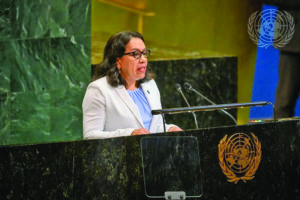
Guyana’s candidate for the United Nations Secretary General (UNSG) position, Ambassador Carolyn Rodrigues-Birkett, has received the backing of the Speaker of the House of Representatives in Jamaica, the Most Honourable Juliet Holness.
In a recent video statement, Mrs Holness, who is the wife of the Jamaican Prime Minister (PM) Andrew Holness, expressed full support for a fellow Caribbean national in her bid for the top UN office.
According to PM Holness, the nomination of a candidate from a small Caribbean nation reflects the potential that exists within the region. To this end, she underscored the importance of the entire region to lobby behind Ambassador Rodrigues-Birkett.
Guyana’s nominee for the United Nations Secretary General post, Ambassador Carolyn Rodrigues-Birkett
“Carolyn Rodrigues-Birkett is one of us. A woman coming from a very small region within Guyana, who appreciates that Guyanese and Caribbean people need to see that they can potentially be masters of our world. As Jamaicans would say, ‘We’re little, but we’re Tallawah.’ It means that though we are coming from small communities and smaller countries, regionally we are stronger,” she stated.
Holness went on to add, “We, as a region, our Caribbean, Americas, and Atlantic regions, are in full support of our sister Carolyn. We want every single voice to be raised supporting her candidacy, and we are speaking it into being. We look forward to you, our next UN Secretary General. You can do it. Do it for all of us.”
In recognition of this latest endorsement, Ambassador Rodrigues-Birkett expressed gratitude to Mrs Holness for her warm words of affirmation and support for her UNSG candidacy.
“I am deeply humbled by this show of support from my fellow CARICOM sister in public service. I also take this opportunity to once again express my sincere appreciation to the Heads of Government of the Caribbean Community (CARICOM) for their collective endorsement,” the Guyanese diplomat stated on Saturday.
Back in July, Caribbean leaders endorsed Guyana’s candidacy for the UN Secretary General position.
“Heads of Government strongly welcomed Guyana’s nomination of Ambassador Carolyn Rodrigues-Birkett and expressed their full endorsement of her candidacy,” a communiqué from the CARICOM Secretariat stated following the 51st Regular Meeting of the Conference of Heads of Government of CARICOM held in Gros Islet, Saint Lucia.
In fact, Deputy Secretary General of CARICOM, Dr Armstrong Alexis, had lauded Guyana’s bid for the top UN position.
During an interview on the side-lines of CARICOM Heads of Government in St Lucia, Dr Alexis said this ambitious move by a Caribbean member state would augur well in positioning the region on the global stage.
“If we succeed in electing a CARICOM national as the Secretary General of the United Nations, that is going to be a huge accomplishment for this region,” the CARICOM Deputy SG stated.
Already, he pointed out that for the first time, the Caribbean has been able to occupy the seat of the Secretary General of the Organization of American States (OAS) in the person of Ambassador Albert Ramdin from Suriname.
According to the CARICOM Deputy Head, the Caribbean region, over recent years, has been positioning itself among the international community.
“We are Small Island Developing States, but we are not islands without the capacity, without the capability, without the intelligence to be able to stand among the best and the brightest in this world,” Dr Alexis had posited.
Ambassador Rodrigues-Birkett, who currently serves as Guyana’s Permanent Representative to the UN and is a former Foreign Affairs Minister, was nominated by President Dr Irfaan Ali back in June for the UNSG position. The tenure of current UNSG Antonio Guterres will end on December 31, 2026.
Since her nomination, Ambassador Rodrigues has embarked on a global campaign to push her candidacy among major leaders and organisations.
Ambassador Rodrigues is vying for the UNSG post alongside the former President of Chile and UN High Commissioner for Human Rights Michelle Bachelet; former President of the UN General Assembly Maria Fernanda Espinosa of Ecuador; Director General of the International Atomic Energy Agency (IAEA) Rafael Grossi of Argentina; SG of UN Trade and Development Rebeca Grynspan of Costa Rica; and former President of Senegal Macky Sall.
As she continues her campaign across the globe, Ambassador Rodrigues-Birkett has been stepping up in the race for the UNSG post. In fact, only two weeks ago, she moved into the lead following the second United Nations Security Council straw poll, securing the highest number of “encourage” votes among the candidates.
Rodrigues-Birkett received eight encourage votes, three discourage votes, and four no-opinion votes in the second round. The result places her narrowly ahead of Rebeca Grynspan, who received seven encourage votes, four discourage votes, and four no-opinion votes.
The latest result represents a shift from the first straw poll, when Grynspan led the field with ten encourage votes. Rodrigues-Birkett had secured nine encourage votes, two discourage votes, and four no-opinion votes in that round.
While Rodrigues-Birkett’s encouragement tally declined by one vote in this second round, Grynspan’s fell by three, allowing the Guyanese candidate to emerge with the highest number of encouragement votes in the field.
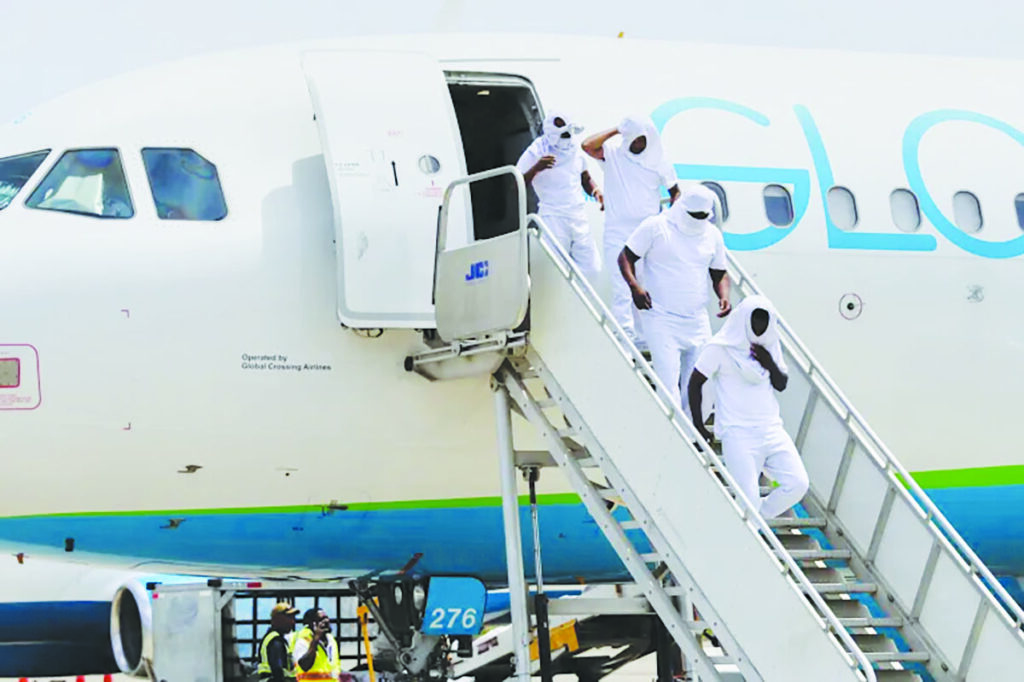
Following months of negotiations, the Guyana Government has agreed to receive a limited number of vetted third-country nationals being deported from the United States.
In a statement on Saturday, the Government said this arrangement falls under a migration cooperation framework with the US Government. It allows for Guyana to “…receive a limited, vetted number of skilled and non-criminal individuals through the International Organization for Migration (IOM) Assisted Voluntary Return Programme.”
Based on international reports, Guyana has already received the first group of deportees from the US on Friday. Despite making efforts to confirm with senior officials at the Foreign Affairs and International Cooperation Ministry, Guyana Times understands that the six deportees arrived on Friday on a special US deportation flight.
Their records, provided by the US, indicated that they had no criminal background, and the youngest is 20 years old, with the oldest being 36.
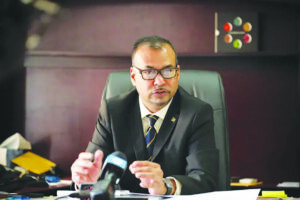
Nevertheless, Foreign Secretary Robert Persaud told The Associated Press (AP) news agency that six nationals from Cuba and Afghanistan arrived in the country on Friday after being vetted by local authorities and found to have no criminal background. He was further quoted in the article, saying that “the US has not made any further requests.”
Persaud added, according to the international news agency, that the arrangement with the US will run for one year and does not constitute permanent resettlement. Those foreign nationals deported from the US, mainly due to immigration issues, will remain in Guyana pending the determination of their immigration status.
According to the Guyana Government in Saturday’s missive, Guyana retains full discretion to review and reject any individual proposed for relocation under the framework, and the US will bear the full cost of the relocation process.
“The Government intends to accept only individuals who have chosen relocation to Guyana of their own volition,” the statement indicated.
It was further explained that the IOM, which is the United Nations (UN) Migration Agency, will be responsible for the operational implementation of the programme.
“IOM will cover the costs of receiving, housing, and supporting individuals relocated to Guyana and will provide the services needed for their integration, including access to communication with legal representatives and family members. The Government of Guyana will not bear the financial cost of the programme, and IOM has confirmed it will not assume, and this arrangement will not transfer to it any of the Government’s responsibilities concerning admission, legal stay, protection, or removal,” local authorities stated.
Foreign Secretary Robert Persaud
Meanwhile, it was noted that President Irfaan Ali’s Government has framed this arrangement as an extension of Guyana’s longstanding commitment to human rights and international cooperation. The Government insisted that individuals relocated to Guyana must retain the right to seek international protection where applicable, and the IOM will support the referral of such cases to the Office of the United Nations High Commissioner for Refugees (UNHCR) in coordination with the relevant Guyanese authorities.
The Government has also confirmed regular, effective, and sufficiently private access to communication with legal representatives and family members.
“The arrangement is temporary in nature and does not constitute permanent resettlement. Individuals relocated to Guyana under the Assisted Voluntary Return Programme do so voluntarily and will await the outcome of their immigration status determination while in Guyana. Depending on the outcome, individuals will either return to their country of origin or relocate elsewhere of their choosing. Their presence in Guyana is governed by a set of predefined terms rather than open-ended residency,” the Guyanese Government explained.
The framework is the latest expression of the steadfast partnership between Guyana and the US, which has blossomed under President Ali’s Government across energy, trade, investment, security, and diplomatic cooperation. It reflects the strength and maturity of the bilateral relationship and Guyana’s standing as a trusted and constructive partner to the US in the region.
The Government of Guyana said it will continue to work closely with the IOM, the UNHCR, and relevant domestic stakeholders to ensure the framework is implemented in a manner consistent with Guyana’s laws, its human rights obligations, and its national development priorities.
Guyana now joins more than 30 nations, including several Caribbean countries, that have signed deals with the Donald Trump Administration to accept deportees from the US who are not their own citizens. Jamaica, St Lucia, Dominica, Grenada, Antigua and Barbuda, and St Kitts and Nevis are among the regional nations with signed deals or advanced arrangements to accept third-country nationals from the US.
Earlier this year, Foreign Secretary Persaud had confirmed that a framework of understanding between Guyana and the US was being developed to facilitate third-country nationals here from the North American nation.
At the time, Persaud had made it clear that even with an agreement in place, Guyana would still retain the right of refusal of anyone being sent.
In fact, the Guyana Government had maintained that it would not be accepting any persons with a criminal background. It had explained that those deported individuals coming are expected to largely encompass persons denied asylum in the US but not desirous of returning to their home country. They are highly skilled individuals who have accepted the option of going to another country that is willing to receive them.
Since last year, the US had sent, or made arrangements to send, third-country foreign nationals to a range of countries across Latin America, the Caribbean, and Africa. These include Guatemala, Honduras, Panama, Costa Rica, Mexico, El Salvador, Belize, Paraguay, and Ecuador.
Dear Editor,
I want to remind President Ali, Prime Minister Mark Phillips, the Minister of Agriculture, and the Minister of Labour that the majority of the Wales Sugar Estate laid-off workers are landless agricultural workers.
They have applied for land, five to 10 acres each, to engage in farming, chicken and animal rearing, skill training, etc, but have not received any reply, not even an acknowledgement of their letters and petitions.
Many of these hard-working sugar workers have worked with Wales Sugar Estate and Guysuco for many, many years and are feeling neglected and forgotten, especially by the Ministry of Labour, the Ministry of Agriculture, and GAWU and NAACIE Union.
Editor, it was reported that President Ali said recently in Region Six, “Poverty reduction is not only about reducing the cost of things.” He said, “It is about investing in you so you can own things: your businesses, your homes, and properties that are increasing in value and have access to the best infrastructure, water, education, and healthcare.” It is also reported that the president stated that his Government’s development approach does not provide temporary relief. Instead, the PPP/C focuses on transforming livelihoods, strengthening communities, and ensuring future generations can live with dignity.
This announcement sounds great, but it appears that the ministers, especially from the Ministry of Agriculture and the Ministry of Labour, are not listening or do not understand what President Ali is saying and wants to do for the Guyanese people.
Isn’t the Wales Sugar Estate laid-off workers, their families, and livelihood matters too?
Editor, the Wales Sugar Workers Committee Representatives and the majority of the workers feel that President Ali, Prime Minister Mark Phillips, and the PPP-C-led Guyanese Government should urgently consider giving some of the idle sugarcane land of the Wales Sugar Estate to them and the landless peasant farmers, including the Belle Vue Pilot Scheme landless farmers, who have requested land for agriculture, chicken and animal rearing, etc, so that these workers can start to be owners, own businesses, and own the means of production.
Editor, it was reported that based on the Wales Estate land survey plan, this closed-down Wales Sugar Estate has over 9000 acres of idle and abandoned sugar cane land. It was also reported that the proposed Wales Gas Project & Gas Power Generating Plant, situated in the Marias Lodge-Free & Easy village area on the West Bank of Demerara, Region Three, will only be using approximately 100 acres of that idle sugarcane land for this Gas Project and Gas Generation Plant.
It was additionally reported that during the last National and Regional Election campaign, Minister Zulfikar Mustapha went to Vreezeland-Vive Laforce village and promised to give a group of squatters, including non-sugar workers, 200 acres from the Wales Sugar Estate cane land for pasture in the Potosi North section. Editor, it is reported that some of these squatters have already received over 500 acres of land from the Guyana Government in the Red Wing Polder, Kamuni area.
Also, in 2026, it is reported that the Guyana Ministry of Housing is in the process of using some of this idle cane land in the Vreezeland-Vive Laforce area for a housing development project, with thousands of house lots not too far from the proposed gas plant and gas generating plant.
We want President Ali and the Guyanese people to know that since 2023, the laid-off Wales Estate Sugar Workers have followed his public advice and organised the workers into a group. They elected a Workers-Farmers’ Committee, made up of these Wales Estate Sugar Workers: Kris Budhoo, Etwaroo, M. Hercules, Twaheer, J Singh, Mohammed, B Balkarran, S Gendalall, Tyron, and others.
The Workers Committee collected the names and signatures of over 350 to 400 of the laid-off Wales Sugar Estate Workers from Canal #2 Polder, Toevlugt-Patentia District, Vreezeland, Vive Laforce-Patosi village, who want land for farming, chicken and animal rearing, aquaculture, etc. The Workers’ Committee made copies of the list/petition and delivered one copy each to the Office of the President, the Ministry of Agriculture, the Ministry of Labour, the Office of the Prime Minister, GAWU, and NAACIE.
Editor, it is reported that to date, none of the Workers Committee Representatives or the workers have received a call or reply from the OP, OPM, Ministry of Agriculture, Ministry of Labour, or the two sugar workers’ unions, GAWU and NAACIE leadership.
Editor, these workers and the sugar workers committee want to know from the two sugar workers unions, especially the GAWU president, who is a sitting member of parliament (MP), what actions, if any, he and GAWU are taking to help us, the Wales Estate laid-off sugar workers, acquire some of this land for farming, chicken and animal rearing, financial assistance, skills retraining, etc. Also, how many of the house lots being developed within the Wales Sugar Estate land will be reserved and given to the Wales Estate Sugar Workers who do not own a house lot and have worked with Wales Sugar Estate for five years and over continuously and qualify under the SILWF programme for a subsidised house lot?
Editor, the GAWU and NAACIE leadership must recognise that these landless, laid-off sugar workers were GAWU and NAACIE union members and supporters who have made donations and paid union dues through the payroll deduction system to GAWU and NAACIE for many years and have rights.
Thank you.
Yours Respectfully,
Shyam Balkarran – Former GAWU & GCFA Member and National Representative
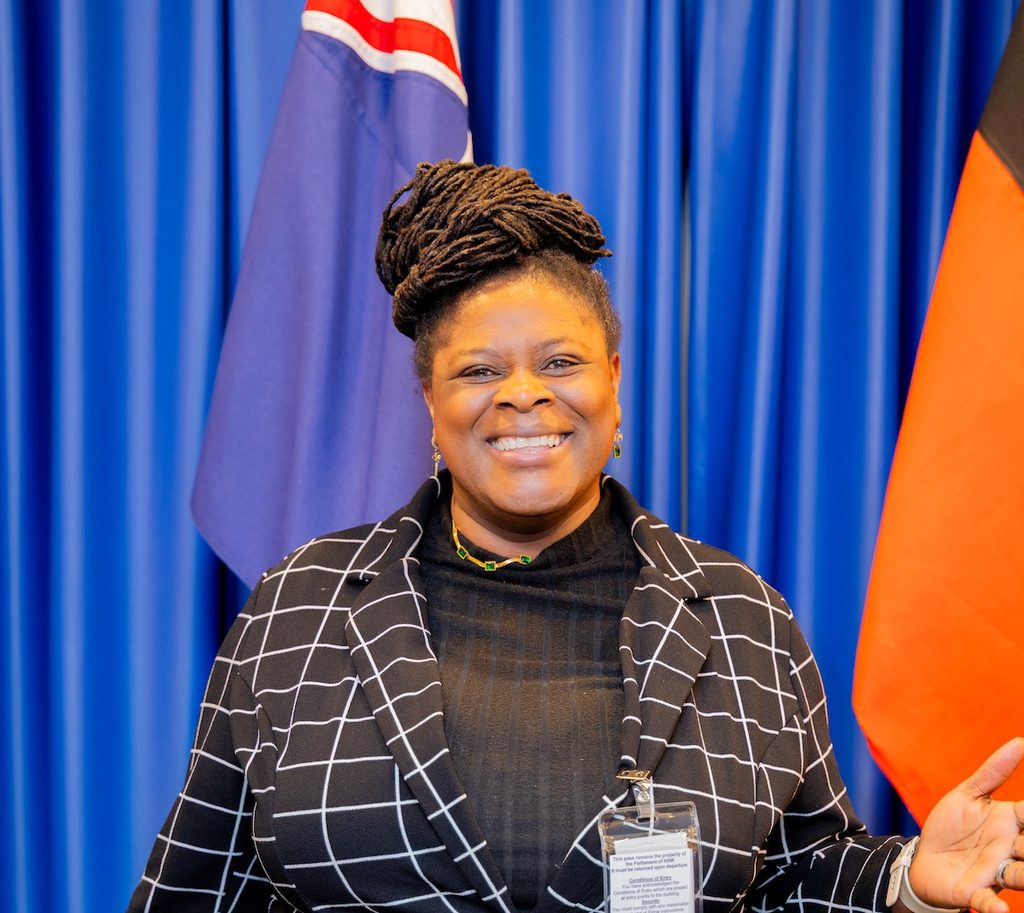
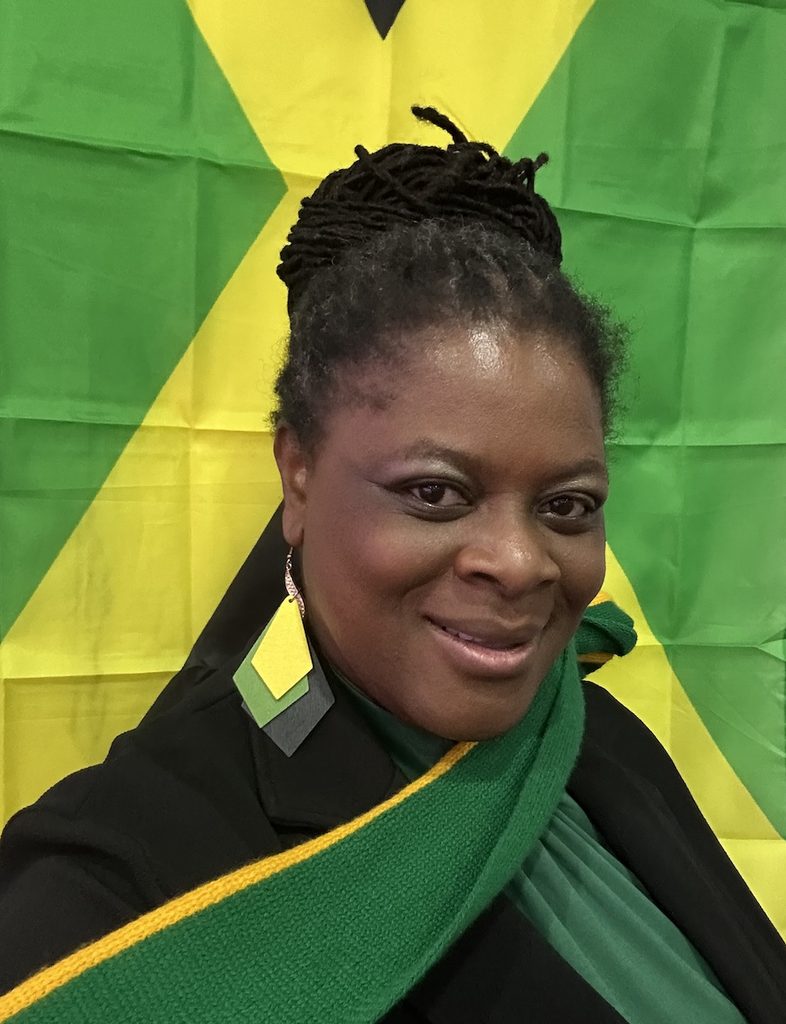
Dr. Stephanie Fletcher-Lartey has been appointed Honorary Consul Designate for Jamaica in Australia, taking on a new role after more than a decade of building and supporting Jamaica’s community in the country.
The appointment was announced at the Annual General Meeting of the Jamaican Association of Australia (JAA) on July 30, 2026, by former Honorary Consul Emeritus Professor Diane Austin-Broos.
Fletcher-Lartey, who founded the JAA and served as its long-standing president, handed leadership of the association to a newly elected executive committee as she prepares to take on her diplomatic responsibilities.
From Clay Ground, St. Ann, to Australia
Fletcher-Lartey was born in Clay Ground, a hilltop community in Bamboo, St. Ann.
Her early education included Bezer Basic School, Bamboo Basic School and Bamboo Primary and Junior High. She passed the Common Entrance Examination at age 10 while in Grade 5 and went on to attend St. Hilda’s Diocesan High School in Brown’s Town. She graduated with the Class of 1992.
After high school, she spent a year at Brown’s Town Community College before working at the St. Ann Regional Library in St. Ann’s Bay.
In 1994, she received a Government Scholarship to train as a Public Health Inspector at the West Indies School of Public Health on Slipe Pen Road in Kingston. She graduated in 1997.
Her academic path later took her to the University of the West Indies, Mona, where she earned a Master of Public Health with Distinction in 2007.
The following year, she received an international research scholarship from the University of Technology Sydney. She moved to Australia in 2009 and completed her PhD in Epidemiology between 2009 and 2013.
Building the Jamaican Association of Australia
When Fletcher-Lartey arrived in Australia in 2009, she found that Jamaicans were spread across a large geographic area with limited ways to stay connected as a community.
She first created a Facebook group for Jamaicans in Australasia. The online group later became the starting point for a wider community organization.
In 2012, as Jamaica celebrated its 50th anniversary of Independence, Fletcher-Lartey brought together a founding group of 10 Jamaicans in Sydney to establish the Jamaican Association of Australia.
The association was created to provide a central point of contact for Jamaicans in Australia, support incoming students and families, preserve Jamaican culture for children born in Australia and give the community a unified voice.
Reflecting on those early years, Fletcher-Lartey told Jamaicans.com that staying connected to Jamaica was important when she first arrived in Australia.
“When I first arrived in Australia, finding a connection to home was essential, not just for myself, but for every Jamaican trying to navigate life in Australia.”
The JAA went on to become a platform for Jamaican cultural activities, community support and engagement with Australian and Jamaican institutions.
From Community Leadership to Consular Service
Fletcher-Lartey’s work extended beyond the JAA.
From 2023 to 2025, she served as the Representative for Asia and the Pacific on the Global Jamaica Diaspora Council. During that period, she worked with Jamaican diplomatic representatives in the region on issues involving diaspora engagement, disaster relief, civic participation, consular access and bilateral relations.
Her experience gave her an opportunity to represent the interests of Jamaicans living across a region that includes Australia and other countries in the Asia Pacific.
That work now provides a link between her community leadership and her new consular responsibilities.
What Her New Role Means
As Honorary Consul Designate, Fletcher-Lartey is expected to assist Jamaican nationals in Australia and foreign nationals, while supporting trade, cultural exchange and closer relations between Jamaica and Australia.
The position also places her in a role where she can help strengthen connections between the Jamaican diaspora, the Jamaican government and Australian stakeholders.
For Fletcher-Lartey, the appointment is a continuation of her community service in a formal diplomatic capacity.
Speaking to Jamaicans.com about the appointment, she said:
“I am truly humbled and deeply honored to step into this role as Honorary Consul Designate for Jamaica in Australia.”
She said her 16 years in Australia have included work to support and celebrate Jamaican culture and community. She also pointed to her previous regional experience as preparation for the new role.
Fletcher-Lartey has said she hopes to build on those relationships while supporting greater cooperation between Jamaica and Australia in areas such as commerce, investment and cultural exchange.
Why Australia Became Home
Fletcher-Lartey initially moved to Australia to pursue her doctoral studies at the University of Technology Sydney.
After completing her PhD in 2013, her original plan was to spend time in Australia before eventually returning to Jamaica to pursue a career in public health leadership.
Her plans changed after she started a family.
She has described Australia’s multicultural environment, social support and health systems as factors that influenced her decision to make the country her permanent home. She also said she valued the opportunity to maintain her Jamaican identity while living among people from different cultural backgrounds.
A Career in Public Health
Fletcher-Lartey brings a background in public health and epidemiology to her new diplomatic position.
Her professional training began in Jamaica as a Public Health Inspector before she pursued graduate studies at UWI Mona and doctoral studies in epidemiology at UTS.
Her career has included work in public health research, infectious disease management, environmental health and emergency response.
The combination of her professional background and years of community leadership has shaped her work with Jamaicans in Australia and across the Asia Pacific region.
Looking Ahead
The appointment marks a new stage in Fletcher-Lartey’s involvement with Jamaica overseas.
After founding and leading the Jamaican Association of Australia for more than a decade, she has now passed leadership of the organization to a new executive committee.
Her new role as Honorary Consul Designate will focus on consular assistance, trade, cultural exchange and relations between Jamaica and Australia.
The Consulate of Jamaica in Sydney is located at 4 Sanananda Road, Bardia, New South Wales 2565, Australia.
– new bridge to replace Pontoon, improve connectivity in Reg 7
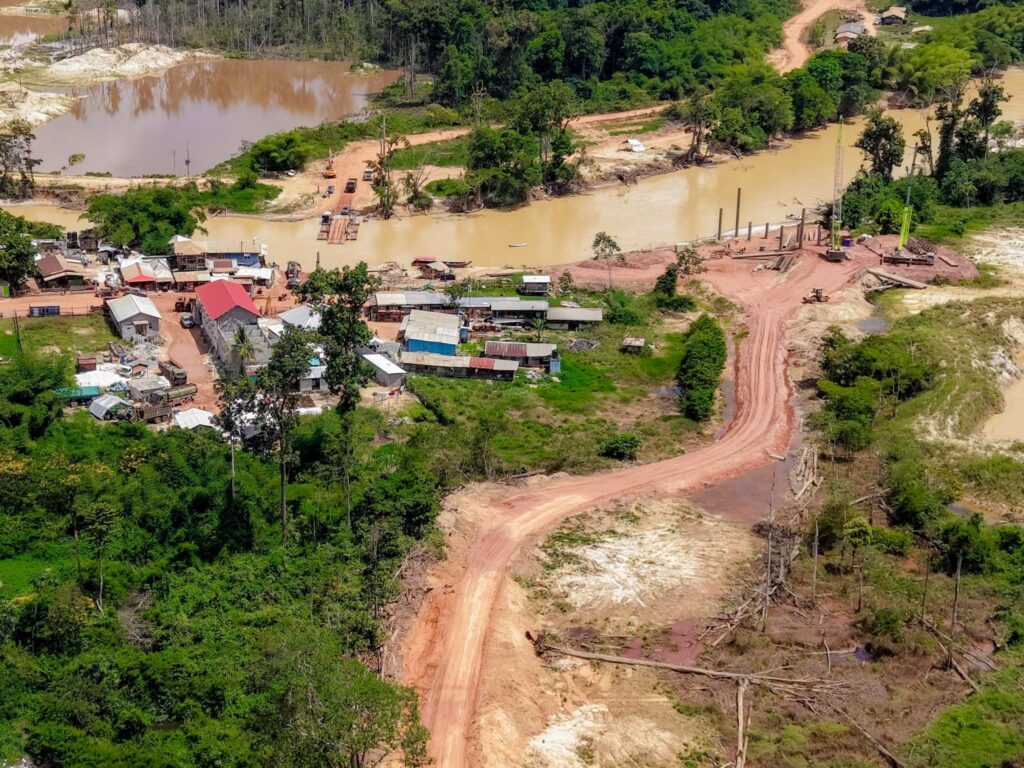
In a major undertaken to improve connectivity, transportation and economic development in Guyana’s hinterland, the earth was broken for the construction of a US$6 million bridge across the Puruni Bridge in Region Seven (Cuyuni-Mazaruni).
The project funded by the Government is being undertaken by Aris Mining and will replace the existing pontoon crossing with a permanent 109-metre modular steel bridge and improved access roads. The new infrastructure will provide a safer and more reliable connection along this important route within the region while allowing heavy industrial traffic to be diverted away from the main community road. The investment will support an already productive economic corridor encompassing nearly 500 mining properties and concessions, as well as several large forestry concessions. Improved connectivity will facilitate the movement of workers, equipment, fuel, timber, mining supplies and other goods, while providing businesses and transport operators with a more dependable route. Importantly, the development extends beyond supporting extractive activities. The wider project provides for community infrastructure, including a multi-purpose Government facility, health centre, digital school facility, playground, agricultural area and a formal waste-disposal area, reinforcing Government’s commitment to ensuring that development within the natural resources sector delivers tangible benefits to surrounding communities. Natural Resources Minister, Vickram Bharrat, said the investment reflects Government’s approach to ensuring that the continued growth of the mining and forestry sectors contributes to broader regional and community development. Minister Bharrat added that “as we strengthen the infrastructure needed to support our productive sectors, we are equally focused on ensuring that the communities in which these activities take place, benefit from improved infrastructure, better access to services and greater economic opportunities.”
The project has progressed through planning, reconnaissance, site investigations and design development, with construction now commencing. The Ministry of Natural Resources will coordinate the project, with technical oversight from the Ministry of Public Works, and the works are expected to be completed by December 2026.
A Guyanese national was allegedly gunned down in Cayenne, French Guiana, on Wednesday after gunmen opened fire in the area where he was reportedly renting an apartment.
The dead man has been identified as 23-year-old Andrew Nathaniel James, formerly of Victoria Village, East Coast Demerara (ECD).
Dead: Andrew Nathaniel James
While information about the shooting remains sketchy, Guyana Times understands that he and another man were in a rented apartment when several gunmen opened fire. He was reported shot several times. The other occupant of the
James’ mother, Ecua Griffith, told a section of the media that she last spoke with her son on Wednesday morning, just hours before he was killed. She noted that he left Guyana a few years ago and was reportedly working in French Guiana. She described her son as a jovial and loving young man.
Meanwhile, the relatives and friends of the dead man held candlelight vigils in Guyana and Brooklyn, New York.
Griffith said funeral arrangements will be announced at a later date as the family continues to grieve and awaits further information from French authorities regarding her son’s death.
The wide consensus is that the old international order has failed to give developing countries anything approaching the influence their numbers, resources and economic importance warrant. One question placed on the agenda is whether BRICS+, with their summit next week in New Delhi, should become the champion – or even the political voice – of the Global South. While in our estimation, the answer should be no, we believe BRICS+ can be an important instrument of the Global South without becoming its leader – a distinction matters enormously for us in Guyana.
BRICS’ growing influence is welcome. Its challenge to the dominance of Western financial institutions, its creation of alternative sources of finance and its efforts to reduce dependence on the US dollar potentially give developing countries something they have often lacked – choice, which is precisely the point. But the Global South should not replace one set of powerful patrons with another since we in Guyana have been there before.
Small countries should never forget one thing about great-power politics – when elephants fight, it is usually the grass that gets trampled. We spent much of our post-independence history navigating this dilemma when during the Cold War, developing countries were routinely pressured to choose between competing power blocs. The Non-Aligned Movement (NAM) was the developing world’s ideal: we are sovereign countries, not pawns on somebody else’s chessboard.
We have seen that a multipolar world does not automatically mean a more democratic one, and a world with several powerful centres can still leave small countries powerless if they are merely expected to choose which great power they wish to depend upon. BRICS, then, should be an opportunity – which Guyana should welcome – not a new headquarters for the Global South. Chinese and Indian markets, Brazilian cooperation and alternative sources of development finance can all serve Guyana’s interests.
But there is a crucial difference between South-South cooperation and South-South dependency, and we should not exchange one dependency for another. Our oil transformation makes this particularly important sense; we are no longer just a small Caribbean country that the great powers can overlook. We possess something everybody wants, and from each we can use what they provide – at the best price and with delivery.
And all of it applies equally to Caricom. The Caribbean’s interests must prioritise those issues that are germane to our reality – climate finance, debt, food security, trade, migration, energy, small-state sovereignty, and the law of the sea, etc. Our regional voice therefore needs greater collective leverage, not another great-power alignment, and that is where a revitalised Non-Aligned Movement could matter.
Not the NAM of ceremonial conferences and grand communiqués, but a modern coalition capable of coordinating developing-country positions at the United Nations, IMF, World Bank and WTO – and collectively pressing for debt relief, climate finance, technology transfer and greater representation in global institutions.
Non-alignment should not mean neutrality about everything but simply the freedom to decide what is best for us within our realities. Our foreign policy should therefore be guided by one simple principle – Guyana first – which is not indecision but sovereignty. That does not mean isolation, and it certainly does not mean that we cannot join alliances that further our interests – as we have done with the US vis-à-vis Venezuela.
The old international order is changing, and we are fortunate in having a Guyanese candidate to lead the largest multilateral global organisation – the UN. We should not only welcome a world in which developing countries have more choices but also help shape one to not become just a collection of competing spheres of dependency. BRICS can provide economic leverage; CARICOM can provide regional leverage; G77 can provide collective influence at the UN, while a revitalised Non-Aligned Movement can provide political cohesion.
The Global South should cooperate where our interests coincide, disagree where they do not, and decide for ourselves. For us in Guyana, sitting atop billions of barrels of oil, that is not diplomatic rhetoric but an insurance policy.




 provides for community infrastructure, including a multi-purpose Government facility, health centre, digital school facility, playground, agricultural area and a formal waste-disposal area, reinforcing Government’s commitment to ensuring that development within the natural resources sector delivers tangible benefits to surrounding communities. Natural Resources Minister, Vickram Bharrat, said the investment reflects Government’s approach to ensuring that the continued growth of the mining and forestry sectors contributes to broader regional and community development. Minister Bharrat added that “as we strengthen the infrastructure needed to support our productive sectors, we are equally focused on ensuring that the communities in which these activities take place, benefit from improved infrastructure, better access to services and greater economic opportunities.”