Ethan Bulkan, a budding Guyanese squash talent, made a promising start at the ongoing Barbados Junior Open Tournament.
He is the lone Guyanese competitor at the tournament.
He convincingly won his opening match in the U-15 category 11-4, 11-3, and 11-2 against Zefan Scott and will advance to the semi-finals later on Saturday.
His presence in the U-15 category is more of an added preparation as he soon heads to the US Open Junior Championships.
A main endeavor for the Caribbean U-13 silver medallist will be defending his U-13 title at this tournament.
With injury cutting short a genuine hope for gold at the Caribbean Championships earlier in the year, another title in Barbados could be an appeasement.
Seeded number one in U-13, the Queen’s College Student has drawn a bye to the semi-final against hosts Ethan Cyrus.
He has a pleasant history against Cyrus, having defeated him in straight sets in the team segment at CASA.
A looming task awaits as victories on Saturday will place him in two finals on Sunday.
A new $239.8 million magistrate court and living quarter was commissioned at Port Kaituma, Region One.
This forms part of the government’s continued effort to support and improve the administration of Justice in Guyana.
Ribbon cutting ceremony for the new Port Kaituma Magistrate Court
The unveiling and ribbon-cutting ceremony on Friday was led by the Attorney General and Minister of Legal Affairs Anil Nandlall, SC, and Minister of Public Works Bishop Juan Edghill.
This landmark facility, the first of its kind in the area, will serve approximately 800 residents of Port Kaituma and a broader population of 18,000 across the region.
It replaces the arrangement where court sessions were held in Matthews Ridge and most recently, the police station.
This development addresses longstanding challenges, including the burden of travel for legal services, which often strained resources, posing barriers for those who needed justice most.
Unveiling of the Plague by Minister of Public Works, Bishop Juan Edghill
The court serves as a statement that justice should be close to home by ensuring access for all.
Minister Nandlall during his address reiterated the government’s commitment to the rule of law and the constitutional rights of every Guyanese, regardless of their geological location.
Underscoring the importance of this achievement in improving the judicial infrastructure, he noted that years ago, such a facility would have been deemed impossible.
“Today you are here to see it as a reality and that is our commitment as a government to work with every sector of our country and work in every sector of our country to ensure that the highest quality of services is delivered to the people or country where so ever, they are located,” the AG stated.
Attorney General and Minister of Legal Affairs, Anil Nandlall Sc and Minister of Public Works, Bishop Juan Edghill touring the new building
Further demonstrating the importance of the justice system, the minister said a people without justice will never advance, as he highlighted the clear connection between a functional justice system and the social and economic well-being of a nation.
The building includes modern amenities, a spacious courtroom, and three living quarters for the magistrate, court clerk, and staff.
It will also host services for domestic violence cases, probation, and social work, further demonstrating the judiciary’s responsiveness to public needs.
Meanwhile, Minister of Public Works, Bishop Juan Edghill noted that the court will reduce bottlenecks in the judicial system, leading to greater efficiency.
Port Kaituma Magistrate Court
“The opening of this Magistrate Court marks a meaningful fulfilment of a promise made to the people within this catchment area. It represents a critical expansion within the Judicial network of Guyana by addressing the growing needs of our citizens,” the minister stated.
Similar facilities are set to be opened in Mabaruma and Mahdia shortly to ensure the judiciary’s mission remains to uphold the rule of law and provide fair, transparent, and efficient access to justice is being executed, while fostering public trust and confidence.
Meanwhile, presentations were made by Vice-Chairperson Anasha Peters, and the Chancellor of the Judiciary (ag) Hon. Mme. Justice Yonette Cummings-Edwards (Republished from the Department of Public Information)
A new chapter in Kato’s development unfolded as President Dr Mohamed Irfaan Ali ceremonially turned the sod for a nearly $5.4 billion state-of-the-art hospital, marking the transformation of a remote cottage facility into a modern healthcare institution.
President Ali was joined by Minister of Health Dr Frank Anthony, Minister of Amerindian Affairs Pauline Sukhai, and enthusiastic residents at the groundbreaking ceremony on Friday.
President Dr Mohamed Irfaan Ali delivering the feature address
Funded through a partnership between the government and the Inter-American Development Bank (IDB), the hospital will span 57,000 square feet—57 times larger than the existing facility. This significant expansion underscores the government’s commitment to improving healthcare services to hinterland communities.
“I want to assure you, that we are not going to stop until every single citizen, every single community, have equal access and same standard of service. You deserve the same level and the same standard of service, like anyone else across the country,” President Ali underscored in his keynote address.
The project will also include a $200 million staff quarters, to accommodate doctors and nurses, who will man the massive facility.
When completed, residents of Kato and surrounding communities will enjoy essential and reliable services, eliminating the need to travel to central communities.
The facility will boost 75 inpatient beds, private rooms with modern amenities, operating theatres catering to cataract and maternity procedures, diagnostic imaging (CT scans and x-rays), dialysis services and advanced laboratories.
“Historically, you have to wait 8-7 months to have your CT scans done, with this hospital, you will have your CT scans done immediately, right here in Region Eight.
…Each ward will have its own washroom, its own shower, it will have its own support system; 100 per cent first-grade hospital beds, not cots, will be part of this hospital,” the president said as he outlined the project’s significance.
The Kato Cottage Hospital will be transformed into a modern, state-of-the-art healthcare institution
Additionally, a neonatal intensive care unit (NICU) will be established within the facility, catering to high-risk babies.
According to the president, construction will take 24 months and is being undertaken by a Chinese company, PCI Sinopharm Consortium.
Healthcare is not the sole focus, but creating employment opportunities is a critical component of the project. Along this vein, President Ali noted that some 60 residents and youths will be permanently employed during the facility’s construction.
“This region is exploding with development and we want all of you to be a part of this,” the head of state urged, noting the village’s immense potential as a hub for ecotourism.
“But for all of this to happen, we have to build an ecosystem that includes proper health, proper education, good infrastructure, a good airstrip and good facilities that will enable development of the sector,” he outlined.
In addition, President Ali pointed out that regional healthcare investment increased from $ 1.7 billion in 2015-2020 under the coalition, to over $10 billion in the past four years.
An artist impression of the $5.4 billion modern facility
Ministers Anthony and Sukhai also delivered remarks at the event, emphasising the government’s commitment to Amerindian development, particularly healthcare.
This aligns with the government’s vision of creating a modern healthcare system, where all citizens, even those in far-flung and remote communities, enjoy world-class services.
As part of continued efforts to bolster security infrastructure, the Ministry of Home Affairs on Thursday signed 11 contracts totalling $1.1 billion for projects aimed at enhancing operational capacity and improving the living and working conditions for staff and the general public.
The initiatives will benefit the Guyana Fire Service, the Guyana Police Force, and the Guyana Prison Service.
Contracts signed to bolster security infrastructure
Permanent Secretary, Andre Ally spearheaded the signing ceremony, where he underscored the importance of completing projects within the contractual deadline, ensuring they align with the government’s vision of high-quality infrastructure.
He also emphasised the need for workers to adhere to safety protocols, stressing the need to prioritise workers’ safety.
“This significant investment underscores our focus on enhancing infrastructure to better serve our communities and workforce. Contractors must maintain timelines and adhere to safety standards to ensure the success of these projects,” PS Ally noted.
Some of the projects include the construction of female and male living quarters at the Mazaruni prison, amounting to around $371.6 million. A living quarter will also be constructed at Lusignan Prison, to the tune of $161.1 million.
The Paramakatoi Police Station in Region Eight will be completed with an additional $40.8 million in contract signed.
In addition, the New Amsterdam Prison Power Network in Region Six will be expanded, with provisions totalling $132.4 million.
Meanwhile, construction of a Caged Walkway at Mazaruni Prison will be undertaken to the tune of $76.9 million (Republished from the Department of Public Information)
In a bold move to foster entrepreneurship and strengthen the economy of Guyana, the Guyana Bank for Trade and Industry (GBTI) has launched GBTI GROW, a specialized division aimed at empowering small and medium-sized businesses (SMBs).
The grand opening event, which took place at Mon Repos, East Coast Demerara on Friday, was graced by the distinguished presence of bank executives and Finance Minister Dr. Ashni Singh.
GBTI GROW is more than just a financial service provider. It is a strategic initiative designed to support Guyana’s entrepreneurs by offering tailored financial solutions that meet the diverse needs of SMBs.
Dr. Singh, GBTI’s Branch Lead and other company executives participates in the ribbon cutting activity
From agricultural ventures to manufacturing and retail, GBTI GROW promises to be a comprehensive resource that nurtures growth, innovation, and sustainability within local businesses.
GBTI GROW will cater to businesses in several key sectors, providing them with the necessary financial tools and advisory support to scale and prosper. The four primary areas of focus include:
Retail/Wholesale Trading and Distribution – Supporting businesses involved in the sale and distribution of goods.
Agriculture – Offering financing for crop farming, livestock, forestry, shrimp farming, fishing, poultry, and other agricultural activities.
Manufacturing – Financing for sectors such as timber and sawmilling, food and beverages, clothing, furniture, art and craft, cottage industries, and more.
Commercial Vehicles – Loans for purchasing trucks, lorries, and other commercial vehicles essential for business operations.
In addition to sector-specific financing, GBTI GROW will offer an array of tailored financial products and services, including:
Specialized Loan Programs: These loans are designed to support the specific needs of SMBs, whether it’s for start-up capital, expansion, or working capital. With flexible terms and affordable rates, GBTI GROW aims to reduce the financial burden often faced by small businesses.
Strategic Partnerships: GBTI GROW will connect businesses with valuable resources, including guidance on financial management, business planning, and market access. Through partnerships with organizations like the Guyana School of Agriculture, NAREI, and the Ministry of Agriculture, GBTI GROW is poised to create a robust ecosystem that enables businesses to grow sustainably.
Digital Solutions: Recognizing the need for modern, efficient solutions, GBTI GROW will offer innovative banking products to help businesses manage their finances more effectively and scale operations with ease.
As part of its long-term vision, GBTI plans to expand the Mon Repos location into a fully operational branch that will serve the broader East Coast Demerara region.
Dr. Singh, in his address at the event, highlighted the staggering growth in credit provided to the non-financial private sector between December 2020 and June 2024, a period during which credit expanded by 58% or $150 billion.
While acknowledging this growth, Dr. Singh pointed out that there is a belief that a significant portion of the credit has been directed towards larger businesses.
However, he emphasized that this perception is not entirely accurate, as there has also been notable credit growth for households and SMEs, particularly in sectors like agriculture, services, and manufacturing.
Dr. Singh took the opportunity to commend GBTI for responding to the challenges faced by SMEs in accessing credit.
He called this move “extremely timely and important,” praising the bank for recognizing the need for financial products tailored to the specific needs of SMEs, which are often left underserved.
Addressing the audience, Dr. Singh emphasized that one of the main challenges SMEs face is the cultural barrier to borrowing.
Many small business owners are hesitant to approach banks for loans, particularly because of concerns about pledging collateral, such as their homes or vehicles.
Dr. Singh reflected on the emotional and psychological toll that borrowing can have, especially for those without stable salaries or formal guarantees of income. He urged GBTI to continue pushing for broader access to credit, not just through traditional means like real estate but also by accepting alternative forms of collateral, such as business receivables or contracts.
“People fear the idea of indebtedness,” Dr. Singh remarked.
“We must work together to educate and reassure them that borrowing, when done responsibly, is not something to fear. The idea that SMEs cannot access credit needs to change.”
The Bar Association of Guyana convened a special meeting on November 28, 2024, to address a request made to the Attorney General concerning the admission of two U.S.-trained attorneys to practice law in Guyana.
The meeting, held in accordance with Rule 6(4) of the Association’s Rules, marked a significant moment in the country’s legal landscape, as it garnered the largest attendance in the history of the Guyana Bar.
The request was made on behalf of two attorneys who have been trained and certified in the United States but do not meet the criteria outlined in Section 4(1)(a) of the Legal Practitioners Act, Cap. 4:01.
This section stipulates that candidates for admission to the Guyana Bar must be nationals of a signatory state under the established legal agreement, which does not include the United States.
The consultation followed a meeting between the Honourable Attorney General and the Bar Council on November 8, 2024, where the Attorney General brought forward the request for an Order under Section 4B of the Legal Practitioners Act to allow these U.S. attorneys to practice in Guyana.
However, Section 4(1)(a) of the Act requires that applicants be nationals of a state that is part of the agreement, and as the U.S. is not a signatory, the two attorneys were deemed ineligible.
During the special meeting, the Bar Association members engaged in thorough and vigorous discussions. After careful consideration, the following resolutions were unanimously adopted:
No Change to the Law: It was resolved that no changes be made to the current legal framework for admission to practice in Guyana. The law will remain as is, with eligibility for admission strictly limited to those who meet the criteria set out in Section 4(1) of the Legal Practitioners Act.
Ineligibility of U.S. Attorneys: It was also unanimously agreed that the two U.S.-trained attorneys in question are legally ineligible for admission to the Guyana Bar under the current provisions of the Act.
The Bar Association expressed its appreciation to the Attorney General for providing an opportunity for consultation on this matter. The Bar Council affirmed its commitment to taking any necessary steps to ensure the resolutions are upheld, should further action be required.
This decision reinforces the Guyana Bar’s commitment to upholding the legal standards and practices set forth in the country’s legal framework, while ensuring that only qualified individuals, as defined by the existing laws, are allowed to practice in the nation’s courts.
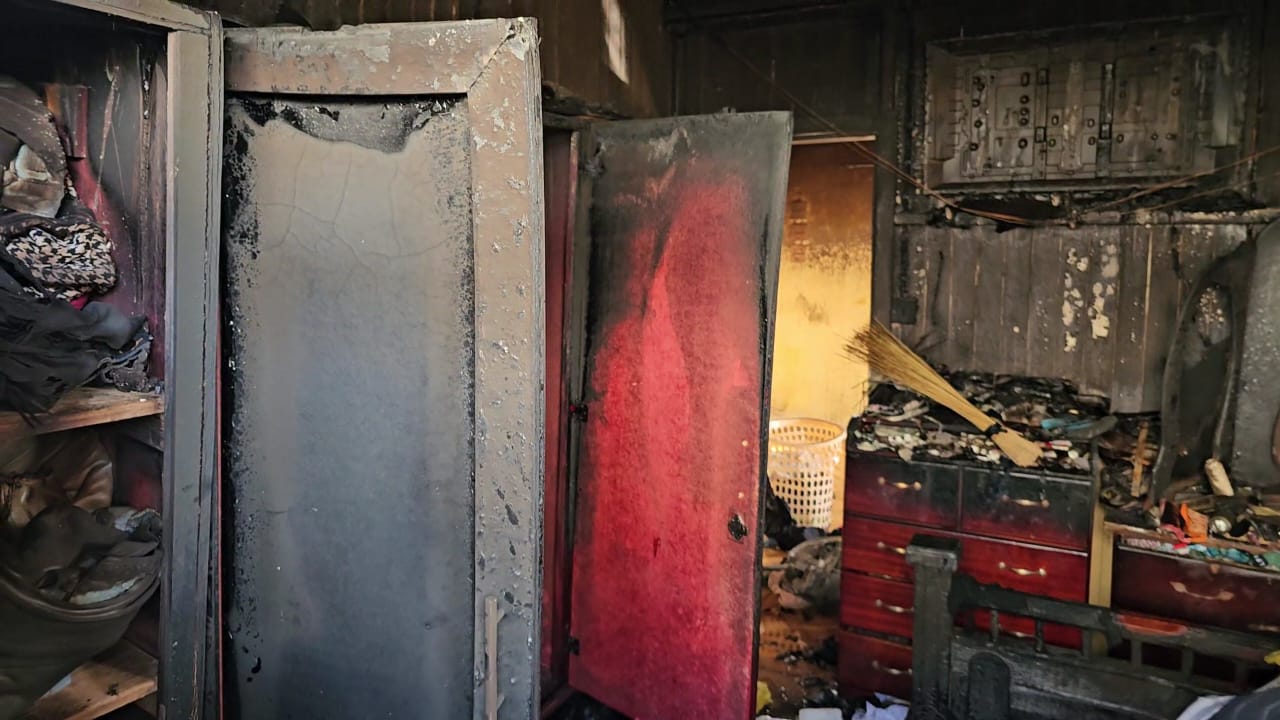
At approximately 13:00 hrs on Friday, the New Amsterdam Fire Station said it received a distress call reporting a fire in Budhan Scheme, Vryheid, West Canje Berbice.
Two fire engines were immediately dispatched to the scene. Upon arrival, firefighters observed flames emanating from the lower floor of the two-storey building.
Thanks to the swift response and effective efforts of the fire service, the blaze was quickly contained to the lower floor, resulting in extensive damage there.
The fire was later determined to be of electrical origin, linked to an issue with a light bulb, according to Divisional Fire Officer Clive McDonald.
Tomika Roach, who lived in the lower flat with her husband and two children, recounted that she had returned home around 13:00 hrs to retrieve an item. After leaving, she was on the road when she received a call from her brother informing her that the house was on fire.
The two-storey residence housed multiple family members; the upper floor was occupied by her mother, nephew, and sister.
Roach praised the fire service for their swift response, which prevented a potentially disastrous outcome. Though shaken by the incident, she expressed immense gratitude that everyone was safe and that the fire was quickly brought under control.
A 72-year-old pensioner from Yakarinta Village, Angelina Mora, was found dead under suspicious circumstances, prompting a police investigation into what is believed to be a case of murder.
Mora, a woman of Amerindian descent, was reportedly killed between 15:00 hrs and 22:00 hrs on November 28 at her home.
The prime suspect, 53-year-old Jeffrey Edwards, a farmer and reputed husband of the victim, was arrested at the scene.
Edwards, who had lived with Mora for over four years in a small house located in an unfenced yard, denied causing the death and claimed that “Kanaima”—a term used to refer to evil spirits in local folklore—was responsible for her demise.
Upon arriving at the scene, police noted that the incident took place in a modest 10×15-foot house with one front door, surrounded by similar dwellings. Initial investigations revealed that Edwards and Mora had been living together as husband and wife.
The investigation gained traction after a key witness, 42-year-old Almalita Marshall, the suspect’s niece, came forward with alarming details. Marshall claimed that on November 28, she saw her uncle physically assaulting Mora under a cashew tree in their yard.
She reported that the assault lasted for several minutes, during which she saw Mora fall to the ground, after which Edwards allegedly dragged her into the house.
Later that evening, another resident of Yakarinta Village, 24-year-old Nekita Benjamin, a Community Health Worker, received a phone call from an anonymous source informing her that Mora had died. Benjamin immediately visited the couple’s home, where she confronted Edwards about the news.
Edwards told her that his wife had been drinking in the village before returning home, going to bed, and later “stopping breathing.”
However, upon examining Mora’s body, which was lying on a bed, Benjamin noticed visible signs of violence, including marks on her face, chest, and breast area. Benjamin questioned Edwards again, prompting him to admit that they had been drinking and had a “little fight.”
The body of the victim was later transported to Lethem Hospital Mortuary, where a doctor confirmed her death. A post-mortem examination is expected to determine the exact cause of death.
Meanwhile, Edwards remains in police custody at Lethem Police Station, where he continues to maintain that evil spirits were responsible for his wife’s injuries.
The third match of the Global Super League saw another close encounter between home favourites Guyana Amazon Warriors and Victoria.
With four balls remaining, the Australian side came out on top by four wickets.
Corey Anderson won the toss for the visiting side and he decided to stick the opposition in and field first in Providence.
That looked a brave decision as Moeen Ali set about the bowling to lay the foundations for a sizeable score.
Jackson Smith removed Roston Chase at the end of the third over but that was the only success for the home side before Ali departed for a typically eye-catching half century at the end of the tenth over.
Smith again doing the business and splattering the stumps.
Shai Hope made 40 and Hassan Khan 25 as the Warriors hauled their way to a competitive total of 162/6. It proved not to be enough.
There was tight bowling from Imran Tahir and his side looked to have put the home side in command and at 69/4 after nine overs the match looked to have swung decisively towards the Warriors on home turf and in front of a loyal crowd.
GEORGETOWN, GUYANA – NOVEMBER 29: Moeen Ali of Guyana Amazon Warriors bats during the ExxonMobil Guyana Global Super League T20 match between Guyana Amazon Warriors and Victoria at Providence Stadium on November 29, 2024 in Georgetown, Guyana. (Photo by Ashley Allen – GSLT20/Global Super League via Getty Images)
A few overs later there was a feeling of disbelief as Victoria rallied with some late order hitting, keeper Scott Edwards and eventual Player of the Match, Karima Gore, showed real composure and no little skill in chasing down the target.
Edwards fell with the job not done entirely, Tanzim Hasan Sakib scudding one past his defences to bowl him, but Gore held his nerve and together with Dominic Drakes they got their side home in the final over.
Indeed, the job was done in some style with both men finding the boundary exactly when they needed to.
With six runs needed off the final six deliveries, Gore sent Dwayne Pretorious to the boundary twice inside the first three balls to seal the win.
All sides have all now got their GLS campaigns underway and Victoria sit at the top of the table after an ice-veined start to their campaign. (GSLT20)
In the brightly lit corridors of the convention centre in Baku, Azerbaijan, a senior Caribbean climate negotiator paused, coffee in hand, and promised a blunt assessment of this year’s United Nations Climate Change Conference, known as COP29. That candid evaluation would come almost a week later, delivered over Google Meet. “At the end of the day, the decision was not quite what anybody really wanted,” the negotiator said. “But it’s not a surprise, given the circumstances we’re in.”
President-elect Donald Trump gestures to supporters at an election night watch party in West Palm Beach, Florida, on Nov. 6, 2024. The New York Times reported on Nov.8 that Trump’s transition team is preparing executive orders to withdraw from the Paris climate agreement. (AP Photo/Julia Demaree Nikhinson)
As the dust settles on COP29, Caribbean nations confront a sobering reality: progress on climate finance remains painfully slow, and the ambitious goals many had hoped for seem more distant than ever.
From the hard-won freedom of the Haitian Revolution to Bob Marley’s revolutionary reggae, the Caribbean has long been the ‘lil axe for the big global tree’. Thinkers like Walter Rodney have challenged colonial narratives, while athletes like Bolt, Alfred, Lara and Chanderpaul have captivated the world with record-breaking feats. Even Rihanna has transformed her pop stardom into an international business empire. For a region that comprises just 1 per cent of the world’s population, the Caribbean has consistently shaped global culture and discourse.
Yet despite their outsized influence, Caribbean nations face immense challenges in climate change negotiations. The impacts of global warming are not abstract threats but daily realities: rising sea levels, intensified hurricanes, and the salinisation of freshwater resources.
One of the most contentious issues at COP29 was the New Collective Quantified Goal (NCQG) on climate finance, a framework intended to mobilise funding to help developing countries mitigate and adapt to climate change. Developing nations had proposed a figure of $1.3 trillion a year, a sum that “still doesn’t really get the job done,” the negotiator, who didn’t want his name published, noted. This amount would only limit global warming to 2.7 degrees Celsius above pre-industrial levels, far from the 1.5-degree target crucial for vulnerable nations like those in the Caribbean.
However, negotiations concluded with a commitment of only $300 billion a year by 2035.
Cedric Schuster, Samoa’s Minister and AOSIS Chair, at COP29 Closing Plenary:”We had more hope that the process would protect the most vulnerable.” (AOSIS)
The timeline of the agreement also drew criticism. With a 2035 deadline and no obligations to increase funding between 2025 and 2035, there is fear that developed nations could delay meaningful contributions. “They can just simply meet the goal in 2035 and say, ‘So we met it,’ but there’s no ramping up, which is what I think a lot of people would like,” the negotiator said.
On the topic of expanding the base of contributors, the negotiator cautioned against shifting financial burdens onto developing countries that are beginning to build wealth from industries such as oil and gas. “Depending on the indices you use, countries such as Guyana or Barbados or Trinidad or the Bahamas can very quickly find themselves on a list of countries expected to contribute. And we have to be very careful in that,” they said. The negotiator pointed out that China, though often depicted as a climate villain, is already the largest provider of voluntary climate finance globally.
ExxonMobil Guyana’s Liza Unity FPSO vessel operating in Guyana’s Stabroek Block, where ExxonMobil and its co-venturers Hess and CNOOC announced in November reaching a milestone of 500 million barrels of oil produced from the offshore block. (Exxon Mobil Guyana)
There was, however, a silver lining in the final agreement: recognition of the need to reform the global financial architecture to address barriers such as high capital costs and the unsustainable debt levels of developing countries. While such provisions are a step in the right direction, the negotiator noted a lack of specific measures or timelines. “It references removing these barriers, supporting calls made through initiatives like the Bridgetown Initiative, spearheaded by Barbados’ Prime Minister Mia Mottley, to make financing more accessible for developing nations,” they said.
For the Caribbean and other vulnerable nations, this financial reform could be crucial. The consequences of a deal that doesn’t adequately support developing nations are dire. Climate change is not a distant threat in the Caribbean; it is a lived reality. “The cost of every project goes up because you have to put climate resilience into it,” the negotiator said. “Maintenance for the seawall, for instance, is going to go up. Maintenance costs for the roads, the overall construction cost for a road, a bridge, a hospital, a port—any of those things.”
Insurance, once a safety net, has become a luxury many cannot afford. “Every time we’re hit, or given the fact that the U.S. is hit multiple times a year, all of the insurance costs go up for the entire region,” they noted. “When you’re a small, poor country, affording that insurance is a problem.”
BREAKING: Hurricane Beryl upgraded to a category 5 hurricane with 161 mph winds.
Loss and Damage, a critical issue for Caribbean nations, was addressed during the “Caribbean Rising” panel at the CARICOM Pavilion in Baku, but with limited optimism. Sasha Jattansingh, a Loss and Damage specialist, called for a human rights-based and climate justice approach to operationalising the fund. She emphasised that access to the Loss and Damage fund must be flexible and timely. “We have to look at access, and also ensuring that the funds have to be climate concessional and grant-based because every time we have any sort of hurricane or major flooding, we have to deal with debt incurred,” Jattansingh said during the panel discussion. “It shouldn’t take three or four years to get the monies. What will happen? Three or four hurricanes hitting us year after year. It has to be responsive to our needs and flexible.”
Despite the difficulties with insurance, regional innovations offer potential solutions. The Caribbean Catastrophe Risk Insurance Facility (CCRIF) has pioneered parametric insurance, delivering payouts within days of disasters. Yet its scope is limited. With support from the Loss and Damage mechanism, CCRIF could expand, providing a safety net for vulnerable sectors like fisheries and tourism.
No Climate Justice = Climate Migration
“The problem is most developed countries are concerned about a migration issue,” asserted Rochelle Newbold of the Bahamas during the same event. “If you make the situation so egregious for persons to not be able to thrive in the countries that they are in, they are going to move. They are going to go someplace else where they think it’s greener and better. And with all the steps that you’re taking to try to prevent that, you’re gonna find these people on your doorstep whether you like it or not.”
From Left to Right: Participants from the CARICOM Pavillion Side Event for Enhanced Loss and Damage Response: Rochelle Newbold, Director of Climate Change & Environmental Advisory Unit, Bahamas, Rueanna Haynes, Director, Climate Analytics Caribbean, Kevin Hope, Debt Management Consultant, Climate Analytics Caribbean, Sasha Jattansingh, Loss And Damage Expert, Climate Analytics Caribbean and David Maslo, Chief Risk Management Officer, CCRIF SPC
COP29’s Breakthrough on Article 6
Amid the frustrations, COP29 did see significant progress on Article 6.4, which outlines how international carbon crediting projects will work. Yalchin Rafiyev, COP29’s lead negotiator, announced that consensus was reached on the standards for Article 6.4 and a dynamic mechanism to update them. This development is a “game-changing tool to direct resources to the developing world and help us save up to $250 billion a year when implementing our climate plans,” Rafiyev stated.
Simon Stiell, the United Nations Climate Change Executive Secretary, emphasized the importance of this agreement: “When operational, these carbon markets will help countries implement their climate plans faster and cheaper, driving down emissions.”
What this means for Guyana
With the compliance market closer to becoming a reality, Guyana stands to benefit significantly. “The decision made at COP29 means that Guyana can now move to that Phase 3 of the work we had set out since 2009,” said Pradeepa Bholanath, a climate economist from Guyana, in an interview with the News Room. “From a financial standpoint, this will mean that the market will have a stronger framework, more buyer interest, potentially higher prices, and more expansive demand.”
In practical terms, this could translate into billions of dollars for Guyana. The country has already engaged in the voluntary carbon market, selling a third of its carbon credits for a minimum of $750 million. “Now, it’s no longer the voluntary market but the compliance market,” she said. “It will mean more buyers getting involved, more sellers getting involved, and it will mean that the price level could potentially go up.”
Baku to Belém: What to expect at COP30
Heading into COP30 in Belém, Brazil, the Caribbean faces the daunting task of pushing for more ambitious outcomes in an increasingly polarised space. Article 2.1(c) of the Paris Agreement, is set to be finalised and aims to align financial flows with low greenhouse gas emissions and climate-resilient development. This means the battle is far from over.
“For us, it’s not just about mitigation,” the negotiator remarked. “It’s about climate-resilient development—building hospitals, roads, and seawalls that keep us safe. These are critical to our survival, but they also come with high emissions footprints.”
The negotiator expressed scepticism about the “Baku to Belém roadmap,” meant to guide efforts until the next COP in Brazil. “Honestly, from my perspective, it doesn’t have a clear structure and there’s no accountability,” they said. “I’m not very confident that it’s going to provide what it is we really want.”
Belém holds a technical meeting to prepare for COP 30. (Marco Santos / Pará Agency)
Despite the frustrations and seemingly insurmountable obstacles, the negotiator remains committed.
They also highlighted the complexities within climate negotiations. “It’s not just simply a line—all developing countries good and all developed countries bad. We have our own internal wranglings; we don’t always all see eye to eye,” they said, emphasizing the nuance often lost in these discussions.
The urgency of focusing on the most vulnerable was a recurring theme. “A country and a region is only as resilient as its most vulnerable people,” the negotiator concluded. “At the end of the day, it’s about people and it’s about ecosystems. It’s putting people and ecosystems first.”
Hurricane Beryl left devastation in its wake, destroying over 90% of buildings in parts of Grenada and St. Vincent and the Grenadines (SVG) (Lucanus Ollivierre/AP)
The Caribbean: A fragile but unyielding resolve
Despite the setbacks, there is hope, particularly in the solidarity that exists within the Caribbean. The negotiator praised regional leaders, including Prime Minister Mottley of Barbados and President Irfaan Ali of Guyana, for their determined advocacy. “We may only be 1 percent of the world’s population, but that 1 percent matters,” they said, a reminder of the Caribbean’s fragile yet unyielding resolve in the face of climate uncertainty.
Just as the steelpan rose from industrial waste to become a symbol of ingenuity and unity, Caribbean nations continue to rise from the wreckage of storms and global politics. They are crafting a narrative where the smallest voices demand the biggest changes—and are determined to achieve them.
(Published as part of Climate Tracker COP29 Caribbean Reporting Fellowship)

 Ribbon cutting ceremony for the new Port Kaituma Magistrate Court
 Unveiling of the Plague by Minister of Public Works, Bishop Juan Edghill
 Attorney General and Minister of Legal Affairs, Anil Nandlall Sc and Minister of Public Works, Bishop Juan Edghill touring the new building
 Port Kaituma Magistrate Court
 President Dr Mohamed Irfaan Ali delivering the feature address
 The Kato Cottage Hospital will be transformed into a modern, state-of-the-art healthcare institution
 An artist impression of the $5.4 billion modern facility
 Contracts signed to bolster security infrastructure
 100vw, 1600px”><figcaption class=) Dr. Singh, GBTI’s Branch Lead and other company executives participates in the ribbon cutting activity
Dr. Singh, GBTI’s Branch Lead and other company executives participates in the ribbon cutting activity As part of its long-term vision, GBTI plans to expand the Mon Repos location into a fully operational branch that will serve the broader East Coast Demerara region.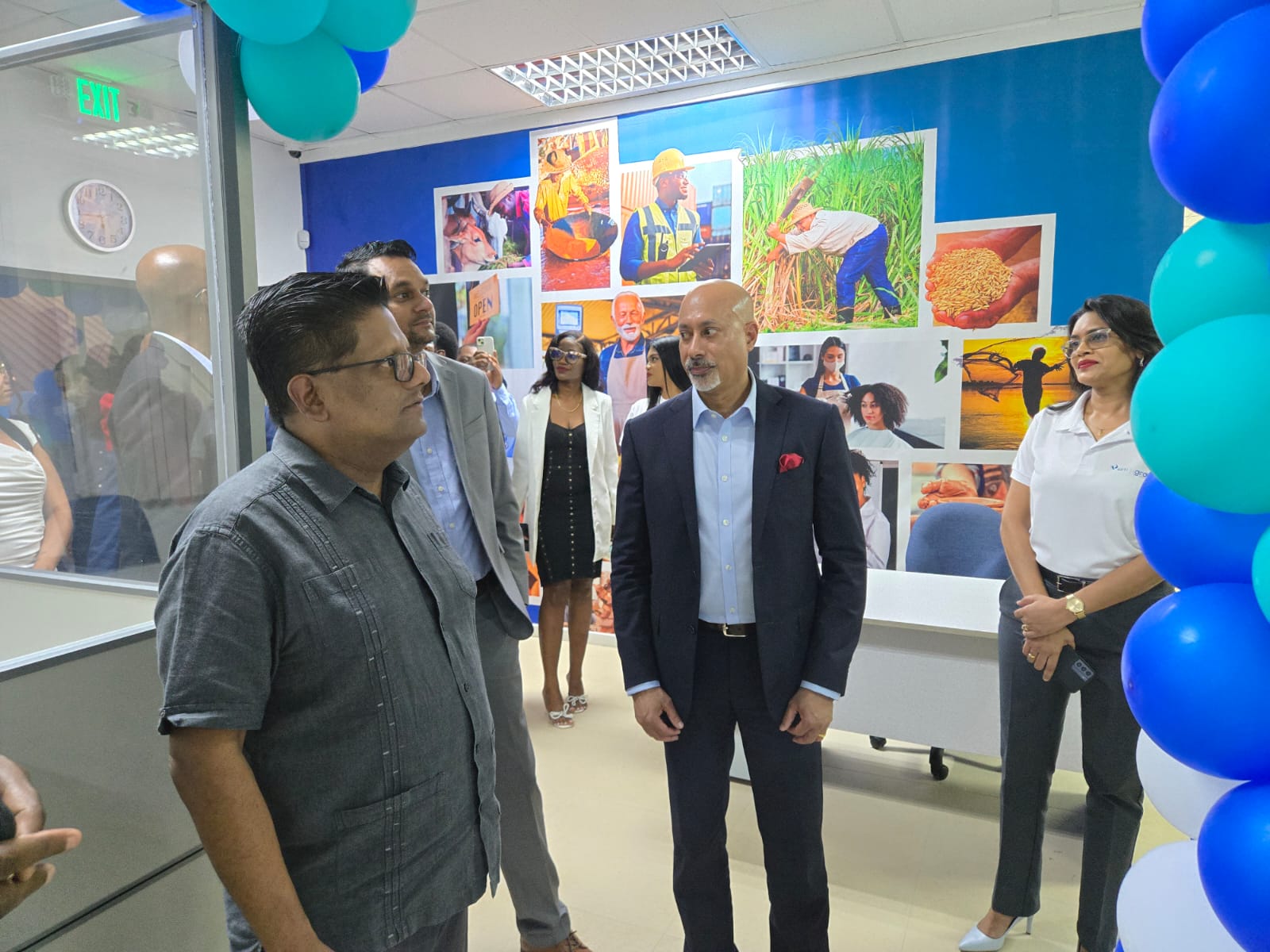
 GEORGETOWN, GUYANA – NOVEMBER 29: Moeen Ali of Guyana Amazon Warriors bats during the ExxonMobil Guyana Global Super League T20 match between Guyana Amazon Warriors and Victoria at Providence Stadium on November 29, 2024 in Georgetown, Guyana. (Photo by Ashley Allen – GSLT20/Global Super League via Getty Images)
 </p>
<p>” data-medium-file=”https://newsroom.gy/wp-content/uploads/2024/11/download-2-300×200.webp” data-large-file=”https://newsroom.gy/wp-content/uploads/2024/11/download-2-1024×683.webp” class=”wp-image-189452 size-large” alt=”” width=”640″ height=”427″ srcset=”https://newsroom.gy/wp-content/uploads/2024/11/download-2-1024×683.webp 1024w, https://newsroom.gy/wp-content/uploads/2024/11/download-2-300×200.webp 300w, https://newsroom.gy/wp-content/uploads/2024/11/download-2-768×512.webp 768w, https://newsroom.gy/wp-content/uploads/2024/11/download-2-630×420.webp 630w, https://newsroom.gy/wp-content/uploads/2024/11/download-2-640×427.webp 640w, https://newsroom.gy/wp-content/uploads/2024/11/download-2-681×454.webp 681w, https://newsroom.gy/wp-content/uploads/2024/11/download-2.webp 1440w” sizes=”(max-width: 640px) 100vw, 640px”><figcaption class=) President-elect Donald Trump gestures to supporters at an election night watch party in West Palm Beach, Florida, on Nov. 6, 2024. The New York Times reported on Nov.8 that Trump’s transition team is preparing executive orders to withdraw from the Paris climate agreement. (AP Photo/Julia Demaree Nikhinson)
President-elect Donald Trump gestures to supporters at an election night watch party in West Palm Beach, Florida, on Nov. 6, 2024. The New York Times reported on Nov.8 that Trump’s transition team is preparing executive orders to withdraw from the Paris climate agreement. (AP Photo/Julia Demaree Nikhinson) 100vw, 640px”></p>
<p>“When you take into account inflation and the various sources they want to use, it really is not a huge amount more than the original $100 billion goal,” the negotiator explained. Developed nations continue to shift financial burdens onto the private sector, which has little incentive to finance adaptation and loss and damage initiatives. “The private sector will never fund adaptation and loss and damage because there is no revenue stream in it,” they asserted. “That’s not how the private sector works.”</p>
<figure aria-describedby=)
</p>
<p>” data-medium-file=”https://newsroom.gy/wp-content/uploads/2024/11/1732409228164-300×169.jpg” data-large-file=”https://newsroom.gy/wp-content/uploads/2024/11/1732409228164-1024×576.jpg” class=”wp-image-189461 size-large” alt=”” width=”640″ height=”360″ srcset=”https://newsroom.gy/wp-content/uploads/2024/11/1732409228164-1024×576.jpg 1024w, https://newsroom.gy/wp-content/uploads/2024/11/1732409228164-300×169.jpg 300w, https://newsroom.gy/wp-content/uploads/2024/11/1732409228164-768×432.jpg 768w, https://newsroom.gy/wp-content/uploads/2024/11/1732409228164-1536×864.jpg 1536w, https://newsroom.gy/wp-content/uploads/2024/11/1732409228164-747×420.jpg 747w, https://newsroom.gy/wp-content/uploads/2024/11/1732409228164-640×360.jpg 640w, https://newsroom.gy/wp-content/uploads/2024/11/1732409228164-681×383.jpg 681w, https://newsroom.gy/wp-content/uploads/2024/11/1732409228164.jpg 2048w” sizes=”(max-width: 640px) 100vw, 640px”><figcaption class=) Cedric Schuster, Samoa’s Minister and AOSIS Chair, at COP29 Closing Plenary:”We had more hope that the process would protect the most vulnerable.” (AOSIS)
Cedric Schuster, Samoa’s Minister and AOSIS Chair, at COP29 Closing Plenary:”We had more hope that the process would protect the most vulnerable.” (AOSIS)
</p>
<p>” data-medium-file=”https://newsroom.gy/wp-content/uploads/2024/11/liza-2-expanding-horizons-master-190219_00_05_06_06_still0009-300×169.jpg” data-large-file=”https://newsroom.gy/wp-content/uploads/2024/11/liza-2-expanding-horizons-master-190219_00_05_06_06_still0009-1024×576.jpg” class=”wp-image-189454 size-large” alt=”” width=”640″ height=”360″ srcset=”https://newsroom.gy/wp-content/uploads/2024/11/liza-2-expanding-horizons-master-190219_00_05_06_06_still0009-1024×576.jpg 1024w, https://newsroom.gy/wp-content/uploads/2024/11/liza-2-expanding-horizons-master-190219_00_05_06_06_still0009-300×169.jpg 300w, https://newsroom.gy/wp-content/uploads/2024/11/liza-2-expanding-horizons-master-190219_00_05_06_06_still0009-768×432.jpg 768w, https://newsroom.gy/wp-content/uploads/2024/11/liza-2-expanding-horizons-master-190219_00_05_06_06_still0009-1536×864.jpg 1536w, https://newsroom.gy/wp-content/uploads/2024/11/liza-2-expanding-horizons-master-190219_00_05_06_06_still0009-747×420.jpg 747w, https://newsroom.gy/wp-content/uploads/2024/11/liza-2-expanding-horizons-master-190219_00_05_06_06_still0009-640×360.jpg 640w, https://newsroom.gy/wp-content/uploads/2024/11/liza-2-expanding-horizons-master-190219_00_05_06_06_still0009-681×383.jpg 681w, https://newsroom.gy/wp-content/uploads/2024/11/liza-2-expanding-horizons-master-190219_00_05_06_06_still0009.jpg 1920w” sizes=”(max-width: 640px) 100vw, 640px”><figcaption class=) ExxonMobil Guyana’s Liza Unity FPSO vessel operating in Guyana’s Stabroek Block, where ExxonMobil and its co-venturers Hess and CNOOC announced in November reaching a milestone of 500 million barrels of oil produced from the offshore block. (Exxon Mobil Guyana)
ExxonMobil Guyana’s Liza Unity FPSO vessel operating in Guyana’s Stabroek Block, where ExxonMobil and its co-venturers Hess and CNOOC announced in November reaching a milestone of 500 million barrels of oil produced from the offshore block. (Exxon Mobil Guyana) 100vw, 640px”><figcaption class=) From Left to Right: Participants from the CARICOM Pavillion Side Event for Enhanced Loss and Damage Response: Rochelle Newbold, Director of Climate Change & Environmental Advisory Unit, Bahamas, Rueanna Haynes, Director, Climate Analytics Caribbean, Kevin Hope, Debt Management Consultant, Climate Analytics Caribbean, Sasha Jattansingh, Loss And Damage Expert, Climate Analytics Caribbean and David Maslo, Chief Risk Management Officer, CCRIF SPC
From Left to Right: Participants from the CARICOM Pavillion Side Event for Enhanced Loss and Damage Response: Rochelle Newbold, Director of Climate Change & Environmental Advisory Unit, Bahamas, Rueanna Haynes, Director, Climate Analytics Caribbean, Kevin Hope, Debt Management Consultant, Climate Analytics Caribbean, Sasha Jattansingh, Loss And Damage Expert, Climate Analytics Caribbean and David Maslo, Chief Risk Management Officer, CCRIF SPC</p>
<p>” data-medium-file=”https://newsroom.gy/wp-content/uploads/2024/11/Belem-holds-a-technical-meeting-to-prepare-for-COP-30-—-Photo-Marco-Santos-Para-Agency-300×200.webp” data-large-file=”https://newsroom.gy/wp-content/uploads/2024/11/Belem-holds-a-technical-meeting-to-prepare-for-COP-30-—-Photo-Marco-Santos-Para-Agency.webp” class=”wp-image-189458 size-full” alt=”” width=”984″ height=”656″ srcset=”https://newsroom.gy/wp-content/uploads/2024/11/Belem-holds-a-technical-meeting-to-prepare-for-COP-30-—-Photo-Marco-Santos-Para-Agency.webp 984w, https://newsroom.gy/wp-content/uploads/2024/11/Belem-holds-a-technical-meeting-to-prepare-for-COP-30-—-Photo-Marco-Santos-Para-Agency-300×200.webp 300w, https://newsroom.gy/wp-content/uploads/2024/11/Belem-holds-a-technical-meeting-to-prepare-for-COP-30-—-Photo-Marco-Santos-Para-Agency-768×512.webp 768w, https://newsroom.gy/wp-content/uploads/2024/11/Belem-holds-a-technical-meeting-to-prepare-for-COP-30-—-Photo-Marco-Santos-Para-Agency-630×420.webp 630w, https://newsroom.gy/wp-content/uploads/2024/11/Belem-holds-a-technical-meeting-to-prepare-for-COP-30-—-Photo-Marco-Santos-Para-Agency-640×427.webp 640w, https://newsroom.gy/wp-content/uploads/2024/11/Belem-holds-a-technical-meeting-to-prepare-for-COP-30-—-Photo-Marco-Santos-Para-Agency-681×454.webp 681w” sizes=”(max-width: 984px) 100vw, 984px”><figcaption class=) Belém holds a technical meeting to prepare for COP 30. (Marco Santos / Pará Agency)
Belém holds a technical meeting to prepare for COP 30. (Marco Santos / Pará Agency) (Lucanus Ollivierre/AP)</p>
<p>” data-medium-file=”https://newsroom.gy/wp-content/uploads/2024/11/6000-300×180.jpg” data-large-file=”https://newsroom.gy/wp-content/uploads/2024/11/6000-1024×614.jpg” class=”wp-image-189460 size-large” alt=”” width=”640″ height=”384″ srcset=”https://newsroom.gy/wp-content/uploads/2024/11/6000-1024×614.jpg 1024w, https://newsroom.gy/wp-content/uploads/2024/11/6000-300×180.jpg 300w, https://newsroom.gy/wp-content/uploads/2024/11/6000-768×461.jpg 768w, https://newsroom.gy/wp-content/uploads/2024/11/6000-1536×922.jpg 1536w, https://newsroom.gy/wp-content/uploads/2024/11/6000-2048×1229.jpg 2048w, https://newsroom.gy/wp-content/uploads/2024/11/6000-700×420.jpg 700w, https://newsroom.gy/wp-content/uploads/2024/11/6000-640×384.jpg 640w, https://newsroom.gy/wp-content/uploads/2024/11/6000-681×409.jpg 681w” sizes=”(max-width: 640px) 100vw, 640px”><figcaption class=) Hurricane Beryl left devastation in its wake, destroying over 90% of buildings in parts of Grenada and St. Vincent and the Grenadines (SVG) (Lucanus Ollivierre/AP)
Hurricane Beryl left devastation in its wake, destroying over 90% of buildings in parts of Grenada and St. Vincent and the Grenadines (SVG) (Lucanus Ollivierre/AP)