Éliminés dès la phase de groupes, les Grenadiers quittent la Coupe du monde 2026 avec une statistique peu flatteuse. Haïti est l’équipe qui a commis le plus de fautes au premier tour.
Au total, 1 604 fautes ont été sifflées lors des 72 rencontres de la phase de groupes, soit une moyenne de 22,3 par match. Avec 55 fautes commises en 3 rencontres, l’équipe nationale occupe la première place de ce classement. Face à l’Écosse, les hommes de Sébastien Migné ont notamment été sanctionnés 23 fois, leur total le plus élevé dans un match.
Sur le plan disciplinaire, les arbitres ont distribué 180 cartons jaunes, soit une moyenne de 2,5 avertissements par rencontre. Le Paraguay est l’équipe la plus sanctionnée avec 8 cartons jaunes.
Enfin, 10 cartons rouges ont été brandis au cours de cette phase de groupes. L’Afrique du Sud est la seule sélection à avoir terminé le premier tour avec deux expulsions.
Tel Obélix, je suis tombé dans la marmite de l’information quand j’étais petit. Ado, je rêvais de ressembler aux plus grands journalistes et puis la réalité a fini par me rattraper. Fan de foot et de boxe, j’arpente désormais les allées du web, armé de ma plume pour dénicher les infos les plus croustillantes… pour votre plaisir, bien sûr ! Pour moi, le journalisme est plus qu’un métier, c’est une passion. ☎️ Contacts : rodchild32@gmail.com / +509 43866407 et +509 34315983 🔘 Je suis également chanteur et professeur d’EPS. Un grand fan de la lecture, la philosophie et la musique pop urbaine française.
La 23e édition de la Coupe du monde, la première disputée à 48 équipes, a offert une opportunité inédite à un grand nombre de joueurs. Sur les 1 248 footballeurs sélectionnés (26 par équipe), 999 ont disputé au moins une minute lors de la phase de groupes.
Jamais autant de joueurs n’avaient pris part à une phase finale du Mondial dès le premier tour. L’élargissement de la compétition a permis à davantage d’internationaux de découvrir la scène mondiale, mais aussi aux sélectionneurs de faire tourner leurs effectifs.
Parmi les 999 joueurs utilisés, 687 sont entrés en jeu en tant que remplaçants, preuve que les 5 changements autorisés sont désormais pleinement intégrés dans la gestion des matchs.
Cette édition marque également un important renouvellement des effectifs. Si 354 de ces joueurs avaient déjà participé à une Coupe du monde, 894 vivaient leur toute première expérience au plus haut niveau.
Les sélectionneurs n’ont d’ailleurs pas hésité à exploiter la profondeur de leur groupe. En moyenne, les 48 équipes ont effectué 4,77 remplacements par match, soit un chiffre proche du maximum autorisé.
Notons que l’Irak, le Mexique et la Norvège se distinguent en ayant utilisé 25 des 26 joueurs de leur liste au cours de la première phase.
Tel Obélix, je suis tombé dans la marmite de l’information quand j’étais petit. Ado, je rêvais de ressembler aux plus grands journalistes et puis la réalité a fini par me rattraper. Fan de foot et de boxe, j’arpente désormais les allées du web, armé de ma plume pour dénicher les infos les plus croustillantes… pour votre plaisir, bien sûr ! Pour moi, le journalisme est plus qu’un métier, c’est une passion. ☎️ Contacts : rodchild32@gmail.com / +509 43866407 et +509 34315983 🔘 Je suis également chanteur et professeur d’EPS. Un grand fan de la lecture, la philosophie et la musique pop urbaine française.
Les 16es de finale de la 23e édition Coupe du monde se poursuivent. Pour ce lundi, les belles affiches ne manquent pas. Le Brésil sera opposé au Japon, l’Allemagne prendra les mesures du Paraguay et les Pays-Bas auront fort à faire face au Maroc.
Le Brésil aura du pain sur la planche. Il défiera le Japon, un sérieux client. Auteur d’un bon début de compétition, Vinicius Junior sera l’élément à surveiller dans le camp des jaune et vert. Le collectif asiatique aura surtout son mot à placer dans ce débat qui sera entre autre animé.
Après son revers face à l’Équateur, l’Allemagne veut reprendre des couleurs. Afin de s’envoler vers la prochaine phase, elle va devoir indiquer la sortie au Paraguay. Le rideau défensif des équipes sud-américaines sont souvent solides. Reste à savoir quelle formule les coéquipiers de Musiala utiliseront pour trouver la faille.
Les Pays-Bas ont hérité d’un adversaire coriace. Après sa prestation à la Coupe du monde 2022, le Maroc n’est pas une sélection à prendre à la légère. Les Néerlandais sont condamnés à sortir le grand jeu pour pouvoir réussir ce test. Les Marocains ne voudront surtout pas s’arrêter en si bon chemin. Alors, que le meilleur gagne.
À noter que le Canada s’est qualifié pour les 8es de finale sur le fil (1-0) face à l’Afrique du Sud.
Pour la première fois de son histoire, la CONCACAF comptait 6 représentants à une Coupe du monde, un chiffre rendu possible par la présence des trois pays hôtes. Au terme de la phase de groupes, le bilan est mitigé avec seulement 3 qualifiés pour les 16es de finale.
Le premier tour du Mondial 2026 a confirmé les difficultés de plusieurs sélections de la zone. Haïti, le Panama et Curaçao quittent la compétition, tandis que le Canada, les États-Unis et le Mexique poursuivent leur parcours.
De retour en Coupe du monde après 52 ans d’absence, les Grenadiers n’ont pas réussi à décrocher le moindre point. Ils ont toutefois quitté le tournoi sur une prestation encourageante face au Maroc, malgré une troisième défaite consécutive.
Le Panama termine également son parcours avec un zéro pointé. Les « Canaleros »deviennent la seule des 48 équipes engagées à n’avoir inscrit aucun but durant la phase de groupes, malgré 3 matchs encourageants (4 buts encaissés au total).
Pour Curaçao, cette première participation historique s’achève dès le premier tour. Plus petit territoire à disputer une phase finale de Coupe du monde, la sélection curacienne repart avec un point, obtenu face à l’Équateur avec un Eloy Room dans un grand soir ayant stoppé 15 tentatives adverses, une performance honorable malgré l’élimination.
À l’inverse, les trois pays organisateurs ont répondu « présent ». Le Mexique a réalisé un parcours parfait avec trois victoires en autant de rencontres, sans concéder le moindre but. Les Aztèques défieront l’Équateur en 16es de finale.
Les États-Unis ont également terminé en tête de leur groupe grâce à leurs succès contre le Paraguay et l’Australie. Au 3e match, l’équipe américaine a baissé pavillon contre une équipe turque qui a complètement raté sa compétition. La Bosnie-Herzégovine sera l’adversaire des hommes de Mauricio Pochettino au prochain tour.
Le Canada complète le trio des qualifiés. Portés par un triplé de Jonathan David face au Qatar, les Rouges ont terminé deuxièmes de leur groupe avec quatre points. Ils affronteront l’Afrique du Sud en 16es de finale. Cette victoire (6-0) contre les Qatariens leur permet également d’atteindre la barre des 10 buts inscrits en Coupe du monde et de signer leur premier succès dans la compétition.
Tel Obélix, je suis tombé dans la marmite de l’information quand j’étais petit. Ado, je rêvais de ressembler aux plus grands journalistes et puis la réalité a fini par me rattraper. Fan de foot et de boxe, j’arpente désormais les allées du web, armé de ma plume pour dénicher les infos les plus croustillantes… pour votre plaisir, bien sûr ! Pour moi, le journalisme est plus qu’un métier, c’est une passion. ☎️ Contacts : rodchild32@gmail.com / +509 43866407 et +509 34315983 🔘 Je suis également chanteur et professeur d’EPS. Un grand fan de la lecture, la philosophie et la musique pop urbaine française.
Summer is here and what an exciting start it has been. Following the exciting events as part of Caribbean American Heritage Month, July is continuing to build on the trend. This month will see a number of events to commemorate the 250th anniversary celebration of the founding of the U.S. (America250).
Be sure to check out some of the fun and diverse activities recommended by our New York based correspondent Lyndon Taylor.
July 4
Sail4th America 250 Tall Ships Sunset Preview Cruise
Departure: Pier 36 NYC 299 South St., New York, NY 10002 Departure Time: 4:00 PM Cost: $199 per person
Set sail aboard the elegant Grande Mariner for a limited-time sightseeing experience celebrating America’s 250th birthday with Sail4th 250! Cruise from Pier 36 on the Lower East Side for an unforgettable two-hour voyage around New York Harbor, viewing majestic tall ships from around the world as they dock across the city’s waterfronts: from South Street Seaport to Brooklyn Bridge Park, Governors Island and the Statue of Liberty. Enjoy live narration, panoramic skyline views, and incredible photo opportunities of these historic sailing vessels as they grace the Hudson and East Rivers.
The Statue of Liberty Quick Cruise around the Statue of Liberty is the fastest way to see New York’s most iconic landmark.
Leaving from Pier 78 in Midtown Manhattan, guests will also see One World Trade Center, Hudson Yards, Chelsea Piers, Little Island Park and Ellis Island.
The highlight of course is when the boat pauses in front of Lady Liberty for everyone to take an unforgettable picture. This is a perfect cruise for visitors with a busy itinerary or anyone wanting a quick way to glimpse the Statue of Liberty and enjoy some of New York City’s breathtaking
July 17–19
“The Creative Escape in The Hamptons” Creole Food Festival
Duck Walk Vineyard 231 Montauk Highway Water Mill, NY 11976
The Harlem Fine Arts Show (HFAS) in conjunction with the Creole Food Festival presents a curated weekend celebrating art, culinary excellence, culture and elevated experiences. Among the events in this cultural summer gathering: The Signature Cocktail Brunch All White Creole Cocktail Brunch in the Hamptons on Saturday, July 18 at 12 noon and The Cotton Club Signature Cocktail Brunch in the Hamptons on Sunday, July 19, starting at 12 noon. The energy of old Harlem nightlife brought to the Hamptons for one afternoon only. Both events include unlimited Creole tastings and top Creole DJs.
July 12 & 18
Roots & Rhymes Summer Tour 2026 (featuring Buju Banton and Stephen Marley)
Bethel, NY & Elmont, NY
The 2026 Roots & Rhymes Summer Tour, featuring Grammy Award-winning global reggae legends Buju Banton and Stephen Marley, is making its New York City visit.
Among the stops: Bethel Woods Center for the Arts on Sunday, July 12th in Bethel, NY and UBS Arena on Saturday, July 18th. Get your tickets now to experience the vibes and the energy Buju Banton and Stephen Marley are bringing to the stage on this tour.
July 25
2nd Annual Fieldnic
12:00 PM – 4:00 PM Caribbeing House Governor’s Island Brooklyn, NY
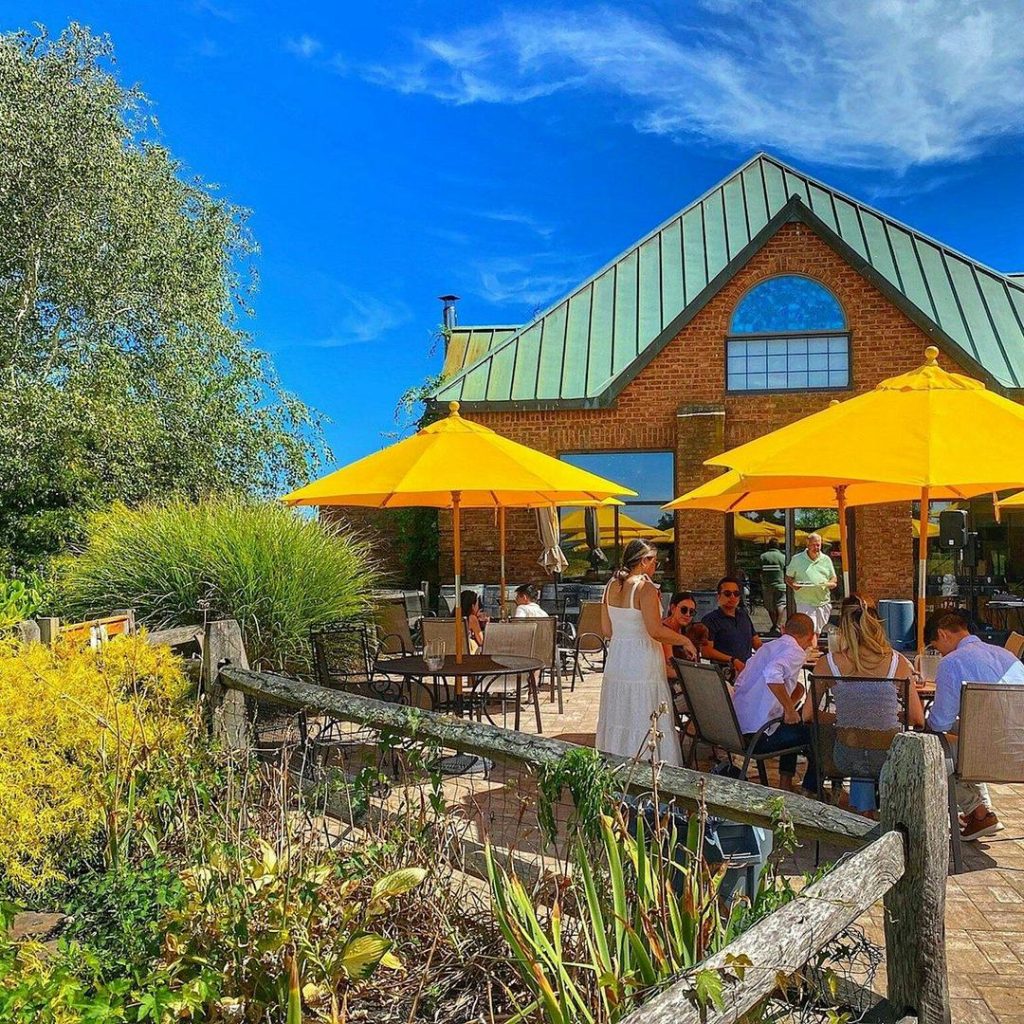
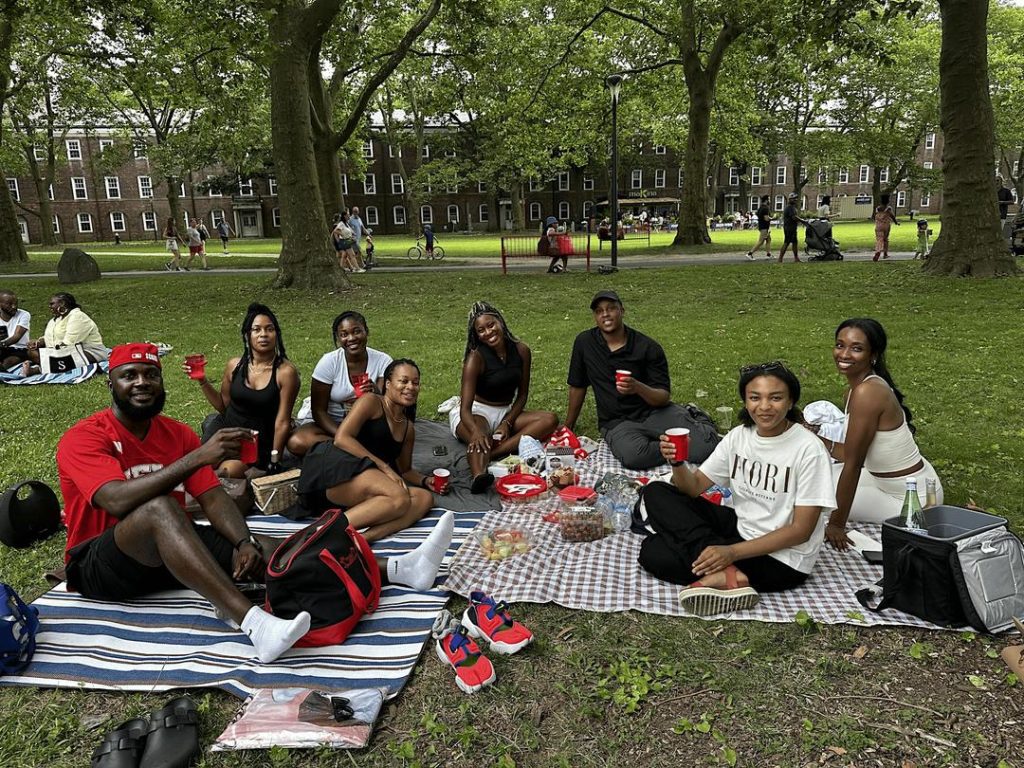
The 2nd Annual Fieldnic, hosted by I AM CARIBBEING is a community-focused Caribbean picnic experience and family-friendly sports day celebrating pure fun, friendly rivalry and BIG SUMMER VIBES. Whether you’re competing, cheering or jut soaking up the sun, Fieldnic is the place to be this summer. Admission is FREE.
July 28 – Aug 1
DTH on Tour
BAAND Together Dace Festival
Lincoln Center for The Performing Arts Lincoln Plaza, NY
The Dance Theatre of Harlem (DTH) is taking part in the annual BAAND Together Dance Festival, held at Lincoln Center for the Performing Arts in NYC.
The festival will run from July 28 to August 1, reuniting five of NYC’s most iconic dance companies on one stage. The festival features a collaborative, shared program celebrating artistry and community. Dance Theatre of Harlem performs alongside Alvin Ailey American Dance Theater, American Ballet Theatre, Ballet Hispánico, and New York City Ballet. Tickets for the festival are generally pay-what-you-wish (or choose-what-you-pay), making world-class dance accessible to all.
About the Author
Lyndon Taylor is the Founder and CEO of Lyndon Taylor & Associates, a boutique media and public relations consulting agency in New York City. With an illustrious career as an award-winning journalist and public relations consultant, he has been a contributor to various community and Diaspora publications. With a passion for sports, youth, the performing arts, music, travel, fashion and lifestyle, he is deeply engaged in narrative shaping and storytelling, focused on individuals, brands and current affairs. His professional focus extends to the meticulous planning, promotion, facilitation and execution of numerous passion projects. Taylor is a qualified journalist, having earned a Post Graduate Diploma in Broadcast Journalism and an M.A. in Journalism from the University of Westminster in London. He also holds an MBA in Media Management from Metropolitan College of New York (MCNY).
Today's forecast: • Temps chaud et venteux par endroits avec un ciel nuageux à très
nuageux en fin d'après-midi et en soirée ;
Valable jusqu'au 02 juillet 2026
Valable jusqu'au 02 juillet 2026
Situation synoptique dans la Caraïbe et sur l'Atlantique
La proximité de l'onde tropicale combinée au creux des différents
niveaux de l'atmosphère engendre une masse d'air humide et
localement instable sur Haiti cet après-midi. Des averses de pluie
parfois soutenues et orageuses sont à cet effet toujours prévues
sur le pays, notamment sur le Centre, l'Ouest, l'Artibonite, la
Grande Anse et le Sud-est en fin d'après-midi et en soirée.
Prévision pour Haïti
• Temps chaud et venteux par endroits avec ciel nuageux à très
nuageux en après-midi et en soirée ;
• Température maximale comprise entre 33 à 37 degrés Celsius ;
• Température minimale comprise entre 18 à 22 degrés Celsius ;
• Des averses de pluie parfois soutenues et orageuses sont
prévues, notamment sur le Centre, l'Ouest, l'Artibonite, la
Grande Anse le Sud-est en après-midi et en soirée.
Note
En raison de la persistance de la chaleur sur le pays, l'UHM, en
concertation avec les autorités concernées, appelle la population à
:
• boire régulièrement de l'eau, même sans sensation de soif, afin
d'éviter la déshydratation ;
• éviter les expositions prolongées au soleil, surtout entre 10 h
et 16 h ;
• porter des vêtements légers, amples et de couleur claire ;
• réduire les activités physiques intenses durant les heures les
plus chaudes de la journée ;
• Surveiller les enfants, les personnes âgées et celles souffrant
de maladies chroniques.
Tendance pour les deux prochains jours :
Mercredi et jeudi : L'instabilité à l'arrière de l'Onde et celle
liée à un minimum dépressionnaire dans la mer des caraïbes risquent
de provoquer sur le pays des averses de pluie parfois un peu plus
soutenues et orageuses, particulièrement sur le Centre,
l'Artibonite, la Grande Anse, les Nippes, le Sud 'Est et le Nord en
après-midi et en soirée.
Prévision pour Port-au-Prince et ses environs
• Temps chaud et venteux par endroits avec un ciel nuageux à très
nuageux en fin d'après-midi et en soirée ;
• Température max mesurée : 37˚C & Température min : 22˚C ;
• De bonnes averses prévues en fin d'après-midi et en soirée.
“Success is where preparation and opportunity meet.” — Bobby Unser, American Race car Driver
There are moments in sports when an athlete becomes so dominant that the conversation is no longer about whether they are great. The conversation becomes whether the rest of us have fully appreciated what we are witnessing.
That is where Jamaica finds itself with Khadija “Bunny” Shaw.
Jamaica’s Most Accomplished Active Footballer?
For years, Jamaicans have celebrated the accomplishments of sprinting legends, cricketers, boxers, netball stars, and footballers. The island has produced athletes whose names became global brands. Yet one could make a very compelling argument that at this moment, Jamaica’s most accomplished active footballer is not playing in the English Premier League, La Liga, Serie A, or the Bundesliga. SHE is playing in the Women’s Super League.
While many sports fans are busy debating Lionel Messi, Cristiano Ronaldo and Kylian Mbappé, Bunny Shaw has quietly built one of the most impressive football résumés in the world. The Manchester City striker has quietly become the club’s all-time leading scorer, collected multiple Golden Boots, and established herself as one of the most feared forwards in the game. Whether wearing the sky blue of Manchester City or the black, green, and gold of the Reggae Girlz, she has demonstrated the rare ability to score goals with remarkable consistency at the highest levels of competition.
The Perfect Time for a Star to Rise
What makes Shaw’s success particularly fascinating is that it is unfolding at precisely the same moment that women’s sports are experiencing a transformation unlike anything seen before.
For much of modern sporting history, women’s sports occupied a space somewhere between underappreciated and overlooked. The athletes were world-class. The competition was elite. The dedication was unquestionable. What was often missing were the audiences, sponsorships, television contracts, and investment that routinely flowed toward men’s sports.
The market has decided otherwise.
What we are witnessing today is not simply the rise of individual athletes. It is the emergence of women’s sports as a major commercial force.
From Fighting for Visibility to Center Stage
For decades, many elite female athletes struggled financially despite competing at the highest levels. Numerous WNBA players spent their off-seasons playing professionally in Russia, Turkey, China, and elsewhere because their league salaries alone were often insufficient to support a full-time career. Female footballers frequently balanced training with second jobs. Even global stars sometimes found themselves competing for attention in sports media that devoted only limited coverage to their accomplishments.
The landscape today looks dramatically different.
In basketball, Caitlin Clark has become the most visible symbol of this transformation. Her arrival has generated record television audiences, sold-out arenas, soaring merchandise sales, and levels of public interest that would have seemed unimaginable only a few years ago. For the first time in league history, every WNBA game is scheduled to be nationally televised or available through a major broadcast or streaming platform. A league that once fought for visibility is now becoming appointment viewing.
Football experienced a similar evolution long before Clark arrived.
The Trailblazers Who Changed Women’s Football
Many sports fans remember Mia Hamm, whose talent and charisma helped introduce women’s football to mainstream audiences in the United States. Abby Wambach followed with her relentless competitiveness and uncanny ability to score crucial goals. Alex Morgan became one of the sport’s most recognizable ambassadors, helping attract an entirely new generation of fans.
Before them all stood Marta.
Widely regarded as one of the greatest footballers ever to play the game, regardless of gender, the Brazilian superstar spent nearly two decades dazzling defenders with a combination of creativity, technical brilliance, vision, and flair. She made the impossible look routine and inspired countless young girls to believe that football could become their future.
Moments That Changed the Game
The growth of women’s football has produced unforgettable moments along the way.
One of the most iconic came during the 1999 FIFA Women’s World Cup when Brandi Chastain removed her jersey after converting the championship-winning penalty kick for the United States. The image became one of the defining photographs in sports history. To some it was controversial. To others it was liberating. What it unquestionably represented was a declaration that women’s sports no longer needed permission to matter.
They mattered.
Serena Williams and the Blueprint for Greatness
Tennis perhaps provided the earliest glimpse of what women’s sports could become when talent, visibility, and commercial investment aligned.
For nearly two decades, Serena Williams dominated tennis with a combination of power, athleticism, intelligence, and mental toughness that transformed the sport. Serena did not simply win championships. She redefined expectations. Entire generations of players entered tournaments hoping to avoid seeing her name on their side of the draw. When an athlete dominates for that long, they stop representing their sport and begin representing excellence itself.
That pursuit of excellence is helping fuel today’s generation of stars.
Women’s Sports Enters a New Era
The National Women’s Soccer League continues to expand. European clubs are investing unprecedented resources into women’s football. Attendance records continue to fall. Television audiences continue to grow. The Women’s World Cup now attracts audiences measured in the billions. Investors who once overlooked women’s sports are now competing for opportunities to participate in its growth.
The next generation has already arrived.
Many sports fans know Dennis Rodman as one of basketball’s greatest rebounders and most colorful personalities. His daughter, Trinity Rodman, has emerged as one of football’s brightest young stars and a key figure for both club and country. The family name may have opened doors, but her performances have ensured that those doors remain open.
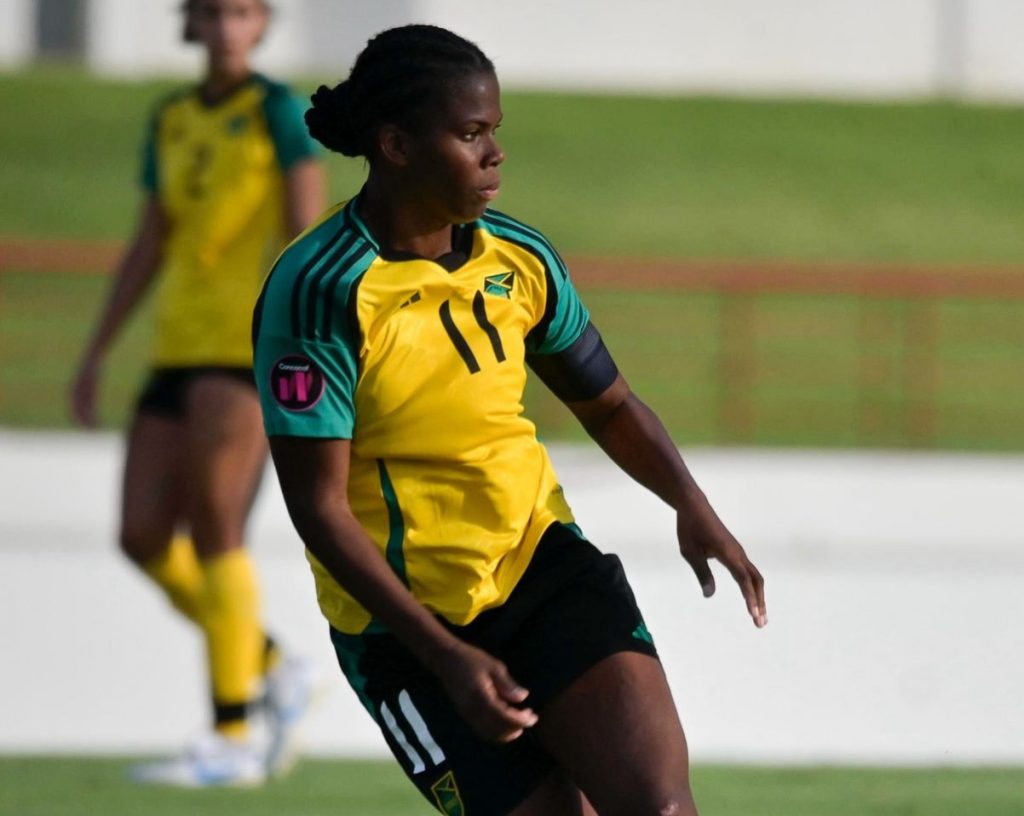
Khadija Shaw of Manchester City Women, during the The FA Women’s Super League match Manchester City Women vs Liverpool Women at Joie Stadium, Manchester, United Kingdom, 21st January 2024
(Photo by Cody Froggatt/News Images)
Jamaica’s Place in the Global Story
Which brings us back to Jamaica.
At a time when women’s sports are experiencing unprecedented growth, one of the most dominant footballers on the planet happens to be Jamaican.
That is not merely a sporting accomplishment.
It is a national achievement.
A nation of fewer than three million people has produced a footballer who is competing with and outperforming players from countries possessing vastly larger populations, richer leagues, deeper development systems, and significantly greater resources. Bunny Shaw’s rise serves as a reminder that talent is not distributed according to national wealth, population size, or geographic location.
The Danger of Taking Greatness for Granted
It should also remind us of something else.
The danger with greatness is familiarity.
When greatness lives among us, we sometimes stop noticing it. We become accustomed to achievements that would inspire headlines if they belonged to someone else. We assume excellence will continue indefinitely and forget to celebrate it while it is unfolding.
More Than Football
Bunny Shaw’s story is about far more than football. It is about what happens when talent meets opportunity. It is about a young girl from Spanish Town who dared to dream beyond the limits that others might have imposed upon her. It is about discipline, perseverance, resilience, and the willingness to compete against the very best in the world.
Years from now, sports historians may look back on this era and conclude that Khadija “Bunny” Shaw was one of the greatest footballers ever produced by the Caribbean. Looking at her accomplishments, that conclusion would not be difficult to defend.
For now, however, Jamaicans have the privilege of watching the story while it is still being written.
Your Eyewitness was quite taken aback when one commentator criticized the govt’s initiative to build 300 houses in Jamaica – after visiting PM Holness expressed admiration for their housing program. The gist of the gripe was that why should we help Jamaica with housing when we have so many poor folks without houses right here in Guyana!! And furthermore, that they’d visited Jamaica and they saw quite a few houses much posher than ours here in Guyana – so why do they need houses from us!!
Now to start from the last jibe, can you believe such schuptideness? Guyana also has posh houses – as to whether they’re posher than Jamaica’s ain’t the point – so the critic implies the Jamaicans don’t need help in that quarter!! But by that (twisted) logic, doesn’t this mean that our poor don’t need no help with houses?? And that should be the question, shouldn’t it??
Weren’t over 50,000 houselots distributed between Aug 2020 and 2025? And already several thousands more this year? But the government didn’t just stop at houselots when the poor is concerned. In every development announced there are provisions for low-income houses – where ownership is facilitated for those who qualifies. For instance, there’s the ceilings on low-income mortgage rates at commercial banks and the New Building Society were lowered – while the principal was increased to $30 million!! Additionally, VAT was removed on locally produced building materials – plus a steel and cement subsidy introduced for first-time home buyers!!
Your Eyewitness believes that maybe the govt critics want FREE HOUSES be built and handed out to the poor!! But hasn’t this been tried since the sixties in the US where those massive “Housing Projects” were created in all the major cities. And didn’t we see them deteriorate into urban jungles where crime was rampant – especially fueled by drugs – and life was nasty, short and brutish??
The point of the matter that must be emphasized is that home ownership as a way out of poverty depends on the homeowner appreciating the VALUE of the house!! And this will only be fostered when the homeowner has some stake in the house. Take for instance some of the so-called “poor” who’re actually refusing to work in the burgeoning construction industry and allowing that sector to be dominated by Venezuelan refugees. Should the government just hand out houses to them – like the ones that’s gonna be built in Jamaica?
And that brings us to the point of that initiative. Hasn’t your Eyewitness already emphasized the importance of wooing Jamaica as an ally in the evolving hemispheric power moves that involves the Yanks??
And at a more mundane – but economically pragmatic level – aren’t we creating a demand for our local hardwoods in Jamaica??
…on policing?
Your Eyewitness is a sucker for police shows. And with Netflix streaming them from across the globe – even Thailand –your Eyewitness invariably wonders how come THEIR police stations are so modernistic – while ours continue to look like something out of Rudyard Kipling!! So he was pretty chuffed when he saw the latest pic of the TWELYE-STOREY edifice that’s replacing our the burnt-out (ancient) Brickdam Police Station!!
So welcome to the 21st century, GPF!! But we hope this is only the beginning of root and branch reform in the institution standing between we the citizens of Mudland and the criminals who’d have us revert to the law of the jungle! But the building can only be the beginning of modernization. Since our GPF was launched in 1839 – to protect the Whites from the newly freed Africans! – the world of policing’s come a long way.
We gotta professionalize the ENTIRE force – and then pay them so they don’t hafta bilk citizens for fry-rice money!!
…free movement?
How long have we been promised ‘free movement of Caricom citizens”?? And it ain’t only a matter of treaties. Seems like the ferry service that was supposed to ply between Guyana, T&T and Barbados has sunk without a trace!!
As negotiations between the Guyana Government and Turkish energy company Karpowership continue over the ongoing operations of the two power ships that supply some 96 megawatts (MW) of electricity to the national grid, the two sides are bouncing between 9 cents and 9.5 cents per kilowatt/hour (kWh). This was revealed by Public Utilities Minister Deodat Indar during an appearance on a recent episode of the Starting Point podcast. Indar recalled that when Guyana signed the contract for the first 36-MW power ship in 2024, it secured electricity at 7.2 cents per kWh for the vessel docked in the Berbice River, the lowest rate on the market at that time. The second ship, however, saw Guyana paying 9.5 cents per kWh for the 60MW generated from the vessel docked in the Demerara River.
Since both of those contracts were for two years, the Government and the company have been in negotiations for a contract renewal. According to the Public Utilities Minister, “So, they asked for 9.5 cents. We said we want 9 cents, and we are working between that because they would never renew it for a concessional rate of 7.6 cents. We know that.”
He pointed out that since the demand for electricity continues to grow across Guyana, the country needs the 90-plus MW of power generated by the two ships. But in the same breath, Indar contended that at no point during the negotiations was the Government backed into a corner by the company, as reported in some sections of the media. “We know we need the generation, but they’re not the only ones in town too. So, we also let them know that we have options too. But it was a very difficult negotiation with the people, and we continue to negotiate with them because the vessel is here. It’s already hooked up to our system. We need the power. They need to work. Let’s find a middle ground. And that is what we’ve been working on. I would say we are 99 per cent there, not fully yet, but we are 99 per cent there with a final outcome,” the Minister stated. Indar went on to explain that it was during this intense negotiation process that Karpowership’s letter to the Government was leaked. Over the past month, there have been reports that the power ship company has threatened, via correspondence to the Public Utilities Minister, to shut off operations if a new deal is not reached. But the Minister had previously assured that the two power ships were still being operated as the Government and company iron out a new agreement. “I don’t know who leaked [the letter], but…you don’t negotiate in public. You negotiate with the people, and we are back and forth. They give their position. We say, fine, we give you a position… But we have to remember too that we got the first two years at very low rates and the owner of the asset said, you know, they have never rented this to anybody at this rate…”
“You bet your bottom dollar, our Government…made sure that we took some strong positions in the negotiation. People can think we are backed into a corner. No one should believe we were ever backed into a corner. We will defend the interests of the Guyanese people. We will fight as best we can to get the outcome we want. We don’t lay back and say, well, you come and bamboozle us. That doesn’t work with us. We don’t operate like that,” he emphasised.
During all of this, the power ship company continues to supply electricity to the national grid. The Guyana Government contracted the two power ships to provide additional capacity to meet the country’s growing demand for electricity.
Following the signing of the two-year contract between the Guyana Power and Light Inc. (GPL) and the joint venture of Turkish-based Karpowership Global DMCC and Qatar-based UCC Energy International LLC (UCC JV) in 2024, the two ships began generating power, with one vessel in the Demerara River at Meadow Bank producing 60 MW and the other at Everton in the Berbice River supplying 36 MW of electricity. At the time, the Government explained that this was a short-term solution while awaiting the highly anticipated Gas-to-Energy (GtE) Project that is slated to come onstream later this year, bringing some 300 MW of power using natural gas from offshore Guyana. These two ships, coupled with other GPL assets, take Guyana’s generating capacity up to approximately 267 MW-way more than the current demand, which stands around 228 MW at peak.
For centuries, nations blessed with abundant natural resources have faced the same troubling question: who truly profits from their wealth? Along with other resource-rich countries, even before independence sixty years ago, leaders have bemoaned our status as remaining exporters of raw minerals while the greatest profits are earned elsewhere through refining, trading, finance, and international markets. The lesson should be clear: owning the resource is only the first step. Capturing its full value is the real challenge.
Gold has long been one of Guyana’s most important exports-starting as far back as the 1890s-and generates foreign exchange while providing livelihoods for thousands of miners, suppliers, transport operators, and hinterland communities. Yet, despite this contribution, much of the industry’s highest-value activities still occur outside our borders.
Raw gold leaves Guyana. The refining, international certification, bullion trading, financial services, and investment products built around that gold largely benefit other economies. Guyana earns from extraction, but others often profit from transformation. That does not have to remain our reality.
Several African nations-including Ghana, Tanzania, and Guinea-are adopting policies designed to retain more value from their gold sectors. Their strategies vary, but the objectives are remarkably similar: encourage domestic refining, formalize small-scale mining, strengthen oversight, reduce smuggling, increase transparency, and build national gold reserves. Rather than viewing gold solely as an export commodity, these governments increasingly regard it as a strategic national asset that can strengthen economic resilience and financial sovereignty. These reforms have been accompanied by debates about how to balance stronger state participation with maintaining investor confidence. Governments that provide clear rules, regulatory stability, and meaningful consultation tend to be better positioned to attract investment while increasing domestic benefits. Guyana can do worse than pursuing a similarly balanced path.
The Government, represented by President Irfaan Ali, has already signaled support through incentives for internationally accredited gold refining within Guyana beyond the start initiated by the GGMC. Every ounce refined locally would create skilled jobs, develop technical expertise, and keep more economic activity at home.
Our financial institutions could also play a greater role. The Bank of Guyana could consider gradually increasing its holdings of locally produced gold as part of its reserve management strategy, strengthening national financial resilience while providing an additional stable domestic market for miners. Gold has re-emerged as a strategic reserve asset in an increasingly fragmented global economy. Unlike fiat currencies, it is widely seen as retaining value during periods of inflation, geopolitical tension, and financial uncertainty. Across the Global South, central banks have increased gold accumulation in recent years as part of efforts to diversify reserves and reduce exposure to external financial systems.
Guyana must also continue transparency initiatives. As with oil, there must be formal reports on gold production, exportation, royalties collected, and how those revenues are spent. Transparency builds trust, deters illegal activity, and reassures responsible investors that Guyana operates under predictable, rules-based governance.
Environmental stewardship has been pioneered by the government. Responsible mining practices, stronger land reclamation requirements, mercury reduction initiatives, and partnerships with Indigenous communities have become central pillars of a modern mining policy. Sustainable mining is not only an environmental necessity-it is increasingly a competitive advantage in global markets.
Importantly, pursuing greater national benefit does not require hostility toward private investors or international companies. Guyana’s success has always depended on partnerships. The objective is not to discourage investment but to ensure that investment creates broader opportunities for Guyanese businesses, workers, engineers, financiers, and communities.
As our petroleum sector transforms the national economy, it would be easy to overlook gold. That would be a mistake. Gold remains one of Guyana’s oldest and most resilient industries, with enormous potential to support economic diversification long after commodity cycles change. The question is no longer whether Guyana possesses valuable resources. We undoubtedly do. Guyana should not simply mine more gold.
We should ensure that more of its value stays where it belongs: here at home.