A motorcyclist was killed on Saturday following a two-vehicle collision along the Reliance Public Road, Essequibo Coast, Region Two (Pomeroon-Supenaam).
The deceased has been identified as Satesh Persaud, also known as “Tony”, of Reliance, Region Two (Pomeroon-Supenaam).
According to information received, Persaud was exiting a street and attempting to get onto the Reliance Public Road without checking for oncoming traffic.
At the time, a motor car was travelling north along the western carriageway at a fast rate of speed and collided with the motorcycle.
Dead: Satesh Persaud (Inset) and the accident scene
As a result of the impact, Persaud was flung several feet into the air and eventually landed on the roadway with severe head and bodily injuries.
He was transported to the Lima Regional Hospital, where he was pronounced dead on arrival by a doctor on duty. The driver of the motor car was taken into Police custody as investigators launched a probe into the fatal accident.
Eccentricity in our senior years refers to unconventional, quirky, or nonconforming behaviours that are fundamentally harmless and bring us joy. While sometimes viewed as odd by society, true eccentricity is a stable personality trait rather than a mental illness. It is, however, important to distinguish between endearing quirks and sudden, dangerous medical changes that would require attention.
Psychologists and geriatric experts suggest several reasons why these traits often become more pronounced in later life. As we age, social inhibitions and the need to conform to peer pressure often fade. Many of us reach a point where we prioritise personal comfort and our authentic selves over social expectations.
In older adults, “eccentricity” often refers to heightened or uninhibited personality traits rather than mental decline. While eccentric individuals are generally creative, nonconforming, and happy, these behaviours can intensify with age as social inhibitions drop or neurological changes reduce adaptability.
Studies show that reduced plasticity of the nervous system could make us less adaptable to new social norms to which we are unaccustomed, allowing for the continuation of lifelong behaviours and traits which could appear odd – or old-fashioned and endearing – in the new normal.
The lowered adaptability allows for the dropping of social filters that undergird conformity, and nonconformity is often a deliberate deviation from known routines or societal expectations.
But those of us who are viewed as odd or eccentric – or even difficult or “own-way” – know exactly what we are doing and are simply choosing to express our true selves.
Notable seniors who have embraced their eccentricity include Maggie Kuhn, an American activist who founded the Gray Panthers movement when she was forced to retire at the mandatory retirement age of 65. She is well-known for the witticism “Old age is an excellent time for outrage. My goal is to say or do at least one outrageous thing every week.”
The loss of structured daily routines that comes with retirement, as in Ms Kuhn’s case, could also increase our solitude, which can result in the development of highly individualised daily habits that could be viewed as eccentric behaviour.
Such behaviour can grow out of a well-earned confidence that comes with ageing. We can become more decisive about our choices and sentiments and feel no need or pressure to conform, but to simply go our own way – a way to which we are probably more accustomed and with which we are more comfortable.
It is crucial to recognise, however, when benign eccentricity crosses the line into a medical condition, such as the onset of dementia or neurodegenerative diseases that affect the brain’s frontal lobe.
If we are fully aware of what we are doing and why, have healthy social connections, and enjoy our activities, then there is probably no harm in what may appear odd to others.
However, there could be a need for medical evaluation if our quirks become dangerous or actively impede daily living. Examples of this include a sudden lack of personal hygiene, severe and unsafe hoarding, extreme aggression, or losing the ability to recognise social situations.
If someone is exhibiting bizarre, inappropriate public behaviour such as stealing, making inappropriate sexual comments, or undressing in public, there would be a need to seek medical help. Someone having delusions or hallucinations, being confused, or living in squalid conditions could be experiencing a serious health crisis that requires medical intervention and treatment.
However, eccentric behaviours in older adults, such as mischievous humour, saying exactly what we feel or think without caring much about the reaction, teasing loved ones, or playing harmless pranks, could all be viewed as harmless oddities.
Some of us may take to dressing in a bolder, flamboyant style, this again being a result of the lowering of social filters that dictated more conservative dress to fit the norms and expectations of society.
For such harmless traits, the best approach for family, friends, or caregivers to take is to embrace the person’s habits and let them express themselves freely.
A well-known eccentric actually built a flourishing business empire on childhood fantasies and entertainment that appeal to both children and the child in all of us. That was Walt Disney, who said, “Growing old is mandatory; growing up is optional.” It’s safe to say he never grew up.
Disneyland and other playful experiences can help us all keep the twinkle in our wrinkles; and if there are passions and interests that bring us joy and do no harm to anyone, then we must surely keep on twinkling. If not now, when?
Baytoram Ramharack’s release of his book, “The Wismar Massacre: A Case of Ethnic Cleansing of Indians in Guyana”, coinciding with our 60th Independence Anniversary commemoration, has unleashed a new wave of narratives and histories of the 60s when that independence was birthed. I would like to emphasise, however, as I have done over the past few decades, that histories are not only written within a particular “space of experience” – the ways that the past is remembered in the present – but also with a “horizon of expectation” – the anticipation of the not-yet-known future beyond the horizon. The pertinent question for the interlocutors is what kind of future they are trying to create with their narratives.
A history of our present, in the words of Caribbean anthropologist David Scott, demands that “histories of the past ought to be interventions in the present, strategic interrogations of the present’s norms as a way of helping us to glimpse the possibilities for an alternative future.”
Somehow our narratives now circulating about the events in Wismar during May 1964 just keep looking backward at what was “then”. But our “problem space” – the threats and opportunities that confront us in our present sociohistorical conjuncture – is radically different. At a minimum, the “us” and “them” of the narratives during the ethnic violence of the 1960s, as the PPP and PNC struggled to inherit governance of our country, has radically changed. The new demographics demand rationally that political parties mobilise across the old ethnic divides for a “One Guyana” to gain political power.
What then should be our “horizon of expectation”? Our interlocutors should note that criticism is always strategic. What is it they want for our society as a consequence of their criticisms, narratives, actions, and exhortations? What, in a word, is their “good”? While there will never be an identical horizon of ends for all of us because of our inherent diversity, I am hoping that among the various possibly competing ends, that of a more harmonious society would be common to all formulations. I am suggesting that with the privilege of hindsight, we should reject the assumption of retrospective determinism and connect the past with the present in a broader narrative that is healing rather than destructive. We cannot change the past, but we do not have to repeat it and can then change the future.
Our horizon of expectation must generate strategies that speak to our normative end of living together in a truly independent Guyana rather than further dividing us as some seem determined to do. A constructive narrative cannot then picture our opposing groups locked forever in mortal combat. John Paul Lederach’s definition of “constructive social change” should recommend itself to us: “the pursuit of moving relationships from those defined by fear, mutual recrimination, and violence toward those characterized by love, mutual respect, and proactive engagement.”
Lederach has advised that “transcending violence is forged by the capacity to generate, mobilise, and build the moral imagination.” We must recognise the complexity of relationships and not fall prey to an “us vs them” mentality. During the violence of the 1960s, there were always accounts of those who risked their lives to help the “other”: there can be no “dualistic polarity” as advocated by our revisionists. Moral imagination is a matter of creating links between memory and vision and is, to a large extent, the vocation of communities.
As I have often mentioned, the plots of the Indian Mahabharata War between the Pandava and Kaurava cousins and Hegel’s famous interpretation of Antigone as the paradigmatic Greek tragedy might be particularly apt to our situation.
In this narrative, both “sides” are morally right: the conflict is not between good and evil but between “goods” on which each is making an exclusive claim. Isn’t this the situation that our mutually exclusive narratives of victimhood, with their facile binary oppositions in a zero-sum struggle, have delivered us into – which, ironically, neither political nor economic competition now demands? The plot of our narrative should suggest compromise rather than a battle of one side overcoming. That would be a constructive narrative for our time, place, and circumstances after Independence 60.
By shifting the meaning of the past through a differential emphasis on particular events, we can transform how we act in the present. The past may not literally exist – any more than the future does – but it can live in its consequences based on our narratives. Our past was not all hate or division.
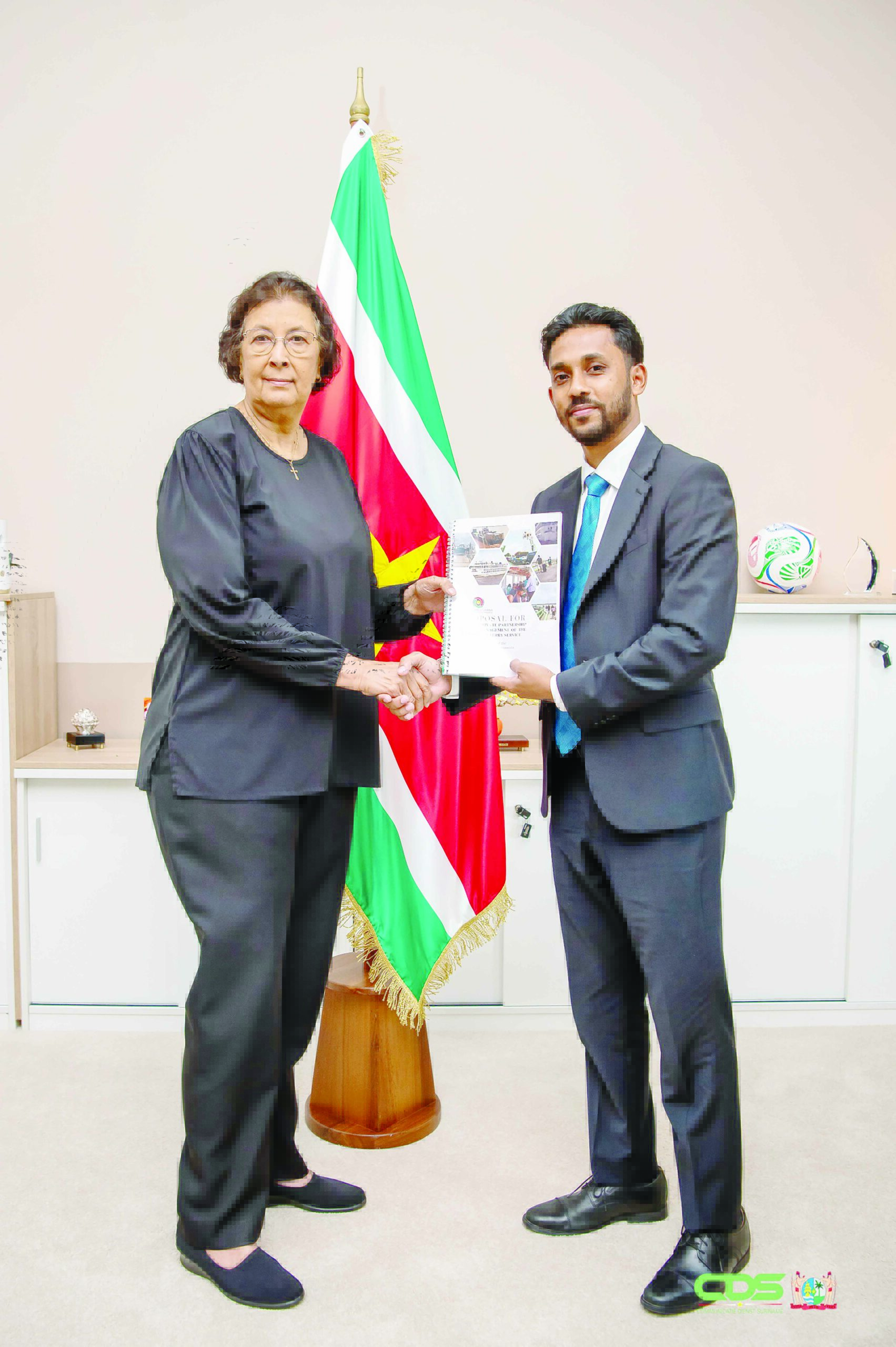
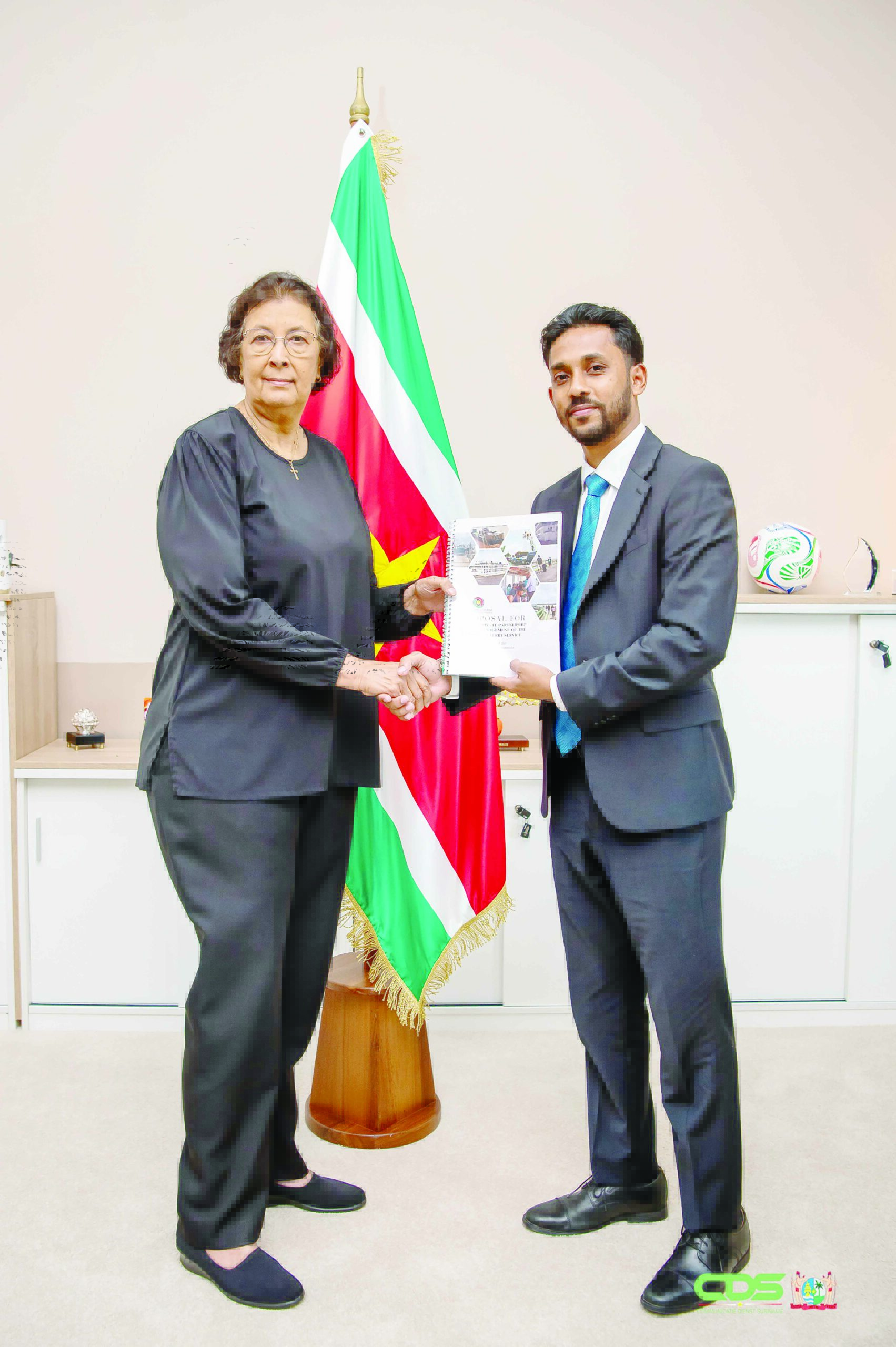
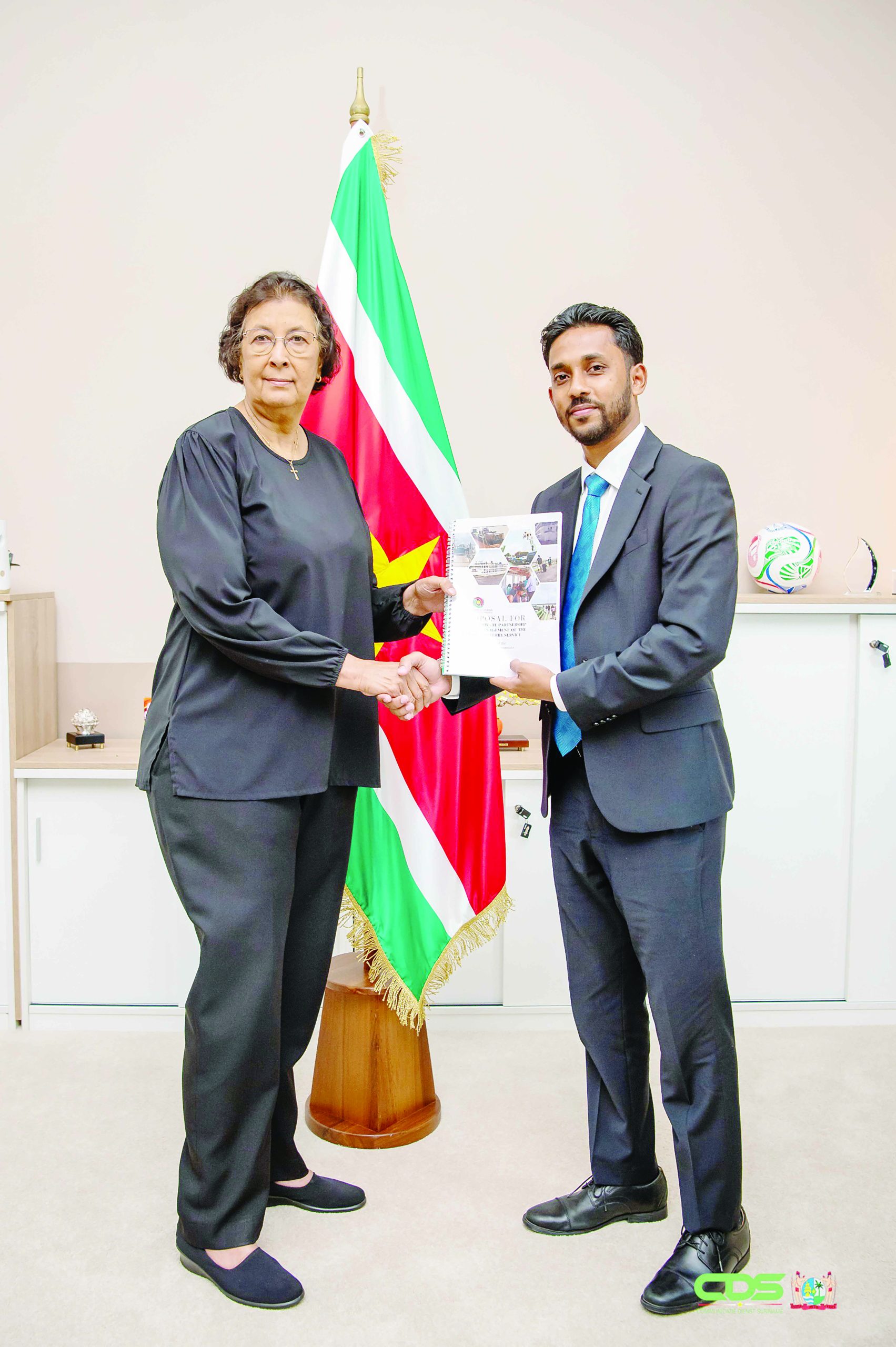
SGCC Chairman Mark Sookhai presented President Jennifer Geerlings Simons with a copy of the Chamber’s Strategic Priorities for strengthening bilateral cooperation between Guyana and Suriname
Opportunities to potentially expand bilateral trade, facilitate investment and improve connectivity are being highlighted to further strengthen economic cooperation between Guyana and Suriname.
These issues were among strategic priorities presented to the Surinamese President, Jennifer Geerlings-Simons, by the Board of Directors of the Suriname-Guyana Chamber of Commerce (SGCC) during a recent engagement held in Paramaribo.
According to SGCC, the engagement reflected a shared appreciation for the longstanding relationship between the two neighbouring countries and the importance of deepening collaboration in ways that deliver tangible benefits for businesses, investors and citizens.
“Discussions focused on practical opportunities to expand bilateral trade, facilitate investment, improve connectivity, strengthen institutional cooperation and support sustainable economic development. There was broad recognition that Suriname and Guyana possess complementary strengths and are well positioned to build one of the Caribbean’s most dynamic economic partnerships,” the Chamber stated in a missive on Saturday.
As part of the meeting, the Chamber presented its vision for the fourth International Business Conference (IBC) Suriname to be held in October 2026, positioning the event as a strategic platform to convene Government leaders, investors, development partners and the private sector. The conference is expected to catalyse new partnerships, support investment promotion and showcase emerging opportunities across Suriname, Guyana and the wider region.
The SGCC said President Geerlings-Simons welcomed the initiative and recognised its continued contribution to Suriname’s investment agenda.
Moreover, the Chamber also presented its public-private partnership management proposal for the Canawaima Ferry, developed as a practical framework to support the long-term sustainability, efficiency and commercial viability of this critical transportation link. The proposal focuses on strengthening operational management and improving service delivery for businesses, travellers and border communities that depend on the crossing.
Surinamese President Jennifer Geerlings-Simons with the SGCC Board of Directors during the recent engagement in Paramaribo
SGCC reaffirmed its readiness to continue engaging constructively with the relevant authorities as discussions progress.
Recognising that investment competitiveness extends beyond infrastructure, the Chamber also expressed its willingness to support national efforts aimed at strengthening financial digitisation, investment readiness, streamlined business processes and the overall ease of doing business.
The discussions examined several priority sectors where closer collaboration can generate long-term value, including fisheries, agriculture, tourism, education, healthcare, construction, renewable energy, infrastructure, aviation and logistics.
It was further noted that particular attention was given to the fisheries industry, recognising its importance to livelihoods, food security and cross-border commerce. The Chamber encouraged continued engagement between relevant authorities and private sector stakeholders to create greater clarity, predictability and confidence for businesses operating in the sector while also supporting responsible joint investment and value-added production.
Regional connectivity was also highlighted, including continued improvements to the Canawaima Ferry service and the development of the Corentyne Bridge. Both were recognised as important to improving the movement of people, goods and services and to strengthening commercial integration between the two economies.
The Chamber further emphasised the importance of enhanced logistics and trade connectivity, including opportunities to strengthen commercial linkages with Brazil and other Caribbean partners. Improved regional transport and supply chain networks were identified as critical to expanding exports, lowering business costs and positioning Suriname and Guyana as gateways for regional commerce.
During the engagement, SGCC also highlighted the value of an enabling environment for cross-border business, including the conclusion of a bilateral double taxation agreement, continued improvements to investment frameworks and greater regulatory certainty for companies operating across both markets.
The meeting reinforced the importance of sustained public-private dialogue in translating opportunity into measurable outcomes. As neighbouring countries with complementary economies and growing regional influence, Suriname and Guyana are well positioned to build a stronger economic partnership grounded in practical collaboration, mutual respect and shared prosperity.
In Saturday’s missive, the SGCC expressed its appreciation to the Surinamese President for the opportunity to engage on these important matters, adding that it looks forward to continued collaboration with public and private sector stakeholders in advancing sustainable economic growth and regional integration.
After the PNC launched its co-op socialist economy after independence, successive Governments have attempted a shift to a free-market economy. This institution needs to be appreciated by our citizens as the PPP Government attempts to use its premises to develop our country – and ourselves.
The following is from a US Federal Bank: A market economy is an economic system in which individuals own most of the resources – land, labour, and capital – and control their use through voluntary decisions made in the marketplace. It is a system in which the Government plays a small role. In this type of economy, two forces – self-interest and competition – play a very important role.
Why do you go to work? Why do you go to school? There may be many reasons, but at their core, you probably go to work and school because you are self-interested. To be self-interested simply means you seek your own personal gain. You go to work because you want to get paid so you can buy the things you want. You go to school so you can be qualified for a better-paying job someday to buy the things you desire. In fact, most economic activity we see around us is the result of self-interested behaviour.
Why does the baker choose to bake? The answer is self-interest. The baker wants to earn enough money to feed his family and buy the things he wants, and the most effective way he has found to do that is to bake bread for you. In fact, his bread has to be good enough and the service friendly enough that you are willing to give up your money freely in exchange for his bread. The baker, while serving his self-interest, has produced a product that is valuable to you. The miracle of a market system is that self-interest produces behaviour that benefits others.
Is being self-interested greedy? Is it immoral? While the term “self-interest” has negative connotations, it does not necessarily imply greedy or immoral behaviour. Self-interest just means that you seek your goals. In fact, your self-interest might lead you to study hard for your maths test, give money to your favourite charity, or volunteer at a local school.
Doesn’t self-interest lead to price gouging, corruption, and cheating? Sometimes it does, but most often it is held in check by competition. Because other self-interested people are competing in the marketplace, my self-interest is held in check. For example, if I were a baker, the only way I would be able to earn your dollars is to produce bread that is better, cheaper, or more convenient than the bread produced by the other bakers in town. If I were to increase my price too much, you would likely buy bread from my competitors. Thus, competition is the regulator, a check on self-interest because it restrains my ability to take advantage of my customers.
Adam Smith described the opposing but complementary forces of self-interest and competition as the “invisible hand”. While producers and consumers are not acting with the intent of serving the needs of others or society, they do. When you work, your goal is to earn money, but in the process, you provide a valuable good or service that benefits others and society. The amazing part of this process is that there is very little Government control. The bread you buy at the store arrived as the result of hundreds of self-interested people cooperating without a Government bread agency managing production at each step along the way. In the words of Adam Smith, it’s as if they were being guided by an invisible hand that directed resources to their most valued use.
The discussion of self-interest and competition usually results in a discussion of the proper role of Government regulation. Some see a market economy as largely self-regulating, assuming there are enough firms competing in the market to be a check on self-interest. Others point to examples of fraud where competition has failed to be an adequate check on self-interest – they argue that Government must take a more active role in regulating economic activity.”
Hard work, not handouts, is the way forward.
“Tam-tam… boom-boom…” That is the sound of the historical Tassa drum, beating like a heartbeat across Guyana’s cultural landscape for more than half a century.
Rising from a family-run workshop at Richard’s Town, Lusignan, East Coast Demerara (ECD), the tradition has helped shape the nation’s rhythmic identity since the 1960s.
From Raghu’s Tassa Tadja and Craft, thousands of handcrafted drums have been produced and generations of players trained, carrying the sound of tradition far beyond local yards and into communities across Guyana and the diaspora.
The Guyana Times caught up with 42-year-old Akhilanand Raghunandan, the leader of the tassa drum group, who explained the deep history and rise of the band.
He said that since the 1960s, the group has been in operation, using both tassa and taja drums as its primary instruments. He noted that while many other bands identify as tassa drummers, most only use tassa drums alone.
He described the instruments as large, likening them to the size of rum barrels.
He further explained that, in addition to crafting new drums, the group also repairs instruments made primarily from goat skin and deer skin.
Over the years, he said, they have trained between 2000 and 3000 people in tassa drumming, many of whom continue to perform today, with some going on to become well-known musicians.
“We are probably the only group that still plays main themes and repairs drums. The Tassa drum is the big one. At one point in time, it represented almost everything around Guyana. It was usually associated with Muslim gatherings, and it was once very active in Guyana. It was even banned at one point by pandits, but in places like Trinidad it still thrives… Over time the drum evolved into something that represented all races – Indian, African, Chinese, and others. When that drum sounded years ago in Guyana, it brought everyone together.”
According to him, over the years the group has produced thousands of drum sets for clients and cultural groups across Guyana, as well as for export to North America and other regions.
He noted that during his days of studying at university he recalled that the drums were taken there and introduced within academic and cultural spaces. He also relayed that there was one early instance of Guyanese drums being introduced in Cuba through scholarship-linked cultural exchange.
Following this, he said, other countries began adopting similar practices, with drum-making and cultural exchange extending to parts of Africa, including Gambia, Ghana, Egypt, and Morocco. He explained that Guyanese drums were shared with groups in these regions, helping to elevate their cultural visibility internationally. He added that this period of expansion and exchange took place between 2004 and 2009, marking a significant phase in the tradition’s international reach.
In fact, he and his father are currently setting their sights upon teaching the history of Tassa drums and the contributions his family has made in the realms of Tassa making – in their very own book.
“My father is now in his late years. He has been playing drums for over 60 years, and he was awarded a Lifetime Achievement Award for his contributions to the world of drumming. I myself have been playing for the last 40 years, and I have worked alongside him throughout. We have played drums in all parts of Guyana and outside of Guyana as well. He is well known in cultural circles as Teacher Raghu, and when he goes to the ministry, everyone knows who he is.”
He noted that despite periods of decline in recognition, the tradition survived through families who continued to preserve the craft. He said his own family’s involvement spans generations, with knowledge passed down from India through his grandfather’s lineage.
According to him, large community gatherings in earlier decades often featured extensive drumming ensembles, sometimes involving dozens of players across ethnic lines. He described these events as moments of social cohesion during otherwise divided periods in Guyana’s history.
“In those days you had segregation in Guyana and so on,” he said, noting that tassa drumming events often brought African, Indian, and other communities together in shared cultural expression.
He also reflected on his pride in the group’s work, particularly its efforts to preserve traditional techniques while adapting to modern materials. He said the organisations have trained many young people, often from difficult circumstances, using music as a form of structure, discipline, and opportunity.
Among its recent developments, he highlighted efforts to help form a national Tassa association alongside other senior groups in Guyana. He described the initiative as still in its early stages but significant in bringing together long-standing practitioners to formalise the craft.
Looking ahead, he expressed concern about the future survival of the tradition, noting that much of its history remains undocumented and preserved mainly through oral memory.
“What I want to see is a format in which this type of drum can be preserved in something more than just oral tradition,” he said, adding that there is currently little written or archived material on the instrument.
He further suggested that the tassa drum may have developed uniquely in Guyana, shaped by the constraints of indentureship-era life, where communities adapted available materials to create instruments that became culturally distinct over time.
He added that while interest in tassa drumming is growing among younger generations, there remains a need for structured publication, research, and cultural investment to safeguard what he described as a significant but under-documented part of Guyana’s heritage.
The United States (US)-based Lindsayca, the company building Guyana’s highly anticipated Gas-to-Energy (GtE) project, is reaffirming its commitment to conducting lawful and transparent operations. This comes as the company responds to a series of attacks in the local media, which it describes as false accusations, incomplete information, and misleading narratives regarding its operations both in Guyana and in the US.
“We categorically deny these allegations,” Lindsayca declared in a statement on Wednesday, expressing its suspicions about the timing of these publications. “We also find it noteworthy that these attacks have intensified at a time when multiple competitive bidding processes are underway. While we will not speculate beyond the facts, we believe it is important to recognise that misinformation can serve the interests of parties seeking to undermine legitimate competition and proven performance,” the missive detailed.
Lindsayca is currently constructing the GtE Project, which comprises a 300-megawatt (MW) combined cycle power plant and a Natural Gas Liquids (NGL) facility being built at Wales, West Bank Demerara (WBD), in the first phase.
As part of Phase Two of the GtE Project, the Guyana Government plans to utilise the excess natural gas that will be piped onshore from the prolific Stabroek Block for a number of industrial projects at the Wales site, including a fertiliser plant.
Lindsayca Guyana Inc. was among 10 companies that submitted proposals back in March to design, engineer, construct, and operate an ammonia/urea plant at Wales. Additionally, the US-based company has also entered the race to design, build, and operate a cooking gas bottling facility at the Wales site.
Works progressing at the Wales site, where Lindsayca is building Phase One of the Gas-to-Energy Project
Nevertheless, Lindsayca pointed out in Wednesday’s statement that it has served as a trusted Engineering, Procurement, and Construction (EPC) provider for the power generation and oil and gas industries for more than 40 years, delivering complex infrastructure projects with safety, quality, and accountability at the centre of everything it does.
“Throughout our history, we have successfully executed more than 140 EPC projects across the Americas and have worked in more than a dozen countries. Our track record has been built on performance, transparency, and long-term relationships with clients, partners, suppliers, and communities. We are proud that, in many cases, clients have repeatedly entrusted Lindsayca with additional work based on the results we have delivered,” it posited.
According to the company, it operates under a transparent management system covering quality, safety, compliance, and human resources. Lindsayca went on to add that its processes are documented, auditable, and aligned with international standards. This, it noted, includes extensive recruitment and interview procedures, proper documentation, and internal controls designed to ensure fairness, accountability, and compliance with applicable laws and regulations.
“Our position is clear: Lindsayca’s only purpose is to fulfil its responsibilities, honour its commitments, and provide our clients with concrete solutions that meet international standards,” the company emphasised.
Guyana operations
When it comes to its operations in Guyana, Lindsayca said they are fully cooperating with the Government of Guyana and are in the process of submitting all requested documentation.
“We are confident that the facts, records, and evidence will demonstrate the truth and confirm Lindsayca’s commitment to lawful, responsible, and transparent operations. Despite these distractions, our teams remain focused on the work. We continue to move forward with discipline, professionalism, and determination to deliver a world-class facility for the benefit of the people of Guyana,” the company stated.
Lindsayca further noted that it “will always defend its reputation with facts, not speculation; with transparency, not rhetoric; and with performance, not distractions.” Wednesday’s statement from the company comes just a few months after it gave similar assurances, especially regarding the transparency of its supply chain, which it said is run by a globally recognised system that cannot be manipulated.
This was in response to reports of “highly irregular and deeply troubling manoeuvres” in the award of subcontracts for the project. However, Lindsayca explained that their supply chain management platform is run by a data processing programme – Systems, Applications, and Products (SAP). This German-founded, multinational software company is famous for creating the Enterprise Resource Planning (ERP) software that helps businesses manage finances, logistics, human resources, and supply chains in real-time.
Currently, construction is progressing at the Wales site, where Lindsayca is accelerating works to deliver the power plant by this year’s end. Only recently, the contractor successfully installed all four heat-recovery steam generator (HRSG) bypass stacks.
“Activity continues across the site as progress advances on multiple fronts,” the company said last month, adding in another update on June 5, saying that “…many efforts are taking place simultaneously across the GtE Project, from structural works and substation activities to the installation of major equipment.”
Negotiations between Guyana Power and Light (GPL) Incorporated and Turkish energy company Karpowership’s new agreement for the continued supply of electricity is 99 per cent complete, according to Public Utilities Minister Deodat Indar.
Although the Minister had indicated that GPL would issue a statement by Friday outlining the outcome of the negotiations and the way forward, no such statement had been released up to Saturday evening.
Nevertheless, providing an update on the negotiation, Indar declined to discuss the substance of the talks but explained that the negotiations were being conducted by GPL and Karpowership and should be allowed to conclude before details are made public.
Public Utilities Minister Deodat Indar speaking with reporters
“GPL and the company were doing the negotiations. Allow them to issue the statement. They should do so in one day. There is no reluctance in providing information. I spoke about this at length all the time… There is no reluctance, but you don’t negotiate in the public. It is not concluded; it is 99 per cent,” Indar said.
While maintaining that the negotiations were nearing completion, the Minister refrained from disclosing any details of the proposed agreement, saying it would be inappropriate to comment publicly before the process was finalised.
His comments come against the backdrop of growing public interest following the expiration of GPL’s agreement with Karpowership last month.
The power supply arrangement, under which the floating power generation company has been providing a significant portion of the country’s electricity generation capacity, expired on May 21.
The power ship is currently adding power to the grid
Government officials have previously assured the public that electricity generation has not been affected and that negotiations were ongoing to secure a new agreement while maintaining an uninterrupted supply of power.
Questions have since been raised about the status of the negotiations, the terms of any new arrangement and when the public would be updated. Although Indar had indicated on Thursday that GPL would issue a statement by Friday addressing the negotiations and outlining the way forward, the power company had not done so up to Saturday evening.
It remains unclear when GPL intends to make the outcome of the negotiations public or whether the parties have since concluded discussions.
The negotiations are being closely watched as Guyana continues to rely on Karpowership’s floating power generation to supplement the national grid while longer-term electricity projects, including the Wales Gas-to-Energy Project, advance.
Any new agreement between GPL and Karpowership is expected to play an important role in maintaining the country’s electricity supply until additional generation capacity comes on stream.
Your Eyewitness is quite impressed with the number of initiatives that have been unfurled by Pressie with our CARICOM cohort Jamaica during the visit by their PM Holness. Maybe he might’ve missed the announcement, but this 2-day state visit by Holness on his way back from that O&G business gathering in Suriname – where the latter bunch of ingrates insulted us once again with their passive-aggressive flag gesture – has been a pleasant surprise!! Especially with the welter of MOUs signed in several areas to advance collaboration between our two countries – including but not limited to the areas of energy, tourism, finance, defence, agriculture, etc.
Holness summed up our relationship rather succinctly: “It is very much clear that Jamaica and Guyana are very much aligned, and we have a similar outlook on the world and a similar understanding of the changing dynamics and the new nature of global politics, but we also share a very positive outlook on our economic prospects.” For his part, Pressie emphasised, “We believe that we have found a common path in many areas and look forward to a stronger, relentless, resilient and sustainable partnership with the government and people of Jamaica.”
On the “global politics” front, this was exemplified last year after US Secty of State Rubio visited Jamaica over the issue of Cuban doctors. In a realpolitik manner, Holness didn’t try to score points like Barbados’ Mottley – who mounted her high horse – but pragmatically signalled the need for change in Cuba and explained – or our Pressie also did – that our arrangement didn’t involve direct payments to the Cuban government!! Jamaica is our largest CARICOM partner and, along with T&T, could help shape the ongoing realignment of hemispheric power relationships with the US as a key ally.
Let’s not make any bones about it – in the coming year with the ICJ scheduled to deliver our victory over the Venezuelans in the controversy they created over our Essequibo border – we’re going to need diplomatic support!! But not of the equivocating type of the likes of Mia Mottley!! And as far as our local politics are concerned, how can we forget the contribution to our discourse by former Jamaican PM Golding, who dubbed Granger a “Sanctimonious Gangster”!!
Rather concretely, there’s an agreement on where to build 300 houses in Jamaica – with our wood and expertise!! Our timber products were once a mainstay in our exports to the Caribbean – and maybe this will be its resuscitation – in value-added form!! Reciprocally, while we mightn’t have their surf and sand, their hotel services are second to none – and we can learn!
Now if they could offer some tips on how they’ve marketed their culture globally, where even in Japan reggae’s a rage – we’ll be set!!
…common cause back then
Now Jamaica and we share a lot!! Hadn’t Burnham and Manley struck their leftist pose and decided we were going to feed ourselves back in the day?? Were they talking about “food security” before there was “food insecurity”?? Naah…they were just reacting to their economies imploding and didn’t have the foreign exchange to import the foods we’d been weaned on. And craved. After all it wasn’t apocryphal that Burnham cried out for “condensed milk” on his death bed, was it??
Anyhow, while there’s nothing wrong about growing our own food and moving off “foreign foods”, what they attempted was an ancient economic notion called “autarky”! Your country has to be completely self-sufficient and become an island (no pun intended) unto itself!! This had been debunked by the “free trade” theory, where countries concentrate on things they have (or can acquire) a comparative advantage in – produce and export those things – then use the foreign exchange earned to buy WHATEVER else is desired!!
We should ask Jamaica about producing Irish potatoes right now – but at EIGHT TIMES the imported price!!
…sinecures
UG’s been around for 60+ years, yet many graduates can barely read and comprehend beyond primary school level?? Gotta end tenure where no one’s fired!!
– GDF troops to be deployed to devastated areas in Caracas
The Guyanese Government is organising a massive donation drive to mobilise humanitarian aid for the people of Venezuela following Wednesday’s 7.2- and 7.5-magnitude earthquakes that have devastated the neighbouring country’s capital.
Based on reports coming out of Caracas on Saturday, at least 1430 person have died, and thousands of others are missing and injured after the twin quakes collapsed houses and other buildings. Speaking at a briefing on Saturday from State House in Georgetown, President Dr Irfaan Ali described the destruction as unimaginable, assuring the Venezuelan people of Guyana’s strong support.
“We are responding to one of the greatest humanitarian needs as a result of a disaster in Venezuela at a scale and magnitude that is unimaginable. As good neighbours, we must reach out… The people of Guyana stand ready to support in whatever capacity we can,” the Guyanese leader stated. According to President Ali, an 8000-tonne vessel has been mobilised to transport the aid to the neighbouring country. The humanitarian aid donation drive will run from June 27 to July 1, 2026, and the drop-off location will be at the Muslim Youth Organisation (MYO) on Woolford Avenue, Georgetown.
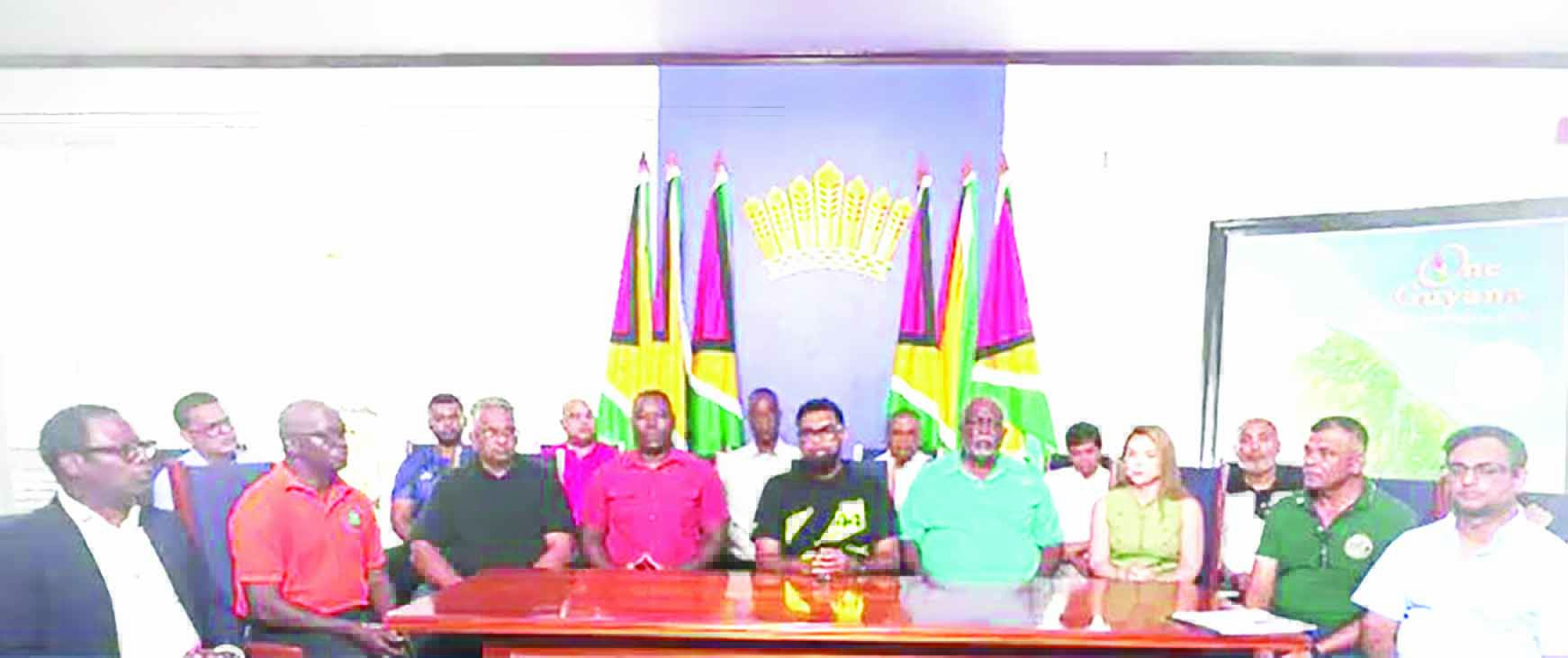
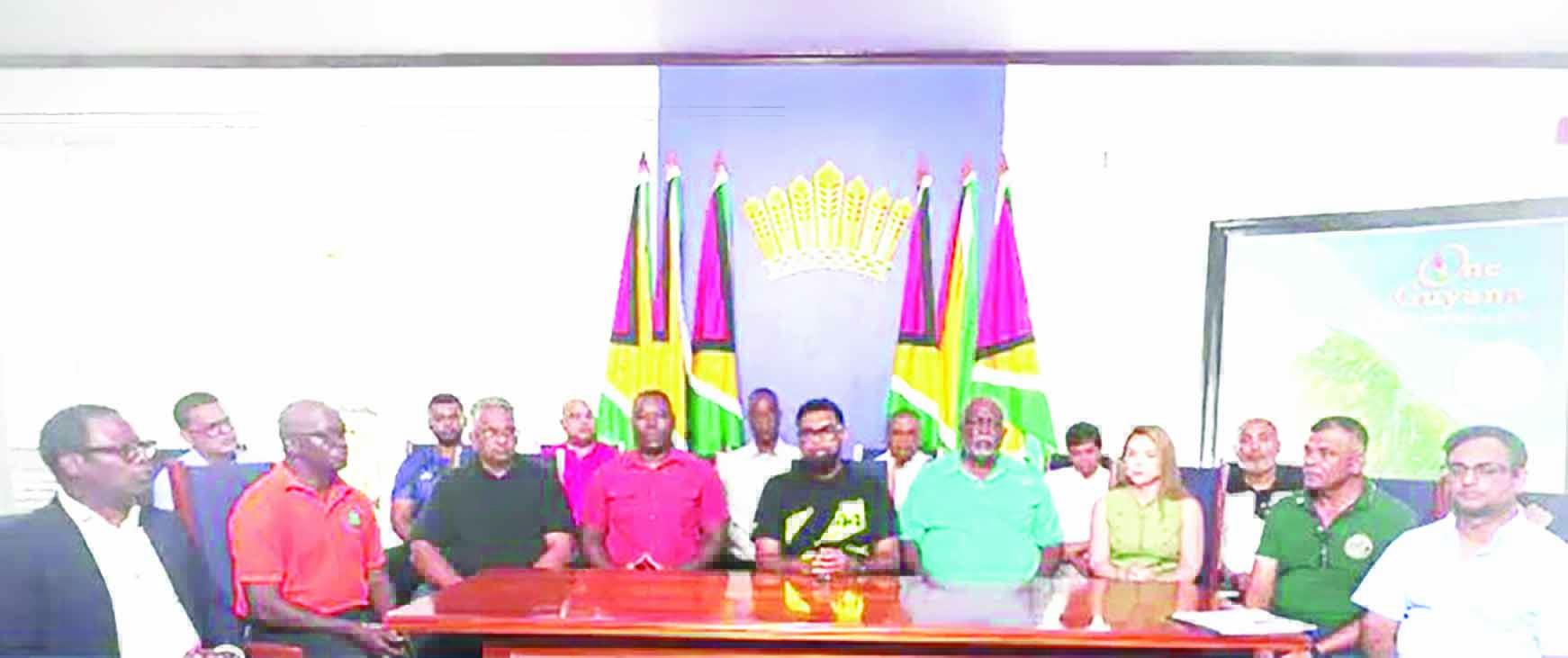
President Dr Irfaan Ali and Prime Minister Mark Phillips, along with other Government officials and stakeholders, at a briefing on the humanitarian aid donation drive for Venezuela
Aid items
The Guyana Defence Force (GDF) and the Guyana Civil Defence Commission (CDC) will be on-site 24 hours a day at the drop-off location to receive donations and package the items for shipment. Among the items needed are drinking water and non-perishable foods such as canned vegetables, beans, fruit, soup, tuna, chicken, dry pasta, rice, oats, cereal, peanut butter, shelf-stable or powdered milk, pasta sauce, canned tomatoes, crackers, granola bars, trail mix, instant noodles, boxed meals, baby food or formula, cooking oil, flour, sugar, salt, spices, tea, coffee and hot chocolate mix.
Personal hygiene items, including soap, toothpaste, toothbrushes, shampoo, deodorant, toilet paper, sanitary napkins, nappies and other essential hygiene supplies, are also required.
Additionally, sleeping items such as sleeping mats and/or mattresses, blankets and sheets, as well as flashlights, batteries, solar chargers and cutting equipment, are needed. It was noted that all donated items should be unopened, unexpired and in good condition. Moreover, easy-to-prepare foods and pop-top cans are especially encouraged.
Already, five containers of critically needed pharmaceutical items have been procured, as well as several containers of food items. However, much more is still required to fill the 8000-tonne vessel that will transport the aid. A second 7000-tonne vessel is also on standby if required. However, Guyana is also coordinating with other Caribbean Community (CARICOM) nations that are also interested in sending aid to Venezuela. St Vincent and the Grenadines has already mobilised three containers of humanitarian aid for Venezuela. According to President Ali, the aim is to have the vessel depart Guyana on Friday, July 3, 2026, for Venezuela.
GDF deployment
In addition to the humanitarian aid, the Commander-in-Chief of the Armed Forces also disclosed on Saturday that a GDF contingent would also be deployed to aid in the recovery efforts as Venezuelan authorities race against time to rescue survivors trapped under collapsed buildings. “We have offered to have a team from the Guyana Defence Force on the ground to help in the recovery efforts in Caracas at this moment,” Ali revealed on Saturday.
Meanwhile, Prime Minister (PM) Brigadier (Ret’d) Mark Phillips will be leading and coordinating Guyana’s response and support efforts. Persons interested in making large-scale donations can contact his office, which will be open every day until the close-off time for the donation drive. A flyer is also being circulated online with additional information on this exercise. It was further explained that the vessel would be available by Wednesday to start the loading process.
While members of the public are encouraged to support these efforts, a special appeal is being made to the local private sector. Persons or companies that are interested in making donations of particular items, such as rice or food items, are being asked to coordinate and fill out a container of each category, which would work out to be more economical for shipping purposes.
“This is not an easy task. It’s an intense logistics operation, but we hope to have this done efficiently for our neighbours and the people of Venezuela. We are also a country with a large number of Venezuelan nationals who work here and who live here, and that community, along with the general Guyanese population, would have reached out and is responding in an unbelievable way,” President Ali noted.
On Thursday, President Ali took to social media, stating, “We stand in solidarity with the people of Venezuela. As neighbours, we are ready to offer assistance within our capacity. Our love, prayers, and thoughts are with the families of those affected and the people of Venezuela.” His message was seen and welcomed by acting Venezuelan President Delcy Rodríguez, who expressed gratitude to President Ali after he extended solidarity and support following the disaster.
According to the Venezuelan leader, “We would like to thank Guyana’s President Irfaan Ali for his solidarity and his willingness to offer support to the Venezuelan people during these difficult times. His message conveys solidarity, respect and a sense of neighbourliness toward Venezuelans.” This show of solidarity and support between Guyana and Venezuela comes as the two South American neighbours are embroiled in a decades-long border controversy. The matter is currently before the International Court of Justice (ICJ), which is expected to deliver a ruling sometime later this year or early next year.


 By Ryhaan Shah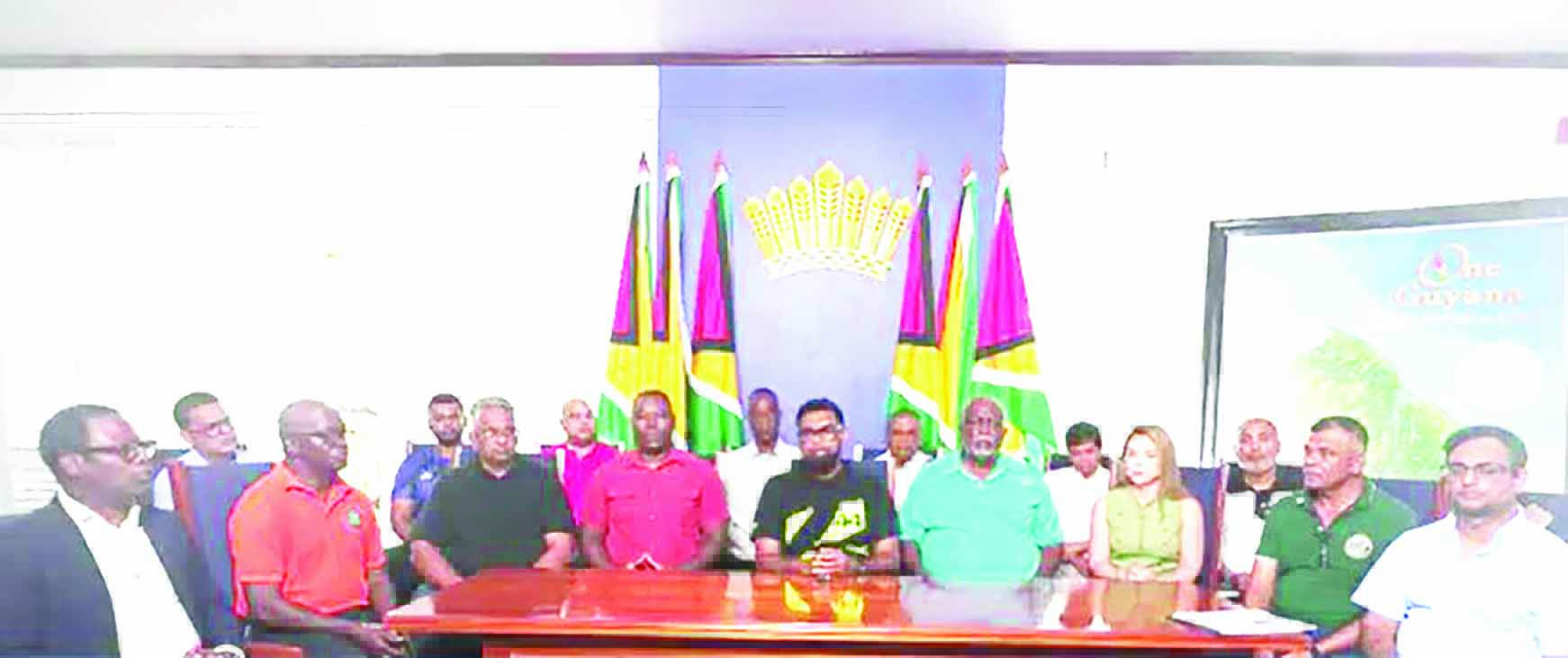






 The United States (US)-based Lindsayca, the company building Guyana’s highly anticipated Gas-to-Energy (GtE) project, is reaffirming its commitment to conducting lawful and transparent operations. This comes as the company responds to a series of attacks in the local media, which it describes as false accusations, incomplete information, and misleading narratives regarding its operations both in Guyana and in the US.