Boxing controversy – what we know and what we don’t
Boxer Imane Khelif is yet to comment, but experts speculate that the Algerian was born with the rare disorder Differences…
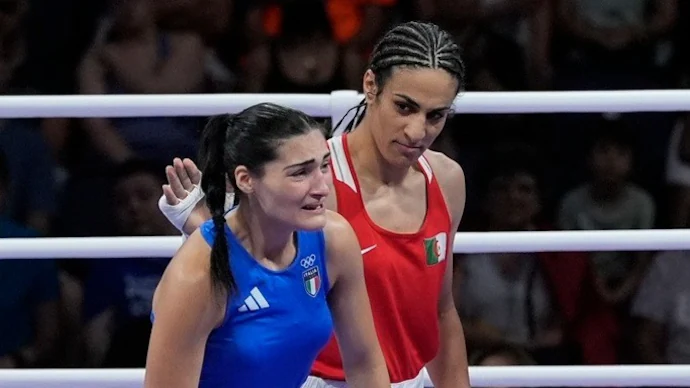
 Boxer Imane Khelif is yet to comment, but experts speculate that the Algerian was born with the rare disorder
Differences in Sex Development
Until recently, most laypeople were unfamiliar with the medical term “differences in sex development” (DSD). Only now, after “biological male” Algerian boxer Imane Khelif beat an opponent in the women’s boxing event, has DSD come under the spotlight.
After failing a “gender assessment”, the Algerian was banned from a previous women’s tournament – but allowed to compete in Paris. Khelif won in only 46 seconds, as Angela Carini was forced to abandon the match, yelling “this is unfair.”
DSD explained
The rare condition was also previously known as disorders of sex development or “intersex” conditions.
Dr Ashley Grossman is an emeritus professor of endocrinology at the University of Oxford. He says: “Simply put, the development of sexual differentiation is an amazing and complex process in the womb, with the vast majority of people being biologically, sexually and in terms of appearance, male or female.
“Yet sometimes things work out a little bit differently and previously unpleasant, insulting terms such as ‘hermaphrodite’ were used to describe these affected people.”
How many people does it affect?
Prof Grossman estimates that DSD is so rare it affects between just 0.05 and 1 per cent of the population. The condition is generally diagnosed at birth, when a baby’s anatomy – genitalia – might not be obvious.
Why was Khelif’s win against Carini controversial?
Much of the criticism from some people stems from Khelif’s disqualification at the 2023 World Championships in New Delhi, India.
She failed a gender eligibility test conducted by the IBA hours before her gold-medal showdown against China’s Yang Liu. The Algerian initially appealed against the decision to the Court of Arbitration of Sport (Cas), but withdrew her appeal during the process, the IBA said.
The Russian-led IBA said Khelif “failed to meet the eligibility criteria for participating in the women’s competition, as set and laid out in the IBA regulations”.
According to the IBA’s regulations: “Boxers will compete against boxers of the same gender, meaning women vs women and men vs men as per the definitions of these rules.
The IBA defines a woman, female or girl as “an individual with chromosome XX” and men, males or boys as “an individual with chromosome XY”.
The IBA denied Khelif’s testosterone levels had been tested.
In an interview with BBC sports editor Dan Roan on Thursday, IBA chief executive Chris Roberts said XY chromosomes were found in “both cases”.
Roberts said there were “different strands involved in that” and therefore the body could not commit to referring to Khelif as “biologically male”.
The IOC has raised doubts over the accuracy of the tests.
“We don’t know what the protocol was, we don’t know whether the test was accurate, we don’t know whether we should believe the test,” said IOC spokesperson Adams.
“There’s a difference between a test taking place and whether we accept the accuracy or even the protocol of the test.”
What testing is conducted in boxing?
In 2019, the IOC delegated responsibility for the organisation and management of doping control at the Olympics to the International Testing Agency (ITA).
The IOC said it took a “zero-tolerance policy” to anyone found using or providing doping products.
Tests include, but are not excluded to, determining an athlete’s levels of testosterone.
“There are many women with higher levels of testosterone than men,” said IOC spokesperson Adams.
“So the idea that a testosterone test is a magic bullet is actually not true.”(Combination of information from BBC and The Telegraph)
The post Boxing controversy – what we know and what we don’t appeared first on News Room Guyana.