– offers to provide support to ensure development goals met
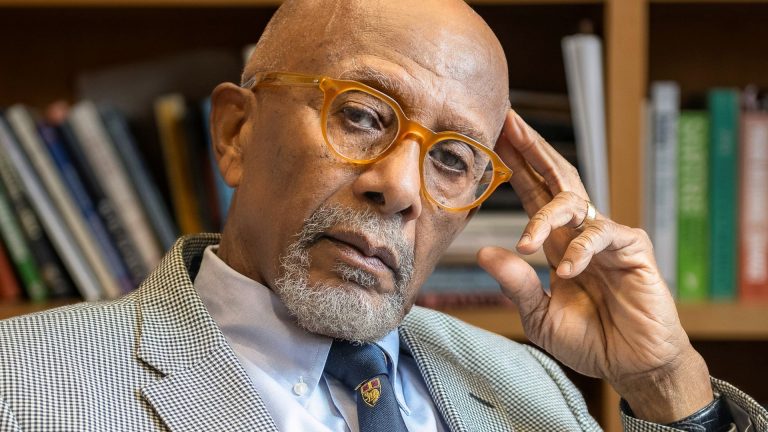
The Government of Guyana has made agriculture the beating heart of its diversification strategy, and the Inter-American Institute for Cooperation on Agriculture (IICA) will hold hands with President Irfaan Ali as he works to make this vision a reality, according to Director General of the Inter-American Institute for Cooperation on Agriculture (IICA) Dr. Muhammad Ibrahim.

“His Excellency President Irfaan Ali is very passionate about agriculture. He’s not only leading the discussion within Guyana, but also in CARICOM. What I applaud about his thinking is how he sees Guyana within a nexus of linking with Brazil, Chile, Paraguay, Uruguay and joining the club of big food exporters…” Dr. Ibrahim told the Guyana Times in an interview.
“I am very impressed to see how Guyana is working towards the initiative of more food security for sovereignty and also how agriculture will be part of this economy, not only an oil-based economy but where you see clear evidence of the investments being made across sectors. This will be very important in terms of how you manage risk and also have a diversified economy; an economy that responds to and benefits the people, the livelihoods of the people. And as I also highlighted, the President is thinking about people, people first, the farmers first, and where he can provide the support for removing barriers, engaging the private sector, and strengthening this cooperation for linking the markets and branding the products of Guyana,” he added.
The IICA Director General posited that government’s stance actions on positioning agriculture as integral to this country’s economic diversification is not just rhetoric but a systemic approach that positions Guyana as both a breadbasket for CARICOM and a global player in agri-food systems.
He pointed out that the center of Guyana’s agricultural policy is the 25 by 2025 plus 5 initiatives, aimed at reducing CARICOM’s food import bill by 25% by 2030 and that IICA has been a key partner in this effort, supporting science, technology, and innovation to boost productivity in rice, beans, and other staples.
“We have bio-fortified crops that are nutrient-enriched to overcome deficiencies – zinc-enriched rice and iron-enriched beans, for example. But also, we are promoting support towards agro-tourism,” he said, while noting that the dual focus of nutrition-smart agriculture and tourism integration reflects Guyana’s ambition to make farming not just about yields but about livelihoods, culture, and health.
Agriculture Policy
This country’s agricultural policy, he reasoned, is not inward-looking as it is designed to integrate with CARICOM and beyond. “Ministers are very receptive. They’ve collectively made a decision towards food sovereignty. Trinidad, for example, sees cooperation with Guyana in soybean production and refining oil. Fertilizer production is another area where Guyana and Trinidad can step up,” Dr. Ibrahim said and honed in that this regionalism is central to Guyana’s vision where agriculture is a collective shield against global vulnerabilities.
Perhaps the most ambitious project here in Guyana, Dr. Ibrahim posited is the Technology and Innovation Hub, launched in collaboration with Brazil’s renowned research institute Embrapa and for which President Ali has championed. “Embrapa generated cutting-edge technologies that transformed marginal soils in Brazil’s Cerrado region. These technologies, biotechnology, gene editing, crop-livestock integration, are directly applicable to Guyana and CARICOM,” he said as he explained that the hub will train young scientists in drones, AI, and precision agriculture, ensuring that the next generation sees farming as a prestigious, science-driven career.
Earlier this month, Brazil’s Deputy Minister of Agriculture and Livestock, Cleber Soares, joined Guyana’s Agriculture Minister, Zulfikar Mustapha and the IICA Director General alongside IICA’s Guyana Representative Wilmott Garnett, to sign a Letter of Intent launching EMBRAPA.
Then IICA and government had explained that the hub is envisioned as a center of excellence for innovation, technology transfer, and agricultural training, aimed at making tangible contributions to increasing the productivity and resilience of regional agrifood systems. It will provide researchers and farmers with easier access to climate-smart planting materials, improved seed varieties, and innovative agricultural technologies.
Innovative agriculture
The initiative makes agriculture smarter and more innovative, placing farmers at the centre of knowledge and technology transfer by providing access to information and practices that have been tested and proven in other settings.
“We are in a tropical region, a tropicalised region in which climate change is a threat, with rising temperatures, increased stress, heat, and changes in water distribution. EMBRAPA has laboratories and tools that are very advanced, and it has developed methodologies that are very applicable. EMBRAPA can make the poorest soil produce large quantities of soybeans as well as corn in a low-input mixed-system approach,” Ibrahim had said at the launch.
He also noted that while there has been significant advancement in innovation and technology, discussions with other officials have focused on facilitating opportunities for young scientists from Guyana and the Caribbean region to receive training at EMBRAPA. He added that the initiative also aims to support the adoption of these technologies within the region, enabling complementary practices to be scaled up effectively. He further emphasised the need to explore blended finance mechanisms to assist farmers in overcoming existing challenges.
For his part, Agriculture Minister Zulfikar Mustapha had noted that the hub allows Guyana’s agriculture sector to transcend borders and strengthen key areas, including regional research networks and collaborative partnerships.
“Hosting this hub is a natural extension of that leadership. Our institutions, such as the National Agricultural Research and Extension Institute (NAREI) and the Caribbean Agricultural Research and Development Institute (CARDI), are ready to collaborate as we seek to validate technologies for tropical crops and livestock, strengthen climate-smart agriculture, improve natural resources management, enhance regional research networks, and build a pipeline of innovations ready for scaling across CARICOM.”
Whilst speaking, he underlined that the Private Sector will also be a key beneficiary and partner in this initiative, stating that the technologies validated through the Hub will enable agribusiness expansion, improve productivity, and unlock new investment opportunities across the region.”
Looking ahead, he outlined plans for Brazilian and Guyanese technical teams to begin preparatory arrangements during the second half of this year. He also underscored the importance of the hub to Guyana and its partners, particularly in advancing climate resilience and sustainable agricultural development.
Building a sustainable agri-economy
During the interview, Ibrahim said that Guyana’s agricultural diversification extends to livestock and fertilizer production. And with global supply chains disrupted, this country is positioning itself as a regional supplier. “We see bio inputs, bio pesticides, bio fertilizers as key for sustainable development. Guyana is growing soybean and corn, integrating livestock systems, dairy, pigs, poultry, with circular economies to produce bio fertilizers,” he said.
The government’s plan to build a fertilizer plant, linked to its gas-to-energy project, is also seen as a strategic move to secure regional food production and he pointed to the alliance with Brazil as a start. “Brazil has a keen interest in teaming with Guyana to have a short supply chain for fertilizers. Having connectivity in-house within the Caribbean secures food production for the world.”
Agriculture he noted is not confined to fields and he is pleased to see President Ali always emphasizing that its part of Guyana’s cultural identity.
Like the President, IICA sees agro-tourism as a way to connect small family farms with visitors. “We provide support to farmers in planning production systems, but also training people to manage tourists; understanding Guyana’s culinary diets, integrating farming with gastronomy, as Peruvians have done.”
This is agriculture as experience where tourists tasting cassava bread in Rupununi, learning about rice cultivation in Essequibo, and seeing how Guyanese diets are rooted in farming systems can be interwoven as part of the economic diversification strategy.
“We’re working in agritourism. As you can see, many Guyanese but also foreigners who are coming back into Guyana to visit and these are good opportunities …,” he said.
Overall, the ICCA head commended President Ali’s “farmers first, people first” and was quick to highlight that his organization will continue to work with Guyana where policies are shown to be translated into concrete projects such as the innovation hub, fertilizer plants biodiversity alliances, and inclusive farming programs. “Guyana is not only feeding itself; it is positioning itself as a leader in global food systems,” he said.
The post IICA hails Pres Ali’s vision for inclusive agriculture appeared first on Guyana Times.