Blog

  • Government launches Climate Smart Agriculture training to boost food security

    Government launches Climate Smart Agriculture training to boost food security

    Guyanese are undergoing Climate Smart Agriculture training aimed at equipping them with practical skills to boost food security and build sustainable livelihoods.

    The programme was launched by the Ministry of Human Services and Social Security’s Women’s Innovation and Investment Network (WIIN). It is being delivered in collaboration with the National Agricultural Research and Extension Institute (NAREI) under the Ministry of Agriculture.

    The programme is designed to train participants in adaptive and resilient agricultural systems that can withstand changing climate conditions while improving crop yields.

    Participants on Friday, attended a training session at the Guyana School of Agriculture (GSA), where they expanded their knowledge of food preservation and condiment production.

    They also sampled a variety of freeze-dried fruits, including mango, pineapple, coconut and tomato powder.

    Participants engaging in the WIIN Climate Smart Agriculture training

    The training moved to the food processing lab, where participants created their own pepper sauce and green seasoning using ingredients they brought from home.

    They were actively involved in every stage of production, from washing and cutting to measuring, blending, boiling, mixing and bottling. They gained practical skills that can support small business development.

    The training concluded at the National Agricultural Research and Extension Institute (NAREI), where participants toured the shade house and learned about different plant species, shade house systems, and soil types and textures.

    They also observed proper techniques for cultivating dragon fruit, along with other valuable insights to support climate-smart agricultural practices.

    Critical to the programme is that it offers participants an opportunity not only to support their families, but also to venture into agriculture as a business.

    The ministry is urging interested persons to register using the WIIN Website, as the programme will soon be expanded to additional regions.

    The initiative which forms part of government’s food security agenda is set to be rolled out across Guyana, with sessions suitable for individuals interested in backyard gardening as well as those seeking to establish or grow agricultural enterprises.

    The post Government launches Climate Smart Agriculture training to boost food security appeared first on News Room Guyana.
  • Children, elderly care centres to be established in every NDC

    Children, elderly care centres to be established in every NDC

    President Dr Mohamed Irfaan Ali has outlined plans to establish community-based care centres for children and the elderly to enhance the quality of life and strengthen social support systems in all regions.

    Delivering remarks at the distribution of garbage disposal trucks on Monday, President Ali said the centres will be developed in partnership with local communities to create shared spaces that promote dignity, joy, and well-being.

    The initiative forms part of a wider “care economy” approach, integrating social infrastructure such as recreational facilities, upgraded markets, and safe public spaces to support families and community cohesion.

    “[We want to create] recreational facilities that lead to better public health so that we can exercise, so we can see people coming out as families and communities and utilising these spaces in a safe way. We don’t want to see everybody running on a public road,” the president said.

    President Ali emphasised that these investments are critical to building stronger, more inclusive communities, where the young and elderly are supported in safe and nurturing environments.

    The post Children, elderly care centres to be established in every NDC appeared first on News Room Guyana.

  • Govt injects $84.2M to improve Swan access road

    Govt injects $84.2M to improve Swan access road

    The main access road of Swan along the Soesdyke-Linden Highway is being rehabilitated into a concrete thoroughfare to improve access and mobility for hundreds of residents and commuters.

    The upgrade is valued at $84.2 million and falls under the rehabilitation of Swan Madewini’s first entrance project.

    Similar construction works were previously conducted but failed after several defects emerged after completion.

    Minister within the Ministry of Public Works, Madanlall Ramraj, met with residents recently to provide reassurance that the road will be reconstructed to the highest quality to ensure durability and longevity.

    During the engagement, he reiterated the government’s commitment to putting people first, stressing that their needs will be addressed.

    “Our government’s 2026 National Budget, themed ‘Putting People First,’ is not just a slogan. It is a guiding principle that shapes how we respond to the needs of citizens. We as a government are committed to ensuring that all projects not only meet the standard required but serve the people effectively,” the minister stated.

    The scope of work includes the reconstruction of the thoroughfare using six inches of structural reinforced concrete, incorporating BRC mesh and high-tension steel dowels. It will also be completed with hard shoulders.

    Minister Ramraj added that alternative routes will be established, guided by consultation to minimise disruption and maintain connectivity while works are ongoing.

    “We do not want any Guyanese utilising roads that are not up to standard. When families, especially children, have to use these roads daily, for school, work, and essential activities, it is our responsibility to ensure they are safe and reliable. That is why we acted quickly, because this kind of intervention brings immediate relief to residents who depend on this road every single day,” he said.

    The government continues to invest in delivering durable infrastructure to meaningfully improve the lives of every Guyanese as part of its overarching development agenda.

    The post Govt injects $84.2M to improve Swan access road appeared first on News Room Guyana.

  • South American Youth Games: Boxer Ken Harvey wins bronze for Guyana

    South American Youth Games: Boxer Ken Harvey wins bronze for Guyana

    The South American Youth Games bore witness to a technical chess match in Panama as Guyana’s Ken Harvey was edged out by Brazil’s Maicon Dos Santos in a razor-thin 60kg semifinal encounter on Friday.

    While Harvey’s journey concludes with a well-earned bronze, the scorecard suggested a contest that could have gone either way, ultimately settled by a 3:2 split decision in favour of the Brazilian.

    Both fighters displayed the “sweet science” at its most competitive. Harvey started with intent, convincing Judge 1 and Judge 4 of his superiority in the opening round, though the remaining three officials favoured Dos Santos.

    The Guyanese pugilist found a higher gear in the latter stages, clawing back the second round on Judge 4 and Judge 5’s cards, and finishing the third round strongly to secure the final frame from Judges 2, 4, and 5.

    Despite Harvey winning the final round on the majority of cards and Judge 4,

    Maria Del Pilar Morales of Mexico, scoring the entire bout 30-27 in his favour, it was not enough to overturn the overall tally.

    The final verdict saw Dos Santos take the win on points (WP), leaving Harvey to stand on the podium as a proud representative of Guyana after three rounds of relentless action. (Modified from Guyana Olympic Association)

    FULL RESULTS: https://results.panama2026.org/#/schedule/disciplines


    The post South American Youth Games: Boxer Ken Harvey wins bronze for Guyana appeared first on News Room Guyana.
  • Jamaican quartet among 11 athletes blocked from switching allegiance to Türkiye; appeal being prepared

    Jamaican quartet among 11 athletes blocked from switching allegiance to Türkiye; appeal being prepared

    A decision by World Athletics to deny 11 athletes, including four Jamaicans, the right to switch allegiance to Turkiye has ignited a debate over fairness, athlete rights, and the future of international athletics.

    The four Jamaicans affected are Olympic discus champion Roje Stona, Olympic shot put bronze medallist Rajindra Campbell, Olympic and World Championships long jump silver medallist Wayne Pinnock, and triple jump standout Jaydon Hibbert.

    In its ruling, the sport’s Nationality Review Panel found that the applications formed part of a “coordinated recruitment strategy” by the Turkish Government, driven by lucrative contracts aimed at boosting the country’s international competitiveness ahead of the 2028 Olympic Games, this according to a release from World Athletics on Thursday.

    At its core, the decision represents one of the most forceful attempts so far by World Athletics to clamp down on what it perceives as the commercialisation of national allegiance.

    The governing body argued that approving the transfers would undermine “the integrity of international competition” and the principle that athletes should have a genuine connection to the countries they represent.

    However, for athlete representatives and legal experts, the move raises troubling questions about consistency and fairness.

    Agent Paul Doyle, who represents Stona, described the decision as “nonsensical”, pointing to numerous instances in which similar switches had been approved.

    “Athletes have transferred allegiances for decades,” Doyle said. “When you look at the ones approved, even in the past five years, it makes zero sense that these would be denied.”

    His concern reflects a broader unease within the sport, whether the rules are being applied evenly, or selectively enforced in response to the scale and coordination of this particular case and the subsequent unease expressed by the Jamaica Athletics Administrative Association.

    A key issue emerging from the ruling is the panel’s decision to assess the 11 applications collectively rather than individually.

    Sports attorney Emir Crowne questioned whether this approach compromised the fairness of the process.

    “It raises questions as to whether the athletes were unfairly grouped together as opposed to an individualised assessment of each case,” he said.

    Beyond procedural fairness, the decision has sparked a deeper argument, whether the ruling constitutes a restraint of trade.

    Veteran agent Cubie Seegobin did not mince words, suggesting the matter could ultimately be settled in court.

    “I think it’s a restraint of trade,” Seegobin said, adding that governing bodies must adapt to the realities of a modern, globalised sports economy.

    Seegobin also questioned the timing of the decision. World Athletics approved stricter transfer of allegiance regulations on March 19, 2026, with the new restrictions taking effect on March 27, 2026. The applications for the Jamaican athletes were submitted well ahead of those dates.

    “They should have let this go through and then implement the new ruling moving forward,” Seegobin argued. “This is going to cause confusion and disruption.”

    For the athletes themselves, the consequences are immediate and significant.

    Many had already committed to the switch, foregoing opportunities to compete for Jamaica in anticipation of representing Turkiye. The denial leaves them in a state of uncertainty, unable to represent their intended new country and disconnected from their previous national programmes.

    Doyle confirmed that Stona, in particular, has been deeply affected.

    “He’s not happy, obviously, but he understands that it’s a process, and, hopefully we can get through this and it will work out as favourable as possible for him. You know, honestly, the hope was that he would be eligible right away. That’s obviously not going to be the case now, but he’s pretty devastated,” said Doyle.

    While athletes can still compete in non-championship events, including road races and club competitions, the pathway to major championships — the Olympics and the World Championships — is now unclear.

    Doyle made it clear that preparations are being made to appeal the decision at “the highest level”, though even this process has drawn criticism.

    Crowne pointed out that athletes must first request a reconsideration from the same panel that denied them before potentially escalating the matter to the Court of Arbitration for Sport.

    “To me, that in itself seems procedurally unfair,” he said. “You have to go back to the same panel and ask them to reconsider before accessing another independent body.” (Jamaica Observer)


    The post Jamaican quartet among 11 athletes blocked from switching allegiance to Türkiye; appeal being prepared appeared first on News Room Guyana.

  • IPL 2026: Miller seals thrilling win for Delhi over RCB

    IPL 2026: Miller seals thrilling win for Delhi over RCB

    David Miller has been here before in IPL 2026. Against Gujarat Titans, he had turned down the tie and ended up costing Delhi Capitals (DC) the game. Ten days later, Miller was in a similar situation once again.

    Except on Saturday, he won the game for DC with a ball to spare, handing Royal Challengers Bengaluru (RCB) their second defeat of the season and first at home.

    It came down to DC needing 15 off the final over bowled by Romario Shepherd, who was bowling his first of the game.

    Miller had missed out on the first ball—a hittable delivery on leg stump that cost RCB just one run—and Tristan Stubbs also managed only a single next ball, leaving DC needing 13 off four balls.

    Miller completed his redemption arc with 6, 6, 4 off the next three balls to stun the Chinnaswamy into silence.

    Virat Kohli and Phil Salt gave RCB a swift start on a slower-than-usual Chinnaswamy pitch after they were asked to bat first. Kohli nicked the second ball he faced from Auqib Nabi between slip and short third, and Mukesh Kumar also found swing in his opening over.

    But nothing could stop Kohli from shimming out of his crease twice and pumping Mukesh for a pair of fours over cover.

    However, when he tried to treat Lungi Ngidi in a similar way in the last over of the powerplay, the seamer shifted his line wider of off and had Kohli caught at sweeper cover—the only man on the boundary on the off side—for 19 off 13 balls.

    In comparison, Salt had managed just 13 off his first 13 balls but turned up the tempo when he took Nabi for 4, 6, 4 in the fifth over. When he cracked Kuldeep Yadav over wide long-off for six, he brought up his half-century off 30 balls.

    Salt hit Kuldeep for another six before the left-arm wristspinner pushed one away from Salt’s swinging arc and had the batter holing out to wide long-off this time for 63 off 38 balls.

    The slowness in the surface also played a part in Salt’s dismissal.

    Kuldeep and his captain Axar Patel combined to slow RCB down even further. Axar, who had delayed his introduction into the attack until the tenth over, possibly because of the presence of Devdutt Padikkal, managed to have the left-hand batter caught at long-on, though he had erred too full.

    Tim David rose above the conditions and ran away to 26 off 15 balls. His drilled six off Ngidi in the 12th over had Kohli off his seat in the dressing room and the Chinnaswamy erupting in joy. Axar, though, played killjoy when he drew an outside edge from David that landed into the hands of short third.

    David had denied Jitesh Sharma strike and turned down a single off the previous ball, but Axar shifted his line wide of off and bested David with turn.

    Rajat Patidar had already been dismissed by Mukesh Kumar for 8 and Shepherd couldn’t fire either, Kuldeep trapping the West Indian allrounder lbw for 1. The pressure piled on RCB as they went 25 balls without a boundary until Jitesh found it in the 18th over. It should have been a catch at short third, but the ball evaded Mukesh’s outstretched left hand and snuck away to the deep-third boundary. Mukesh, who had landed face-first into the ground, left the field in discomfort after completing his four overs.

    RCB didn’t score a boundary in their last two overs and managed only two in their last six. At the innings break, former RCB captain Faf du Plessis reckoned that the hosts were ten runs short.

    The first two overs from Bhuvneshwar Kumar in RCB’s defence was a passage of play straight out of Test-match cricket. With two slips in place, Bhuvneshwar got the new ball to swing both ways and tore through DC’s top order.

    He produced the opening breakthrough when he pinged Pathum Nissanka’s pad with a big inswinger in his first over. He then went bang-bang in his second to dismiss Karun Nair and Sameer Rizvi. DC had brought Nair in at No. 3 at his domestic home ground at the expense of a finisher in Ashutosh Sharma, but an outswinger from Bhuvneshwar had Nair carving a catch to deep third for a run-a-ball 5.

    Three balls later, Bhuvneshwar had Rizvi caught behind with another outswinger. Jitesh dived full length to his right and pulled off a one-handed screamer, reducing DC to 18 for 3 inside three overs. (ESPNcricinfo) 


    The post IPL 2026: Miller seals thrilling win for Delhi over RCB appeared first on News Room Guyana.

  • Trio sentenced for illegal gold mining in Iwokrama Forest

    Trio sentenced for illegal gold mining in Iwokrama Forest

    [Press Release] – Ongoing efforts of the Iwokrama International Centre together with support from the Government of Guyana agencies, to stem the illegal gold mining situation within the Iwokrama Protected Area is continuing to bear fruit.

    On December 10, 2025, an Enforcement mission with GGMC, Iwokrama Rangers and Guyana Police Force  saw the arrest two Brazilian and one Venezuelan Nationals.

    The following miners were caught red-handed operating illegal gold mining operations in the Iwokrama Forest Protected Area:

    CONVICTION – A win for Iwokrama

    On April 16, 2026, after three months of court hearings and nine witnesses later, the three aforementioned foreign nationals changed their plea to Guilty and were fined under the GGMC Act and duly  sentenced to serve five months imprisonment each.

    Iwokrama’s management is grateful for the continued support of Ministry of Natural Resources, the Guyana Geology and Mines Commission, the Guyana Police Force, the Protected Areas Commission and the Environmental Protection Agency for their support in these enforcement operations.

    Iwokrama would like to especially thank the DPP, Ms Shalimar Hack and DPP Prosecutor, Ms Daniels, who was instrumental in ensuring success for this case.

    Illegal miner unearthing the dredge he buried to hide from enforcement team – Dec 10, 2025

    DRAGGERS PRESENCE NEAR THE IWOKRAMA PROTECTED AREA

    More recently, Management of Iwokrama has also noticed with grave concern the presence of “Draggers” (river dredges) in the area. In fact, one Dragger had to be removed by GGMC in February last, from an area that is special to Iwokrama , nearby communities and other tourism operators for charismatic aquatic wildlife.

    It is especially concerning that yet another suspected illegal dragger was seen being built at Kurupukari Landing since January 2026, which is not a designated Mining Landing.  Foreign nationals from Brazil without work permits were seen building the dragger and when told to stop by the GPF Immigration on February 2026. They subsequently moved to Chinie Landing, a designated Mining Landing and kept building the Dragger structure without work permits. It is very unclear the legality of the mining papers presented.

    It is very concerning as well that there is also currently yet another ‘dragger’ under construction at Chinie Landing with foreign nationals who possess work permits who showed police a map of the area they plan to mine- further downstream Essequibo River (ie River Mining).

    The rivers bordering protected areas act as Buffer zones and a further one Kilometer in-land are designated buffer zone spaces.

    Large Dragger that moved from Kurupukari Landing under construction at Chinie Landing downstream from Iwokrama River Lodge. (Photo taken April 16, 2026)

    A REMINDER

    The Centre would like to once again remind the public and other stakeholders that gold mining activities are absolutely PROHIBITED in the Iwokrama Forest and rivers the buffer the Protected Area.  The IWOKRAMA ACT 1996 is clear on the prohibition of illegal activities with provisions for such violations.

    Furthermore, such illegal activities pose an imminent threat to our national ecological integrity, disrupts local livelihoods and traditional practices and undermines Guyana’s forestry and protected areas management systems. Such violations WILL NOT be tolerated.

    This illegal mining activity can affect Iwokrama’s International Certification and also by extension impacts the entire Protected Areas System and Guyana’s progressive Green agenda.

    Guyanese citizens using the Iwokrama 72 km stretch of the Georgetown – Lethem road passing through Iwokrama are also asked to use their monitoring eyes and report any suspicious activities to Dr Raquel Thomas, Director, Resource Management and Training,  Email: training@iwokrama.org or Iwokrama’s Whatsapp +592 639 3216.

    The post Trio sentenced for illegal gold mining in Iwokrama Forest appeared first on News Room Guyana.

  • Advanced eye care services available in Guyana with new Optique Eye Hospital 

    Advanced eye care services available in Guyana with new Optique Eye Hospital 

    Guyanese no longer need to travel abroad for specialised eye care services, following the official opening of the Optique Eye Hospital in Georgetown on Friday evening.

    The hospital, located at 350 New Market Street, is a major private investment, supported by the Government of Guyana. Optique’s Chief Executive Officer, Dhani Narine, said the team, which includes one of Guyana’s leading ophthalmologists, Dr. Shailendra Sugrim, had been providing eye care services for years but recognised a greater need for more advanced and accessible support.

    Indeed, scores of patients in need of complex eye surgeries had to travel abroad, often to Trinidad and Tobago, for much-needed care. Getting surgeries done abroad is a costly, time-consuming task.

    Now, the Optique Eye Hospital team is collaborating with several international partners to offer much-needed services right here in Guyana.

    “This project demonstrates that with the right partnerships, a supportive investment climate fostered by the Government of Guyana, and unwavering commitment, highly complex subspecialty procedures can be performed locally at an international standard. We remain committed to investing in advanced ophthalmic services so that no child or adult has to leave the country for sight-saving care when it can be delivered safely and effectively at home,” Narine said.

    Guyana’s President Dr. Irfaan Ali said such private sector-led investments are crucial to bring more accessible services to Guyanese. He posited that this eye hospital, alongside government initiatives such as the expansion of healthcare facilities, screening services, and the provision of health vouchers, will vastly improve citizens’ health.

    “The private sector is critical to this national strategy. That is why we have incentivised healthcare in this country,” President Ali said.

    In a release from the hospital, it was noted that the team aims to deliver exceptional patient care and outstanding service through the following initiatives:

    • Utilisation of state-of-the-art equipment and advanced operating theatres, with a continuous commitment to upgrading medical technologies and procedures 
    • Ongoing in-house and external training and development programmes to ensure staff remain highly skilled and equipped to provide quality care 
    • Implementation of robust monitoring and evaluation systems to maintain and enhance service standards 
    • Continuous execution of vision health education initiatives, including community outreach programmes and eye screening campaigns, to promote awareness and early detection of eye diseases 

    Additionally, the hospital offers a comprehensive range of specialised ophthalmic surgical services, including:

    • Cataract Surgery 
    • Glaucoma Surgery 
    • Orbit and Oculoplastic Surgery 
    • Corneal and Pterygium Surgery 
    • Vitreoretinal Surgery 


    The post Advanced eye care services available in Guyana with new Optique Eye Hospital  appeared first on News Room Guyana.
  • Guyana’s carbon market experience is showing the Global South how nature can fund the future

    Guyana’s carbon market experience is showing the Global South how nature can fund the future

    By Danielle Swain

    danielle@newsroom.gy

    Year after year, COP after COP, climate diplomacy has asked the developing world to be ambitious without answering the most basic question… who will pay for it?

    In the Global South, where countries face rising seas, stronger natural disasters and fragile public finances, that question needs an answer. Small island developing states have made bold promises under the Paris Climate Agreement, including renewable energy, coastal protection, resilient infrastructure and ecosystem restoration. However, ambition without finance is a dream.

    This is where Guyana comes in.

    The small country on South America’s northern coast is leveraging its expertise for countries around the world just like them.

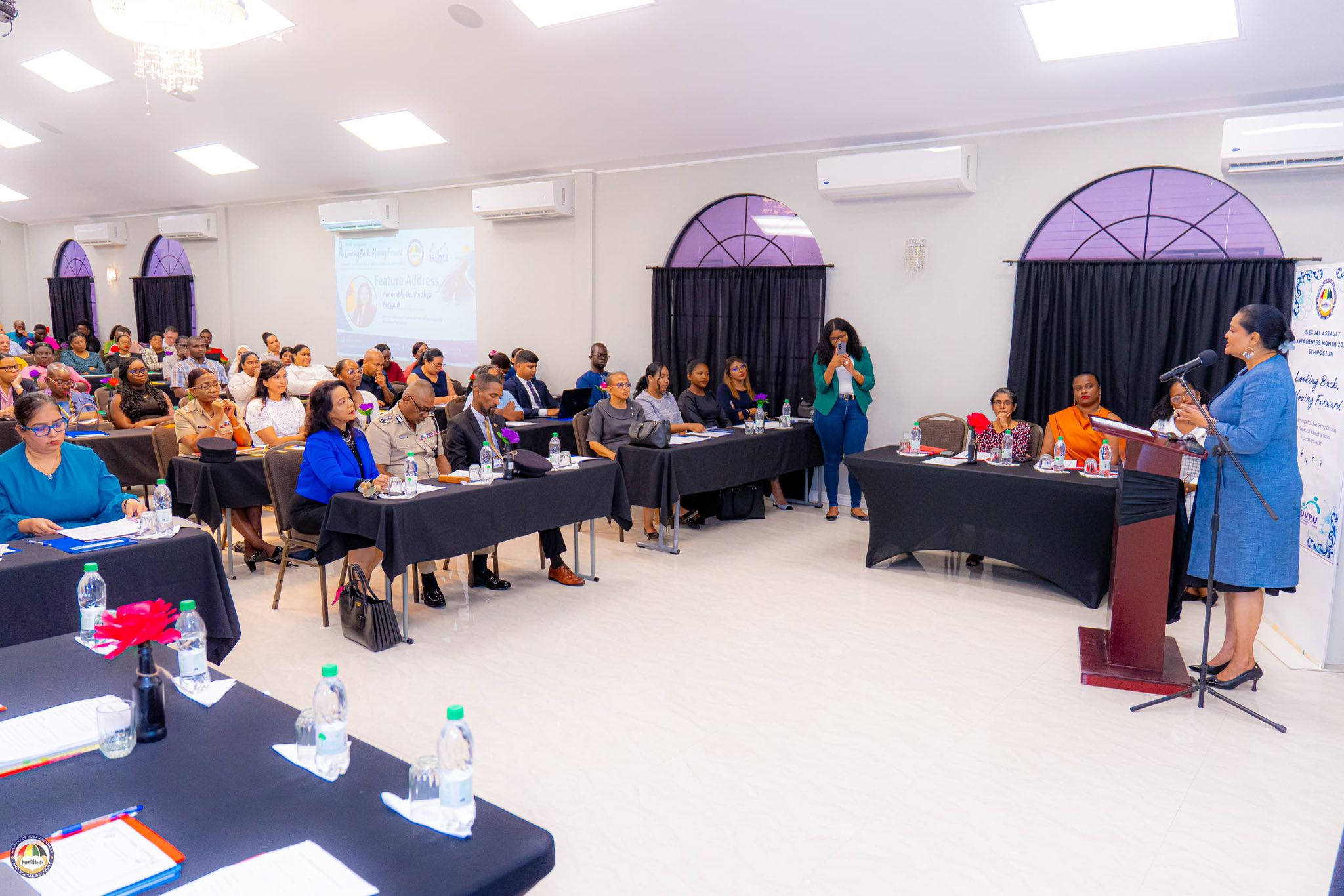
    In a presentation organised by the Commonwealth Climate Finance Access Hub (CCFAH) Pradeepa Bholanath, Guyana’s Senior Director for Climate Change and REDD+ in the Ministry of Natural Resources, set out how the country has built one of the most closely watched climate finance models in the developing world: a system that turns standing forests into revenue and channels those earnings into national development, Indigenous communities and climate resilience.

    Titled “Mobilising green finance for NDC implementation: Lessons from Guyana’s carbon market experience”, a regional knowledge exchange between Caribbean Community Climate Change Centre (CCCCC), the United Nations Development Programme (UNDP), the World Bank and the UNFCCC Regional Collaboration Centre (RCC) Caribbean, Guyana’s case matters for a reason bigger than carbon.

    What is emerging from Georgetown is not a forest-credit story but a broader political and economic argument from the Global South. Countries rich in ecosystems should not be trapped in a model where nature is only considered valuable once it’s cut down, extracted, dredged or burned. In Guyana’s story, forests are not empty land waiting for “development”. They are living national assets that store carbon, safeguard biodiversity, regulate water, support livelihoods and offer a foundation for a new kind of economy.

    That argument has force in Guyana, where about 85% of the country’s landmass is still covered by forest. Bholanath said the country’s forests span roughly 18 million hectares and that deforestation has remained below 0.1% a year, despite pressures from mining, infrastructure and agriculture. That long record of keeping forests largely intact has allowed Guyana to position itself as a high-forest, low-deforestation jurisdiction and to further insist that such stewardship should attract serious international finance.

    For many countries in the global south, that is the core lesson and Guyana isn’t presenting itself just as an exception but offering its experience as a solution.

    Guyana’s journey began in 2009, when it launched its Low Carbon Development Strategy (LCDS) under President Bharrat Jagdeo and entered a pioneering forest-climate partnership with Norway. That first phase, Bholanath explained, helped Guyana build the science, governance and monitoring systems needed to build a credible climate finance programme. The country earned about US$227 million through that arrangement and used the money to support renewable energy, sustainable land management, adaptation, resilience and community development.

    Presentation on Guyana’s Climate Finance Programme (Pradeepa Bholanauth/Ministry of Natural Resources)

    The second phase pushed Guyana into the carbon market and in December 2022, the country became the first to receive jurisdictional-scale ART-TREES credits, with 33.5 million credits issued for the 2016-2020 period.

    Since then, Bholanath said, Guyana has received annual issuances for 2021, 2022 and 2023, roughly 7 to 7.5 million credits a year. Through its agreement with Hess, now Chevron, Guyana has secured prices rising from US$15 a tonne for earlier credits to US$20 and then US$25 in later years. A marked jump from the US$5 a tonne paid under the original Norway arrangement.

    So far, she shared, Guyana has earned more than US$350m from carbon credit sales. That alone would be enough to make governments across the Caribbean pay attention. But the deeper significance of Guyana’s approach is that it treated carbon as an entry point instead of a destination.

    Again and again, Bholanath stressed the importance of aligning national systems with international rules such as monitoring, reporting, safeguards, verification and transparency. The point was partly technical, but also strategic. Countries with stretched institutions can’t afford to build one reporting system for the UN climate regime, another for donors, another for private carbon standards and yet another for future Article 6 markets. Guyana’s attempt has been to build one architecture that can serve several purposes.

    Presentation on Guyana’s Climate Finance Programme (Pradeepa Bholanauth/ Ministry of Natural Resources)

    That is why Guyana’s experience resonates globally. Other small states may not have vast forest cover, but many do have mangroves, marine ecosystems, seagrass beds, watersheds or biodiversity assets that are globally significant and locally underfunded. What Guyana is demonstrating is that the global south can try to shape these financial systems rather than waiting to be shaped by them.

    And this is where the biodiversity comes in. Asked during the discussion about what comes next, Bholanath made clear that Guyana is already looking beyond carbon. Forests, she said, are not just carbon stores. They provide biodiversity services, watershed services, ecotourism value and a wider range of ecosystem benefits that current markets are only beginning to recognise. The carbon market, in other words, may be the first financial instrument Guyana has managed to scale but it’s not the only one it wants to build.

    That shift is important because one of the main criticisms of carbon markets is that they can flatten nature into a single metric. A forest becomes valuable because of the carbon it stores, while its species richness, ecological complexity and cultural meaning are treated as secondary. Guyana’s message is that this is too narrow.

    Bholanath pointed directly to biodiversity credits, green bonds, blue bonds, debt-for-nature swaps and conservation trust funds as part of the next wave of instruments now under examination. She said Guyana is testing and collaborating the feasibility of several biodiversity financing tools with international partners and expects the findings to help inform the wider membership of the Global Biodiversity Alliance, a coalition birthed in the country’s capital that it’s using to push for finance that recognises ecosystem services beyond carbon.

    Over decades, countries rich in biodiversity have been told that conservation is a global good, while the burden of protecting ecosystems has remained largely national and often deeply unequal. The rainforest stays standing, the mangroves border the coast, the rivers stay clean and yet the countries doing that work are still expected to borrow, depend on aid or accept underpriced climate payments.

    Guyana is effectively saying that this model no longer holds whilst offering a proven solution. Its carbon market programme is built on a larger political philosophy that sovereignty matters and countries should decide how their natural capital is used. Climate finance should be linked directly to development priorities and local communities must be treated as a priority.

    Bholanath stressed that stakeholder engagement has been central from the beginning, and that independent verification has been essential to maintaining credibility.

    She highlighted that at least 15% of annual carbon credit revenues are directed to Indigenous Peoples and local communities. In 2023, 2024 and 2025, about US$22.5m each year was transferred to around 242 Indigenous villages, financing roughly 3,000 projects centred on food security, livelihoods and local development priorities chosen by the villages themselves.

    That detail is critical. In theory, market-based conservation can sound aspirational but in practice, who really benefits? Guyana’s effort to channel revenue back into Indigenous villages is part of what gives its model political legitimacy at home and relevance abroad. It suggests a framework in which communities are not custodians for somebody else’s climate targets, but participants in a development strategy shaped around biodiversity and self-determination.

    There are, of course, unresolved questions. Guyana still needs to deepen its institutional capacity, especially as it prepares for the more complex compliance markets emerging under Article 6 of the Paris Agreement. Bholanath acknowledged that the country is considering a national registry and that existing institutions will need to expand.

    And there is no guarantee that what has worked for Guyana will transfer neatly elsewhere. Many factors like geography and politics – globally and locally influence outcomes. In addition, Guyana spent more than a decade building systems before reaping market awards.

    However, in a world where climate finance remains woefully inadequate, Guyana has managed to turn natural capital into real revenue, translating the science and theory into concrete action and capital and is now trying to widen that logic to biodiversity itself. Bholanath also shared that when Guyana was building it’s carbon market capacity, it was in a time before many instruments existed so other countries may not take as long.

    For SIDS and other countries of the Global South, that may be the most important lesson of all. The future of climate and development finance can’t rest only on the carbon content of forests or the goodwill of donors. It will have to reckon with the full value of living ecosystems, their biodiversity, watersheds, coastlines, and role in food security and cultural survival. Guyana again has moved early into that space.

    In doing so, Guyana has become a model of whether the Global South and the wider world can build a system in which protecting nature is not a cost to bare, but a source of finance and power.

    The post Guyana’s carbon market experience is showing the Global South how nature can fund the future appeared first on News Room Guyana.
  • Scotiabank named the Caribbean’s and Guyana’s Best Bank 2026 by Global Finance

    Scotiabank named the Caribbean’s and Guyana’s Best Bank 2026 by Global Finance

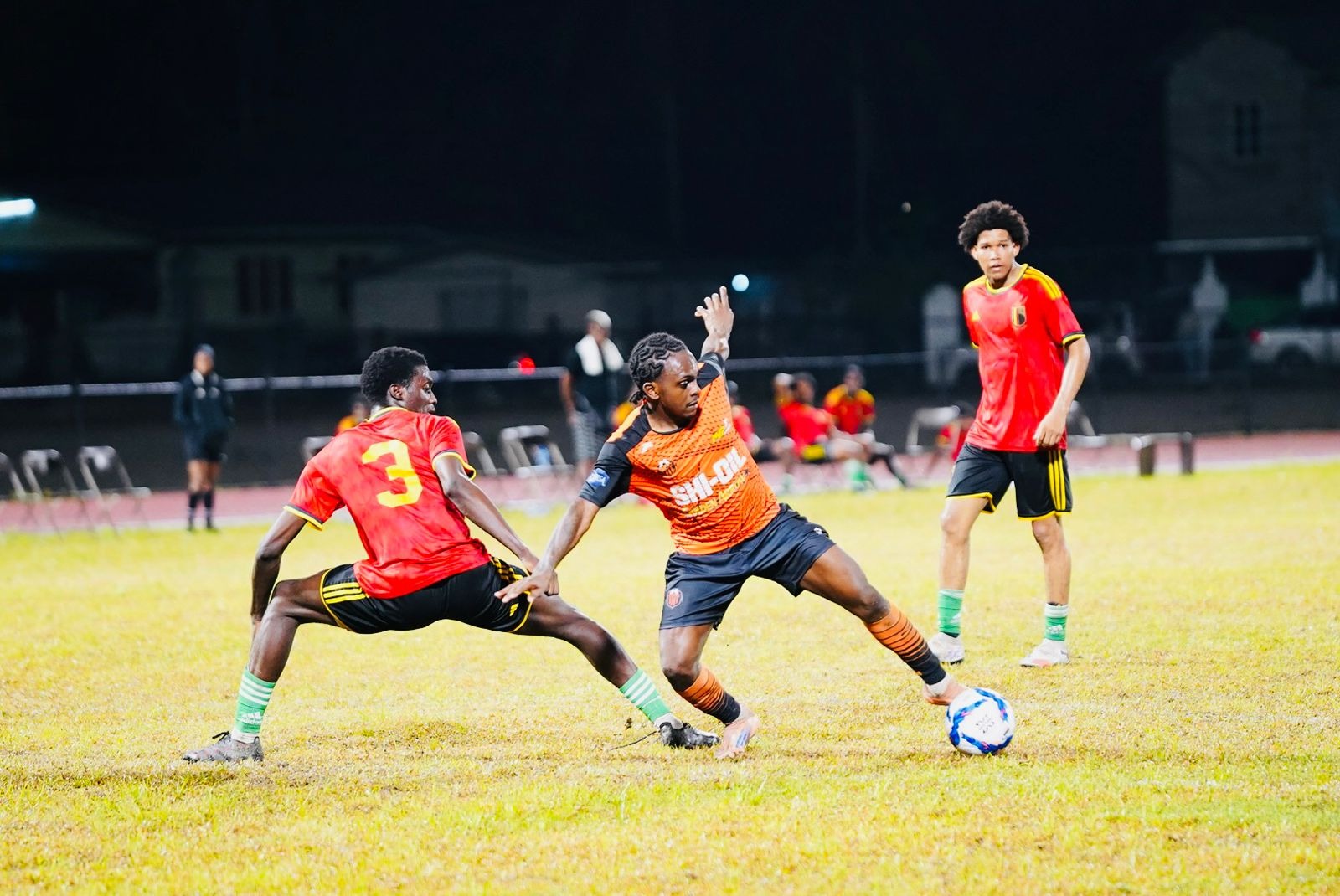
    Scotiabank Guyana has been named Best Bank in Guyana for 2026 by Global Finance, one of the world’s most respected financial publications, as part of its 33rd Annual Best Bank Awards. In addition, Scotiabank was also recognised as Best Bank in the Caribbean, underscoring the strength of its regional performance and leadership.

    The awards celebrate banks that consistently demonstrate excellence in financial performance, innovation, customer service and strategic execution across highly competitive markets. Joseph D. Giarraputo, Publisher and Editorial Director of Global Finance commented “The Best Bank Awards 2026 honor the institutions that best manage their assets and liabilities while investing in digital innovation and AI to meet the changing needs of their clients.”

    Nafeeza Gaffoor, Country Manager, Scotiabank Guyana

    Commenting on the achievement, Nafeeza Gaffoor, Country Manager, Scotiabank Guyana, said “In a fast‑changing and expanding economy like Guyana’s, trust, stability and adaptability matter. This award reinforces our commitment to building a bank that is responsive to the needs of our clients. By listening to clients changing needs, we are delivering secure, reliable and modern banking solutions. We thank our clients for their continued trust and partnership and our dedicated employees for their commitment to helping individuals and businesses succeed.”

    Scotiabank Guyana’s recognition was supported by several key achievements, including:

    • Strong balance‑sheet growth, with total assets increasing by 37% in 2025, driven by continued deposit growth and expansion across key sectors of the economy. Resilient profitability, with Return on Equity improving from 16.8% in 2023 to 20.0% in 2025, supported by revenue growth, margin expansion and disciplined expense management.
    • Continued investment in digital banking capabilities, including enhancements to the Scotia Caribbean App and Scotia Online, offering features such as biometric sign‑in, digital onboarding, account personalisation and debit‑card lock and unlock functionality.
    • Expansion of self‑service and automation, including deployment of Intelligent Deposit Machines (IDMs) and alternative service channels, improving convenience, transparency and operational efficiency.
    • Meaningful social impact initiatives, particularly in youth development, education, green entrepreneurship and financial literacy, delivered in partnership with local organisations across Guyana.

    Scotiabank was also recognized as the Best Bank 2026 in Bahamas, Barbados and Turks & Caicos (Scotiabank press release) 


    The post Scotiabank named the Caribbean’s and Guyana’s Best Bank 2026 by Global Finance appeared first on News Room Guyana.

Televizyon Lakay
Televizyon Lakay
Jwe Jwèt Gratis!
Quiz, Solitaire ak Mo Kaché
Jwèt Ayiti & Karayib — 100% gratis!
Jwe Kounya — 100% Gratis →
English · Français · Kreyòl