See below the full release from the Guyana Police Force:
The Guyana Police Force (GPF) wishes to inform the public that following comprehensive investigations into the explosion which occurred at the Mobil Gas Station on October 26, 2025 at Regent and King Streets, Georgetown, legal advice was obtained from the Director of Public Prosecutions (DPP) to institute charges against several individuals.
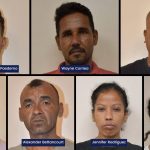
As a result of the evidence gathered, the following individuals were charged:
1. Wayne Corriea, 44 years, Guyanese
2. Ramesh Pramdeo, 51 years, Guyanese
3. Krystal LaCruz, 33 years, Guyanese
4. Daniel Alexander Ramirez Poedemo, 33 years, Venezuelan
5. Jennifer Rodriguez, 33 years, Venezuelan
6. Johnny Boodram, 27 years, Venezuelan
7. Alexander Bettancourt, 44 years, Venezuelan
They have each been charged with the 𝐎𝐟𝐟𝐞𝐧𝐜𝐞 𝐨𝐟 𝐓𝐞𝐫𝐫𝐨𝐫𝐢𝐬𝐦, 𝐂𝐨𝐧𝐭𝐫𝐚𝐫𝐲 𝐭𝐨 𝐒𝐞𝐜𝐭𝐢𝐨𝐧 𝟑(𝟏)(𝐚) 𝐨𝐟 𝐭𝐡𝐞 𝐂𝐫𝐢𝐦𝐢𝐧𝐚𝐥 𝐋𝐚𝐰 (𝐎𝐟𝐟𝐞𝐧𝐜𝐞𝐬) 𝐀𝐜𝐭, 𝐂𝐡𝐚𝐩𝐭𝐞𝐫 𝟖:𝟎𝟏 and is to appear at the 𝐆𝐞𝐨𝐫𝐠𝐞𝐭𝐨𝐰𝐧 𝐌𝐚𝐠𝐢𝐬𝐭𝐫𝐚𝐭𝐞𝐬’ 𝐂𝐨𝐮𝐫𝐭 at 09:00 hrs 𝐭𝐨𝐦𝐨𝐫𝐫𝐨𝐰 𝐖𝐞𝐝𝐧𝐞𝐬𝐝𝐚𝐲 𝐍𝐨𝐯𝐞𝐦𝐛𝐞𝐫 𝟓, 𝟐𝟎𝟐𝟓 to answer to the said charge.
The Guyana Police Force assures the public that the investigation was conducted with professionalism, integrity and strict adherence to due process. The Force remains committed to upholding the rule of law, protecting citizens and ensuring peace and public safety across the nation while expressing gratitude to the public and partner agencies for their continued cooperation and support in this matter.
A major citywide drainage upgrade programme is being advanced by the government, and President Dr Irfaan Ali announced that robust consultations with citizens will be held starting Monday.
The multi-agency team, the President said, will lead consultations for about three weeks. The goal is to share the government’s plans for majorly improving Georgetown’s drainage network and hear suggestions or concerns from citizens.
President Ali said the programme will first involve clearing, cleaning, and levelling all parapets. Once the drainage network is upgraded, the President said other matters like parking and the city’s beautification will be dealt with too.
“This will lead to enormous improvement in your property price and of course, the value of the city itself,” President Ali said.
This drainage upgrade is part of a wider Georgetown revitalisation programme. The President said previously that the revitalisation of Georgetown is not optional but an essential part of Guyana’s broader development agenda, aimed at creating a cleaner, greener, and more liveable capital for all citizens.
For Isaiah and Thilia Somerset, a young couple with dreams of acquiring a university degree, the journey to academic glory was filled with challenges and obstacles. They faced health issues, financial difficulties, and, on top of this, had to deal with all the challenges that come with an expanding family. But they were determined to overcome every hurdle and finish the journey they started almost four years ago.
Isaiah will graduate with a degree in Biology from the Faculty of Natural Sciences, while Thilia will graduate with a Bachelor’s Degree in Education (Early Childhood Education) from the faculty of Education and Humanities when the University of Guyana hosts its series of Convocation exercises from November 20 to December 6.
Isaiah, who grew up in Linden and now lives in Lodge with his wife and children, always dreamed of becoming a doctor. “I always wanted to become a doctor from a young age. I am a people person and I love to help. I think being a doctor would allow me to help people”. That dream almost died when he first came to Georgetown to study Chemistry at UG and struggled. “My grades were not good. I took a complete withdrawal from the programme and decided I was not going to study again. My dad has a gold business and I was already prepared to take up that mantle.”
But marriage brought a turning point. “After I got married, my wife encouraged me to study again,” Isaiah said. He switched to the BSc Biology programme, but life tested him immediately. “I had struggles at work and I was working taxi so I did not really take it [studies] seriously at first. Added to that, when we had a baby in my first year and another in my final year.”
Isaiah and Thilia Somerset with their children
When face-to-face classes resumed, something shifted. “Ms. Ruth Daniels spoke to us about what it means to have a bachelor’s degree. The way she spoke made me realise how serious this is. I decided to get more serious. She really made this degree sound like it mattered,” Isaiah said.
For Thilia, a teacher at St. Gabriel’s Primary, motherhood, work, and school collided in painful ways. “It was chaotic. During my pregnancy I would have nightmares. It got overwhelming because it was a lot. At one point I had to step away from work because I couldn’t manage; I was on one month’s sick leave. I was being pressured at work,” Thilia shared.
Then came heartbreak. “My last pregnancy was a twin and we only got one baby, and I believe it was the pressure I was under that affected the other baby,” Thilia shared. She never lost sight
of her why. “I kept going because I wanted to be someone respectable in society, and I was doing this for my children and my husband,” she said with much pride.
Their challenges intensified. Illness struck. “After the second year, I went to the interior for two months and came out with malaria,” Isaiah recalled. “When I was writing exams in third year the symptoms started manifesting. I was allergic to one of the medications and was in class scratching all the time.”
Thilia added, “At one point we were sharing a container, throwing up at the same time. We were both sick, studying with a new baby.” There were days they sat in hospital beds together, missing classes. There were nights they studied with fevers, days they attended lectures while exhausted, and moments when the demands felt unbearable.
But the young couple moved as one unit. They sacrificed for each other. “We would usually share one computer. One time we took the same elective and had an exam the same day, same time. He allowed me to do my exam first, even when only a little time was left. He sacrificed his grade for me. Thankfully he was allowed to redo his exam another day.”
“One time I had a Berbice job with my taxi work, and I did not want to miss my presentation. I pulled over with the customer in the car, did my presentation, then continued to Berbice. Thank God my customer was understanding,” Isiah recalled.
When asked what advice they would give to other couples sharing the same journey, Thilia said: “Put God first and everything will fall into place. The devil tempted us a lot. We even went through marriage counselling. We experienced financial difficulties. Some days we didn’t know how we would make it, but we did. God is so good.”
“Support each other, love each other even when things look hard. Sometimes it might look like there is no hope, but there is. Be your partner’s motivation,” Isiah encouraged.
Family became their earthly anchor. “My mother-in-law is the biggest supporter,” Isaiah said. Thilia also noted: “My father Mark Fraser and my brother Takyle Fraser too. They were part of our world, in everything that we have been through.”
They also added that Lecturers and classmates also stepped in along the way to give support in various forms. For Isiah and Thilia, this convocation represents far more than degrees. It represents answered prayers, restored hope, and a testimony forged through trials. “People see our pictures and judge us based on what they see, but they don’t know what we went through,” Thilia said.
Isaiah agreed saying: “I was not planning to come back, but after I got married, my wife motivated me. After writing my final exam, I could not believe I was done. I could jump for joy. My wife is my biggest cheerleader.”
Ahead lies more growth, more ambition, and more purpose. “I don’t want to stop here; I want to do my PhD”, Thilia said.
Isaiah is prayerfully waiting on direction. “I am between two worlds. I am thinking about business, and I am also thinking about being a dentist,” he said.
The University of Guyana has produced upwards of 70,000 graduates in its 62-year existence – many of whom have gone on to serve at the highest levels in both the private and public sectors nationally and internationally. (Feature by the Department of Events of Events, Conferences and Communication (DECC), Office of the Vice-Chancellor, University of Guyana)
When U.S.-based Guyanese businessman Navin Shivpal first took over Cottage Home Care Services in a small Queens office just before the pandemic, he could hardly have imagined that five years later it would become one of New York’s largest and fastest-growing home care agencies.
Now employing over 3,000 caregivers and serving thousands of families across the state, Cottage Home Care has opened a new branch on Flatbush Avenue in Brooklyn. The new office is not just a business expansion; it’s being hailed as a cultural and care hub for the borough’s diverse Caribbean community.
“This isn’t just about business,” Shivpal said during the ribbon-cutting ceremony.
“It’s about helping humanity. We’re expanding across states not to make a profit, but to give people opportunity, training and stability.”
U.S.-based Guyanese businessman Navin Shivpal
Shivpal’s rise from humble beginnings to leading one of New York’s top home care agencies is a true Guyanese success story. Born and raised in Guyana, he migrated to New York in 1995 at the age of 13 in search of a better life. By 18, he had ventured into the restaurant business with his brother in Florida, running two seafood eateries under the name High Tide.
But after the 2008 economic downturn shuttered that dream, he turned to healthcare — an industry that would become his true calling. In 2020, just before the COVID-19 lockdown, he took over an almost bankrupt post-hospitalisation facility in Queens that had only 25 patients. Today, it stands as one of New York’s largest home care networks.
Of the thousands employed, hundreds are Guyanese women, many of whom Shivpal personally helped train and certify through his vocational institutions, including the Brooklyn Institute of Vocational Training and the Care Guide Training Institute in Brooklyn.
At the Brooklyn opening, the atmosphere was charged with pride and community spirit. Locals, health leaders and members of the Caribbean diaspora gathered to celebrate a business that reflects their values.
Council Member Rita Joseph, herself of Haitian descent, spoke emotionally about caring for her elderly mother.
Claire Patterson-Monah, Interim Executive Director of the Guyana Cultural Association of New York, said the model of care practised by Cottage goes far beyond routine service. “When caregivers know their clients’ favourite foods, music, and traditions — from roti to reggae — it transforms the experience,” she said.
Deputy Brooklyn Borough President Kim Council called Cottage’s mission “the intersection of culture, compassion, and community,” while State Senator Kevin Parker praised the company’s investment in the community.
While his achievements in the U.S. continue to grow, Shivpal’s heart remains firmly tied to his Guyanese roots.
He hopes to replicate his success back home by establishing a senior centre, nursing home and dialysis facility in Guyana.
Police Corporal Yonelle Almarie Cumberbatch of Eastville Housing Scheme, East Coast Demerara (ECD), was on Tuesday granted $500,000 bail after she was charged with causing the death of 15-year-old Navindra Mahes by dangerous driving.
The accident occurred on October 30 along the Success Public Road, ECD.
Cumberbatch appeared before Magistrate Abigail Gibbs at the Sparendaam Magistrates’ Court 2, where the charge was read to her. She was not required to plead.
The charge was brought under Section 35(1) of the Motor Vehicle and Road Traffic Act, Chapter 51:02.
The matter was adjourned to January 6, 2026, for disclosure of statements.
Reports indicate that the accident occurred at around 07:30 hrs, while the “third lane” system was in operation. The system was discontinued following the accident.
CCTV footage captured the moment Mahes, who was standing on the median separating the two carriageways, attempted to cross the road using the pedestrian crossing. As he stepped forward, he was struck by a vehicle driven by the accused.
The impact flung the teenager several feet into the air before he landed on the roadway, suffering severe head injuries and a fractured right leg.
Public-spirited citizens rushed Mahes to the Georgetown Public Hospital, where doctors made efforts to save his life, but he later succumbed to his injuries.
A post-mortem examination later revealed that Mahes died as a result of multiple injuries resulting from a vehicular accident.
Ryan Boodhoo, the new owner of the iconic black KTM X-Bow, has declared himself happy with his return to competitive motor racing after a 20-year hiatus at the South Dakota Circuit.
The comeback represents a significant step up for Boodhoo, who last competed two decades ago in the Starlet Cup and established a strong pedigree as a standout rookie driver.
However, as is often the case, life intervened. A profound focus on his family and business shifted Boodhoo’s priorities away from the competitive motorsport arena.
Following constant enquiries from fans and fellow enthusiasts about his return, Boodhoo finally relented and has competed in the last two race meets, immediately finding success.
In his first event, Boodhoo secured a first and third-place finish.
Last Sunday, the Group Four competitor built on that momentum by claiming two solid second-place finishes.
Boodhoo noted that the experience has been “amazing” since acquiring the X-Bow at the start of 2025 from its previous owner, Vishok Persaud, who set the current Group Four (2WD) lap record of 1:16.691s in 2023.
“The car is quite efficient,” Boodhoo highlighted, expressing optimism about his future performance. “I hope that in 2026 I can lower my lap times to one minute and 17 seconds.”
The KTM X-Bow is renowned for its minimalist, track-focused design and formidable performance, making it a powerful contender in the Group Four category.
Three hundred officers in the Guyana Police Force are undergoing special training in public engagement to strengthen the quality of visitors’ experience in Guyana.
The six-part training session is made possible through a partnership between the Guyana Tourism Authority (GTA) and HAROBED at the GPF Officers’ Training Centre, Camp Street in Georgetown.
The initiative aims to build stronger connections between law enforcement and the tourism sector.
It focuses on enhancing the officer’s capacity in key areas, including visitor engagement, customer service, cultural sensitivity, destination awareness, and professional conduct.
Minister of Tourism, Industry and Commerce Susan Rodrigues underscored the police force’s role as the front-line ambassadors for Guyana.
She emphasised the importance of stakeholders’ collaboration in the success of the tourism experience.
Minister Rodrigues highlighted the importance of establishing the Hospitality and Tourism Institute in the near future, stating it is vital to ensuring a positive visitor experience in Guyana.
“When a visitor asks for directions, interacts with a police officer or seeks help, they are not just encountering individuals. They are experiencing Guyana. That is the essence of the training you will receive”, she noted.
Police Constable Marvin Rajkumar expressed gratitude for the opportunity to participate in the training.
“It’s very much beneficial for us officers to be exposed to the public domain now. And knowing that Guyana is having a booming economy when it comes to tourism, the training will also assist in this regard by helping us know the right things to say and the right way to approach persons.” (Republished from DPI)
Two persons have died in a Monday night accident at the intersection of Proctor Road and Kara Kara Public Road, Linden, Region 10.
Dead are Latrel Whinfield, 19, and Isaiah Richards, a student whose name and address are not yet known. Whinfield and Richards were riding on a motorcycle at the time of the accident.
Police Headquarters, in a statement, reported that motorcycle #CP 6912 was proceeding east along the Kara Kara Public Road at a fast rate when it collided with the right side of motor Car #PAE 7246. The car, Police said, was turning north onto Proctor Road.
The impact caused both the rider (Whinfield) and pillion rider (Richards) to be thrown onto the roadway, resulting in severe injuries. Both persons were picked up in an unconscious state and taken to the Linden Hospital Complex, where they were pronounced dead. Their bodies were later escorted to a funeral home for storage, pending post-mortem examinations.
Meanwhile, Police also reported that both vehicles were lodged at the Mackenzie Police Station for examination. CCTV footage from the area will be reviewed to assist the investigation, while the driver of the motor car remains in Police custody as investigations continue.
Guyana received US$1.05 billion as revenue from its share of profit oil in the first six months of 2025 and another US$1.7 billion in royalties during that period, according to the Ministry of Finance’s mid-year report.
The revenue earned included payments for two lifts of oil that occurred in the final quarter of 2024 and 13 of the 15 lifts in the first half of the year.
According to Guyana’s 2016 oil contract, up to 75% of the costs (or money invested) can be recovered as the oil produced is sold. The remaining 25% of revenues is split between the companies (ExxonMobil, Hess, and CNOOC) and the government; the government gets half of the revenues, and the three companies share the other half among themselves.
The government also gets an additional two per cent in royalties from total revenues.
The US$1.7 billion in royalties received in the first half of the year was for crude oil production and sales in the final quarter of 2024 and the first quarter of 2025.
After withdrawals of US$1.2 billion, the cumulative balance in Guyana’s Natural Resources Fund, inclusive of an interest income of US$68.9 million, at the end of June, was US$3.19 billion.
While presenting the Notifications of Receipts to the National Assembly of all petroleum revenues paid into the NRF during the period April 1, 2025 to June 30, 2025, and July 1, 2025, to September 30, 2025, Finance Minister Dr. Ashni Singh said the NRF balance at the end of September 2025 amounted to US$3.6 billion.
The PPP/C Government remains committed in maintaining its established track record of transparent and prudent public debt management, supporting strong debt sustainability fundamentals even as there is an expansion in investments in public infrastructure, social services, and other initiatives aimed at improving the standard of living for all Guyanese. The Government is committed to harnessing Guyana’s debt-carrying capacity to finance its transformative development agenda.
Under the leadership of President Irfaan Ali, Government continues to move aggressively ahead with its agenda to transform and develop the country. In this vein, Senior Minister in the Office of the President with Responsibility for Finance Dr. Ashni Singh today presented a number of loan agreements to the National Assembly.
Guyana’s debt position has undergone a remarkable transformation over the past three decades, shifting from a heavily indebted nation to one with a strong and sustainable fiscal outlook. Public and Publicly Guaranteed (PPG) debt-to-GDP ratio has decreased from over 600 percent in 1991 to 24.3 percent at the end of 2024. Furthermore, the burden of debt service as a percentage of Government revenues has also declined sharply. It has plummeted from an unsustainable 90 percent to a manageable 5 percent. Recently, the International Monetary Fund, in its 2025 Article IV Report, assessed Guyana as being at low risk of debt distress and with low vulnerability to large shocks, underscoring the success of the PPP/C Government’s unwavering commitment to fiscal discipline and strategic economic planning.
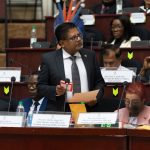
Finance Minister Dr Ashni Singh
The loan agreements table today in the National Assembly will support agricultural and infrastructural development, human services , policy and institutional reforms in biodiversity conservation, climate action, water resource management, and affordable and reliable energy.
Agricultural and Infrastructural Development Programme
In June 2025, the Government of Guyana (GoG) and the CARICOM Development Fund (CDF) signed a US$15 million loan agreement for the Agricultural and Infrastructural Development Programme (AIDP).
This administration understands that agriculture is one of the most important sectors of Guyana’ economy. The objective of this project is to contribute to the development of Guyana’s agricultural sector but specifically to target increased production and value added in selected commodities to satisfy the national and regional food security drive towards socio-economic growth and development. As such Guyana’s ability to produce safe value-added products (crops and livestock) for internal and export use will improve significantly, thereby boosting the growth trajectory of the local economy consistent with the National Strategy for Agriculture (2020-2030).
This program has two main components:
Compliance with Food Safety, Sanitary, and Phytosanitary Standards: This includes constructing and equipping one abattoir (primarily for swine), building/renovating eight outposts (including a natural enemies’ multiplication unit), equipping these outposts, and installing surveillance at key entry ports. It also involves constructing/upgrading thirteen processing facilities, procuring equipment, and providing technical assistance for honey, coconut waste by-product, peanut, coffee, and cocoa value chains. Training will be provided to over 4,000 farmers and producers’ associations, and 250 technical/extension staff in the Ministry of Agriculture (MOA), including the executing agency- The Agriculture Sector Development Unit (ASDU).
Strengthening ASDU’s Institutional Capacity: This component focuses on enhancing the ASDU’s ability to manage and coordinate the program, including hiring specialized staff, preparing designs and tender documents, and conducting training in procurement, monitoring, evaluation, and financial management.
Programme for the Support to Human Services in Guyana II
The Programme for the Support to Human Services in Guyana II is a programmatic policy-based loan from the Inter-American Development Bank (IDB), signed in June 2025, for US$350 million. This loan is the second in a two-part series intended to strengthen the protection of vulnerable populations through the Ministry of Human Services and Social Security (MHSSS).
The program’s main objective is to improve the MHSSS’s efficiency and promote gender empowerment. It also builds upon the reforms and progress achieved in the first phase of the loan program.
Key programme components
Digital transformation of the social safety net: The program will streamline and digitize the MHSSS’s processes, such as implementing the Beneficiary Registry and Document Management System (BRDMS), to reduce transaction costs and improve service delivery.
Strengthening the Senior Citizen’s Pension program: This includes the expansion of the electronic payment system for senior citizens.
Empowerment of persons with disabilities: The program aims to strengthen the Public Assistance program and enhance the activities of the “Learning Lab,” which provides job skills and life management techniques to people with disabilities.
Gender empowerment: This involves services for victims of gender-based violence (GBV), economic empowerment of women (through initiatives like the Women’s Innovation and Investment Network), and support for victims of human trafficking.
Programme to support the strengthening of Guyana’s policy and institutional reforms in biodiversity conservation, climate action, and water resource management.
The Caribbean Development Bank (CDB) is providing its support for Guyana’s policy and institutional reforms programme to strengthen resilience to climate and disaster risks and impacts, enhance institutional, technical, and financial capacities to protect biodiversity resources, adapt to climate change impacts, and address water-related challenges. This support is given through an Environmental Sector Policy-Based Loan (PBL) signed in June 2025, for an amount of US$125 million.
This Environmental PBL series supports GoG in strengthening its environmental risk management, climate resilience, and biodiversity conservation capacity. GoG has established a robust legal framework and is now moving from policy formulation to implementation, by mobilizing the resources needed. The PBL proceeds will provide budgetary support, reinforcing the government’s ability to implement priority actions and ensure the long-term integrity of Guyana’s ecosystems.
The operation also supports inclusive development by protecting the rights and livelihoods of indigenous peoples and forest-dependent communities, aligning with Guyana’s LCDS 2030. In addition to policy and institutional reforms, the PBL resources will safeguard Guyana’s macro-fiscal stability by providing affordable financing. This is crucial for managing oil revenue volatility and scaling up climate investments while transitioning to a sustainable, low-carbon economy.
Guyana’s Gas-to-Energy Project
The Export – Import Bank of the United States has provided a loan to Guyana for an amount of US$527 million to finance the country’s Gas-to-Energy Project.
Guyana’s gas-to-energy project is one of the most transformative initiative, this government has undertaken leveraging offshore natural gas to provide reliable, affordable, and cleaner domestic power, fostering economic growth and new industries. This project promises multifaceted economic benefits, including reduced reliance on imported fossil fuels, lower electricity costs, increased competitiveness, foreign investment, and economic diversification. It will create numerous jobs in engineering, construction, and operations, alongside significant investment in local training and capacity building.
Environmentally, the project will significantly reduce carbon footprint by transitioning from heavy fuel oil to cleaner-burning natural gas, aligning with Guyana’s sustainable development goals. Ultimately, it aims to enhance citizens’ quality of life through reliable electricity, supporting education, healthcare, and overall social and economic improvement. This strategic investment promises broad prosperity, a secure energy future, and improved living standards for Guyana.
Strengthening Human Capital through Education Project
On July 1, 2025, Guyana received a loan from the International Development Association (IDA) for an amount of SDR1,690,000. The purpose of this loan is to provide additional financing for the Guyana Strengthening Human Capital through Education Project.
The additional financing is intended to facilitate the continuation and successful completion of the Project’s current activities. It also aims to align the Project’s component which focuses on enhancing service delivery to support student retention and learning at the secondary level, with the Ministry of Education’s updated priorities, specifically teacher training and coaching, and digital education.
The PPP/C Government remains committed to implementing its accelerated development agenda and fulfilling our promise of a brighter and better future for all Guyanese, while maintaining a track record of transparent and prudent debt management. [Ministry of Finance Press Release]


 100vw, 640px”><figcaption class=) Isaiah and Thilia Somerset with their children
Isaiah and Thilia Somerset with their children
 100vw, 503px”><figcaption class=) U.S.-based Guyanese businessman Navin Shivpal
U.S.-based Guyanese businessman Navin Shivpal



 100vw, 640px”><figcaption class=) Finance Minister Dr Ashni Singh
Finance Minister Dr Ashni Singh