
Alexander Bedward was one of the most influential Black religious and social leaders in Jamaica during the late 19th and early 20th centuries. A preacher, healer and leader of the Jamaica Native Baptist Free Church, Bedward built a large following from his base in August Town and spoke openly about the treatment of Black Jamaicans under colonial rule.
His story will soon reach a wider audience through Bedward, The Musical, written by Louis Marriott. The production explores Bedward’s life, ministry and movement and will be presented in South Florida in September 2026.
Who Was Alexander Bedward?
Born in St. Andrew in 1848, Bedward became a prominent figure in Jamaica’s Revival movement. He eventually led the Jamaica Native Baptist Free Church, which had been established by Harrison “Shakespeare” Woods, an African American who had emigrated to Jamaica.
Bedward’s ministry was based near the Hope River in August Town. His services attracted large crowds, and his reputation as a preacher and healer helped his movement grow across Jamaica.
At its height, Bedward’s movement is reported to have had about 30,000 followers. His influence also reached Jamaicans and other people in places including Panama, Cuba and Costa Rica.
His message went beyond religion. Bedward encouraged his followers to become self sufficient and spoke against the conditions facing Black Jamaicans. He also identified with Paul Bogle, the Baptist leader who was executed following the Morant Bay Rebellion of 1865.
A Leader Who Challenged the Colonial System
Bedward lived during a period when Jamaica was still under British colonial rule and social inequality remained a major issue for the country’s Black population.
He became increasingly critical of the colonial authorities and other institutions that he believed worked against Black Jamaicans. His growing following made him a figure of concern to the establishment.
In 1895, Bedward was arrested for sedition. He was later confined to a mental asylum before being released and returning to his ministry.
His conflict with the authorities continued. In 1921, Bedward and hundreds of his followers marched toward Kingston. The group was arrested, and Bedward was again sent to a mental institution. He remained there until his death in 1930.
Bedward’s Connection to Marcus Garvey
Bedward’s story is also connected to the development of Black political consciousness in Jamaica.
Marcus Garvey emerged as a major leader in the years after Bedward’s movement had established a large following. Many former Bedward followers later became supporters of Garvey and his Universal Negro Improvement Association.
Bedward is therefore often discussed as one of the figures who helped shape the environment in which Garveyism developed.
His emphasis on Black self reliance, racial pride and resistance to colonial authority formed part of a wider history of movements that sought greater dignity and independence for people of African descent in Jamaica.
The Story Behind the Stories
Few Jamaican historical figures have attracted as many different stories about their lives as Bedward.
One of the best known is the story that he attempted to fly. Accounts of the incident have appeared in Jamaican writing and popular discussions for decades, but the details vary considerably.
The flying story has also come to overshadow other parts of Bedward’s life, including his religious ministry, his large following and his challenge to the colonial establishment.
That makes the telling of Bedward’s story important. His place in Jamaican history cannot be understood only through one dramatic story associated with the final years of his public life.
His movement was part of a much larger period of change in Jamaica, when Black Jamaicans were creating their own religious institutions and finding new ways to organize around questions of identity, independence and economic survival.
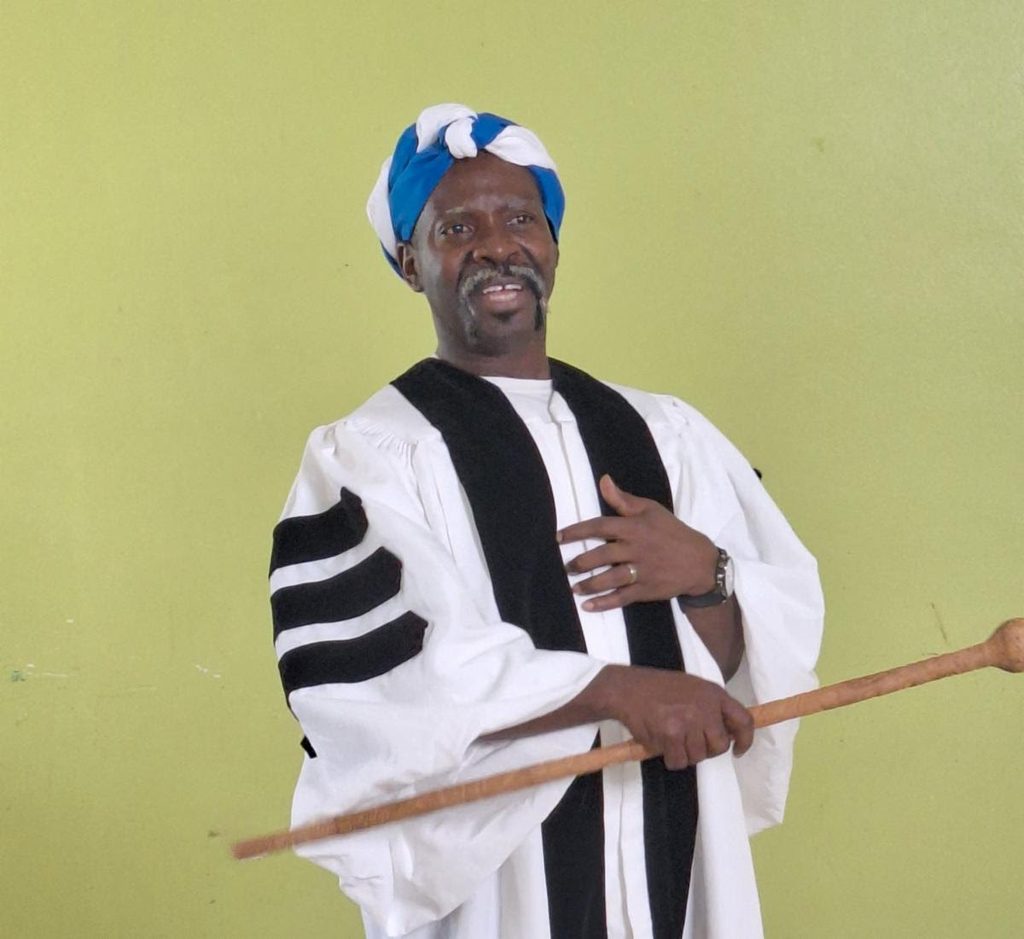
Bringing Bedward’s Story to the Stage
Louis Marriott’s Bedward, The Musical offers another way to tell this history.
Directed by Michael Forrest, the production follows Bedward’s life and ministry through music, drama and dance. The production features traditional gospel hymns and Jamaican folk music, with musical direction by Dr. Floyd Antonio and choreography by Yvonne Jones-Goodridge.
The cast includes Ricky Rowe as Bedward, along with Jerome Russell, Malachi Smith, Rev. Horace Ward, Dr. Allan Cunningham, The Jamaican Folk Revue, Phillip Cross, Neville Williams, Nadine Brady-Taylor and Lena Lawrence.
The production also includes arrangements by the late Noel Dexter.
For Jamaicans in the diaspora, the story offers a chance to look back at a figure who played a role in the development of Jamaica’s religious and social history. It also provides an opportunity for younger generations to learn about Bedward beyond the stories that have become familiar through popular culture.
Bedward’s Place in Jamaican History
Alexander Bedward died in 1930, but his name remained part of Jamaica’s cultural memory. His movement, his followers and his public clashes with the colonial authorities form part of the history that preceded the rise of Marcus Garvey and later movements for Black identity and self determination.
More than a century after Bedward’s movement reached its peak, his story continues to raise questions about religion, race, leadership and the treatment of Black Jamaicans during the colonial period.
Bedward, The Musical brings that history to the stage and gives audiences, including those in the Jamaican diaspora, an opportunity to consider the man behind the name.
See Bedward, The Musical in South Florida
Bedward, The Musical will be presented at the Lauderhill Performing Arts Center on Saturday, September 19 and Sunday, September 20, 2026.
The Louise Bennett-Coverley Heritage Council is currently producing the musical with assistance from Tallawah Cultural Productions. The musical is presented by the Louise Bennett-Coverley Heritage Council.
“Bedward, The Musical is more than a stage production,” said Dona Lee Raymond, President of the Louise Bennett-Coverley Heritage Council. “It is an opportunity to explore an important chapter of Jamaican history through music, drama, and storytelling. The themes of faith, justice, resilience, and the struggle for dignity remain as relevant today as they were more than a century.”
The Louise Bennett-Coverley Heritage Council, a Florida nonprofit organization, was founded in February 2007 as the Louise Bennett-Coverley Reading Festival. In 2015, it was incorporated under its current name with a mission to educate and entertain through culturally rich programs.
The Council works to promote Jamaica’s cultural heritage around the world through educational and entertaining programs connected to the work and legacy of Louise Bennett-Coverley, Jamaica’s internationally recognized folklorist and cultural icon known affectionately as Miss Lou.
Its annual programs include the Reading Festival, the Louise Bennett-Coverley Memorial Lecture and a fundraiser held around Miss Lou’s birthday in September. Proceeds from its fundraising activities are used to provide scholarships for young people pursuing performing arts education.
The Council’s mission is charitable and educational, with a focus on preserving and promoting Miss Lou’s work and legacy while contributing to Jamaica’s cultural life.
Bedward, The Musical is part of that broader effort to use the arts to present Jamaican history and culture to audiences in South Florida and beyond.
Photo – JIS

