
– as local operations drive strong Q2 performance
Operations in the prolific Stabroek Block offshore Guyana continue to play a major role in ExxonMobil’s global performance as the United States oil major eyes a brighter future here with new developments to come online.
“I think our view is we’re not done yet in Guyana, and we continue to see a really bright future there,” Chairman and Chief Executive Officer (CEO) of ExxonMobil Darren Woods declared during the company’s second-quarter 2026 Earnings Call on Friday.
In its 2026 second-quarter report, the US-based oil giant described Guyana as a long-term growth engine with strong production gains recorded. Exxon on Friday reported earnings of US$14.5 billion as per the Generally Accepted Accounting Principles (GAAP), while adjusted earnings were recorded at US$14.7 billion.
The company said its upstream business, which includes crude oil and natural gas production, generated approximately US$7.9 billion, or adjusted earnings of US$9.19 billion, in the second quarter.
This represented the highest upstream production recorded in more than two decades, despite disruptions caused by the Middle East conflict – something which Exxon attributed to the operations in Guyana and the Permian Basin in the US.
According to CEO Woods, Guyana remains one of the clearest examples of the company’s advantaged growth.

“In the quarter, Guyana delivered gross production volumes of approximately 900,000 barrels per day… Delivering on tight schedules at industry-leading costs with strong reliability and optimised production has resulted in recovering our capital and costs nearly two years earlier than anticipated,” he stated during Friday’s earnings call.
ExxonMobil has already received the Guyana government’s approval to develop six projects – Liza Phase One and Two, Payara, Yellowtail, Uaru (2026), and Whiptail (2027) – in the oil-rich Stabroek Block.
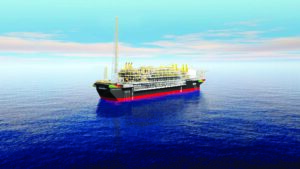
Currently, the US oil giant is operating four Floating Production Storage and Offloading (FPSO) vessels – Liza Destiny, Liza Unity, Prosperity, and One Guyana – and is now gearing up for its fifth development project, Uaru. This project will utilise the Errea Wittu FPSO, which set sail for Guyana in June and remains on track for start-up by the end of this year, increasing capacity by 250,000 barrels per day.
According to Woods, the Longtail Project, which is the company’s eighth development here, is on the path toward a final investment decision, and Exxon is already evaluating the potential for a ninth FPSO.
“The success of this development has set a new standard for the industry and frankly has exceeded our own expectations,” the CEO emphasised. “It’s a real success story in what we’ve achieved in Guyana, delivering, frankly, the production units faster than we had originally anticipated at a lower cost, running those assets above the investment basis.”
Earlier this year, President of ExxonMobil Guyana Limited (EMGL), Alistair Routledge, disclosed that the Haimara gas field in the south eastern section of the Stabroek Block will be the anchor for Exxon’s ninth offshore project and that the company plans to approach the government for approval in early 2027.
But even as production continues to grow, the US oil major is equally confident about future explorations offshore Guyana. In fact, the Exxon CEO says the company is awaiting the International Court of Justice’s (ICJ) ruling on the border controversy case between Guyana and neighbouring Venezuela to resume exploration in the Stabroek Block.
“We obviously have a large chunk of acreage, which is in force majeure, waiting for the ultimate ruling from the International Court of Justice… We feel there’s an opportunity then to start shooting seismic and understand what that acreage potentially holds. We’ve got more work to do in the acreage,” he asserted.
Already, ExxonMobil is using artificial intelligence (AI) technology to analyse oil fields in Guyana at a much faster rate. In fact, the company said an AI model built using Guyana’s offshore seismic data was able to identify about 90 percent of the oil fields that have already been discovered here.
“We’ve really put a lot of effort into artificial intelligence and training models based on what we’ve found already, all the drilling that we’ve done, and the characterisation of that subsurface and have unleashed that in the rest of the block and have four new discovery opportunities above and beyond what we thought were opportunities. We’re optimistic there. Obviously, a lot more work to do to confirm those.”
“I think longer-term, we’ve got more work to do… With some of the AI tools that we’ve trained with, what we’ve already found in the drilling we’ve done, we’ve seen some new opportunities to explore that we hadn’t previously identified. I would tell you the tape hasn’t run out on this play yet, and we’re going to continue to evaluate that and see what we can get from it. You can rest assured the organisation is very focused on maximising the value of that acreage,” CEO Woods stated.
The post “We’re not done yet in Guyana” – ExxonMobil CEO sees “bright future” in offshore developments appeared first on Guyana Times.

