Blog

  • Haïti-Météo : 6 départements visés par des averses orageuses ce soir

    Haïti-Météo : 6 départements visés par des averses orageuses ce soir

    6 novembre 2019. « Quelques averses orageuses par endroits restent possibles notamment sur les départements de l’Artibonite, du Centre, de l’Ouest, du Sud-est, du Sud et de la Grand’ Anse », signale l’Unité Hydrométéorologique d’Haïti (UHM) dans son dernier bulletin.

    Les possibilités d’averses orageuses isolées sur certains départements du pays découlent des conditions météorologiques qui sont caractérisées par une onde tropicale localisée au Sud de l’île d’Haïti.

    De faibles averses orageuses isolées sont également prévues sur Port-au-Prince et ses environs en fin d’après-midi et en soirée d’aujourd’hui.

    Température

    * Tmax comprise entre 30 à 34 degrés Celsius ;

    * Tmin comprise entre 22 à 25 degrés Celsius ;

    Lever et coucher du soleil pour Port-au-Prince

    Lever : 05h52mn Coucher : 17h13mn

  • Gonaïves: la PNH fait échec à une tentative d’évasion de prisonniers

    Gonaïves: la PNH fait échec à une tentative d’évasion de prisonniers

    Des détenus de la prison centrale des Gonaïves ont tenté de s’enfuir jeudi 7 novembre 2019, mais sans succès.

    La prison centrale de la cité de l’Indépendance était sous tension, jeudi après-midi. Les unités spécialisées UDMO et CIMO de la police nationale ont déjoué une tentative d’évasion de certains détenus, après que plusieurs d’entre eux se sont ligués contre l’un des gardes et l’ont dépouillé de son arme à feu, selon les informations relayées par Haiti Press Network.

    Les détenus, après leur forfait, tentaient de prendre la fuite et ont fait sauter quelques verrous de cellules jusqu’à la grande barrière de la prison qu’ils n’arrivaient pas à franchir. L’Unité Départementale du Maintien d’Ordre (UDMO) et le Corps d’Intervention au Maintien d’Ordre (CIMO), deux corps spécialisés de la police nationale sont intervenus à temps et les ont repoussés à coup de gaz lacrymogène.

    Des coups de feu ont été entendus de l’intérieur de la prison, ainsi que de l’extérieur. Aucune victime par balle n’a été enregistrée jusqu’ici. Hier vendredi, l’ordre devrait être rétabli dans la prison, avait promis le commissaire de la ville. Mais nous n’avons encore pu entrer en contact avec aucun responsable.

    Les conditions calamiteuses de détentions et les traitements infligés aux détenus de cette prison seraient à l’origine de cet acte de rébellion. De nombreux organismes de droits humains dont Medha-Droits humains avaient déjà critiqué les conditions de détention du milieu carcéral des Gonaïves.

    Suite à de nombreuses critiques faites par ces organismes appelant au respect de l’intégrité physique des prisonniers, 271 détenus dont 12 mineures et 14 femmes, avaient été transférés en septembre 2018 dans un nouvel espace. Ce nouveau local était une promesse de campagne du maire Neil Latortue. Cependant, la réalité carcérale y reste encore préoccupante.

    Lire| Les détenus de la Prison des Gonaïves transférés dans un nouvel espace

    Le 9 juin 2018, un détenu de la Prison des Gonaïves, Roosevelt Jérôme, s’est donné la mort après avoir entamé une grève de la faim suite à son arrestation. Deux ans plus tôt, soit en octobre 2016, sept (7) prisonniers s’étaient évadés de cette prison.

    Lire| Comment s’est passé l’évasion de la prison des Gonaïves

  • Gov’t Service Centres for Kamarang, Bartica — President Ali

    Gov’t Service Centres for Kamarang, Bartica — President Ali

    His Excellency President Dr Irfaan Ali announced on Sunday that within four weeks, Government Service Centres will be established in Bartica and Kamarang, Region Seven (Cuyuni—Mazaruni).

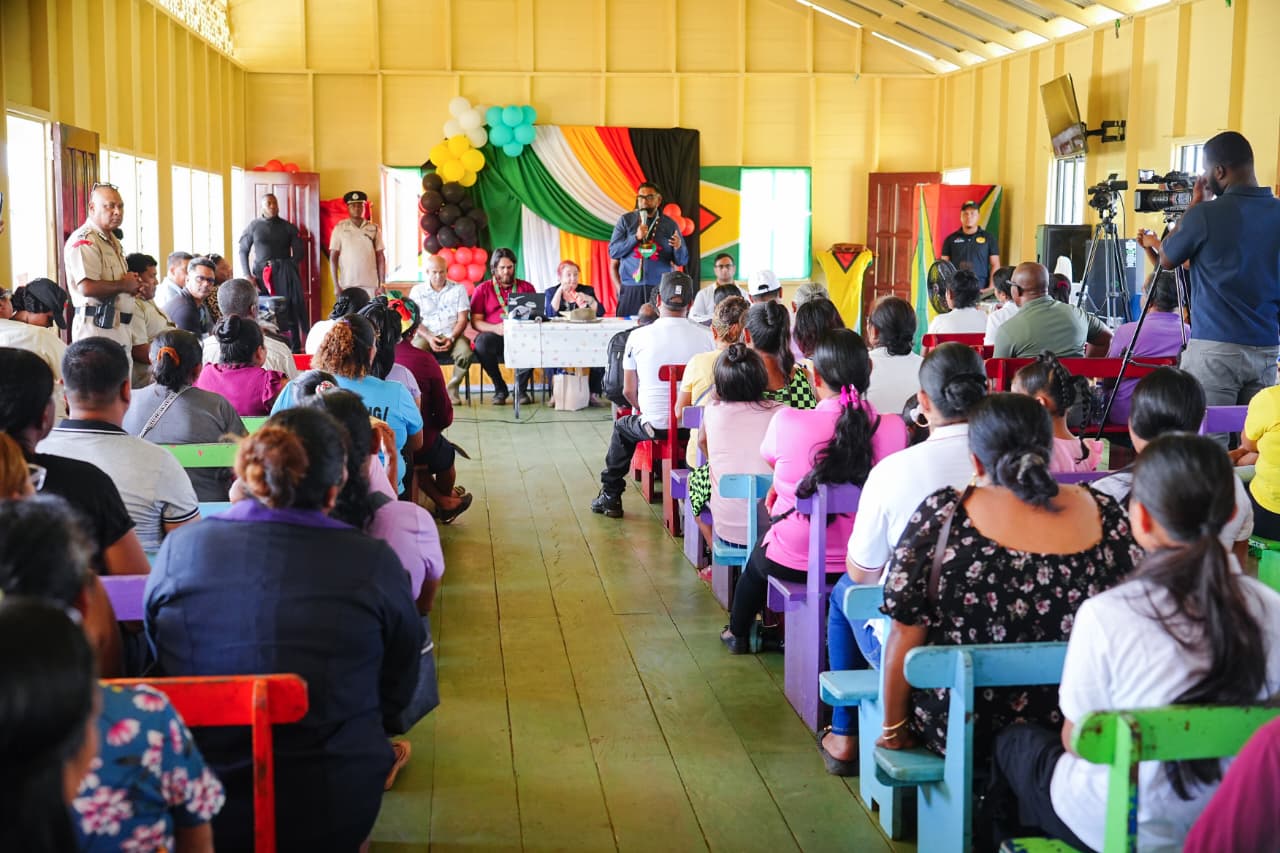
    The Head of State made the announcement during his address to hundreds of residents of Karrau Creek and Kamarang, Region 7, during separate meetings as part of a Cabinet outreach.

    The President emphasised that the service centres will serve as a one-stop, decentralised hub where residents can access a range of government services, including those from the Guyana Revenue Authority (GRA), the National Insurance Scheme (NIS), the Guyana Registrar’s Office (GRO), the Central Immigration & Passport Office, and E-ID services.

    The establishment of the Centres will enable quicker access to government services within the region, eliminating the need for long travel and will save residents both time and money.

    President Ali speaking with Karau residents

    During the meetings, the President emphasised that the aim of the outreach is to discuss the next development priorities for the communities and, by extension, the Region. He said that his Government is investing heavily in the Region because it is not only an important Region for mining but also for forestry, “and an extraordinarily important region for tourism and tourism development”.

    President Ali highlighted a number of ongoing initiatives, including the construction of the Sandhills to Bartica road, the recently completed new Bartica Stelling, and the new boat being procured to ply the Bartica route.

    Development Initiatives for Kamarang

    Addressing the residents of Kamarang, President Ali noted that, in a bid to increase the region’s food security, his Government, through the Ministry of Agriculture, will establish a 20,000-capacity tunnel-house poultry farm within the next three months. The chickens, the President said, will be sold to the upper Mazaruni area at cost. He said that a segment of the Army’s Agricorp will be deployed to the community to ensure that the project is set up as quickly as possible.

    Additionally, the Government will also invest in increasing the community’s cold storage capacity, with an investment made in procuring three 20-foot containerized solar blast freezers.

    “That will reduce tremendously the cost of two key items, eggs and chicken. This is an investment that will cost us maybe close to $300 million, but we’re going to make this investment to enhance the food security of the upper Mazaruni area”.

    Also high on the agenda is the development of a fuel depot in collaboration with the Guyana Geology and Mines Commission (GGMC). The President emphasised that this depot will not be for the mining community, but to supply fuel for households.

    “In addition to the fuel depot, we’re going to see how we can establish a depot for cooking gas, because we can use some of our military assets to transport from Bartica to Kamarang.”

    President with. student of Kamarang

    Development Initiatives for Karrau

    For the Karrau community, President Ali noted his commitment to improving infrastructure connectivity and the electricity network. He announced that a team led by the Prime Minister’s Office, in collaboration with the Ministry of Public Utilities and Aviation and the Honourable Deodat Indar, will assess whether an off-grid system or another solution is best for the village, with the goal of ensuring that the community benefits significantly from the investments made to improve their living conditions.

    He added that another priority area for development is enhancing food security in the village and the Region.

    High on the agenda also is the rehabilitation of the villages’ 2km road and another 8-10KM road that connects to the backlands. He said his government has decided to procure the necessary equipment and develop a system where the villagers will rehabilitate and maintain their own roads. This initiative will also be replicated in Kamarang.

    The President also noted that soon the community’s health centre will have a full-time dentist. The necessary equipment was already procured.

    Another important initiative, the President said, will be a housing improvement project requested by the community. He said his government will conduct an assessment of all vulnerable families in the community to provide materials to improve their homes.

    Several other key projects have also been earmarked for the community, including fixing one of the two wells to increase the water supply; assessing over 400m of erosion to determine necessary repairs; and helping to develop Karrau’s recreational facility.  The village will also benefit from the construction of a new secondary school, which is currently at 85% completion.

    President Ali and his cabinet are on a two-day outreach to Region 7.

    The post Gov’t Service Centres for Kamarang, Bartica — President Ali appeared first on News Room Guyana.

  • 23-Y-O Linden man murdered; suspect in custody

    23-Y-O Linden man murdered; suspect in custody

    A 23-year-old labourer of Scheme Hill, Wismar, Linden was on Sunday stabbed to death following an altercation at Lovers Lane, Amelia’s Ward, Mackenzie, Linden.

    Police said the incident occurred at around 18:07h resulting in the death of Tafawa Alexander.

    Investigations revealed that the Alexander and a 38-year-old man of Lovers Lane, Central Amelia’s Ward, Linden, were involved in an altercation, during which the suspect armed himself with a knife and dealt Alexander several stab wounds about his body.

    The injured man was escorted to the Mackenzie Hospital Complex, where he was pronounced dead on arrival.

    His body was examined and stab wounds were observed to the left side upper chest, left upper arm and left side head.

    The suspect was subsequently arrested and escorted to the Mackenzie Police Station, where he is presently in custody.

    A knife suspected to have been used during the incident was recovered and lodged.

    The suspect remains in custody as investigations continue.

    The post 23-Y-O Linden man murdered; suspect in custody appeared first on News Room Guyana.

  • Venezuelan national shot after found on Farmer’s property

    Venezuelan national shot after found on Farmer’s property

    A farmer of Parika, East Bank Essequibo (EBE) on Saturday night shot a 20-year-old Venezuelan construction worker of Zeelugt, EBE, after the man was found under a shed in his yard.

    According to a police report, the 62-year-old farmer, who is a licensed firearm holder, was at home when he reportedly heard a sound coming from his front door at about 23:30 hours on Saturday.

    Further enquiries disclosed that the farmer later observed the 20-year-old male under a shed on his property. During the incident, two rounds were discharged from his firearm, which resulted in the 20-year-old receiving injuries to his upper right abdomen.

    The injured man was escorted to the De Kinderen Regional Hospital, where he was seen and examined by a doctor on duty and admitted a patient.

    The farmer later reported the matter to the Police.

    The licensed firearm, five live rounds and two spent shells were lodged pending investigation.

    Several persons were questioned, and statements are being taken as part of the investigation.

    Investigations are ongoing.

    The post Venezuelan national shot after found on Farmer’s property appeared first on News Room Guyana.

  • Panel discussion hosted to highlight conservation of Guyana’s Giant River Otters

    Panel discussion hosted to highlight conservation of Guyana’s Giant River Otters

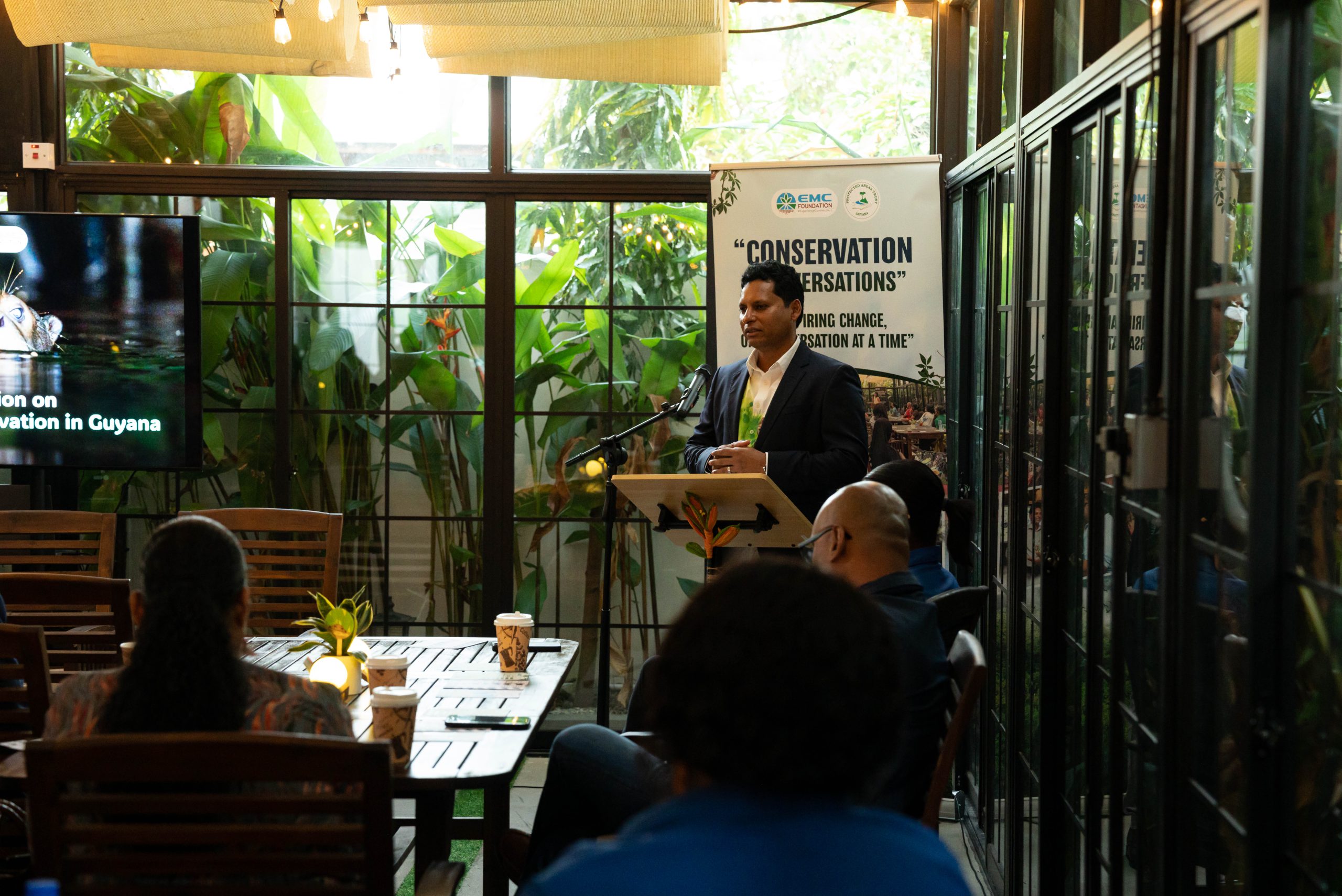
    The EMC Foundation, in collaboration with the Protected Areas Trust (PAT), hosted a panel discussion on Friday, May 29, 2026, in observance of World Otter Day. The event was held at The Avenue Café from 5:00 to 7:30 p.m. as part of the monthly Conservation Conversations Initiative, which aims to foster dialogue, collaboration, and partnerships needed to support long-term conservation impact.

    World Otter Day is celebrated annually to raise awareness about otter conservation and the protection of the rivers, wetlands, and coastal ecosystems they depend on. The day highlights the role of otters as indicator species for healthy aquatic ecosystems and emphasises the importance of safeguarding freshwater habitats for biodiversity and future generations.

    The panel discussion focused on the conservation of the Giant River Otter in Guyana and explored the importance of scientific research, habitat protection, public awareness, and collaborative conservation efforts. The session brought together conservation organisations, researchers, government agencies, students and members of environmental organisations and the private sector to discuss ongoing conservation initiatives and the challenges facing the species.

    Mr. Shyam Nokta, founder of the EMC Foundation and Chairman of the Protected Areas Trust, in providing opening remarks stated “Conservation Conversations was launched on March 26, 2026, by the EMC Foundation and the Protected Areas Trust (PAT) as a monthly initiative designed to bring together conservation stakeholders from across Guyana to share knowledge, experiences, and strengthen partnerships. The initiative serves as a platform to encourage dialogue and inspire practical action for the protection of Guyana’s natural environment, while highlighting a wide range of conservation approaches through presentations from organisations involved in community-based conservation, scientific research, environmental education, and protected area management.”

    Since its launch, the series has featured organisations including the South Rupununi Conservation Society (SRCS), which presented on community-led conservation initiatives in the Rupununi, including wildlife monitoring, environmental education, and sustainable livelihoods, as well as the Kanashen Amerindian Protected Area (KAPA), which highlighted Indigenous-led conservation, traditional ecological knowledge systems, and the management of one of the world’s largest community-owned protected areas.

    The inclusion of giant river otters as this month’s featured topic reflects the species’ growing international conservation importance. Classified as Endangered, the giant river otter is recognised as a key indicator of healthy freshwater ecosystems and plays an important ecological role as a top predator within river and wetland systems across the Amazon and Guiana Shield. Guyana is considered one of the species’ remaining strongholds due to its extensive intact forests, wetlands, and river networks.

    Within Guyana’s broader conservation framework, the species has become an important focal point for strengthening freshwater ecosystem protection and reinforcing ecological connectivity between inland river systems and coastal wetland environments. Its conservation has also helped promote more integrated, landscape-level thinking, recognising that upstream forest and river health directly influences downstream biodiversity and ecosystem services.

    Conservation efforts for the giant river otter are increasingly shaped by a coordinated approach involving Indigenous and local communities, government agencies, conservation organisations, researchers, and private sector partners. This collaboration has produced tangible results, including strengthened community-led governance through localised biodiversity monitoring systems and fishing management plans informed by otter presence and fish population recovery.

    In key conservation landscapes such as the Kanuku Mountains Protected Area and Karanambu, joint monitoring initiatives have helped establish robust population baselines, with observations confirming stable groups of otters in multiple river systems. Trained community rangers and citizen scientists also play an active role in mapping otter distribution and identifying threats such as illegal gold mining and mercury pollution, which impact freshwater food chains.

    Featured panellists included:

    • Melanie McTurk, Managing Director of Karanambu Lodge
    • Deirdre Jafferally, Community-Based Natural Resource Management Specialist
    • Alona Sankar, Commissioner of the Guyana Wildlife Conservation and Management Commission (GWCMC)
    • Sarah Singh, Program Coordinator of the EMC Foundation

    The discussion was moderated by Oleta Williams, Executive Director of the Protected Areas Trust (PAT), who guided the conversation on the ecological importance of Giant River Otters, the threats affecting their populations, and opportunities for strengthening conservation partnerships across Guyana.

    Throughout the discussion, panellists highlighted the critical role Giant River Otters play in maintaining healthy freshwater ecosystems and the importance of protecting wetlands, rivers, and surrounding habitats that support biodiversity. The panel also explored how research and monitoring programmes are contributing to a better understanding of otter behaviour, habitat use, and conservation needs in Guyana.

    The discussion further emphasised the importance of collaboration among conservation organisations, government agencies, researchers, local communities, and the public to strengthen conservation outcomes. Panellists also noted the role of education and public awareness in fostering appreciation for Guyana’s wildlife and encouraging greater stewardship of natural resources.

    Melanie McTurk highlighted the significance of long-term conservation efforts and research in protecting the Giant River Otter and its habitat. “Many people don’t realise that giant otters are one of the most understudied species, to the point where we don’t even know if they exist in some areas. That gives us an opportunity to start looking at the varying populations and how those individual populations are impacted by human activity. There is an opportunity for researchers and young scientists in the room to start understanding the DNA.”

    Dr. Deirdre Jafferally emphasised the importance of integrating community engagement and local knowledge into conservation initiatives to support long-term environmental stewardship. “Community efforts to care for abandoned and injured giant river otter pups have been impactful, helping to support the species’ recovery and contributing to their return in areas where they were once rarely seen. Citizen science is an important part of that, as well as education and awareness. Educating people is important, getting them involved, not just those who already know and see and want to be involved in established forums.”

    Alona Sankar emphasised the importance of strengthening wildlife conservation policies, legal protections, monitoring, and enforcement mechanisms to ensure the long-term survival of Guyana’s giant otter populations and other wildlife resources. “What we need to strengthen is our monitoring and enforcement capability to ensure that persons are actually abiding by what the law requires. Now we want to increase our giant otter populations, so if you’re affecting the viability of the species, that is very negative.”

    Sarah Singh highlighted the Foundation’s ongoing Giant River Otter Education and Conservation Programme in the Mahaica Watershed and the importance of combining research and education initiatives to improve understanding and protection of the species. “We started this Giant River Otter Education and Conservation Programme in October 2025. It comprises of two components:

    Research and Monitoring and Education and Awareness. Under our Education and Awareness component, we have environmental clubs that we work with along the Mahaica River, and we are also working on communication tools and capitalising on social media audience to share key messages.”

    The panel discussion highlighted the collective commitment among conservation partners and stakeholders to protecting Guyana’s Giant River Otters and the freshwater ecosystems they depend on. The engaging dialogue and knowledge sharing throughout the evening reinforced the importance of continued collaboration, research, and public awareness to ensure the long-term conservation of one of Guyana’s most iconic species.

    The post Panel discussion hosted to highlight conservation of Guyana’s Giant River Otters appeared first on News Room Guyana.

Televizyon Lakay
Televizyon Lakay
Jwe Jwèt Gratis!
Quiz, Solitaire ak Mo Kaché
Jwèt Ayiti & Karayib — 100% gratis!
Jwe Kounya — 100% Gratis →
English · Français · Kreyòl